I remember staring at my overloaded wall socket, a tangled mess of plugs fighting for space. My old desk was a mess of cables, and I desperately needed more outlets. I ended up at the hardware store, completely bewildered. I asked the guy behind the counter, ‘So, are power strips and extension cords the same thing?’ He just grunted, pointed vaguely, and said, ‘One gives you more holes, the other makes the cord longer.’ Helpful.
That’s pretty much the gist of it, but it’s also wildly incomplete. For years, I just grabbed whatever looked like it would solve my immediate problem, never really understanding the difference or, more importantly, the risks. It’s a classic case of assuming you know something until you’ve actually made a mistake and learned the hard way.
Let’s clear up this confusion once and for all. They look similar, they both deal with electricity, but they are NOT interchangeable, and using them incorrectly can be a serious fire hazard. Forget the grunt-and-point advice; we’re going to get into the real deal here.
Why People Get Confused: The Same Goal, Different Tools
Look, I get it. They both plug into the wall, and they both give you a way to connect more than one device, or a device that’s further away. On the surface, that’s a lot of overlap. But thinking are power strips and extension cords the same thing is like saying a screwdriver and a hammer are the same because they’re both tools you use for building things. They have different jobs, different designs, and using the wrong one for the task can cause a whole lot of trouble.
An extension cord, at its core, is pretty simple. It’s a flexible cable with a plug on one end and a socket on the other. Its main purpose is to extend the reach of an existing power outlet. Need to plug in your lamp across the room? Extension cord. Want to use your leaf blower without being tethered to the garage? Extension cord. They’re built for portability and distance. Think of it as a literal extension of the wall socket’s arm.
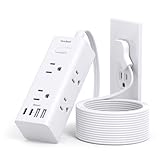
A power strip, on the other hand, is designed to multiply outlets. It’s a bar with multiple sockets, usually attached to a single, often shorter, power cord that plugs into a wall outlet. Its primary function is to give you more places to plug things in, right where you need them. It’s the hub, the distribution center, for a cluster of devices. My first real ‘aha!’ moment with power strips was when I realized they often came with built-in surge protection, something most basic extension cords totally lack. That’s a big difference.
Here’s a quick breakdown I wish I’d seen years ago:
| Feature | Extension Cord | Power Strip | My Verdict |
|---|---|---|---|
| Primary Function | Extends reach | Multiplies outlets | Both solve proximity issues, but a power strip does it more efficiently for multiple devices. |
| Typical Cord Length | Longer (6ft to 100ft+) | Shorter (3ft to 15ft) | Use an extension cord when distance is the main problem, a power strip when outlet availability is. |
| Outlet Count | Usually 1-2 | Multiple (3-12+) | Power strips win for consolidating devices. |
| Surge Protection | Rarely standard | Often included (look for UL listing) | BIG DIFFERENCE. Never plug sensitive electronics into a basic extension cord if surge protection is needed. |
| Portability | High | Moderate (depends on size) | Extension cords are for moving around, power strips are often stationary hubs. |
| Common Use Cases | Outdoor tools, remote appliances, temporary setups | Home office, entertainment centers, workshops | Match the tool to the job. |
So, while they both connect your electronics to the grid, their fundamental design and intended uses are distinct. Misusing one for the other is where the real problems start.
The Dangers of Using Them Wrong: More Than Just a Blown Fuse
This is where I really started paying attention. It wasn’t just about not having enough outlets; it was about not wanting my house to go up in smoke. I’ve seen enough flickering lights and smelled enough burnt plastic to know that electricity isn’t something to mess with casually. The confusion between are power strips and extension cords the same thing can lead to some genuinely dangerous situations.
The most common mistake? Using an extension cord as a permanent indoor power source, or worse, plugging a power strip into an extension cord. This is a recipe for disaster. Extension cords are generally not designed for continuous, heavy-duty use.
They might not have the same heavy gauge wiring or solid insulation as a power strip’s cord. Imagine trying to run your entire home entertainment system through a thin garden hose – it’s not going to end well. The wire can overheat, melt its insulation, and start a fire.
I once plugged a desktop computer and a printer into a flimsy extension cord that I’d been using for a Christmas tree for years. Within an hour, the cord was hot to the touch, and I could smell that awful acrid smell.
Thankfully, I unplugged it before anything caught fire, but it was a stark reminder.
Another big no-no is overloading. Both extension cords and power strips have wattage or amperage limits. Exceed these, and you’re asking for trouble. A power strip with a 15-amp limit can only handle so much. (See Also: Can Extension Cords Short Out )
If you plug in a high-wattage appliance like a space heater, a microwave, or a hair dryer, you’re asking for it to overheat or trip the breaker. Some people think, ‘Well, it has six outlets, I can plug six things in!’ No, you can’t plug in six high-draw items.
You need to add up the wattage of everything you’re plugging in and make sure it stays below the strip’s or cord’s capacity. It’s like trying to cram 20 people into a minivan designed for 7; something’s going to break.
Also, never run extension cords under rugs or carpets. This is a cardinal sin in electrical safety. Why? Because you can’t see them. They can get pinched, damaged by furniture being moved, or even overheat without you knowing. That hidden damage is a major fire risk. I learned this the hard way when I had a cord running under the rug for my lamp. The vacuum cleaner snagged it once, and I didn’t even notice until I smelled something funny a few days later. The insulation was frayed in a spot I couldn’t see.
And for the love of all that is holy, never use indoor extension cords outdoors. They aren’t built to withstand moisture, dirt, or temperature fluctuations. You’ll ruin the cord, and more importantly, you risk electric shock. Always use outdoor-rated cords for outdoor applications. The insulation is different, and they’re designed to handle the elements. It’s a simple distinction, but one that’s often overlooked by people who just need to plug something in, anywhere.
What to Look for: Buying Smart, Not Just Cheap
So, you’ve realized they’re not the same, and you’ve got a glimmer of understanding about the risks. Now what? When you’re actually in the store, staring at a wall of these things, how do you pick the right one? Forget the cheapest option; that’s almost always a bad idea. You need to look for quality and safety features. My first power strip was a cheap, no-name brand I got for maybe $5. It lasted about six months before the outlets started getting loose. Not exactly confidence-inspiring.
The absolute first thing you should look for is the UL Listing (or ETL, or CSA). This is a mark from an independent testing laboratory that the product meets safety standards. If it doesn’t have one of these markings, put it back. Seriously. Don’t buy it. It means it hasn’t been tested for safety, and that’s a huge red flag. It’s like buying a car with no brakes. For power strips, look for the UL 1449 listing, which specifically covers surge protective devices. This tells you it’s designed to protect your electronics from voltage spikes.
Next, consider the cord gauge. This refers to the thickness of the wire. Thicker wires (lower gauge number) can handle more amperage and are less likely to overheat. For general use around the house, a 14-gauge cord is usually sufficient for power strips. For extension cords, especially longer ones or those powering high-draw tools, you might need 12-gauge or even 10-gauge. If the packaging doesn’t clearly state the gauge, or if the cord feels excessively thin and flimsy, it’s probably not a good quality product. I learned to check the label on the cord itself; sometimes it’s printed right there.
Surge protection is another key feature, especially for a power strip. A basic power strip just gives you more outlets. A surge protector power strip has circuitry that can absorb excess voltage from lightning strikes or power surges, protecting your sensitive electronics like computers, TVs, and game consoles. Look for specifications like joule rating – a higher joule rating means it can absorb more energy before failing. A good surge protector will have a rating of at least 1000 joules, and ideally much higher for expensive equipment.
Think about the number and spacing of outlets. Do you need a lot of outlets close together, or do you need space for bulky power adapters? Some power strips have widely spaced outlets specifically for these ‘wall warts’. Also, consider if you need features like individual on/off switches for each outlet, USB ports, or even smart features that let you control outlets remotely. These add convenience but also potentially cost more.
Finally, cord length is important for both. For an extension cord, you need to measure the distance you need to cover. Don’t buy a 6-foot cord if you need 15 feet; that just defeats the purpose. But also, don’t buy a 50-foot cord if you only need 10 feet. Excess cord can be a tripping hazard and can sometimes degrade the power quality, especially with cheaper cords. For a power strip, the cord length is usually shorter and designed to reach a nearby outlet from where you’ll place the strip.
Power Strips vs. Extension Cords: When to Use Which
Alright, we’ve established they’re different and why using the wrong one is a terrible idea. Now, let’s get practical. When does a power strip make sense, and when is an extension cord your only real option? It all boils down to the problem you’re trying to solve.
You need a power strip when:
- You have multiple devices clustered in one location that need to be plugged in, and you only have one or two outlets available. Think your home office desk, your TV and entertainment center, or a charging station for phones and tablets. The goal here is outlet multiplication.
- You need surge protection for sensitive electronics. Most decent power strips come with this built-in. A standard extension cord usually doesn’t offer any protection against voltage spikes, which can fry your computer or TV.
- You want a single point of control. Some power strips have a master on/off switch, allowing you to easily cut power to everything plugged in at once.
- You need to consolidate chargers. Many modern power strips include USB ports, reducing the need for separate USB wall adapters.
I remember setting up my first ‘command center’ workstation with my computer, monitor, printer, speakers, and a desk lamp. I only had two outlets behind my desk. A cheap, multi-outlet surge protector power strip was the perfect solution. It gave me six places to plug things in, all protected from surges, and kept the whole setup neat and tidy. (See Also: Can Extension Cords Be Use With Electric Heaters )
You need an extension cord when:
- The device you need to power is far from an available outlet. This is its primary job. Using a power strip here won’t help if the device itself is 30 feet away from any power source.
- You need to power a single, high-draw appliance temporarily. For example, if you’re using a power tool in the backyard, or bringing a space heater into a room that doesn’t have an outlet nearby. Just be sure the extension cord is rated for the amperage of the appliance.
- You need to connect equipment for events or temporary setups. Think sound systems for parties, temporary lighting for a project, or powering equipment on a stage.
- You are connecting a power strip to a distant outlet. This is a valid use, but it’s important that the extension cord is heavy-duty enough to handle the combined load of everything plugged into the power strip. This is where you absolutely do NOT want a thin, cheap cord. A 12-gauge cord is often recommended for this scenario, especially if the power strip itself has many outlets or is rated for higher amperage.
Here’s a contrarian take: Everyone always says ‘just get a power strip.’ But sometimes, that’s the wrong answer. If your lawnmower is in the middle of the yard and the nearest outlet is inside the garage, you don’t need a power strip; you need a heavy-duty, outdoor-rated extension cord. Don’t let the convenience of a power strip blind you to the fact that sometimes, simple distance is the only problem, and a good extension cord is the proper tool.
Common Mistakes and How to Avoid Them
We’ve touched on some, but let’s hammer home the common blunders people make with power strips and extension cords. Honestly, a lot of it comes down to thinking they’re more solid than they are, or simply not reading the labels. I’ve made most of these mistakes myself, so trust me when I say it’s easy to do if you’re not paying attention.
Mistake 1: Daisy-Chaining. This means plugging a power strip into another power strip, or an extension cord into a power strip, which is then plugged into another extension cord. This is a huge fire hazard. Each connection point increases resistance, generates heat, and adds potential points of failure. If you need more outlets than one strip provides, you need a different solution, like a dedicated circuit installed by an electrician or a higher-capacity power strip. I saw a setup at a small concert once where they had three power strips plugged into each other, then into a single extension cord running across a walkway. It looked like a fire waiting to happen.
Mistake 2: Using the Wrong Cord for the Job. This is the indoor/outdoor mix-up, the light-duty cord for heavy-duty tools, and the undersized gauge for high-draw appliances. Always check the wattage or amperage rating. For appliances like space heaters, microwaves, hair dryers, or power tools, you need a cord specifically rated for that load. A cord that feels light and flexible is usually for light-duty electronics (lamps, chargers), not power-hungry machines. For anything demanding a lot of power, you want a thick, stiff cord. Look for the AWG (American Wire Gauge) number; lower numbers mean thicker wire and higher capacity.
Mistake 3: Hiding Cords. As mentioned, running cords under carpets, behind furniture without airflow, or in walls is a big no-no. They can be damaged invisibly, overheat, or create a fire hazard. Proper cord management involves keeping them visible, allowing for airflow, and using cord covers or raceways if you need to protect them from damage or make them look tidier, but never concealing them where you can’t see them.
Mistake 4: Forgetting About Grounding. Most modern devices and outlets have a third prong – the ground pin. This is a vital safety feature. It provides a path for electricity to flow to the ground in case of a fault, preventing you from getting shocked. Never break off the ground pin on a plug to make it fit into a two-prong outlet or adapter. If you have an older outlet without a ground connection, you should have it updated by an electrician. Using ungrounded adapters or cords with three-prong plugs is incredibly risky.
Mistake 5: Ignoring Physical Damage. Cracks in the insulation, frayed wires, bent prongs, or loose outlets on a power strip are all signs of damage. Don’t try to repair them; these cords and strips are not designed to be repaired. Dispose of them safely and replace them. A damaged cord is an accident waiting to happen. I once found an old extension cord that had been run over by a car. The outer casing was shredded. It was a miracle it hadn’t caused a fire.
The Technical Bits: Amperage, Wattage, and Safety Standards
Let’s get a little more technical, but keep it straightforward. Understanding amperage (amps), wattage (watts), and voltage (volts) is key to using power strips and extension cords safely. They’re all interconnected, and knowing their relationship helps you avoid overloading.
In simple terms:
- Voltage (V): This is the electrical pressure. In North America, household voltage is typically around 120 volts.
- Amperage (A): This is the rate of electrical current flow, basically how much electricity is moving.
- Wattage (W): This is the total power consumed by a device. It’s calculated by multiplying Voltage x Amperage (W = V x A).
So, if a device runs on 120V and draws 5 amps, it consumes 600 watts (120V x 5A = 600W).
Power strips and extension cords have maximum amperage or wattage ratings. You’ll usually see this printed on the device itself, or on its packaging. A common rating for a standard power strip might be 15 amps at 120 volts, which equates to 1800 watts (15A x 120V = 1800W). This means the total load from all the devices plugged into that strip cannot exceed 1800 watts.
If you plug in a device that draws more than the strip or cord can handle, several things can happen: (See Also: Are Outdoor Extension Cords 10 Or 12 Gauge )
- Overheating: The wires inside the cord or strip get too hot. This can melt the insulation and potentially start a fire.
- Tripped Breaker/Blown Fuse: Most circuits are protected by a breaker or fuse designed to cut power if the current exceeds a safe level. This is a safety feature, but it means your devices will suddenly stop working.
- Damage to the Device or Cord: Prolonged overloading can damage the internal components of the power strip, cord, or even the plugged-in devices.
This is why checking ratings is so important. When buying, look for labels like “15A, 120V, 1800W MAX” or “13A, 125V, 1625W MAX”. If you’re using a device that has a high wattage rating (like a 1500W space heater), it might be best to plug it directly into the wall outlet, especially if it’s a higher-amperage circuit. Trying to run that heater through a cheap, thin extension cord is a definite recipe for disaster.
Regarding safety standards, the most important one to look for is UL Certification. Underwriters Laboratories (UL) is a global safety certification company. When a product has a UL mark (like UL Listed or UL Recognized), it means it has been tested against established safety requirements and found to meet them. For power strips and surge protectors, look for UL 1449, which specifically covers surge protective devices. This is your assurance that the product has undergone rigorous testing for electrical safety, fire resistance, and performance. It’s not just a marketing buzzword; it’s a safety guarantee.
Frequently Asked Questions About Power Strips and Extension Cords
Are Power Strips and Extension Cords the Same Thing?
No, they are not the same. While both provide a way to connect devices to electricity, their primary functions differ. An extension cord is designed to extend the reach of a power outlet, while a power strip is designed to multiply the number of outlets available at a single location.
Can I Plug a Power Strip Into an Extension Cord?
It is generally not recommended to plug a power strip into an extension cord, as this practice, known as daisy-chaining, can overload the extension cord and pose a fire hazard. If you must use both, make sure the extension cord is heavy-duty and rated for the combined load of all devices plugged into the power strip.
Are All Power Strips Surge Protectors?
No, not all power strips are surge protectors. Some are basic power strips that simply offer more outlets. Surge protector power strips contain special circuitry to absorb voltage spikes and protect connected electronics. Look for a surge protection rating (e.g., joules) and a UL 1449 listing to identify a surge protector.
Can I Use an Extension Cord Outdoors?
Only use extension cords that are specifically rated for outdoor use. Outdoor extension cords are constructed with insulation and materials that can withstand moisture, temperature fluctuations, and other environmental factors. Using an indoor cord outdoors is a safety risk and can damage the cord.
The Verdict: They Serve Different Purposes
So, to definitively answer the question: are power strips and extension cords the same thing? Absolutely not. They look similar, they both deal with plugging things in, but they have distinct jobs and safety considerations. An extension cord is about reach, and a power strip is about multiplication and often protection.
My personal journey with these simple electrical accessories has taught me a valuable lesson: don’t assume. Don’t assume the cheapest option is good enough, don’t assume a cord can handle more than it’s rated for, and certainly don’t assume they’re interchangeable. The risks are too high. I’ve spent more on a good quality surge protector power strip with a decent warranty than I ever did on cheap ones, and honestly, it’s worth every penny for the peace of mind. Plus, my sensitive electronics have been much happier.
Next time you’re faced with a power outlet dilemma, take a moment to think about what you really need. Is it more distance, or more places to plug in? Choose wisely, and always, always prioritize safety. Check for those UL markings, mind the wattage, and never hide your cords.
Final Thoughts
So, there you have it. Power strips and extension cords are two different tools for two different jobs, and understanding that difference is key to keeping your home safe and your electronics running. I’ve seen enough close calls and heard enough horror stories to make me a stickler for using the right tool for the job.
If you need to extend the reach of an outlet, grab a proper extension cord – just make sure it’s rated for the task and any outdoor conditions if necessary. If you need more plug-in spots or surge protection for your gadgets, a good quality power strip with a UL listing is your best bet. Never, ever plug a power strip into an extension cord. It’s just asking for trouble and might be the reason are power strips and extension cords the same thing is such a dangerous question to get wrong.
Before you buy, always check the labels for amperage and wattage ratings. And for goodness sake, keep those cords visible and in good condition. It’s a small effort that can prevent a big disaster. If you’re unsure about your home’s wiring or the capacity of your circuits, it’s always best to consult a qualified electrician. Safety first, always.