I remember the first time I hung a heavy mirror in my apartment. The landlord had said, ‘Just use the anchors that come with it!’ Big mistake. I used those flimsy plastic ones, and within a week, the mirror was listing like the Titanic. That’s when I started asking myself: are metal drywall anchors better than plastic? It’s a question that seems simple, but the answer has saved me a lot of frustration and a few potentially broken mirrors since. Let’s get real about what actually holds up your stuff.
Plastic Anchors: The Illusion of Strength
Let’s be honest, those little plastic anchors are everywhere. They come in kits, they’re cheap, and they seem like the go-to for any DIYer who doesn’t want to deal with studs.
They work by expanding when you screw into them, creating a friction fit against the drywall. The problem is, drywall itself isn’t exactly a rock.
It’s basically compressed gypsum paper. These plastic anchors, especially the ribbed ones, can sometimes tear out a cone of drywall paper if you put too much sideways force on them, or if the drywall is particularly crumbly.
I once tried to hang a relatively light shelf with about six of those standard conical plastic anchors. I’d put maybe 10 pounds of books on it, and over a few weeks, I noticed the shelf was starting to sag. When I finally took it down, three of the anchors had completely pulled out, leaving gaping holes. It felt like a betrayal.
They work for super light things, like a small picture frame or a lightweight curtain rod, but anything with a bit of heft or any kind of wiggling force is going to test their limits, often to breaking point. You might think you’re saving money, but if it fails, you’ve got a hole to patch and whatever you were hanging is likely damaged or on the floor. That’s not saving money; that’s just delaying the inevitable repair and potential replacement.
Metal Anchors: The Real Deal for Weight
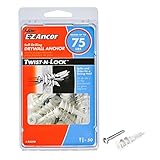
When you start looking at things you actually want to trust, metal anchors come into play. The most common type you’ll encounter is the threaded metal anchor, often called a “self-drilling” or “E-Z Ancor.” These guys are fantastic. They have a screw-like thread that bites directly into the drywall, making a much stronger hold than plastic ever could.
You screw them in by hand or with a drill, and they create a solid, flush mount. Then, you screw your actual screw into the metal anchor.
This creates a really secure connection. I used these for the first time when I was mounting a heavy TV bracket. The instructions specifically recommended them, and I was skeptical. But after I screwed them in, they felt solid.
I mean, really solid. Like they were part of the wall. (See Also: Can Concrete Anchors Be Used In Brick )
The TV bracket, which weighs a good 40 pounds on its own, plus the TV, has been up there for two years with zero sag. No movement, no creaks. It’s the kind of security that lets you sleep at night. Another type is the toggle bolt, which is definitely overkill for most drywall jobs but is incredibly strong.
It’s a metal bar with wings that fold out behind the drywall, creating a huge surface area to distribute the weight. These are usually for really heavy items, like large cabinets or very heavy mirrors, and require a larger hole.
But for everyday use, the threaded metal anchors are the workhorses that make you feel confident.
When Plastic Might (just Barely) Cut It
So, are metal drywall anchors better than plastic? For most things, the answer is a resounding YES. However, there are niche situations where plastic might be… acceptable. I’m talking about hanging something so light that it barely registers on the scale.
Think of a single, small picture frame with no glass, or maybe a very thin, unframed piece of art. Or perhaps you’re hanging a lightweight string of fairy lights that don’t weigh anything. In these cases, the cost savings are negligible, and the ease of use (just push it in and screw) can be appealing. My sister, bless her heart, once tried to hang a single, very lightweight mix using those little plastic screw-in anchors.
It worked fine, but honestly, a couple of thumbtacks probably would have done the job just as well, and with less visual impact on the wall. The key here is minimal weight and no use. If there’s any chance the item will be bumped, wiggled, or pulled on, even slightly, you are asking for trouble with plastic. It’s like using a single strand of spaghetti to tow a car.
It might hold for a second, but disaster is imminent. So, while I’d rarely recommend them for anything substantial, I’ll concede that for the absolute lightest decorative items, they can get the job done.
But don’t expect miracles.
Choosing the Right Anchor for the Job
Picking the right anchor is less about a brand name and more about understanding the weight you need to support and the material you’re drilling into. For drywall, you’ve got a few main players. (See Also: Can Cords Be Used To Make Anchors Climbing )
You’ve got your basic plastic expansion anchors, which are good for maybe 5-15 pounds if you’re lucky and the drywall is in good shape. Then you have the threaded metal anchors (like E-Z Ancors or similar), which are my go-to for most things.
These can handle anywhere from 25 to 75 pounds or more, depending on the specific anchor and how well it’s seated. They feel incredibly solid. Then there are toggle bolts, which are the heavyweights. These can support 100+ pounds, but they require drilling a larger hole and can be a bit more fiddly to install.
I used toggle bolts once to hang a massive antique bookshelf that was probably 100 pounds empty. It held like a champ. When you’re deciding, always err on the side of caution.
It’s much better to use an anchor that’s slightly stronger than you think you need than one that’s too weak. Check the packaging; most reputable brands will give you a weight rating for drywall.
Keep in mind these ratings are often for static loads (just sitting there). If the item will be moved, vibrated, or is subject to any kind of dynamic stress, you’ll want to reduce that weight capacity significantly. My personal rule of thumb is to take the rated weight and cut it in half for anything that isn’t perfectly static.
That’s a good safety margin.
Common Mistakes and How to Avoid Them
One of the most common mistakes I see people make is using the wrong anchor for the job. This usually means using those cheap plastic ones for something that’s way too heavy. I’ve been there. I’ve seen friends do it.
It always ends with a hole in the wall and a sad, fallen item. Another mistake is not prepping the hole properly. For plastic anchors, you need to make sure the hole is the right size. Too big, and they won’t grip; too small, and you’ll struggle to get them in, potentially damaging the drywall.
For metal threaded anchors, you usually just screw them in, but make sure you’re screwing them in straight. If you go in at an angle, they won’t bite properly. A more advanced mistake is not considering the condition of the drywall itself. (See Also: Can Anchors In Your Shoulder Break )
If your drywall is old, damp, or has been patched multiple times, it’s weaker. In these situations, even a good metal anchor might not hold as well. I learned this the hard way when I tried to hang a towel rack in a bathroom that had some water damage behind the drywall. Even with a strong metal anchor, it eventually pulled out because the underlying drywall was compromised.
The fix? I had to cut out a larger section, reinforce it with a piece of wood, and then re-drywall.
A much bigger job than intended. Always check the wall surface.
Tap it, listen for hollowness, and if you suspect it’s weak, use a stronger anchor or consider finding a stud. Speaking of studs, that’s the ultimate anchor, but you can’t always hit one.
People Also Ask
Can Plastic Anchors Hold Heavy Items?
Generally, no. Standard plastic drywall anchors are designed for light-duty applications, typically holding items weighing up to about 15-25 pounds at most, and that’s often in ideal conditions. For anything heavier, or items that experience any kind of movement or stress, plastic anchors are prone to pulling out, damaging the drywall, and causing the item to fall. Metal anchors or toggle bolts are significantly better for heavier loads.
How Much Weight Can a Metal Drywall Anchor Hold?
The weight capacity of metal drywall anchors varies widely depending on the type and size. Threaded metal anchors can often hold between 25 to 75 pounds or more in standard 1/2-inch drywall. Toggle bolts are even stronger, capable of supporting 100 pounds or more. Always check the manufacturer’s specifications for the specific anchor you are using, and remember that these ratings are usually for static loads in good condition drywall.
Are Self-Drilling Anchors Better Than Plastic?
Yes, self-drilling metal anchors are generally much better than plastic anchors for most applications. They create a stronger, more secure hold by threading directly into the drywall. This provides a more solid connection that is far less likely to pull out or damage the wall compared to plastic anchors, especially when dealing with heavier items or any kind of dynamic load.
What Is the Strongest Type of Drywall Anchor?
The strongest type of drywall anchor is typically a toggle bolt. These anchors have a spring-loaded or wing-like mechanism that expands behind the drywall, distributing weight over a large surface area. While they require a larger hole and can be more complex to install than other types, they offer superior holding power for very heavy items.
When to Use What: A Quick Reference
| Anchor Type | Typical Use | Weight Capacity (approx. in 1/2″ drywall) | My Verdict |
|---|---|---|---|
| Plastic Expansion Anchor (Ribbed/Conical) | Very light items: Small picture frames, lightweight wall decor. | 5-15 lbs | Barely adequate. Avoid if possible. Only for the absolute lightest things. |
| Threaded Metal Anchor (Self-Drilling) | Medium to heavy items: Shelves, TV mounts, mirrors, cabinets. My go-to. | 25-75+ lbs | Excellent. Reliable, strong, and easy to install. Highly recommended. |
| Toggle Bolt | Very heavy items: Large mirrors, heavy cabinets, anything requiring maximum hold. | 100+ lbs | Overkill for most, but the absolute best for extreme weight. Worth the effort. |
Verdict
So, to cut through the noise and get straight to it: yes, for most practical purposes, metal drywall anchors are significantly better than plastic. They offer a level of security and reliability that plastic just can’t match when it comes to holding anything with more than a whisper of weight. I’ve learned this through experience, and it’s saved me a lot of headaches and wall repairs.
When you’re standing there with a heavy item in your hand and a wall in front of you, don’t second-guess. Reach for those threaded metal anchors. They cost a little more upfront, but the peace of mind and the integrity of your walls are well worth the minor extra expense. It’s a small investment that pays big dividends in preventing damage and disappointment.
Before you pick up your drill or screwdriver next time, take a moment to consider what you’re hanging. Is it a delicate piece of art, or is it something that could cause a cascade of destruction if it falls? Make the right choice now, and save yourself a potential DIY disaster later. That’s the honest truth from someone who’s been there.