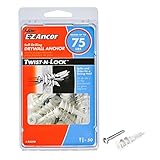
I remember the first time I faced a concrete wall with a heavy mirror and a toolbox full of what I thought were ‘proper’ anchors. I’d seen plenty of YouTube videos, read the back of the shiny packaging, and figured I was set. Then the mirror decided to test gravity with a sickening thud that still haunts my DIY nightmares. So, let’s cut to the chase: are lag shields lead anchors?
The short answer is no, they are not. But the real question is, are they any good, and when should you even bother with them? I’ve spent more money than I care to admit on fasteners that promised the moon and delivered a damp squib, so I’m here to tell you what actually works, and what’s just fancy metal waiting to let you down.
Lag Shields vs. Lead Anchors: What’s the Deal?
Alright, let’s get this straight from the jump. When people ask if lag shields lead anchors, they’re usually trying to figure out if they’re dealing with the same kind of heavy-duty, dependable fastener. The simple, no-nonsense answer is: no, they are not the same thing at all. A lag shield anchor is a specific type of mechanical anchor designed to be used with a lag screw.
It’s basically a fluted metal sleeve. You drill a hole, hammer the shield in, and then drive the lag screw into it.
The screw expands the shield against the inside of the hole, creating a pretty solid hold, especially in softer materials like concrete, brick, or block. They work by friction and expansion. Think of it like a tiny, metal Chinese finger trap for your wall.
Lead anchors, on the other hand, are typically made of soft lead, and they’re usually designed to be hammered into a pre-drilled hole and then have a screw driven into them. The lead deforms and grips the material. Historically, lead anchors were common, but modern building codes and material science have largely phased them out for many applications because lead is soft and can creep or deform over time under load, especially in dynamic situations.
The biggest difference is the mechanism and the material. Lag shields are about mechanical expansion, while traditional lead anchors are about material deformation. They look different, they install differently, and most importantly, they perform differently.
The common confusion probably stems from both being ‘anchors’ and both being used in masonry. But if you’re looking at a ribbed metal tube, that’s a lag shield. If it’s a soft, malleable piece of metal, it’s likely an old-school lead anchor.
For anything you’re hanging that weighs more than a picture frame, you’ll want to be sure you’re using the right tool for the job, and honestly, lag shields have their place, but they’re not always the first choice for me anymore.
My Own Dumb Mistake with a “heavy Duty” Anchor
I learned this lesson the hard way, back when I was probably too cocky for my own good. I was hanging a rather substantial antique medicine cabinet in my bathroom. It was solid wood, probably weighed 30 pounds empty.
I went to my local hardware store, pointed at a box of what looked like chunky metal sleeves, and the guy said, ‘Oh yeah, those are the ones for heavy stuff in concrete.’ So, I bought them. They were called ‘lag screw anchors’ or something equally vague.
I drilled my holes, tapped them in, drove the lag screws – they felt super tight. I mean, rock solid. I hung the cabinet, stepped back, feeling like a master craftsman.
Then, about three days later, I heard this faint creaking sound. I looked, and the bottom corner of the cabinet was starting to sag. (See Also: Can Concrete Anchors Be Used In Brick )
Not a lot, but enough to be terrifying. I pulled it off, and the lag shields had just started to pull out of the concrete block.
They hadn’t failed catastrophically, but they had definitely started to loosen. Turns out, the concrete block I was drilling into had some voids, and the lag shields, while they expanded, didn’t have enough solid material to grip onto securely. That day, I learned that ‘heavy duty’ on the box and what actually works in your specific wall are two very different things. I ended up going back and buying some wedge anchors, which are a completely different beast and held that cabinet like it was part of the foundation.
The lag shields? They’re still in my junk drawer, a monument to my misplaced confidence and a painful reminder that not all anchors are created equal, and ‘heavy duty’ is a relative term. This experience taught me to really understand the material I’m drilling into and the type of anchor that best suits it, rather than just grabbing the first metal tube I see.
When Do Lag Shields Actually Shine (and When They Don’t)?
So, if they aren’t the magic bullet for everything, when are lag shields actually a good choice? Honestly, they’re decent for lighter to medium-duty applications in solid concrete or dense cinder block. Think about mounting a pipe rack, a shelving unit that won’t hold a ton of weight, or even a heavy-duty bracket for something like a bicycle rack on a garage wall. The key here is the material you’re drilling into.
If it’s solid, consistent concrete or block, the expansion of the lag shield can create a good mechanical lock. They’re also relatively inexpensive, and they install pretty quickly, which is a bonus when you’re trying to get a project done. The process is pretty straightforward: drill a hole the specified diameter for the shield (this is important, too small and it won’t go in, too big and it’ll be loose), tap the lag shield in flush with the surface, then drive the lag screw into the shield. As the screw threads engage, they wedge into the flutes of the shield, forcing it outwards against the wall of the hole.
Simple, right? Now, where do they fall short? Anywhere you have hollow block, or brick that’s crumbly, or even drywall (which they are absolutely NOT designed for).
In hollow materials, there’s nothing for the shield to expand against, so it’s just going to pull out. Also, for anything that’s going to experience a lot of vibration or dynamic loads (like a swing set, or that medicine cabinet I almost lost), they’re generally not the best bet.
That’s when you need something more solid, like a wedge anchor or a sleeve anchor that provides a more secure mechanical grip. The general rule of thumb for me is: if the weight is significant or the application has any kind of movement, I’m looking beyond basic lag shields. They are okay for static, moderate loads in solid substrates.
Choosing the Right Lag Shield: Size Matters (and Material Too)
Picking the right lag shield can feel like a guessing game if you’re not paying attention. The first thing you need to know is the size of the lag screw you intend to use. Lag shields are sized to match specific lag screw diameters. You can’t just grab any shield and expect it to work with any screw.
The packaging will usually tell you what size lag screw a particular shield is designed for (e.g., ‘For 1/4″ Lag Screws’). More importantly, the packaging will also tell you the diameter of the drill bit you need to use to create the hole for the shield. This is absolutely most important.
If you use a bit that’s too small, you’ll hammer yourself into a frenzy trying to get the shield in, and you might even damage it. If you use a bit that’s too large, the shield will be loose, and it won’t have anything to grip onto. So, measure your lag screw and then find the shield that’s made for it and specifies the correct drill bit size.
Beyond size, you’ve got material. Most common lag shields are zinc-plated steel, which is fine for interior use or areas that don’t get wet. (See Also: Can Cords Be Used To Make Anchors Climbing )
For anything outdoors or in damp environments, you’ll want to look for stainless steel lag shields to prevent rust and corrosion. Rusting can weaken the anchor over time and will make a mess of your wall. Some sources might mention lead-filled lag shields, but these are less common and often not recommended for the same reasons lead anchors fell out of favor – they can be inconsistent.
Stick with steel or stainless steel. Another thing to consider is the length of the shield. The longer the shield, the more surface area it has to engage with the material, potentially leading to a stronger hold, but you also need to make sure you have enough depth in your substrate for the full shield to fit.
Always read the packaging carefully; it’s your best friend here. I once tried to force a shield into a hole that was just a hair too small, and the shield split.
Useless. Get the right drill bit, get the right size shield for your screw, and consider the environment. It’s not rocket science, but it does require a little bit of attention to detail.
Common Mistakes and How to Avoid Them
We’ve all been there – staring at a wobbly shelf or a fixture that just doesn’t feel right. When it comes to lag shields, a few common mistakes can turn a simple installation into a frustrating failure.
The biggest one, as I’ve already hammered home (pun intended), is using the wrong drill bit size. This is the cardinal sin. Too small, and you’re fighting the anchor. Too big, and you’re just creating a sloppy hole that the anchor can’t grip.
Always, always, always use the drill bit size specified on the anchor packaging. The second mistake is not drilling deep enough.
The lag shield needs to sit flush with the surface, and the lag screw needs to be able to thread into the shield fully. If your hole is too shallow, the screw won’t engage properly, and the shield won’t expand effectively.
You need to drill at least as deep as the shield is long, and preferably a bit deeper to allow for any concrete dust or debris. Another common blunder is overtightening the lag screw. While you want it snug, cranking on it too hard can strip the threads inside the shield or even crack the surrounding material, especially if it’s a brittle substrate like old concrete block.
Drive the screw until it’s firm and the shield is expanded, but don’t go overboard. Feel for resistance, and stop when it’s solid. I’ve also seen people try to use lag shields in hollow walls like drywall or plaster.
They just don’t work. Drywall anchors are a whole different category. Lag shields need solid material to expand into. Finally, and this is a big one for me, people often don’t consider the load.
They’ll hang something way too heavy for a lag shield. While they’re decent, they are not infinite weight-holders. If you’re unsure, err on the side of a more solid anchor like a wedge anchor or a toggle bolt for hollow walls. A little planning and careful execution will save you a lot of headaches and potential damage. (See Also: Can Anchors In Your Shoulder Break )
The common advice is often to just ‘use a lag shield,’ but that’s like saying ‘use a hammer’ for every construction task – it’s too vague.
People Also Ask
What Is the Difference Between a Lag Bolt and a Lag Shield?
A lag bolt, also known as a lag screw, is the fastener itself – it has a hex head and coarse threads designed to bite into wood or, when used with an anchor, masonry. A lag shield is a separate sleeve, usually made of metal, that you insert into a pre-drilled hole. When you drive the lag bolt into the shield, the bolt’s threads expand the shield against the sides of the hole, creating a secure fastening point.
Can You Use Lag Shields in Drywall?
Absolutely not. Lag shields are designed for solid masonry materials like concrete, brick, or block. They rely on expanding outwards against a solid substrate. Drywall is hollow and brittle; a lag shield will simply pull out of it, rendering the connection useless and potentially damaging your wall.
What Is the Strongest Anchor for Concrete?
The strongest anchors for concrete are typically mechanical expansion anchors like wedge anchors, sleeve anchors, or drop-in anchors. These anchors create a very secure mechanical lock by expanding firmly against the concrete. For extreme loads, adhesive anchors (epoxy anchors) can also provide exceptional strength, bonding the anchor rod to the concrete.
How Deep Should a Lag Shield Be Drilled?
The drill hole depth for a lag shield should be at least as deep as the shield itself, and preferably a little deeper. This makes sure the entire shield can be inserted flush with the surface and allows enough room for the lag screw to properly engage and expand the shield without obstruction. Always check the anchor manufacturer’s specifications for precise depth requirements.
Lag Shield vs. Other Common Anchors: A Quick Comparison
When you’re standing in the fastener aisle, staring at a wall of options, it’s easy to get confused. Lag shields are just one piece of the puzzle. Let’s break down how they stack up against a few other common players, keeping in mind that ‘best’ depends entirely on your material and load. I’ve put together a little table to make it clearer. Remember, this is my take from actual use, not just what the box says.
| Anchor Type | Best For | Pros | Cons | My Verdict |
|---|---|---|---|---|
| Lag Shield | Solid Concrete, Block (Medium Loads) | Inexpensive, easy to install, good for static loads. | Requires correct drill bit size, not for hollow walls, can pull out under heavy or dynamic loads. |
Okay for light to medium static loads in solid masonry. My go-to for general-purpose shelving where I’m not worried about it falling off tomorrow. |
| Wedge Anchor | Solid Concrete (Heavy Loads) | Very strong mechanical hold, excellent for heavy items, vibration resistant. | Requires precise drilling, can be overkill for light jobs, larger hole size. |
The workhorse for anything heavy. If I’m hanging a TV mount or a load-bearing shelf, this is what I use. Rock solid. |
| Toggle Bolt | Hollow Walls (Drywall, Plaster) | Excellent holding power in hollow materials, distribute load over a larger area. | Requires a larger hole, can be fiddly to install, not for solid walls. |
My absolute favorite for hanging things on drywall. Once it’s in, it’s in. A lifesaver for hollow walls. |
| Plastic Expansion Anchor (e.g., Con-Sert) | Solid Concrete, Block (Light Loads) | Very cheap, easy to install, good for very light fixtures. | Low holding power, can degrade over time, not for anything heavy or important. |
Honestly? I avoid these unless it’s literally just hanging a small, lightweight picture. They feel flimsy and I don’t trust them for much. |
As you can see, the lag shield has its niche. It’s a step up from the cheap plastic anchors but generally not as bombproof as a wedge anchor in solid concrete. For hollow walls, forget about it – you need a toggle bolt or a specific drywall anchor. The key is matching the anchor to the material and the weight you’re hanging. Don’t let the packaging fool you; real-world performance is what matters, and I’ve learned that the hard way more times than I’d like to admit.
Verdict
So, to circle back, are lag shields lead anchors? No, they’re fundamentally different in design and function. Lag shields rely on mechanical expansion, while traditional lead anchors deform.
For the most part, the lead anchors of old are out, and lag shields have carved out their own space. They’re a decent option for medium-duty static loads in solid masonry, provided you get the drill bit size right and don’t try to hang a piano from them.
I’ve personally moved away from them for anything I’m really worried about, preferring wedge anchors for solid walls and toggle bolts for hollow ones. But if you’ve got a simple shelf in solid concrete and you’re not pushing the weight limits, a lag shield can absolutely do the job. Just remember to check your material and don’t over-promise its capabilities.