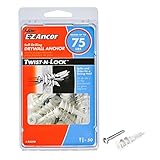
You’ve got a shelf you want to hang. Maybe a bracket for the garden hose. You glance at the hardware store aisle, a rainbow of plastic doodads staring back, promising to hold anything. And then the question hits: are plastic anchors for concrete really worth a damn? I’ve been there, staring at a wall, a drill, and a pile of questionable plastic. My first few attempts at DIY involved a lot of guesswork and, frankly, a lot of wasted money on anchors that looked promising but crumbled under the slightest pressure. It taught me a harsh lesson: not all plastic is created equal, especially when it comes to holding weight in concrete.
This isn’t about fancy engineering terms or corporate jargon. This is about what works, what doesn’t, and how you can avoid ending up with a sagging shelf or, worse, something falling off the wall. Let’s cut through the marketing fluff and get to the nitty-gritty of these ubiquitous little fasteners.
So, How Do These Little Plastic Things Actually Work?
Alright, let’s get down to brass tacks. When you’re talking about hanging something on concrete, you’re usually dealing with a solid block of cement, aggregate, and sand. It’s tough stuff. You can’t just screw into it like you can with drywall or wood. That’s where anchors come in. Plastic anchors, specifically the common ‘ribbed’ or ‘wing’ types, are designed to work with a screw. You drill a hole into the concrete, the right size for the anchor. Then, you tap the plastic anchor into that hole. It’s usually a snug fit, which is good. The real magic (or lack thereof) happens when you drive a screw into the anchor.
The idea is that as the screw turns, it forces the plastic anchor to expand. The ribs or wings on the anchor dig into the sides of the drilled hole, creating friction and a mechanical lock. The screw then threads into the plastic itself, and combined with the outward pressure from the expanding anchor, it’s supposed to hold whatever you’ve attached.
It sounds simple enough, right? In theory, it’s a clever, cheap way to create a secure fastening point. The plastic itself is usually made of nylon or polypropylene, materials that have some flexibility but are rigid enough to hold their shape under stress. The ribs are designed to prevent the anchor from spinning in the hole as you drive the screw, which is a common frustration with some cheaper anchors.
It’s all about creating a tight fit and some grip against the rough concrete surface.
However, there’s a catch. Concrete isn’t uniform. You’ve got hard spots, soft spots, aggregate that might shift, and variations in density. A plastic anchor’s effectiveness is heavily dependent on the quality of the concrete, the accuracy of the drilled hole, and the quality of the anchor itself. I once tried to hang a relatively light picture frame on a basement wall that felt like solid granite. The plastic anchor went in fine, but the screw barely bit. It felt loose from the start. A few weeks later, the frame was on the floor. That’s when I learned that not all concrete is created equal, and neither are the anchors.
When Plastic Anchors Actually Don’t Suck
Okay, so I’ve painted a bit of a grim picture, but let’s be fair. Plastic anchors aren’t always the devil’s work. There are situations where they can actually hold up pretty well, especially for lighter loads and specific types of concrete. Think about those hollow-core concrete blocks, or cinder blocks. They’re not solid all the way through. In those cases, a good quality plastic anchor can expand into the void and provide a decent grip. It’s not going to hold up a 500-pound safe, but for something like a lightweight electrical conduit, a small sign, or a very light decorative shelf, they can be perfectly adequate. The key here is ‘lightweight’ and ‘adequate’.
I remember trying to mount a simple wire shelving unit in a garage that had those older, somewhat crumbly concrete floors. I wasn’t hanging anything heavy on it, just some plastic bins of gardening supplies.
I used a set of decent-quality ribbed plastic anchors, drilled the holes carefully, and made sure they were seated properly. For over two years, that shelf held firm, no sagging, no worries. It wasn’t subjected to any kind of lateral pull or vibration, just static weight. (See Also: Can Concrete Anchors Be Used In Brick )
That’s the sweet spot for plastic anchors: low-stress, low-weight applications in reasonably sound concrete or block. The common advice that they are ‘never’ good for concrete is often an oversimplification. It’s more accurate to say they are limited in their application.
One important factor, even for plastic anchors, is the screw. You need a screw that’s designed for use with anchors – typically a coarse thread that will bite into the plastic and the concrete wall. Using a fine-thread wood screw, for example, is a recipe for disaster. Always match the screw type and size to the anchor as recommended by the manufacturer. It sounds obvious, but you’d be surprised how many people just grab whatever screw is lying around. The plastic anchor is only half the equation; the screw does a lot of the heavy lifting (literally).
What to Look for When Buying (and What to Avoid Like the Plague)
If you absolutely must use plastic anchors for a light-duty job on concrete, there are a few things that separate the decent ones from the absolute junk. First, the material quality. You want anchors that feel firm and not brittle. If they feel like they’ll snap when you tap them into the hole, they’re probably not going to hold much. Nylon anchors are generally better than the softer plastic ones. Look for deep, well-defined ribs. These are what give the anchor its grip against the concrete wall of the hole. Shallow or rounded ribs won’t bite effectively.
The shape matters too. The classic ‘wing’ style anchors, which have little fins that expand outwards, are generally better for holding power than the simple ribbed cylinders, especially if the concrete is a bit rough. Some anchors have a tapered lead-in for the screw, which helps center it and prevents it from pushing the anchor back out as you screw it in. Always check the packaging for weight ratings. While these are often optimistic, they give you a general idea of what the manufacturer thinks it can hold. Remember, these ratings are almost always for static loads in ideal conditions, not for dynamic loads or vibrations.
What to avoid? Anything that feels flimsy. Generic, unbranded packs of a thousand anchors for a couple of bucks are usually suspect. If the ribs are barely there, or if they’re just smooth cylinders with no aggressive grip pattern, steer clear.
Also, avoid anchors that require an absurdly large drill bit. Sometimes, anchors that are too loose in the hole are worse than ones that are a bit tight. A tight fit is key for any anchor to perform. I once bought a bulk pack that looked okay, but the plastic was so soft that driving the screw actually deformed the anchor before it could expand properly.
The screw just spun in place. Lesson learned: cheap often means you’ll be redoing the job sooner rather than later. For concrete, if you’re unsure or the load is anything more than a feather, you’re better off spending a few extra dollars on something more solid.
My Own Stupid Mistake: The Shelf That Fell
I’ve got a confession. Years ago, I was helping a buddy move into a new apartment. He had this huge, framed mirror that he wanted to hang in his living room. The walls were solid concrete, the kind that makes you question if you’re really a homeowner or just a glorified renter of a bunker. He’d bought a big pack of what he called ‘heavy-duty’ plastic anchors. They looked like beefier versions of the standard ribbed ones, with a bright orange color that screamed ‘strength’. He was so proud of them.
I was skeptical. I mean, I’d already had my share of plastic anchor failures. (See Also: Can Cords Be Used To Make Anchors Climbing )
But he insisted. ‘These are the good ones,’ he said, probably convinced by the packaging. So, we drilled the holes, tapped in the anchors, and screwed in the lag bolts that came with them.
They felt surprisingly solid at first. We hung the mirror, which, let me tell you, was heavy.
It looked fantastic. For about an hour. Then, with a sickening crunch and a loud crack, the whole thing came down. Thankfully, nobody was standing in front of it, but the mirror shattered, the wall got gouged, and my buddy was devastated.
The anchors had literally ripped out of the concrete. The plastic had crumbled, and the screws had nothing to grip.
That day was a stark reminder. Just because something looks tough or is colored brightly doesn’t mean it’s up to the task, especially with concrete. We should have used proper concrete screws (like Tapcons) or expansion anchors. It cost him a mirror and a lot of plaster repair. It taught me to trust my gut and my past experiences. If it feels like overkill to use a proper masonry anchor, that’s usually a sign you should be using one. Over-engineering a fix is almost always better than under-engineering it when it comes to structural integrity.
When It’s Time to Ditch Plastic for Metal (or Something Stronger)
Look, the truth is, for anything more than hanging a very light picture frame or a small, lightweight utility hook on a truly solid, dense concrete wall, plastic anchors are a gamble. The common advice I hear from seasoned DIYers, and the advice I now give, is this: If the item you’re hanging weighs more than a couple of pounds, or if it’s something that could cause damage or injury if it falls, you need to step up.
That means moving to metal anchors. The most common and usually best alternative for general DIY use is the concrete screw, often called a Tapcon (which is a brand name, but it’s become a generic term for this type of fastener).
These are hardened steel screws with a special thread that cuts directly into the concrete. You drill a pilot hole of a specific size (important for these), and then you just screw them in. They provide significantly more holding power and are much more reliable than plastic anchors for most applications.
Another excellent option is the wedge anchor. These are heavy-duty metal anchors that you hammer into a pre-drilled hole. As you tighten the nut on the bolt, a conical wedge is pulled into an expansion sleeve, forcing it outwards against the concrete. These are used for serious structural loads, like attaching deck ledgers, pergolas, or heavy machinery. For truly demanding jobs, like mounting a TV on a concrete wall or hanging a heavy cabinet, a sleeve anchor or a drop-in anchor might be the way to go. These are also metal and expand mechanically to provide a very strong grip. They’re a bit more involved to install than a simple concrete screw, but the holding power is exceptional. (See Also: Can Anchors In Your Shoulder Break )
The decision point often comes down to load capacity and risk. If your project involves anything that could be dangerous if it failed – like a railing, a structural support, or even just a heavy piece of furniture that could tip – plastic anchors are simply not in the same league. They’re a convenience item for truly trivial tasks. When in doubt, or if the item has any significant value or weight, always opt for a metal anchor. It’s a small price difference for a huge gain in peace of mind and security. I’ve learned to just skip the plastic ones for anything that matters anymore.
Faq: Are Plastic Anchors for Concrete a Good Idea?
Are Plastic Anchors Strong Enough for Concrete?
For very light loads, like hanging a small, lightweight picture frame or a small utility hook, a good quality plastic anchor might be strong enough, especially if the concrete is dense and the hole is drilled precisely. However, for anything heavier, or for items where failure could be dangerous, they are generally not strong enough. They are best suited for low-stress, low-weight applications and can be prone to failure in variable concrete conditions.
Can You Use Plastic Anchors in Cinder Blocks?
Yes, plastic anchors can often work reasonably well in cinder blocks, especially if the block is hollow. The anchor can expand into the void behind the face of the block, creating a somewhat secure grip. However, the holding power will still be limited by the strength of the concrete and the anchor itself, so avoid heavy loads even in cinder blocks.
What Is a Good Alternative to Plastic Anchors for Concrete?
For most applications where plastic anchors fall short, concrete screws (like Tapcons) are an excellent alternative. They offer significantly better holding power and reliability. For heavier loads, consider wedge anchors, sleeve anchors, or drop-in anchors, which provide solid mechanical expansion into the concrete.
How Do I Know If a Plastic Anchor Will Work?
You’ll know a plastic anchor is likely to work if it’s for a very light object, the concrete is solid and dense, the anchor feels snug in the hole, and the screw threads in firmly without stripping. If the anchor feels loose, the plastic is soft, or the screw spins, it’s unlikely to hold. Always check the manufacturer’s weight rating, but treat it as a guideline for ideal conditions, not a guarantee.
Are All Plastic Anchors the Same?
No, absolutely not. Plastic anchors vary greatly in material quality, rib design, and overall construction. Higher-quality anchors made of nylon with deep, aggressive ribs will perform much better than cheap, brittle plastic ones with shallow or smooth surfaces. The shape and size of the anchor also dictate its suitability for different screw sizes and hole diameters.
| Anchor Type | Typical Use Case | Holding Power | Pros | Cons | My Verdict |
|---|---|---|---|---|---|
| Ribbed Plastic Anchor | Very light-duty, e.g., small pictures, light hooks | Low | Cheap, easy to install | Unreliable, prone to failure, limited weight capacity | Only for the absolute lightest, non-important jobs. Often not worth the risk. |
| Winged Plastic Anchor | Light-duty, slightly more secure than ribbed | Low to Medium-Low | Slightly better grip than plain ribbed | Still unreliable for significant loads, can crumble | Marginally better than plain ribbed, but still a gamble. |
| Concrete Screw (e.g., Tapcon) | Medium-duty, shelves, brackets, conduit | Medium to High | Reliable, good holding power, relatively easy to install | Requires specific pilot hole size, can be difficult to remove | My go-to for most medium-duty concrete tasks. Solid bang for your buck. |
| Wedge Anchor | Heavy-duty, structural attachments, posts | High to Very High | Very strong, secure, good for significant loads | More complex installation, requires hammering, difficult to remove | Excellent for anything you absolutely don’t want to move. Overkill for light jobs. |
Final Verdict
So, to wrap it all up: are plastic anchors for concrete a good idea? For most people and most projects, the answer is a resounding ‘no’. While they have their niche for extremely light, non-important loads, the risks of failure, damage, and frustration far outweigh the minimal cost savings. I’ve learned the hard way that the few extra dollars spent on proper concrete screws or metal anchors are some of the best investments you can make in a DIY project. They offer peace of mind and genuine security that plastic simply can’t match.
My advice? Unless you’re hanging a single piece of paper or a tiny piece of art on a wall you don’t care about, just skip the plastic anchors for concrete altogether. Invest in concrete screws, wedge anchors, or whatever the right tool is for the job. Your shelves, your walls, and your sanity will thank you.