I remember the first time I hung a heavy mirror. The kind that makes you sweat a little just lifting it. I grabbed what I thought were decent anchors from the hardware store, hammered them in, and screwed the mirror’s mounting brackets to them. Felt solid. For about a week.
Then, one Tuesday morning, it happened. A sickening crack, a shower of plaster dust, and a very expensive, very shattered mirror on the floor. That’s when I started asking myself, are my drywall anchors cheap? And more importantly, how the hell do I stop this from happening again?
This isn’t about fancy designer wall decor; it’s about the fundamental question of whether the little bits of plastic and metal holding your stuff up are actually up to the job.
What Even Are Drywall Anchors, Anyway?
Look, drywall itself is basically glorified paper mache. It’s crumbly, it’s weak, and if you just screw something directly into it, it’ll pull out faster than a politician from a debate. That’s where anchors come in. Their whole job is to spread the load of whatever you’re hanging over a larger area of the drywall, or to bite into something more substantial behind it, like wood studs.
There are a bunch of types, and they all work a bit differently. The most basic ones, the ones that probably make you wonder ‘are my drywall anchors cheap?’, are the plastic conical ones. You drill a hole, shove ’em in, and then screw into them. They work by friction and by expanding slightly as you drive the screw. They’re cheap, they’re ubiquitous, and they’re generally only good for very light stuff – think a small framed picture or a coat hook that won’t see much action. They can fail spectacularly if overloaded, as I learned the hard way.
Then you get into the toggle bolts. These are the ones with the little wings that spring open behind the drywall. They’re a step up. They have a much larger surface area pressing against the back of the drywall, distributing the weight better. You usually need a bigger hole for these, and they can be a bit fiddly to install. Still, for hanging shelves or moderately heavy items, they’re a solid choice. I’ve had good luck with these for mounting basic shelves in my garage.
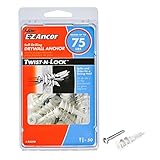
The next level up are the screw-in anchors, sometimes called self-drilling anchors. These are usually metal or a sturdier plastic. You just screw them directly into the drywall without a pilot hole. They have threads that grip the drywall really well. They’re quick to install and can hold a decent amount of weight, but you still need to be mindful of the load rating. I’ve used these for mounting things like towel bars in bathrooms, and they’ve held up well over time.
Finally, you have the real heavyweights, like molly bolts and toggle bolts with wider wings. Molly bolts are metal and expand behind the drywall when you tighten them, creating a very secure connection. Toggle bolts, especially the larger ones with a good wingspan, can handle serious weight, often hundreds of pounds, provided your drywall is in decent condition. These are what you want for anything truly substantial, like large TVs, heavy cabinets, or serious shelving units. The key is understanding that ‘cheap’ often means ‘low load capacity’ and ‘higher risk of failure’.
What to Look for (beyond Just Price)
So, you’ve established that not all anchors are created equal, and the cheap ones are often a gamble. What should you actually be looking for when you’re at the store, trying to avoid another shattered mirror incident? It boils down to a few key things: material, design, load rating, and ease of installation.
First, material. Plastic is generally for light-duty. If you’re hanging anything more than a pound or two, you should be looking at metal anchors. Zinc-plated steel is common and offers good corrosion resistance. Brass is another option. For heavy loads, you might see steel anchors with a thicker gauge or specialized coatings.
Next, design. This is where the ‘how it works’ comes into play. For light-duty, simple expansion anchors (like the plastic ones) are fine, but only if the weight is truly minimal. For medium-duty, toggle bolts (the kind with wings that spring open) or screw-in anchors (self-drilling types) are usually better. They engage more of the drywall surface or the space behind it. For heavy-duty, you’re looking at solid toggle bolts with large wings or molly bolts. The larger the surface area the anchor engages with behind the drywall, the stronger the hold.
Then there’s the load rating. This is IMPORTANT. Anchors will usually have a maximum weight they are rated to hold. This is almost always less than what the anchor itself can physically withstand. They factor in safety margins, the strength of the drywall, and how the load is applied (sheer weight vs. pulling force). You’ll often see ratings for ‘shear strength’ (hanging straight down) and ‘pull-out strength’ (pulling straight out). Always err on the side of caution. If a shelf is going to hold 50 pounds of books, don’t buy anchors rated for 20 pounds. I’ve learned the hard way that these ratings are not suggestions; they are limits. (See Also: Can Concrete Anchors Be Used In Brick )
Finally, ease of installation. Some anchors are a breeze. Others… not so much. Toggle bolts can be tricky, especially the bigger ones that require a fairly large hole and some dexterity to maneuver. Screw-in anchors are generally very easy. Plastic expansion anchors are also simple. Consider your own comfort level with tools and the project. If you’re already stressed about hanging something, the last thing you need is an anchor that fights you every step of the way.
My personal rule of thumb? If I have to ask ‘are my drywall anchors cheap?’, I’m probably using the wrong kind. I try to buy anchors that are clearly rated for more than I think I’ll need. It’s cheaper than buying a new TV or mirror.
Common Mistakes That Lead to Anchor Fails
Okay, so you’ve bought anchors that look like they should be strong enough. You’re ready to hang that heavy picture frame. But even with good anchors, things can go wrong. I’ve made pretty much every mistake in the book, so hopefully, you can learn from my plaster-covered triumphs and failures.
Mistake number one: Using the wrong anchor for the job. This is the big one that led to my mirror incident. I grabbed the cheapest, most basic plastic anchors because, hey, they’re just anchors, right? Wrong. For anything with significant weight – even a medium-sized TV mount, a sturdy bookshelf, or a substantial piece of art – those little plastic cones are not going to cut it. They rely too much on friction within the drywall itself, which is a weak material. You need anchors that can spread the load, grip behind the drywall, or ideally, hit a stud.
Mistake number two: Not checking for studs. This is probably the most common and, frankly, the easiest to avoid. Before you even think about anchors, grab a stud finder. Seriously. If you can hit a wood stud, you often don’t need a drywall anchor at all, or you can use a much simpler screw. Studs are the skeleton behind your drywall. They are designed to hold significant weight. Most modern homes have studs spaced 16 or 24 inches apart. Learning to find them and using them will save you a world of headaches. I used to skip this step for small things, thinking it was overkill, but now I always look. It’s worth the two minutes.
Mistake number three: Overloading the anchor. Even good anchors have limits. People see a shiny metal anchor that looks tough and assume it can hold a small elephant. Read the packaging!
Manufacturers put those load ratings there for a reason. When they say a toggle bolt is rated for 50 pounds, that’s under ideal conditions with the load applied correctly. If you’re hanging a TV that weighs 60 pounds and the mount requires two anchors, you’re already pushing it. Then factor in movement, vibrations, or someone accidentally leaning on it.
It’s a recipe for disaster. I once tried to hang a heavy antique cabinet using what I thought were strong toggle bolts, but the cabinet itself was a good 80 pounds plus whatever I put on the shelves. It lasted about a month before one side started to sag. That’s when I realized I’d overestimated the anchor’s strength and underestimated the weight.
Mistake number four: Improper installation. This applies to all types. For plastic anchors, over-driving them can split them.
For toggle bolts, not letting the wings fully deploy or not tightening the bolt properly means they won’t grip behind the drywall effectively. For screw-in anchors, not screwing them in straight can strip the threads in the drywall. It sounds simple, but taking an extra minute to make sure the anchor is seated correctly and fully engaged makes a huge difference in its holding power. I once rushed installing a set of molly bolts for a heavy mirror, and didn’t get them fully seated.
The mirror tilted precariously. A quick re-do, making sure they were snug, fixed it. (See Also: Can Cords Be Used To Make Anchors Climbing )
Lesson learned: patience pays off.
Real-World Use: What Holds What
Okay, theory is one thing, but what does this actually mean for the stuff you want to hang on your walls? When I’m looking at a project, I try to mentally categorize the weight and then pick the anchor accordingly. It’s not an exact science, but it prevents a lot of guesswork and potential failure. Here’s a rough breakdown based on my experience:
Very Light Duty (0-5 lbs): For things like small, lightweight picture frames, a single coat hook that won’t take much weight, or a small decorative item. The basic plastic conical anchors can work here if you’re careful. I’ve used them for hanging calendars or small mirrors that are mostly decorative. However, even for this weight, I often opt for a slightly better option because I know how easily these fail. A small, screw-in metal anchor or a very tiny toggle bolt is often a better bet for peace of mind, even if it feels like overkill at the time.
Light to Medium Duty (5-20 lbs): This is where things like medium-sized framed pictures, lightweight shelves holding books or decor, or bathroom accessories (towel bars, toilet paper holders) come in. This is the sweet spot for good quality screw-in anchors (the self-drilling metal kind) or smaller toggle bolts. I’ve used these for mounting a small spice rack, a floating shelf for my router, and the aforementioned towel bars. They generally install easily and provide a secure hold for this weight range. The key is making sure you use at least two anchors for any shelf.
Medium to Heavy Duty (20-50 lbs): Now we’re talking about more substantial shelves, smaller flat-screen TVs, larger mirrors, or wall-mounted cabinets that aren’t carrying a huge load. For this, I’m looking at solid toggle bolts with decent-sized wings, or molly bolts. These anchors engage more of the drywall behind the wall, providing a much stronger grip. When I mounted my first flat-screen TV (a smaller, older model), I used heavy-duty toggle bolts because I didn’t want to risk it. The mounting bracket itself specified anchor types, and it was clear it needed more than just plastic.
Heavy Duty (50 lbs+): This is for large, heavy TVs, full bookshelves, wall-mounted cabinets holding heavy items (like in a kitchen or garage), or anything that could cause serious injury or damage if it fell. For anything in this category, my default is to find studs. If studs aren’t an option for some reason, I’m using the largest, highest-capacity toggle bolts I can find, or specialized heavy-duty drywall anchors designed for extreme loads.
Sometimes, even with the best anchors, if you can’t hit studs, you might need to consider reinforcing the drywall itself or using a different mounting strategy altogether. I once had to hang a very heavy antique dresser mirror that was probably 70-80 lbs, and after much deliberation, I ended up using four of the largest toggle bolts available, making sure they were perfectly seated. It’s held for years, but it was a nerve-wracking installation.
Here’s a quick comparison table of common anchor types, with my personal verdict on their effectiveness:
| Anchor Type | Typical Material | Installation Difficulty | Typical Load Rating (per anchor, approximate) | My Verdict |
|---|---|---|---|---|
| Plastic Expansion | Plastic | Easy | 2-10 lbs | Only for the absolute lightest items. High risk of failure. |
| Screw-In (Self-Drilling) | Metal/Sturdy Plastic | Easy | 15-30 lbs | Good for light to medium duty. Quick and reliable for many tasks. |
| Toggle Bolt (Standard Wings) | Metal | Medium | 25-75 lbs | Excellent for medium to heavy duty. Reliable when installed correctly. |
| Molly Bolt | Metal | Medium | 30-100 lbs | Very secure for medium to heavy duty. Good expansion grip. |
| Heavy-Duty Toggle Bolt (Large Wings) | Metal | Medium-Hard | 75-200+ lbs | The go-to for serious weight when studs aren’t an option. Requires careful installation. |
My Own Drywall Anchor Fails and Fixes
Let’s be blunt: I’ve screwed up. A lot. The mirror incident was just the most dramatic. There was the time I hung a set of kitchen cabinets that were technically ‘lightweight’ but I packed them full of pots and pans. They started to sag within a month. My fix? I had to remove the cabinets, rip out the flimsy anchors, and install proper heavy-duty toggle bolts, two per cabinet support, making sure they were anchored into solid drywall without any crumbling. It was a pain, but the cabinets haven’t moved since.
Then there was the bookshelf incident. I bought a nice, tall bookshelf and filled it with textbooks.
The anchors I used were the basic screw-in kind, the ones that look like little metal screws with wings. They seemed fine at first, but over time, the constant weight and slight shifting caused the drywall around the anchors to start to crumble. The shelf wasn’t falling, but it was visibly tilting forward. (See Also: Can Anchors In Your Shoulder Break )
My solution was to carefully remove the shelf, then use a larger toggle bolt that had a wider wingspan, and install it slightly lower than the original hole. This meant the new anchor was grabbing a fresh, uncompromised section of drywall and spreading the load more effectively. I also learned to distribute the weight more evenly across more anchors rather than relying on just a few. Three anchors evenly spaced on a long shelf are better than two crammed together.
Another common mistake I made early on was not realizing that the type of drywall matters. Standard ½-inch drywall is common, but if you have thicker drywall, or that moisture-resistant green board, you might need different anchors or different installation techniques. For example, some toggle bolts might not have enough length to engage properly if the drywall is unusually thick. Always check the anchor’s specifications against your wall material. For a while, I was using a generic metal screw-in anchor for a bathroom shelf, and it kept loosening up. I eventually realized the constant humidity might be affecting the drywall’s grip, so I switched to a heavy-duty molly bolt that expanded more aggressively, and that solved the problem.
The biggest lesson I’ve learned is that when in doubt, over-anchor. It’s far better to use a stronger anchor than you strictly need than to risk a collapse. The cost of a few heavy-duty anchors is peanuts compared to replacing a damaged item or repairing a hole in your wall. And always, always check the load ratings. They are there for a reason, and ignoring them is like playing Russian roulette with your belongings and your wall.
Faq: Your Drywall Anchor Questions Answered
Can Drywall Anchors Hold a TV?
Yes, but it depends entirely on the type of anchor and the weight of the TV. For smaller, lighter TVs (under 25-30 lbs), heavy-duty toggle bolts or molly bolts installed correctly into solid drywall might suffice, but it’s risky. For most modern, heavier flat-screen TVs, it is highly recommended to locate wall studs and mount the TV bracket directly into them. If studs are absolutely not an option, you need specialized, high-capacity TV mount anchors designed for drywall, which are significantly stronger than standard anchors and require careful installation.
How Much Weight Can a Drywall Anchor Hold?
This varies wildly. Basic plastic expansion anchors are typically rated for only 2-10 pounds. Good quality screw-in anchors can hold 15-30 pounds. Toggle bolts can range from 25-75 pounds for standard ones, up to 200+ pounds for heavy-duty versions. Molly bolts generally fall into the 30-100 pound range. These are approximate ratings and depend heavily on proper installation, the condition of the drywall, and the direction of the force applied.
Should I Use Anchors If I Can Find a Stud?
No. If you can locate a wall stud (the wooden or metal framing behind the drywall), you should always aim to screw directly into the stud. A screw or lag bolt driven into a stud can hold significantly more weight than any drywall anchor. Drywall anchors are specifically for when you cannot reach a stud. Using an anchor in a stud is unnecessary and can actually weaken the stud’s holding power.
Are the Anchors That Come with Products Any Good?
Often, no. Manufacturers frequently include the cheapest possible anchors to keep costs down. These are usually basic plastic expansion anchors that are barely adequate for very light items. It’s almost always a good idea to discard the included anchors and buy your own, higher-quality ones based on the weight of the item you’re hanging and your specific wall conditions. Don’t trust those little plastic things for anything important.
Final Verdict
So, are my drywall anchors cheap? If you’re looking at those little plastic cones or the cheapest pack you can find, the answer is almost certainly yes, and you should probably rethink using them for anything you care about. The good news is that better anchors aren’t outrageously expensive, and the peace of mind they provide is well worth the few extra dollars.
My experience has taught me that investing in quality anchors and taking the time to find studs (or use the right anchor if studs aren’t an option) is a fundamental part of doing any kind of home improvement or decorating. It’s not glamorous work, but it’s the stuff that keeps your walls from looking like a disaster zone.
Next time you’re at the hardware store, don’t just grab the cheapest bag. Take a moment, consider the weight of what you’re hanging, and choose an anchor that’s up to the task. Your stuff, and your walls, will thank you for it.