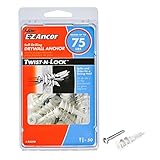
I remember staring at a hollow concrete block wall in my garage, a hefty shelf full of tools weighing on my mind. The sales guy at the hardware store, bless his heart, pointed me towards a box of ‘red hat’ anchors, assuring me they were the bee’s knees for any masonry. He wasn’t exactly wrong, but he wasn’t entirely right either. So, are red hat anchors any good in concrete block walls? The short answer is: sometimes, but you need to know their limits.
These little guys, also known as drive anchors or hammer drive anchors, have been around forever. They’re simple, cheap, and when used in the right spot, they hold surprisingly well. But when that ‘right spot’ involves the airy, hollow nature of concrete block, things can get a bit dicey.
What Exactly Is a Red Hat Anchor and How Does It Grab?
Let’s get down to brass tacks. A red hat anchor, or more technically, a hammer drive anchor, is a fastener made of zinc-plated steel. The ‘red hat’ part is usually a plastic cap that sits on top, meant to prevent over-driving and protect the head during installation. Inside the metal body, there’s a threaded screw or bolt, and the magic happens when you hammer this whole assembly into a pre-drilled hole. As you drive it in, the metal sleeve expands, creating friction against the sides of the hole. The idea is that this expansion wedges the anchor securely into the material. Simple, right?
In solid concrete or dense cinder block, this expansion and wedging action can be pretty effective. You drill a hole just big enough for the anchor body, tap it in with a hammer, and then screw down whatever you’re attaching. For lighter duty stuff – think a small bracket for a garden hose reel, or maybe a basic light fixture that doesn’t weigh much – they can absolutely do the job in solid material. I’ve used them for hanging tool racks in my shed that’s built with poured concrete walls, and they’ve held up for years without any issues. The key there is ‘solid’.
The problem arises when you’re dealing with hollow concrete blocks, which are a lot more common in basement walls, garages, and older construction. These blocks have air pockets inside. When you drill into one of these blocks, you might hit the solid outer shell, but often you’re drilling into the hollow interior. That means there’s nothing substantial for the expanding anchor to grip onto. The anchor expands, but it’s just pushing against air or flimsy webs of concrete. It’s like trying to nail a picture to a piece of cheese – it might hold for a bit, but it’s not going to be reliable.
One time, I was trying to hang a fairly heavy mirror in my friend’s basement. The walls looked solid, like cinder block, but as soon as I started drilling, my bit went right through into emptiness.
I’d only gone about an inch deep, so I figured I was still in the outer wall. I popped in a couple of red hat anchors, screwed the mirror bracket on, and stepped back to admire my work. Ten minutes later, a loud crack echoed through the basement, followed by the sound of shattering glass.
The mirror had come clean off the wall. The anchors had pulled right out of the hollow section.
Lesson learned the hard way: looks can be deceiving, and those red hats have their limits. (See Also: Are Ascendant Anchors Weekly )
When ‘good Enough’ Isn’t, and Why You’re Probably Wrong
Here’s where I get a little opinionated, because I see people make this mistake constantly. Everyone says, ‘Oh, just drill a hole and bang in a red hat anchor.’ It’s the go-to advice for quick fixes. But the truth is, for anything that carries even a moderate amount of weight, or anything you don’t want falling down and potentially causing damage or injury, a red hat anchor in a hollow concrete block wall is a recipe for disappointment. It’s like using a paperclip to hold your car’s exhaust pipe on – it might work for a little while, but you wouldn’t trust it.
The common advice often assumes you’re drilling into solid block. If you’re just hanging a lightweight picture frame or a very light electrical conduit, maybe. But for shelves, cabinets, heavy lights, TV mounts, or anything that could put a real strain on the fastener, you’re asking for trouble. The anchor might feel tight when you first install it, giving you a false sense of security.
This is because the threads of the screw are biting into the metal sleeve, and the sleeve is expanded. But that expansion relies on the material around the sleeve for support.
In a hollow block, there’s no real support. The weight simply pulls the sleeve away from the flimsy inner wall, and then it’s game over.
I’ve seen people try to compensate by using longer screws, or multiple anchors side-by-side. While doubling up might add some redundancy, it doesn’t fix the fundamental problem: the anchor isn’t properly seated in solid material. It’s like putting more weight on a weak foundation – it’s just going to fail eventually. My own experience with that mirror incident is a prime example. I thought I was being clever by drilling into what looked like a solid part of the block, but I’d just missed the hollow void. You end up wasting time, making more holes than you need, and potentially damaging the wall, all for an unreliable fix.
The real problem with this ‘common advice’ is that it doesn’t account for the variability of concrete block construction. You don’t always know if you’re hitting a solid section, a hollow void, or even the mortar joint between blocks, which is even weaker. The red hat anchor’s mechanism relies on friction and expansion within a dense material. When that material is inconsistent or absent, its holding power plummets. So, while they might seem like a quick and easy solution, they are often not the right tool for the job in hollow block, and the reliance on them for more than light-duty tasks is often misguided.
When Red Hat Anchors might Work (and When to Walk Away)
Okay, let’s be brutally honest. There are very specific scenarios where a red hat anchor might be considered for concrete block walls, but they usually involve very light loads and a bit of luck. If you’re drilling into the solid part of a concrete block wall – the face or the end webs where the block is actually solid and dense – a red hat anchor can perform adequately for hanging things like a single extension cord holder, a very small, lightweight sign, or perhaps a tiny bracket for a thin piece of wire. These are applications where the shear and pull-out forces are minimal.
The key to success, if you can call it that, is absolute certainty that you are drilling into solid material. This means drilling beyond the hollow void and into the actual concrete material that forms the block. If you’re not entirely sure, or if you hit resistance that feels like it might be a hollow space or a thin shell, you should stop. The ‘red hat’ itself doesn’t add significant holding power; it’s primarily a guide and a stop. The anchor’s strength comes from its expansion against the surrounding material. Without that material, it’s useless. (See Also: Are Drywall Anchors Reusable )
Here’s a table outlining my personal take, and it’s not pretty for hollow block:
| Anchor Type | Concrete Block (Solid) | Concrete Block (Hollow) | Verdict |
|---|---|---|---|
| Red Hat Anchor (Hammer Drive) | Okay for very light loads | Generally NO. High risk of failure. | Avoid for anything substantial. Only for trivial weights if you hit solid material. |
| Toggle Bolt (with wings) | Overkill, but works. | Excellent. Wings expand behind the face. | Best for hollow applications needing strong hold. |
| Wedge Anchor (Epoxy or sleeve) | Excellent, very strong. | Can work if long enough to pass through hollow and anchor in solid block behind. | Requires proper installation and solid material depth. |
| Lag Shield (with lag bolt) | Good, reliable. | Can work if the shield is long enough to reach solid block. | Better than red hats, but toggle bolts are often simpler for hollow. |
You can see from the table that for hollow concrete block, the red hat anchor is pretty much a non-starter for anything serious. If you’re in doubt about the type of block, or if you’re hanging anything that matters, just don’t. The risk of the anchor failing, potentially damaging what you’re hanging or the wall itself, isn’t worth the few cents you save over a more appropriate anchor. Walk away from the red hat anchor for hollow block and grab something designed for it, like a toggle bolt or a longer sleeve anchor that can span the void.
The Right Way to Anchor in Hollow Block: What Actually Works
So, if red hat anchors are out for hollow concrete block, what should you use? This is where you need to think about how the anchor grips. Since you can’t rely on expansion within the block material, you need an anchor that grips behind the face of the block. This usually means an anchor with a mechanism that expands or deploys into the hollow space.
The undisputed champion for this in most DIY situations is the toggle bolt. You drill a hole large enough for the collapsed toggle mechanism, insert it through the hole, and then the spring-loaded wings pop open behind the face of the block. Once you tighten the bolt, these wings provide a massive surface area to distribute the load against the inside of the block. They are fantastic for hanging shelves, cabinets, even flat-screen TVs. The key is to get a toggle bolt with a long enough bolt to pass through the block’s face and allow the toggle to deploy fully in the void. You can find them in various lengths and load ratings.
Another option, especially for heavier loads or if you need a more permanent, rigid mount, is an epoxy anchor or a sleeve anchor that is long enough to pass through the hollow section of the block and anchor securely into the solid material behind it. With epoxy anchors, you drill a hole, clean it out thoroughly (this is important for epoxy strength), inject a two-part epoxy resin, and then insert a threaded rod or bolt. The epoxy cures, creating an incredibly strong bond. Sleeve anchors work similarly by expanding a sleeve behind the material, but they require the sleeve to extend deep enough to catch solid material. These are more involved installations, often requiring specialized tools and careful adherence to manufacturer instructions, but they offer superior holding power.
When you drill the hole for these anchors, it’s important to know the thickness of the block face and the depth of the hollow cavity. You can often find this information in construction guides or by carefully probing with a thin wire. For toggle bolts, you want to make sure the wings have enough space to open.
For epoxy or sleeve anchors, you need the shaft to be long enough to engage solid material. Don’t guess. A little bit of research or a quick call to a knowledgeable friend can save you a lot of headaches and prevent a potentially costly failure.
The best anchors for hollow concrete block are those that don’t rely on expanding into the void, but rather expand or grip behind it. (See Also: Are Drywall Anchors Strong Enough For Shelves )
Common Mistakes and How to Avoid Them
Beyond just picking the wrong anchor, there are a few classic blunders people make when trying to fasten into concrete block, especially when they’re using something like a red hat anchor and hoping for the best. The first, and we’ve beaten this to death, is assuming the block is solid when it’s not. Don’t just drill until you hit resistance. Keep drilling to understand the depth and if you’ve passed through a thin face into a void. A thin wire probe can be your best friend here. Push it in after drilling; if it goes in easily for a significant distance, you’re in a void.
The second big mistake is using the wrong size drill bit. For most anchors, the manufacturer specifies the exact drill bit diameter needed. Too small, and you won’t get the anchor fully seated or expanded properly. Too large, and the anchor won’t have enough material to grip. Red hat anchors, in particular, need a snug fit. If the hole is too big, the anchor will just spin or pull out easily. Always, always measure the anchor body and use the corresponding drill bit size. A masonry bit is, of course, a must.
Another common error is not cleaning the hole properly, especially if you opt for an epoxy anchor. Dust and debris left in the hole will compromise the bond between the epoxy and the concrete. You need to blow out the hole thoroughly (a shop vac or compressed air works wonders) and sometimes even brush it out. Failure to do this is a guaranteed way to weaken your anchor’s holding power significantly. Even for mechanical anchors, a clean hole helps make sure proper engagement. It sounds simple, but it’s often overlooked in the rush to get the job done.
Finally, and this relates back to the red hat anchor specifically, people often try to use them for loads far exceeding their capacity. They might look sturdy, but their holding power in hollow materials is minimal. Overloading an anchor, even in solid concrete, will lead to failure. Always check the manufacturer’s specifications for the anchor’s shear and pull-out strength. If you’re unsure, or if the load is important, err on the side of caution and use a heavier-duty anchor. Consulting a load chart or even asking a structural engineer for advice on important applications can prevent major problems down the line. Don’t let a cheap, inappropriate anchor compromise the safety of your project.
People Also Ask
What Is the Strongest Anchor for Concrete Block?
For hollow concrete block, the strongest anchors are typically toggle bolts or epoxy anchors. Toggle bolts work by expanding wings behind the block face, distributing the load. Epoxy anchors use a chemical bond with a threaded rod or bolt, providing exceptional strength when installed correctly in both hollow and solid block. Sleeve anchors can also be very strong if they are long enough to pass through the void and anchor into solid material.
Can You Use Anchors in Hollow Block Walls?
Yes, you absolutely can use anchors in hollow block walls, but you must use the correct type. Red hat anchors (hammer drive anchors) are generally NOT suitable for hollow block as they rely on expansion within the material itself, which is absent in the voids. Anchors like toggle bolts, molly bolts, or longer sleeve/epoxy anchors that grip behind the face of the block are designed for hollow applications and are very effective.
How Deep Do Anchors Need to Go Into Concrete Block?
The required depth depends on the anchor type and the load it needs to support. For solid concrete, anchors need to embed a sufficient depth to develop their full holding power, typically a few inches for standard anchors. For hollow block, anchors need to be long enough to pass through the hollow void and engage the solid concrete material behind it. Toggle bolts need enough length for their wings to deploy and grip. Always follow the manufacturer’s recommended embedment depth for the specific anchor and material.
Final Verdict
So, are red hat anchors any good in concrete block walls? The short, blunt answer is: not really, especially if those blocks are hollow. I’ve seen them work in a pinch for something feather-light, but the risk of them failing when you least expect it is way too high. They’re designed for solid materials, and when you don’t have that solid backing, they’re basically just decorative metal tubes.
If you’re dealing with a hollow concrete block wall and need to hang anything more substantial than a calendar, do yourself a favor and look at toggle bolts or appropriate sleeve anchors. They’re designed for this specific problem and will save you a lot of frustration, potential damage, and maybe even a few broken items. Don’t be the person who has to clean up a mess because they went with the ‘easy’ fix.
My advice? Keep red hat anchors for solid concrete or brick. For everything else in block walls, especially the hollow kind, grab the right tool for the job. Your future self will thank you.