I remember the first time I tried to hang a shelf in my apartment. The studs just weren’t where I needed them, so I grabbed a handful of those little plastic things from the hardware store, convinced they were the magic bullet. Turns out, they were more of a magic mess. That experience got me wondering: are drywall anchors reusable? It feels like a waste to just toss them if they don’t get destroyed. So, I’ve spent a good chunk of time and a not-insignificant amount of money over the years figuring this out, and I’ve got some blunt truths to share.
The short answer is… it depends. But that’s not very helpful, is it? Let’s get into what actually matters when you’re trying to hang something heavier than a picture frame on a wall that doesn’t have studs right where you want them.
Can You Actually Reuse Those Little Plastic Bits?
Look, I’m all for saving money and reducing waste, but when it comes to those common plastic expansion anchors – the ones that look like little ribbed sleeves – reusing them is generally a bad idea. I learned this the hard way. I had a shelf I needed to move, and I thought, ‘Why not just pull these out and stick ’em back in?’ Big mistake.
When you pull one out, the plastic often gets deformed. It might not look drastically different, but that ribbed structure that’s supposed to grip the drywall? It’s compromised. Trying to push it back in can be a real struggle, and even if you get it in, it won’t have the same holding power.
I ended up with a shelf that sagged and, frankly, a bit of a hole in my wall that was harder to patch than it needed to be. It’s like trying to reuse a zip tie that’s already been cinched tight – it just doesn’t grab the same way.
The common advice you’ll find everywhere is to just buy new ones. And yeah, they’re cheap.
You can get a box of 50 for under $10 at most big box stores. That’s not the issue.
The issue is the frustration and the potential for your stuff to fall. If you’re hanging something light, like a small mirror, maybe you’ll get away with it.
But for anything with a bit of weight – a coat rack, a TV mount, a bookshelf – you’re risking it. Think about it: the drywall itself is crumbly. These anchors work by expanding and pressing against that crumbly material. Once they’ve done that expansion job, the material they’re pressing against is already a bit stressed.
Re-expanding them in the same, or even a slightly different, spot means you’re asking the drywall to hold on for dear life, again and again. It’s just not designed for that kind of repeated stress. So, while technically you might be able to shove a de-stressed plastic anchor back into a hole, the holding power is questionable at best, and the risk of failure is significantly higher.
There are also some fancier drywall anchors out there that are designed for easier installation and removal. We’ll get to those. But for your standard, run-of-the-mill plastic expansion anchor? Just buy new ones. It’s a small price to pay for peace of mind and a securely hung item. I usually buy a few different sizes and types, just to have them on hand. It’s like having a good set of screwdrivers – you don’t use them every day, but when you need them, you really need them.
The Different Types of Anchors and Their Reusability
Okay, so we’ve established that your basic plastic sleeve anchor is pretty much a one-and-done deal. But not all anchors are created equal. There’s a whole world out there, and some of them are designed for a bit more robustness. Let’s break down the common players: (See Also: Can Concrete Anchors Be Used In Brick )
Plastic Expansion Anchors (Screwshell Anchors): These are your bog-standard ribbed plastic sleeves. You drill a hole, tap it in, and screw a screw into it. As the screw goes in, the sleeve expands. As mentioned, reusing these is a gamble. The plastic gets stressed, the ribs can get damaged, and the hole in the drywall is already somewhat compromised.Verdict: Generally NOT reusable.
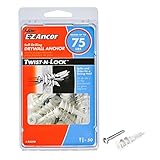
Self-Drilling Anchors (E-Z Ancor, Screw-In Anchors): These are often made of metal or a tougher plastic. They have a sharp point that you can literally screw directly into the drywall without pre-drilling a hole (though pre-drilling a pilot hole can make it easier and prevent drywall crumbling). They have threads that bite into the drywall. These can sometimes be reused, but it’s still not ideal.
When you unscrew them, the threads can get a little mangled, and the drywall they were biting into is now a bit roughed up. If you’re careful and the hole is clean, you might get away with one reuse for a very light item, but I wouldn’t trust them for anything significant.
My experience is that they don’t bite as firmly the second time around.Verdict: Sometimes reusable for very light loads, but not recommended.
Molly Bolts (Hollow Wall Anchors): These are metal anchors with a sleeve that expands behind the drywall. You typically need to drill a larger hole for these. Once installed and the screw is tightened, the sleeve splits and flares out on the back side of the drywall, creating a very secure anchor point. These are generally not designed to be removed and reinserted.
The sleeve is meant to deform and grip. If you try to pull it out, you’ll likely damage the sleeve and the flared portion won’t go back through the hole neatly. However, if you install one, decide it’s not quite right, and immediately remove it before fully tightening and flaring, you might be able to salvage it.
But I’ve never had luck with this. Once that sleeve starts to expand, it’s game over for reusability.Verdict: Not reusable.
Toggle Bolts: These are arguably the most solid type for drywall. They consist of a bolt with a spring-loaded wing that folds up to go through a drilled hole, then opens up on the other side of the wall. They provide excellent holding power.
Can you reuse them? Yes, to a degree.
The mechanism itself is pretty durable. However, the hole you drill for them is quite large. If you remove a toggle bolt, you’re left with a substantial hole. While you can reinsert the toggle mechanism, you’re best off using it in the same, now larger, hole.
If you’re moving something to a completely different spot, you’ll have to patch the old hole and drill a new one. So, while the anchor itself can survive removal and reinstallation, the practical aspect of reusing it in a new location is more involved and means patching.Verdict: Anchor mechanism is reusable, but requires patching or re-installation in the same large hole. (See Also: Can Cords Be Used To Make Anchors Climbing )
Here’s a quick rundown:
| Anchor Type | Typical Material | Holding Power (General) | Reusability Verdict | Why? |
|---|---|---|---|---|
| Plastic Expansion | Plastic | Light to Medium | No | Deforms easily, loses grip. |
| Self-Drilling | Metal/Tough Plastic | Medium | Maybe (light loads only) | Threads can strip, drywall hole rough. |
| Molly Bolts | Metal | Medium to Heavy | No | Sleeve expands and deforms permanently. |
| Toggle Bolts | Metal | Heavy | Yes (mechanism) | Spring mechanism is durable, but requires large hole. |
Common Mistakes People Make with Anchors
This is where I see a lot of folks, myself included in the early days, really mess things up. It’s not always about the anchor itself, but how you use it – or, more accurately, how you don’t use it. The biggest mistake I see is not matching the anchor to the job. People grab the smallest, cheapest plastic anchor for hanging something that weighs more than a feather. Then they wonder why their shelf ends up on the floor.
Another huge error is not drilling the correct size hole. Most anchor packages will tell you what size drill bit to use. If you use a bit that’s too small, you’ll have a hell of a time getting the anchor in, and you’ll likely damage it or the surrounding drywall. If you use a bit that’s too large, the anchor won’t have anything to grip. It’ll just spin loosely in the hole, offering zero holding power. I once tried to force a plastic anchor into a hole that was clearly too small. I ended up just shredding the drywall around the hole, making it useless for any anchor. It was a mess that required significant patching.
Over-tightening is also a killer. With plastic anchors, you want them snug, flush with the wall. If you keep cranking, you can strip the threads inside the anchor (if it’s a type with threads) or, more commonly, you can crush the drywall around it, creating a weak point. It’s like trying to screw a bolt into a nut that’s already stripped – you just keep turning and nothing happens. I’ve definitely been guilty of this, thinking ‘more torque equals more strength,’ which is the opposite of the truth here. You’re just creating more damage.
People also get lazy with their wall material knowledge. They see ‘drywall’ and think all drywall is the same. But you can have different thicknesses, and sometimes there’s plaster and lath behind it, or even those weird gypsum panels. The anchor that works perfectly on one wall might be a disaster on another. Always check what you’re actually drilling into. A quick poke with a screwdriver (in an inconspicuous spot, obviously!) or tapping the wall can give you clues. If it sounds hollow, it’s likely just drywall. If it sounds solid and dense, you might have something else going on.
Finally, not considering the shear versus tension strength. Most anchors are rated for a certain weight. This rating is usually based on shear strength (pulling straight down, like a shelf). However, if you’re hanging something that might pull outwards (like a heavy coat hanging off a hook), that’s tension, and the anchor’s performance can be drastically different. Always think about the direction the force will be applied. For heavy items that will be pulled on, studs or more solid toggle/molly bolts are usually the way to go. It’s not just about how much weight it can hold, but how it will hold that weight under different forces.
When Are Anchors Actually Necessary?
This is a question that comes up a lot, and honestly, I used to use anchors far more than I needed to. The common wisdom is: if there’s no stud, you need an anchor. And for many things, that’s true. But it’s not the whole story. The real question is: how much weight are you trying to hang, and what is the item? For something lightweight, like a small picture frame with a wire hanger, a picture hanging hook with a nail is often perfectly fine. The nail creates a small hole, and the hook distributes the weight. You don’t need a plastic behemoth.
For anything that has a bit of weight, or will have weight applied in a way that could pull it away from the wall, you absolutely need to locate studs. Seriously. I can’t stress this enough. Get a good stud finder. They aren’t perfect, but they’re miles better than tapping and hoping. I bought a decent electronic one a few years back for about $30, and it’s saved me so much guesswork and wall damage. Once you find a stud, you’re golden. You can screw directly into the wood, and it’ll hold a significant amount of weight. I’ve hung heavy bookshelves, TV mounts, and even a workbench off studs, and I’ve never worried about them falling.
So, when are anchors truly necessary? When you cannot hit a stud, and the item you’re hanging has more than a trivial amount of weight, or will be subjected to pulling forces. Think about a heavy mirror, a wall-mounted cabinet, a towel bar in a bathroom (which gets yanked on constantly), or even just a shelf that will hold books. These are the situations where an anchor is your best friend. And not just any anchor, but the right anchor for the job. For heavier items, you’re looking at toggle bolts, heavy-duty molly bolts, or specialized anchors designed for significant loads. For medium-duty, self-drilling anchors might suffice, but I’m always a bit hesitant with those if there’s any doubt.
My personal rule of thumb is this: if I can’t find a stud and the item weighs more than a couple of pounds, or it’s something I really don’t want falling and breaking, I’m using an anchor. If it’s a light decorative item, I’ll stick to nails or picture hooks. The key is to assess the load and the potential forces.
Don’t just slap an anchor in because there’s no stud. Think about what you’re actually asking the drywall to do. I once tried to hang a fairly substantial pot rack using only plastic anchors, because I couldn’t find studs easily. Within a week, the anchors had pulled out, and my pots were on the floor. (See Also: Can Anchors In Your Shoulder Break )
Lesson learned: always overestimate the weight and underestimate the strength of a cheap anchor.
My Honest Take on the ‘reusable’ Question
Alright, let’s circle back to the core question: are drywall anchors reusable? My lived-in, paint-splattered, sometimes-frustrated answer is this: For most of the common, cheap plastic anchors you find, the answer is a resounding NO. They are designed to expand and grip, and that process deforms them. Trying to reuse them is like trying to uncrumple a piece of paper and expect it to be perfectly flat again. It might look okay from a distance, but the structural integrity is compromised. You’re rolling the dice with your belongings and your walls.
The only real exceptions are certain types of metal toggle bolts, where the mechanism itself is solid and can be removed and reinserted, but even then, you’re dealing with a large hole you’ll need to patch if you move it. Self-drilling anchors are a maybe, but I wouldn’t trust them for anything important. The risk of them not biting as firmly the second time around is too high for my liking. I’d rather spend another dollar on a fresh anchor than risk an item falling.
Here’s my contrarian opinion: everyone says “just buy new ones, they’re cheap.” And yes, they are. But the real cost isn’t the dollar or two for the anchor; it’s the potential damage, the frustration, and the time spent fixing a failed installation. If you’re hanging something that matters, the cheapest option might end up being the most expensive. Instead of focusing on reusing the cheap plastic ones, focus on buying the right type of anchor for the job, and then consider if that specific type is designed for removal and reinstallation. Many higher-end anchors are built for longevity, but the cheap ones? They’re disposable by design.
I once bought a pack of heavy-duty screw-in anchors thinking they’d be super reusable. After installing them, I realized I needed to reposition my shelf by about six inches. I carefully removed the anchors, and they looked… okay. I tried to put them back in the new holes. They didn’t grip nearly as well. I ended up having to patch the old holes and use new anchors in the new spots anyway. It was a $5 lesson in understanding that ‘reusable’ often comes with caveats, and for basic drywall anchors, those caveats are pretty much deal-breakers.
Are Plastic Drywall Anchors Reusable?
Generally, no. Standard plastic expansion anchors are designed to deform and grip the drywall as a screw is inserted. This deformation compromises their ability to grip effectively if reinserted. While you might be able to force them back in, their holding power will be significantly reduced, increasing the risk of failure.
Can Toggle Bolts Be Reused?
Yes, the toggle bolt mechanism itself is typically reusable. However, toggle bolts require a large hole to be drilled in the drywall. If you remove a toggle bolt, you’ll be left with this large hole. While you can reinsert the toggle into the same hole, if you move the item to a new location, you will need to patch the old hole and drill a new one for the toggle bolt.
Are Self-Drilling Drywall Anchors Reusable?
Self-drilling anchors, often made of metal or tough plastic, can sometimes be reused, but it’s not recommended for anything requiring significant holding power. The threads that bite into the drywall can become slightly damaged upon removal, and the drywall itself is already compromised. Their effectiveness is reduced on subsequent installations.
What Is the Best Reusable Drywall Anchor?
The most solid types of anchors that are generally considered reusable are toggle bolts, due to the durable spring mechanism. However, as noted, their reusability comes with the practical consideration of the large hole required. For truly reusable solutions that don’t require extensive patching, you might look into specialized systems that are designed for repeated use, but these are less common and often more expensive than standard anchors.
When Should I Avoid Reusing Drywall Anchors?
You should avoid reusing drywall anchors when hanging anything heavy, anything that could cause significant damage if it falls, or anything where safety is a concern (like a grab bar). Always err on the side of caution. If an anchor has been stressed, deformed, or the drywall around it looks damaged, it’s best to use a new one.
Conclusion
So, to wrap this up, the big takeaway for whether are drywall anchors reusable is that for the vast majority of the cheap, common plastic ones, you’re better off tossing them. They’re not built for a second act. The integrity of your hanging job depends on that initial grip, and once that’s been compromised, you’re just asking for trouble down the line.
If you’re dealing with anything substantial, your best bet is always to find a stud. If that’s not an option, invest in the right type of heavy-duty anchor – like a toggle bolt – and understand that while the mechanism might be salvageable, the wall it attaches to might not be without a little patching. It’s a small price to pay for security.
Next time you’re hanging something, take a moment to really assess the weight and the forces involved. Don’t just grab the first anchor you see. A few extra minutes of thought can save you a lot of headache and potential wall damage. Always buy new if you’re in doubt.