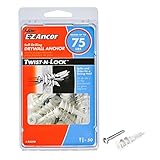
I remember staring at a wall, a brand-new, heavy mirror in my hands, and a small bag of what looked like colorful plastic spaghetti. My buddy swore they were all the same, just ‘wall anchors’. Then came the panic: which one was for this mirror? Does the color actually mean anything? The frustrating truth is, many DIYers have been there, fumbling in hardware store aisles. So, let’s cut to the chase: are plastic anchors color coded according to size? Mostly, yes, but it’s not a universal law written in stone. It’s more of a helpful, widely adopted convention.
For years, I’ve wrestled with these little plastic doodads, often after buying the wrong ones and having a hole in my wall that was bigger than my confidence. I’ve learned the hard way that not all anchors are created equal, and the colors are usually your first clue.
The Color Code: A Lifesaver or a Suggestion?
Look, I’ve bought enough wall anchors in my life to wallpaper a small shed. And through sheer trial and error, I’ve come to rely on the colors. For the most part, you can bet your bottom dollar that yes, are plastic anchors color coded according to size. It’s not some secret conspiracy; it’s a common sense approach that manufacturers figured out would make life easier for us. Think about it: if every single anchor was plain white or beige, you’d be squinting at tiny numbers or, worse, guessing. The color coding is basically a visual shorthand.
The idea is simple: different colors correspond to different anchor sizes, and therefore, different weight capacities. A tiny red anchor for a lightweight picture frame is going to be a different color than a beefy blue anchor meant to hold up a shelf with a dozen books. This system helps prevent the most common mistake: using an anchor that’s too small for the job. I once tried to hang a fairly substantial coat rack with what I thought were the right anchors.
They were a sort of pale yellow, and I figured ‘yellow is good, right?’. About a week later, with three coats on it, the whole thing came crashing down. The anchors had basically disintegrated.
Turns out, that pale yellow was for small decorative hooks, not for bearing any real weight. Lesson learned the loud, dusty way.
While it’s a widespread practice, you’ll occasionally run into brands that go rogue. They might use a different color scheme or, more annoyingly, no color coding at all. This is where checking the packaging becomes your best friend.
But for the vast majority of anchors you’ll find at your local hardware store or big box retailer, the color is your guide. It’s meant to be intuitive. A quick glance at the bag should tell you if you’re looking at anchors for drywall, plaster, or even brick. It’s a small detail, but when you’re halfway through a project and the light is fading, that little bit of clarity can save you a world of frustration.
I’ve definitely wasted trips back to the store because I grabbed the wrong bag, and that’s usually when the project budget starts to creep up unexpectedly.
Decoding the Common Colors and What They Actually Hold
Alright, so let’s talk specifics. While there can be slight variations between manufacturers, there’s a pretty standard color palette you’ll see. This isn’t some hard-and-fast rule book, but it’s what I’ve found to be overwhelmingly true in my own projects. For example, the little butterfly-style anchors, often used for lightweight items like small mirrors or calendars, are frequently a bright red. They’re small, expand nicely behind the drywall, and are perfect for those minor jobs where you don’t need serious muscle.
Then you get into the more solid options. The common ribbed anchors, often called “mollies” or “plugs,” usually come in white or yellow for smaller sizes, suitable for things like hanging a smoke detector or a very light shelf.
As you step up in size and load-bearing capacity, you’ll often see blue. Blue anchors are typically medium-duty. They’re the workhorses for hanging standard shelves, curtain rods, or even smaller TV mounts. They’re usually longer and thicker, designed to get a good grip in the wall cavity.
I’ve used blue anchors for everything from mounting kitchen cabinets (with proper screw length, of course) to hanging a rather large framed piece of art. They’re reliable for a good amount of weight if installed correctly. (See Also: Can Concrete Anchors Be Used In Brick )
Going even bigger, you’ll frequently encounter green or sometimes brown anchors. These are your heavy-duty players. They are designed for significant loads – think substantial shelving units, large mirrors, or even ceiling fans.
They often have a wider flange to prevent them from pulling through the drywall and a more aggressive ribbing or expanding design. I once had to hang a rather hefty antique medicine cabinet in a bathroom, and the green anchors I chose felt incredibly solid once they were in.
It gave me the confidence to load it up with bottles and jars without a second thought. It’s worth noting that for truly heavy items, like a full-size TV mount or a very heavy piece of furniture, you might need to look beyond standard plastic anchors and consider toggle bolts or molly bolts, which offer superior holding power. But for most everyday household tasks, the color-coded plastic anchors will get the job done.
| Anchor Color (Common) | Typical Size Range | Intended Use | My Verdict |
|---|---|---|---|
| Red | Small (e.g., 3/16″ – 1/4″) | Lightweight items: small pictures, calendars, lightweight decorations. | Great for the absolute lightest tasks. Don’t push it. |
| White/Yellow | Small to Medium (e.g., 1/4″ – 5/16″) | Light to Medium-duty: smoke detectors, small shelves, curtain rods. | Reliable for general-purpose light hanging. The go-to for many small jobs. |
| Blue | Medium (e.g., 5/16″ – 3/8″) | Medium-duty: standard shelves, curtain rods, larger frames, light cabinets. | My workhorse. Can handle a surprising amount of weight if used properly. |
| Green/Brown | Large (e.g., 3/8″ – 1/2″+) | Heavy-duty: substantial shelves, heavy mirrors, light fixtures, smaller cabinets. | When you need serious hold. Trustworthy for significant loads. |
| Clear/Natural | Varies | Often general purpose or specific to a brand’s line. Always check packaging. | Can be a gamble if you don’t read the label. |
When Colors Lie (or Just Aren’t There)
Now, I’m going to be blunt: relying solely on color is a gamble you shouldn’t always take. I’ve seen generic packs or off-brand anchors that throw the whole color-coding system out the window. You might buy a bag of what looks like a “medium blue” anchor, only to find out it’s meant for the same weight capacity as a small white one from a different brand. It’s infuriating, and it’s a common mistake that leads to anchors pulling out of the wall. It’s like a cruel joke from the hardware gods.
The packaging is your ultimate authority. Always, always, always check the label for the recommended drill bit size, the screw size that fits, and, most importantly, the weight rating.
This is especially true if you’re buying anchors in bulk or from a less-established brand. They might not adhere to the same color conventions as the big players like TOGGLER, E-Z Ancor, or Ramset. I once bought a massive assortment pack that promised variety, but the colors were all over the place.
I ended up having to drill a hole, test fit the anchor, and then check the tiny print on the bag to figure out what I was dealing with. It turned a 10-minute job into an hour-long saga.
It taught me to be less reliant on just the pretty colors and more on the actual specs.
Another thing to consider is the material of your wall. These color codes are primarily designed for standard drywall. If you’re dealing with plaster, concrete, or even lath and plaster, the plastic anchor’s performance and the color code’s meaning can change dramatically. Plaster, for instance, can be brittle, and a plastic anchor that works wonders in drywall might crumble it.
Concrete requires specific masonry anchors, which often have their own distinct appearance and color coding (or lack thereof). So, while are plastic anchors color coded according to size is a generally useful question, the context of your wall material is equally, if not more, important.
Don’t let a nice blue or green anchor fool you into thinking it’s invincible in a wall that’s fundamentally different from standard drywall.
The Right Way to Install Them (it Matters More Than You Think)
So, you’ve got the right color anchor for the job, and you’ve double-checked the packaging. Great! Now, let’s not mess it up during installation. This is where a lot of perfectly good anchors meet their doom. (See Also: Can Cords Be Used To Make Anchors Climbing )
The biggest pitfall? Using the wrong drill bit size. Every anchor, regardless of its color, comes with a recommended drill bit diameter.
It’s usually printed on the packaging right next to the weight rating. If you drill a hole that’s too big, the anchor won’t have enough material to grip onto, and it’ll just spin freely in the wall.
Conversely, if the hole is too small, you’ll struggle to get the anchor in, and you might even crack the drywall or the anchor itself trying to force it.
I learned this the hard way when I was younger and impatient. I figured, “How much difference can a millimeter make?”
Turns out, a lot. I was trying to install a shelf for my tools, using what I thought were appropriately sized blue anchors. I used a drill bit that was just a hair too big. The anchors went in, but they felt loose.
I put a few heavy wrenches on the shelf, and pop – the anchors pulled right out, sending my tools scattering across the floor. It wasn’t just the anchors that were damaged; it was my ego. Since then, I’ve made it a habit to buy a cheap set of drill bits specifically for anchor installation, making sure I have the exact sizes recommended. It’s a small investment that prevents a lot of headaches.
A little jig or template can also help make sure the hole is perfectly straight, which is important for optimal grip.
Another common mistake is not driving the anchor in far enough. It should sit flush with the wall surface, or slightly recessed if the design calls for it. If it’s sticking out, your screw won’t seat properly, and you’ll have a wobbly fixture.
Sometimes, tapping it gently with a rubber mallet can help seat it securely. And for the love of all that is holy, use the right screw.
The anchor is designed for a specific screw diameter and thread type. Using a screw that’s too thin won’t engage the anchor properly, and one that’s too thick might split the anchor.
Always match the screw to the anchor’s specifications. If you’re unsure, buy the screws recommended by the anchor manufacturer, or at least confirm the size from the packaging. It’s far better to spend an extra five minutes confirming than to spend an hour fixing a failed installation.
Real-World Use Cases: Beyond Hanging Pictures
Most people think of plastic anchors for hanging picture frames or lightweight shelves, and sure, they’re great for that. But their utility extends far beyond simple decor. I’ve used them in some pretty unexpected places. For instance, I once had to temporarily secure a large piece of equipment in a workshop while I waited for specialized mounting hardware to arrive. Using heavy-duty green anchors, I was able to securely fasten it to the wall, preventing it from tipping over. It wasn’t a permanent solution, but it bought me the time I needed and kept the workspace safe. That’s the beauty of having a good assortment of anchors on hand; you can tackle a surprising range of problems. (See Also: Can Anchors In Your Shoulder Break )
Another situation where they’re invaluable is for securing things that might experience vibration. Think about a small workbench where you’re using power tools, or even a washing machine stand. While you wouldn’t mount a heavy appliance directly to drywall with plastic anchors, they are excellent for attaching things like cable management clips, tool holders, or even small utility boxes to the wall near such equipment. The vibration can loosen improperly secured items, but a well-installed anchor provides a stable point of attachment. I’ve also used them to secure lightweight plumbing pipes or electrical conduit to walls, especially in unfinished basements or garages where a rigid mount isn’t strictly necessary.
Consider mounting a lightweight monitor arm to a desk or wall, securing speaker mounts, or even attaching a small whiteboard to a kitchen wall for grocery lists. The key is understanding the weight capacity, both of the anchor itself and the material it’s going into. If you’re dealing with a hollow wall, the anchor distributes the weight across a larger surface area than a simple screw would. This is why, even though are plastic anchors color coded according to size is a good starting point, you still need to consider the overall load.
For instance, if you have a very flimsy piece of drywall, even a heavy-duty anchor might not hold as much as it would in thicker, more solid drywall. Always err on the side of caution and choose an anchor rated for more weight than you think you’ll need.
Faq: Your Burning Anchor Questions Answered
Are Plastic Anchors Color Coded by Size?
Yes, generally speaking, plastic anchors are color coded according to size. Different colors, like red, yellow, blue, and green, typically correspond to different anchor sizes and their respective weight-bearing capacities. This color coding is a widely adopted convention across many manufacturers to help users quickly identify the correct anchor for their needs.
Can I Reuse Plastic Anchors?
It’s generally not recommended to reuse plastic anchors. Once an anchor has been inserted and expanded in a wall, its shape is altered. Reinserting it often means it won’t seat as securely or provide the same holding power. For the sake of safety and reliability, it’s best to use a new anchor for each installation.
What Is the Strongest Type of Plastic Anchor?
The strongest plastic anchors are typically the larger, heavy-duty ones, often colored green or brown. These are designed for significant weight loads and feature designs that expand more robustly behind the wall. However, for very heavy items, other types of fasteners like toggle bolts or molly bolts often offer superior strength and should be considered.
How Do I Know If I Need a Plastic Anchor?
You need a plastic anchor when you are trying to hang something on a hollow wall (like drywall or plaster) and the item is too heavy for just a screw alone, or if you want to make sure a more secure, distributed hold. If you tap on the wall and it sounds hollow, and the item you’re hanging weighs more than a pound or two, an anchor is usually necessary.
My Contrarion Take: Don’t Always Trust the Label for Heavy Items
Everyone says, “Just get the right anchor, check the weight rating, and you’re golden.” And for most things, that’s true. But I’ve found that for anything truly heavy – I’m talking about hanging a large, heavy TV, a substantial piece of furniture that needs to be secured to the wall, or even a really big mirror that could cause serious damage if it fell – I get deeply uncomfortable relying solely on plastic anchors, no matter how beefy the color code suggests they are. I’ve seen enough anchors pull out, even when supposedly rated for the load, to make me hesitant.
My contrarian opinion? For anything where failure could result in injury, significant property damage, or is just incredibly expensive to replace, plastic anchors are a stepping stone, not the final solution. I’ll use them to position something, or to hold it temporarily while I install something more solid. But for those truly important, heavy-duty applications, I’m reaching for toggle bolts, heavy-duty drywall anchors designed specifically for those loads, or even drilling into studs if possible.
The peace of mind is worth the extra few dollars and minutes. The packaging might say a green anchor can hold 50 pounds, but if my gut tells me that’s pushing it for my specific wall condition, I’m going with a different, more substantial fastener.
It’s about understanding the limitations, even when the color code and weight rating seem to point you in a specific direction.
Final Thoughts
So, to circle back to the original question: are plastic anchors color coded according to size? Yes, for the most part, they are. It’s a helpful visual cue that most manufacturers stick to. But as with most things in DIY, it’s not a foolproof system. Always double-check the packaging for specific weight ratings and recommended screw sizes. Your wall isn’t just a surface; it’s a material with its own limitations, and the anchor is only as good as the hole you drill and the screw you use.
Don’t let a pretty color blind you to the actual specifications. For lighter jobs, the color code is usually your friend, saving you time and confusion. But for anything truly important, remember that there are more solid fastening options out there, and sometimes, it’s worth investing a little extra for the confidence that your hanging job will stay put. Next time you’re at the hardware store, look at the colors, but read the labels too. Your walls (and your belongings) will thank you.