I’ve stood in my fair share of hardware stores, staring at a wall of plastic and metal gizmos, all promising to hold your precious belongings. And I’ve definitely bought the wrong ones. The question ‘are drywall anchors strong enough for shelves’ is one I’ve wrestled with more times than I care to admit, usually after something has either crashed to the floor or wobbled precariously for weeks.
Let’s cut to the chase: it’s not a simple yes or no. It depends on the anchor, the shelf, and what you plan to put on it. Most of us just want to hang a few books or some decorative bits without drilling into a stud. But trusting the wrong anchor can lead to disappointment, or worse.
When a Hole in the Wall Isn’t Enough
So, you’ve decided you need a shelf. Maybe it’s for that awkward corner in the living room that’s just begging for some plants, or perhaps you’re trying to get your book collection off the floor.
The easiest route, the one that avoids the headache of finding wall studs (which, let’s be honest, can feel like a treasure hunt sometimes), is to go straight into the drywall. But here’s the blunt truth: drywall itself is basically compressed gypsum dust between two sheets of paper. It’s not exactly load-bearing material on its own.
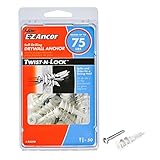
Without something to spread the weight, any fastener you put directly into drywall will likely pull out under even moderate pressure. That’s where the humble drywall anchor comes in. Its job is to expand or grip behind the drywall, creating a more solid anchor point.
Think of it as a little helper that gives your screw something more substantial to bite into than just crumbly gypsum.
I remember the first time I tried to hang a fairly heavy mirror using just the little plastic anchors that came with it. I hammered them in, screwed the mirror bracket on, and it looked great. For about an hour. Then, with a sickening creak, the whole thing tilted, and the mirror slid down, thankfully not breaking, but leaving two jagged tears in the drywall.
I’d underestimated the mirror’s weight and, more importantly, the limitations of those basic plastic anchors. It was a harsh lesson in understanding that not all anchors are created equal, and more importantly, not all drywall situations are the same. My mistake wasn’t just using an anchor; it was using the wrong anchor for the job, and not considering the shear forces that gravity would exert on it over time.
The common advice you’ll hear is to always find a stud. And yeah, if you’re hanging something truly heavy – like a massive TV mount or a library’s worth of encyclopedias – that’s still the gold standard.
But for the vast majority of everyday shelving needs, anchors are your best friend. The trick is knowing which friend to invite to the party. The real question isn’t if drywall anchors can hold weight, but how much weight, and which kind of anchor is up to the task. It’s about matching the anchor’s load rating to the expected weight of your shelf plus its contents, and then adding a healthy buffer for good measure.
Because nobody wants their carefully hand-picked display to end up on the floor.
Understanding the Different Types of Drywall Anchors
This is where things get a bit more technical, but it’s key if you want your shelves to stay put. You’ve got your basic plastic expansion anchors, the ones that look like little ribbed sleeves. They’re cheap, ubiquitous, and honestly, pretty weak. When you screw into them, the plastic spreads out behind the drywall. They’re okay for very light things, like a small picture frame or a key hook. Don’t even think about putting them on a shelf that will hold anything substantial. I once used a pack of these for a small shelf holding a couple of paperback books, and within a week, I could see the shelf starting to sag. They’re basically a temporary fix at best.
Then you move up to the metal expansion anchors. These are a step up. You screw them in, and as you tighten the screw, a sleeve expands behind the drywall. They offer a bit more grip and a higher weight rating than their plastic counterparts. They’re a decent choice for moderately heavy items. I’ve used these for shelves holding my collection of ceramic mugs, and they’ve held up reliably. They feel more secure than the plastic ones, with a satisfying ‘clunk’ when you tighten them down. (See Also: Can Concrete Anchors Be Used In Brick )
The real workhorses for shelves, though, are the toggle bolts and the molly bolts. Toggle bolts have those spring-loaded arms that spring open behind the wall. You need a larger hole for them, and they can be a bit fiddly to install, but they offer serious holding power. They’re fantastic for heavier loads.
Molly bolts are similar in concept, with a metal sleeve that expands, often with little teeth to grip the drywall surface. These are what I’d generally recommend for any shelf that’s going to hold more than just a feather duster. The heft of them, the solid metal construction, just screams reliability. I’ve used molly bolts for shelves holding heavy textbooks, and they’ve never given me a second thought.
They feel substantial and inspire confidence.
Here’s a little table I put together based on my personal experience and what I’ve seen work:
| Anchor Type | Typical Use | Holding Power (General Verdict) | Ease of Installation |
|---|---|---|---|
| Plastic Expansion | Very light items (small frames, key hooks) | Low – Avoid for shelves | Very Easy |
| Metal Expansion | Light to moderate items (mugs, small decor) | Medium – Okay for light shelves | Easy |
| Toggle Bolt | Moderate to heavy items (books, small electronics) | High – Good for heavier shelves | Moderate (needs larger hole) |
| Molly Bolt | Moderate to heavy items (books, small electronics, tools) | High – Excellent for most shelves | Moderate |
When you’re looking at packaging, pay attention to the weight ratings. But take them with a grain of salt. Manufacturers often give ‘shear’ and ‘tension’ ratings. Shear is when the weight pulls down (like on a shelf), and tension is when it pulls straight out. For shelves, shear is usually the more important number. Always aim for an anchor with a rating significantly higher than what you think you’ll need. It’s better to be over-engineered than to have your shelf meet the floor.
Common Mistakes That Lead to Anchor Failure
The number one mistake I see people make, and yes, I’ve made it myself, is simply not reading the packaging. Or worse, ignoring it. Those weight limits printed on the little plastic bags aren’t just suggestions; they’re generally based on testing.
But here’s the catch: those tests are usually done in ideal conditions. The drywall thickness can vary, the density can vary, and the condition of the drywall matters.
If your drywall is old and crumbly, even the best anchor might not hold as much as advertised. I learned this the hard way when I was trying to hang some heavy ceramic planters on a wall, and the anchors I picked, while rated high, just kept slipping because the drywall was shotty.
Another huge mistake is using the wrong size screw for the anchor. Every anchor is designed to work with a specific screw diameter and length.
Too small a screw, and it won’t expand the anchor properly. Too big, and you might split the anchor or the drywall. I once grabbed a screw that looked right, but it was a millimeter too thick for the molly bolt I was using. I forced it, and it felt tight, but a week later, the shelf started to bow.
When I took it down to fix it, I saw the molly bolt had been stressed and slightly cracked. Always match the screw to the anchor; it’s usually specified right on the packaging.
It’s a small detail, but it’s the difference between a shelf that stays up and one that doesn’t. (See Also: Can Cords Be Used To Make Anchors Climbing )
Over-tightening is another culprit. Some anchors, especially the plastic ones, can be damaged by too much torque. You might think you’re making it super secure, but you’re actually crushing the plastic or the drywall around the anchor, creating a weak point. Conversely, under-tightening leaves the anchor loose, and it will wobble and eventually fail.
It’s a delicate balance. For toggle and molly bolts, you want them snug and flush against the wall, but you don’t need to be Hercules to get them there.
Feel the resistance and stop when it feels solid and stable. The anchor should be flush with the wall, with no gaps. If there’s a gap, it means the anchor isn’t fully seated, and it won’t have its full holding power.
Finally, and this is a big one for shelves, people often underestimate the total weight. It’s not just the shelf itself; it’s the shelf plus everything you put on it. A shelf might weigh five pounds, but if you load it with ten pounds of books, that’s fifteen pounds of downward force. And that force is multiplied if the shelf is long and the weight is concentrated at the far end, creating a use effect.
The anchor is bearing the brunt of that use. I always advise people to double the expected weight of their contents and then choose an anchor rated for at least that amount, preferably more.
Better safe than sorry is my motto when it comes to hanging things on walls.
Real-World Use Cases and My Experiences
I’ve got shelves in almost every room of my house, and I’ve used a variety of anchors to get them there. For my kitchen, where I have a few floating shelves holding spices and small jars, I used heavy-duty molly bolts. These shelves get daily use, and while the individual items aren’t super heavy, the cumulative weight and frequent access mean I wanted something bombproof. I installed them about 16 inches apart, and they’ve been solid as a rock for the past three years. The key here was realizing that even though it’s just spices, the sheer number of them adds up, and I didn’t want any surprises when reaching for the salt.
In my home office, I have a long shelf above my desk intended for books and a few small decorative items. This one was a bit trickier because the wall there seemed a bit thinner than elsewhere. After some research, I opted for toggle bolts. They required drilling a slightly larger hole, which initially made me nervous, but the installation process, while a bit more involved than just screwing something in, was straightforward. Those toggle arms expand wide behind the drywall, providing incredible support. I’ve loaded that shelf with probably 50 pounds of books at various times, and it hasn’t budged. It’s a testament to the power of a good toggle bolt when you need serious strength.
My biggest surprise came when I was helping a friend hang a heavy antique mirror. We decided to use what we thought were solid anchors, but the wall was plaster and lath, not standard drywall. Plaster can be brittle, and lath is just thin strips of wood. The anchors just wouldn’t grip properly. We ended up having to locate studs for that one, which was a pain but ultimately the only safe option. This taught me that drywall anchors are really for drywall. If you’re dealing with plaster, concrete, or other wall materials, you need different solutions. It’s a common misconception that all wall anchors work the same way everywhere.
Another instance was with a set of small, decorative shelves in my entryway. I used the standard plastic anchors because the shelves were so small and I was only planning on putting lightweight items, like a single small plant or keys. Within a month, the plastic anchors had started to deform under the minimal load. The shelves were sagging noticeably. I ended up replacing them with metal expansion anchors, and while it was a bit of extra work, the difference in stability was immediate. It was a stark reminder that even for ‘light’ duty, the cheapest option isn’t always the best, and sometimes you pay for quality and reliability.
Contrarian Opinion: When Anchors Are Just a Band-Aid
Now, I know what you’re thinking: ‘So, anchors are the answer!’ And for many situations, they absolutely are. But here’s my contrarian take: sometimes, relying solely on drywall anchors for significant weight is just putting a band-aid on a structural problem. Everyone talks about finding the right anchor, the right weight rating, the right installation technique. And that’s all valid. But what if the shelf itself is too long? What if the load is distributed unevenly? What if the drywall is just inherently weak?
My argument is this: if you are constantly worried about what’s on your shelves, if you’re always second-guessing the anchors, or if the shelf is sagging noticeably even with what you consider good anchors, then maybe the anchor isn’t the problem – the approach is. For heavy-duty shelving, especially if it’s a long span or holding items with significant weight (think collections of tools, heavy electronics, substantial book libraries), you should really be thinking about either mounting directly to studs or using a shelf system that incorporates its own bracing or support. Anchors are fantastic for filling in the gaps, for adding that extra shelf where there isn’t a stud precisely where you want it. But they should augment, not replace, proper structural support when the loads are genuinely substantial. (See Also: Can Anchors In Your Shoulder Break )
I’ve seen people cram so many heavy items onto a shelf supported only by anchors that they’re practically tempting fate. They might get away with it for a while, but the stress on the drywall and the anchors is immense. Eventually, something gives.
It might be a slow sag, a gradual loosening, or a sudden, catastrophic failure. While I’m a huge proponent of using the right anchors for the job, I’m also a firm believer in knowing when the job requires more than just anchors.
It’s about understanding the physics at play – use, shear forces, material limits. Sometimes, the most “honest” solution isn’t finding a stronger anchor, but finding a stronger wall connection, which usually means studs. So, while I’ll happily use anchors for my everyday shelves, for anything I truly can’t afford to have fall, I’m looking for studs or more solid mounting hardware. Anchors are a great tool, but they’re not a magic bullet for every heavy-duty situation.
Practical Tips for Strong Shelf Installation
Alright, let’s get practical. You’ve decided you need anchors, and you know roughly what kind you need. Here’s how to make sure your shelf stays put:
- Mark and Measure Accurately: Before you drill anything, double-check your measurements. Use a level to mark exactly where your shelf will go. Mark the anchor points precisely. A crooked shelf looks amateurish and can also put uneven stress on the anchors.
- Choose the Right Anchor for the Job: I’ve harped on this, but it bears repeating. Consider the weight of the shelf plus its intended contents. Err on the side of caution. If a shelf needs to hold 20 lbs, get anchors rated for at least 30-40 lbs. For books, always go heavier duty.
- Pilot Holes are Your Friend: Most anchors, especially molly and toggle types, require a pilot hole. Use the drill bit size recommended on the anchor’s packaging. Drilling the correct size hole makes sure the anchor installs properly and gets its maximum holding power. Don’t eyeball it; use a measuring tape or the side of the drill bit to check depth.
- Install Anchors Correctly: Follow the instructions for your specific anchor type. For expansion anchors, make sure they are fully seated and flush with the wall. For toggles, make sure the wings have fully opened behind the drywall. Don’t force screws; they should thread in smoothly.
- Distribute Weight Evenly: If you have a long shelf, don’t place all the heavy items in the middle. Spread the weight out. Ideally, you want anchors roughly every 16-24 inches, depending on the shelf’s length and the weight it will carry. More anchors mean less individual stress on each one.
- Test the Stability: Once the shelf is installed, give it a good, firm push and pull. Wiggle it. Does it feel solid? If there’s any play or movement, re-examine your installation. It might be a loose anchor, or you might need to add more support.
One often-overlooked tip: when installing molly bolts or toggle bolts, especially if you’re a bit unsure about your drywall’s condition, I sometimes put a dab of wood glue or construction adhesive on the outside of the anchor sleeve (the part that contacts the drywall surface) before pushing it in. This isn’t its primary function, but it can sometimes provide a little extra friction and grip, especially if the hole is a tiny bit oversized. It’s a little trick I picked up from a contractor friend, and it doesn’t hurt, though it makes removal a bit more permanent.
People Also Ask:
Can I Hang a Shelf Directly Into Drywall?
Yes, but only with drywall anchors. Drywall itself is too weak to support any significant weight. Anchors expand behind the drywall to create a secure attachment point for your screws. Without them, any weight on the shelf will likely pull the screws right out of the wall.
What Is the Strongest Type of Drywall Anchor?
Generally, toggle bolts and heavy-duty molly bolts are considered the strongest types of drywall anchors. They work by expanding or gripping a large area behind the drywall, distributing the weight more effectively than basic expansion anchors.
How Much Weight Can a Drywall Anchor Hold?
Weight ratings vary significantly by anchor type and size, ranging from a few pounds for plastic anchors to over 100 pounds for some heavy-duty toggle bolts. Always check the manufacturer’s rating on the packaging and choose an anchor with a capacity well above the expected load, factoring in shear force.
Do I Need to Find Studs to Hang a Shelf?
You should find studs for very heavy items or long shelves that need maximum support. However, for lighter to moderately weighted shelves, appropriate drywall anchors can suffice. The key is to use the right anchor for the weight and the wall material.
Verdict
So, are drywall anchors strong enough for shelves? The answer, as we’ve seen, is a qualified yes. For most common household shelves holding books, decor, or kitchen items, the right anchor installed correctly will do the job reliably. My own experiences confirm that with a bit of know-how and the correct hardware, you can create sturdy shelves without needing to locate a stud for every single mounting point.
However, it’s important to remember their limitations. Don’t treat them as a magic fix for extremely heavy loads or questionable wall conditions. Always factor in the total weight, understand the different anchor types, and when in doubt, opt for the stronger option or consider finding studs. A little bit of effort upfront in choosing and installing the right anchors can save you a lot of headaches (and potential repairs) down the line.
Next time you’re looking at a blank wall and dreaming of shelving, take a moment to assess the load. Choose your anchors wisely, install them properly, and you’ll likely have a shelf that stands the test of time – and gravity. After all, nobody wants to be the person whose collection of ceramic cats ends up in a heap on the floor because of a faulty anchor.