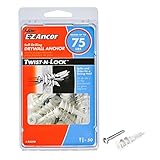
I remember the first time I tried hanging a heavy mirror on my living room wall. I grabbed a pack of those cheap plastic anchors from the hardware store, feeling pretty confident. Slotted them in, screwed the mirror’s brackets onto them, and stepped back to admire my work. Less than an hour later, the whole damn thing crashed down, taking a chunk of drywall with it. That was my rude awakening to the fact that not all drywall anchors are created equal, and the question of ‘are plastic anchors good for drywall’ isn’t a simple yes or no.
It turns out, those little plastic doodads have their place, but thinking they’re a universal solution for anything heavier than a picture frame is asking for trouble. They’re often the default choice, but when do they actually hold, and when are you just asking for a drywall disaster?
When Those Little Plastic Guys Actually Work (and When They Don’t)
Look, I’m not going to tell you plastic anchors are utterly useless. They have a purpose, and that purpose is usually tied to very light-duty tasks. Think about hanging a small, lightweight picture frame that barely has any weight to it, or maybe a very light piece of wall decor that’s mostly for show. For something like that, a basic plastic anchor, properly installed, can often do the job. The idea behind them is simple: you drill a hole, shove the plastic anchor in, and when you screw into it, the plastic flares out behind the drywall, creating a bit of a grip. It’s basically a crude wedge system.
The problem is, drywall itself is pretty crumbly. It’s basically gypsum plaster sandwiched between paper. When you put any kind of real weight on a plastic anchor, especially if it’s subjected to any kind of tugging or vibration, that plastic can just rip right through the drywall. I’ve seen it happen. I once tried to hang a decent-sized bathroom mirror with them, and within a week, the mirror was sagging. Eventually, the plastic just started to tear the drywall paper, and it all came down. Total nightmare. The weight rating on the packaging is often wildly optimistic, or it assumes the anchor is perfectly flush and not being stressed in any direction other than straight down.
The biggest issue with plastic anchors is their limited holding power. They rely on friction and the slight expansion of the plastic against the drywall. This is fine for things that weigh next to nothing, but anything with a bit of heft – a shelf with books, a TV mount, even a heavy coat rack – is going to be a gamble. The drywall itself is the weak link. It’s not designed to bear significant loads directly. When you consider the forces involved, especially use, those plastic anchors are often just a patch, not a real solution. They’re cheap, yes, and readily available, but ‘cheap and available’ doesn’t always translate to ‘good for the job’.
I’ve also found that the quality of the plastic itself can vary wildly. Some feel brittle and cheap, while others are a bit more flexible. The ones that are too brittle tend to crack when you hammer them in, which compromises their integrity from the start. The ones that are too flexible might not expand enough to get a good grip. It’s a real Goldilocks situation, and most of the time, you’re getting either too hot or too cold. Trying to hang anything that might cause a child to bump into it, or any pet to brush against it, is asking for trouble with plastic anchors.
People often ask if they’re good for heavy items. The short answer is almost always no. For anything that requires actual structural integrity, you’re going to want to look at other types of fasteners. Relying on plastic anchors for anything beyond a few pounds is like building a shed with popsicle sticks – it might look okay for a bit, but it’s not going to stand up to any real stress. Think of them as a temporary fix for something very temporary, or for things that are almost weightless.
The temptation is always there, especially when you’re in the middle of a project and realize you need to hang something now. You’ve already drilled the hole, and those plastic anchors are right there in your toolbox. But trust me, the few minutes you save now can easily turn into hours of repair work later when that anchor fails. It’s a lesson I learned the hard way, and one I’m happy to pass on to anyone who will listen. They are good for drywall in the sense that they can be installed in it, but they are NOT good for holding significant weight in drywall.
When to Upgrade: Better Anchors for Drywall
So, if plastic anchors are often a no-go for anything substantial, what should you be using? The good news is there are much better options available that are specifically designed for drywall, offering significantly more holding power and peace of mind. The key is to choose an anchor that distributes the weight over a larger area of the drywall or uses the wall’s structure more effectively. My go-to for anything that isn’t feather-light is usually a toggle bolt or a self-drilling anchor. These two types offer a massive step up in reliability and strength compared to basic plastic anchors.
Toggle bolts are a bit more involved to install, but they are incredibly strong. They work by passing a spring-loaded wing through a slightly larger hole in the drywall. Once the toggle is behind the wall, it pops open, and the weight of whatever you’re hanging rests on this wing, distributing the load across a much wider surface area of the drywall. You can find them in various sizes, and they can hold surprisingly heavy items, sometimes upwards of 50-100 pounds depending on the size of the toggle and the condition of your drywall.
I used a set of these to hang a massive antique mirror that must have weighed 75 pounds, and it’s been rock solid for years. The installation involves drilling a larger hole, but the payoff in security is absolutely worth it.
Self-drilling drywall anchors, also known as Molly bolts or screw-in anchors, are another excellent option, especially for medium-weight items. These are usually made of metal or a very sturdy plastic composite. You simply screw them directly into the drywall – no pilot hole needed for most types, though some larger ones might benefit from a small starter hole. Once they’re in, you screw your bolt or screw into the anchor itself.
As you tighten, the anchor expands behind the drywall, creating a very secure hold. They’re quick to install and offer a good balance of strength and ease of use. (See Also: Can Concrete Anchors Be Used In Brick )
I’ve used these for hanging bookshelves and even a small TV mount, and they’ve held up beautifully. They feel far more solid than any plastic anchor I’ve ever used.
Another category worth mentioning are expansion anchors. These are often made of metal and work by expanding when you tighten the screw. You drill a hole, insert the anchor, and then as you tighten the screw, the anchor expands outward, gripping the inside of the drywall. These are generally stronger than plastic anchors but can sometimes loosen over time if the drywall is particularly soft or crumbly. They’re a decent middle-ground option but I’d still lean towards toggle bolts for the heaviest items.
When choosing an anchor, always consider the weight of the item you plan to hang and the type of wall you have. For standard drywall, the anchors mentioned above are your best bet.
If you have plaster walls, you might need to be a bit more careful, as older plaster can be brittle. In those cases, finding the studs is always the most reliable method, but when a stud isn’t an option, a good toggle bolt is usually the way to go.
Don’t be afraid to spend a few extra dollars on better anchors; it’s a small investment to prevent a much larger headache down the road. The difference in holding power between a basic plastic anchor and a decent toggle bolt is night and day.
The common advice that ‘drywall anchors are fine for most things’ is only true if ‘most things’ means picture frames and very light decor. Anything that could cause injury if it falls, or anything that has significant value, needs a more solid fastening solution. The physics are simple: the weaker the material (drywall), the more you need to distribute the load. Plastic anchors just don’t do that effectively for anything beyond minimal weight.
| Anchor Type | Typical Weight Capacity (lbs) | Ease of Installation | Best For | My Verdict |
|---|---|---|---|---|
| Plastic Expansion Anchors | 5-25 lbs | Easy | Light picture frames, very light decor | Barely adequate for the lightest loads. Overrated for anything substantial. |
| Self-Drilling Anchors (Screw-in) | 25-75 lbs | Very Easy | Shelving, mirrors, light cabinets | Good balance of strength and ease. Reliable for medium loads. |
| Toggle Bolts | 50-100+ lbs | Moderate (requires larger hole) | Heavy shelves, TVs, large mirrors, cabinets | The go-to for serious weight. Worth the extra effort. |
| Screw into Stud | Unlimited (within drywall strength) | Easy (if stud located) | Anything needing maximum security | The gold standard. Always the best option when possible. |
Common Mistakes When Using Drywall Anchors
Even with better anchors, people still manage to mess things up. One of the most common mistakes I see is not reading the packaging. Seriously, these things come with weight ratings for a reason. People see an anchor, think it looks strong, and slap it into the wall without checking if it’s actually rated for the item they’re hanging. Then, surprise, surprise, it fails. You wouldn’t buy a ladder and ignore the weight limit, right? Treat your wall anchors the same way. These ratings are usually conservative, but they’re still the best guide you have.
Another huge mistake is using the wrong size drill bit. For plastic anchors, the package will tell you the exact size. Too small, and you’ll struggle to get it in and might damage the anchor or the drywall. Too large, and it’ll be loose and won’t grip properly. It sounds basic, but I’ve seen people eyeball it, and it rarely ends well. A good set of drill bits and a tape measure are your friends here. For toggle bolts, the hole size is often dictated by the width of the folded toggle wing, so make sure you’re drilling a hole large enough for it to pass through.
Over-tightening is another classic error, especially with plastic anchors. Once they’re snug, that’s it. If you keep going, you can strip the threads in the plastic or even crack the anchor itself. Similarly, with self-drilling anchors, you want them to be flush with the wall, but you don’t need to crank them in with all your might. You’re trying to seat them firmly, not drill them into the drywall. Stripping the drywall around the anchor will significantly weaken its holding power.
People also tend to forget about the type of wall they have. While most modern walls are drywall, older homes might have plaster and lath. Plaster is harder and more brittle than drywall, and it can crack or crumble easily if you’re not careful. Lath is the wooden strips that plaster is applied over, and it’s much stronger, but getting an anchor to grip both the plaster and lath can be tricky. For plaster walls, finding a stud is even more most important. If you’re unsure, it’s always best to err on the side of caution and use a heavier-duty anchor like a toggle bolt, or even better, try to locate a stud.
One of my personal pet peeves is when people try to reuse anchors. Once an anchor has been installed, used, and then removed, its integrity is compromised. The plastic is stretched, or the threads are slightly deformed. Putting it back in is like trying to use a worn-out screw – it just won’t hold as well. It’s a false economy to try and save a few cents by reusing a damaged anchor. Just buy a new one. It costs pennies and saves you potential wall damage and heartache.
Finally, there’s the issue of not considering the material of the item being hung. A frame with a hanging wire is different from a shelf that will have books directly placed on it. The wire distributes weight, while the shelf takes direct downward force. You also need to think about how the item will be used. A coat hook, for example, will be subjected to a lot of pulling and yanking, not just static weight. These dynamic forces can put much more stress on an anchor than its static weight rating might suggest. Always factor in potential movement and stress. (See Also: Can Cords Be Used To Make Anchors Climbing )
How to Install Drywall Anchors Correctly?
Installation varies by anchor type, but the general process for most common types involves drilling a hole of the specified size, inserting the anchor, and then screwing your fastener into it. Always consult the manufacturer’s instructions for the specific anchor you are using, as details like hole size and insertion method can differ. For toggle bolts, you’ll need to drill a larger hole to fit the toggle mechanism through. Self-drilling anchors often require no pilot hole and are simply screwed directly into the drywall until flush.
The Real-World Use Case: What Actually Holds
So, after all this talk about what doesn’t work, let’s get practical. What are the real-world scenarios where anchors, including the better ones, shine? It’s all about understanding load distribution and knowing when you absolutely must hit a stud versus when an anchor can save the day. For me, anything that’s going to be frequently touched, moved, or put under dynamic stress needs to be anchored into a stud if at all possible. Think about a towel bar in a busy bathroom, or a shelf in a kid’s room that’s going to have toys piled on it. These are places where failure is not just an inconvenience, but potentially dangerous.
But what about those times when a stud just isn’t where you need it? This is where decent drywall anchors come into their own. I’ve used self-drilling anchors to mount small spice racks in my kitchen, and they’ve held up perfectly for years, holding jars of spices without an issue. They provide enough grip for light to medium loads in a static situation. Similarly, I’ve used them to hang lightweight kitchen cabinets where I couldn’t align perfectly with studs. The key here is that these cabinets aren’t being overloaded, and they aren’t being slammed or pulled on.
Toggle bolts are my go-to for larger, heavier items where a stud isn’t available. I recently mounted a rather large, framed piece of artwork in my hallway that I wanted to be absolutely secure. I couldn’t get it perfectly centered on a stud, so I opted for two heavy-duty toggle bolts. The peace of mind knowing that those wings are spread wide behind the drywall is invaluable. It’s holding a piece that’s probably around 40 pounds, and it hasn’t budged. Another time, I needed to hang a substantial mirror in an entryway, and again, toggle bolts were the solution. The visual impact of a fallen mirror can be significant, so for items like that, you don’t want to cut corners.
The phrase ‘are plastic anchors good for drywall’ really boils down to weight. If you’re hanging something that weighs less than, say, 5 pounds, and it’s not going to be bumped or pulled, a plastic anchor might be okay. I’m talking about a single, lightweight picture frame with glass that’s only a few inches across. Anything more than that, and you’re pushing your luck. I’ve learned to be conservative. If the item weighs more than a loaf of bread, I’m reaching for something better than plastic.
Consider the depth of your drywall too. Most standard drywall is 1/2 inch thick, but some can be 5/8 inch. Thicker drywall can offer a bit more grip, but it doesn’t fundamentally change the material’s weakness. Anchors that require a deeper embedment, like some toggle bolts, benefit more from thicker drywall. The goal is always to maximize the surface area of contact between the anchor and the wall material. Plastic anchors simply don’t offer much surface area for gripping.
It’s also worth thinking about the overall stability of the wall itself. Is it a load-bearing wall? Is it new construction or an older house? Older homes with plaster and lath might have different structural properties. If you’re unsure, it’s always best to test any anchor you use by applying a firm, steady pull before committing the item to it. For something like a TV mount, where the TV can be quite heavy and is often bumped by people walking by, I would never use anything less than lag bolts screwed directly into studs. That’s a situation where safety is absolutely most important.
The key takeaway is to treat drywall as a material that needs support. It’s not structural in the way wood or concrete is. Therefore, any fastener you use in drywall needs to either spread the load widely or engage with something more substantial behind it, like a stud. Plastic anchors, by their very nature, do neither very effectively for anything beyond the lightest loads.
What Is the Weight Limit for Drywall Anchors?
The weight limit for drywall anchors varies significantly by type and size. Plastic anchors typically have very low weight limits, often ranging from 5 to 25 pounds, but these are usually for static loads and are often unreliable. Self-drilling anchors can handle moderate loads, typically between 25 and 75 pounds, while heavy-duty toggle bolts can support 50 to 100 pounds or even more. Always check the packaging for the specific weight rating of the anchor you are using, and remember these ratings are usually for ideal conditions and static loads.
Finding the Stud: The Undisputed Champion
Let’s be brutally honest here. No matter how fancy your drywall anchor is, if you can avoid using one altogether by screwing directly into a wall stud, you should. This is the gold standard. A stud is a structural member of your wall, usually made of wood or metal, and it’s designed to bear significant weight. When you screw directly into a stud, you’re bypassing the weak drywall entirely and using the wall’s own structure to support your item. This is the most secure and reliable method for hanging anything of substantial weight.
The trick, of course, is finding the stud. This is where stud finders come in. I’ve used several types, from simple magnetic ones that detect screws or nails in the wall to electronic ones that use sensors to identify density changes. The electronic ones are generally more reliable, but even they can be a bit finicky. You often have to slide them slowly and carefully across the wall, making marks as you go. Sometimes you need to try from different directions or check the spacing between studs, which in North America are typically spaced 16 or 24 inches apart on center.
My personal favorite method, though it requires a bit more finesse, is the ‘nail-finder’ trick. You get a very thin, stiff piece of wire or a very small nail and gently tap it into the drywall in a grid pattern where you think a stud might be. When you hit a stud, the resistance changes dramatically. You can feel it become much harder to push the wire through. Once you find a solid hit, you can then use a regular screw or nail to confirm it by driving it in a bit further. This method takes a bit of practice, but it’s incredibly accurate and doesn’t leave big holes like a stud finder might if you’re not careful. (See Also: Can Anchors In Your Shoulder Break )
Another technique is to look for existing clues. Are there electrical outlets or light switches on the wall? These are almost always attached to a stud. Measure from the edge of the electrical box to find the stud. Similarly, look for where pipes might enter the wall. Sometimes, you can also see faint outlines of studs on older walls, especially if they’ve been painted over many times. Small nail holes from previous hangings can also give you clues about stud placement.
Once you’ve located a stud, the rest is easy. Use screws that are long enough to penetrate at least an inch into the stud itself. For most drywall thicknesses, a 2-inch screw is a good starting point. If you’re hanging something very heavy, like a TV mount, you’ll likely use specialized lag bolts that are even longer and thicker. The important part is that the screw is going into solid wood or metal, not just the flimsy paper and gypsum of the drywall.
I can’t stress this enough: for anything truly heavy or important – like mounting a TV, a large mirror that could shatter and cause injury, or heavy shelving units – always, always prioritize finding a stud. Anchors are a compromise. Finding a stud is the solution. If you’re a renter and can’t drill into studs, then yes, you’ll have to rely on anchors, but in that case, you absolutely must use the strongest anchors you can get, like toggle bolts, and understand their limitations. Even then, avoid mounting anything truly heavy or valuable if stud mounting isn’t an option.
The common advice to ‘always find a stud’ is perhaps the most valuable piece of DIY wisdom you’ll ever hear. It’s not always convenient, but it’s always the most secure. For those situations where studs are impossible to hit, you then move to the next best option, which is always a solid anchor designed for drywall, not just a cheap plastic one.
Faq: Your Drywall Anchor Questions Answered
Can You Hang a TV with Plastic Anchors?
Absolutely not. TVs, even small ones, are far too heavy and can be dangerous if they fall. Plastic anchors are designed for very light items and do not have the structural integrity to hold the weight of a television. Always use lag bolts screwed directly into wall studs for TV mounts.
Are Screw-in Drywall Anchors Strong Enough?
Screw-in or self-drilling drywall anchors are significantly stronger than basic plastic anchors and are suitable for many medium-weight items like shelves, mirrors, and light cabinets. However, for very heavy items or items that will be subjected to a lot of stress, toggle bolts or screwing directly into studs are still the preferred and more secure options.
What Is the Difference Between a Plastic Anchor and a Toggle Bolt?
A plastic anchor is typically a hollow cone that expands slightly when a screw is driven into it, relying on friction against the drywall. A toggle bolt, on the other hand, has a spring-loaded mechanism with wings that open up behind the drywall, distributing the weight over a much larger area. This makes toggle bolts considerably stronger and more reliable for heavier loads.
How Many Pounds Can a Plastic Anchor Hold?
The weight capacity of plastic anchors varies greatly depending on their size and design, but they are generally rated for very light loads, often between 5 and 25 pounds. It’s important to note that these ratings are usually for static loads in ideal conditions, and the actual holding power can be much lower in real-world applications, especially with any movement or dynamic stress.
Should I Use Anchors If I Can Hit a Stud?
No, if you can hit a stud, you should always screw directly into the stud. Anchors are a compromise for when a stud is not available. Screwing into a stud provides the strongest, most secure attachment because you are using the structural integrity of the wall itself, rather than relying on the limited holding power of the drywall and the anchor.
Final Verdict
So, to circle back to the big question: are plastic anchors good for drywall? For anything more than a tiny, lightweight picture frame, my honest answer is no. They are cheap, they are easy to find, and they often fail when you need them most, leading to damaged walls and potentially broken items. I’ve learned that investing a few extra dollars in better anchors, like self-drilling ones or toggle bolts, is always the smarter move. Or, even better, learning to find studs and using screws directly into them is the undisputed champion of secure mounting.
Don’t be like me, learning the hard way with falling mirrors and ripped drywall. Take the time to choose the right fastener for the job. Your walls (and your sanity) will thank you for it. If you’re not sure, always err on the side of caution and go with the more solid option. It’s better to have a slightly over-engineered anchor than a hole in your wall.
Next time you’re hanging something, I’d urge you to pause and consider the weight, the stress, and the potential consequences of failure. Are plastic anchors good for drywall? Only in the most limited, trivial of circumstances. For everything else, look for a better solution.