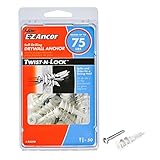
I remember the first time I tried to hang a heavy shelf in my garage. I grabbed a box of what looked like fancy plastic screws, figured they were the standard for concrete, and got to work. Fast forward a few months, and I found the shelf and its contents doing a dramatic floor-based performance. So, to cut to the chase: are plastic anchors okay for concrete? The short answer is: sometimes, and with huge caveats.
Look, I’ve wasted more money than I care to admit on DIY hardware that turned out to be less than useless. These plastic ones are often the first casualties of a project gone wrong. They promise ease, but often deliver disappointment when you really need them to hold.
This isn’t about brand names; it’s about understanding what these little doodads can actually do, and more importantly, what they absolutely cannot. Let’s get real about whether plastic anchors are the right choice for your concrete projects.
Plastic Anchors vs. Concrete: The Real Deal
So, you’ve got a concrete wall, a picture frame, or maybe a lightweight cabinet you want to hang. Naturally, you’ll head to the hardware store and see those little plastic things. They look simple enough. They’re usually white or yellow, ribbed, and come with a screw. The idea is you drill a hole, hammer the anchor in, then screw into the anchor. Easy peasy, right? Well, not exactly. The fundamental problem with plastic anchors in concrete is that concrete is, well, concrete. It’s dense, it’s hard, and it’s designed to be a solid, unyielding surface. Plastic, on the other hand, is… plastic. It’s a relatively soft material that relies on expansion and friction to grip.
When you hammer a plastic anchor into a pre-drilled hole in concrete, its ribs are supposed to expand and wedge themselves into the pores and imperfections of the concrete. The screw then tightens, further expanding the plastic and creating a friction fit. For very light items, like a small decorative mirror or a few picture frames, this might hold. I’ve had them work for things that weigh practically nothing. The issue arises when you start asking them to bear any real load. Think about hanging a TV, a heavy mirror, a shelf with books, or any kind of functional cabinetry. These plastic anchors just aren’t designed for that kind of sustained stress, especially in a material as unforgiving as concrete.
The common advice you’ll find online, especially from sources that haven’t actually put these things through their paces, often glosses over the limitations. They’ll say ‘drill the correct size hole’ and ‘hammer it in flush,’ and that’s it. But they don’t tell you about the micro-fractures that can happen in the concrete around the anchor, or how the plastic itself can degrade over time, especially if exposed to moisture or temperature fluctuations. I once tried to hang a fairly standard bathroom vanity cabinet using what I thought were heavy-duty plastic anchors.
Within a year, the whole thing started to sag, and I found the anchors had basically ripped themselves out of the concrete, leaving gaping holes. It was a mess, and I had to repair the wall before I could even think about re-hanging it with something more appropriate.
The truth is, plastic anchors are best suited for drywall or plaster, where the material is softer and more forgiving. When it comes to concrete, they are almost always a compromise, and usually, a bad one. It’s like trying to build a skyscraper with toothpicks – it might stand for a bit, but you wouldn’t trust it with anything important.
What to Look for Instead of Plastic
If plastic anchors are generally a no-go for concrete, what should you be using? This is where things get a bit more technical, but it’s worth understanding if you want your projects to last. The key is to use anchors that are specifically designed for concrete and masonry, and that create a more solid mechanical connection. The most common and reliable alternatives are expansion anchors and lag shield anchors.
Expansion anchors are fantastic. They come in a variety of types, but the principle is similar: you drill a hole, insert the anchor, and then as you tighten the screw or bolt, a mechanism inside the anchor expands, forcing it outwards and creating a very strong grip against the concrete. Sleeve anchors, wedge anchors, and concrete screws (like Tapcons, which are a brand name for a specific type of concrete screw) fall into this category.
Concrete screws are particularly user-friendly. You drill a pilot hole of the exact size specified by the manufacturer, and then you drive the screw directly into the concrete.
It cuts its own threads, creating a powerful hold. I’ve used Tapcons for everything from mounting electrical boxes to securing heavy-duty shelving brackets, and they have never failed me. They require a specific drill bit, usually a masonry bit of the exact diameter recommended, and a powerful drill, but the effort is absolutely worth the peace of mind. (See Also: Can Concrete Anchors Be Used In Brick )
Lag shield anchors are another excellent option. You drill a hole slightly larger than the shield, then you hammer the metal shield into the hole. The screw, which is typically a lag screw, then threads into the shield. As you tighten the screw, the shield expands, gripping the concrete securely. These are great for medium-duty applications where you might need to remove the screw later, as the shield remains in place. For heavier loads, like structural components or machinery, you’d look at wedge anchors or sleeve anchors, which are designed for maximum load-bearing capacity. These often require a larger hole and are a bit more involved to install, but they offer incredible strength.
When choosing an anchor for concrete, always consider the weight of what you’re hanging and the type of concrete you’re working with. Is it solid poured concrete, or is it blockwork? The anchor’s specifications will usually tell you the shear and pull-out strength, and it’s wise to pick an anchor rated significantly higher than the expected load. Never skimp here; the cost difference between a flimsy plastic anchor and a proper concrete anchor is minimal compared to the cost of repairing damage from a failed installation.
My Own Dumb Mistake with Anchors
Alright, confession time. A few years back, I was determined to build a custom entertainment center in my living room. I had this grand design, and it involved mounting a significant portion of it directly to the concrete foundation wall in my basement. I’d seen plenty of DIY videos and articles online that casually mentioned using ‘heavy-duty plastic anchors’ for concrete. ‘Heavy-duty’ seemed to imply they were strong enough, right? Wrong. So, so wrong.
I bought what the packaging claimed were ‘ultimate strength’ plastic anchors. They looked beefier than the usual ones, with thicker walls and more aggressive ribs. I followed the instructions to the letter: drilled the precise hole size, hammered them in until they were flush, and then carefully screwed in the mounting brackets for the entertainment center’s frame. It looked incredibly solid. I spent days building the rest of the unit, feeling pretty smug about how well it was going.
Then came the moment of truth. I started lifting the heavy TV onto its mount, which was attached to the brackets. As I tightened the last securing bolt, I heard it. A subtle, horrifying crunch. I froze. Then, I saw it. The bracket nearest the corner of the wall was pulling away. The plastic anchors, under the combined weight of the frame, the TV, and the sheer physics of use, had basically disintegrated. They hadn’t just loosened; they had crumbled into dust. The entire structure, which I had spent days building, began to tilt precariously. I had to scramble, bracing the whole thing, and then painstakingly remove the TV and disassemble the frame just to get to the failed anchors.
The wall was left with four ugly, jagged holes where those plastic anchors had been. It was a stark, embarrassing lesson. I ended up having to patch those holes, re-drill, and install proper wedge anchors. The entire process took twice as long and cost me more in frustration and materials than if I had just done it right the first time. It taught me that ‘heavy-duty’ is a relative term, and for concrete, plastic anchors are almost always on the wrong side of that relativity.
When Plastic Anchors might Work (and Why I Still Avoid Them)
Okay, let’s talk about the fringe cases. Are there any scenarios where plastic anchors are actually, genuinely okay for concrete? In my experience, and after years of wrestling with DIY projects, the answer is a resounding ‘barely’. If you are hanging something that weighs less than a pound, and I mean less than a pound, and it’s not going to be bumped or subjected to any shear force, then maybe, just maybe, a well-installed plastic anchor might hold. Think of a tiny, lightweight piece of wall art that’s mostly air, or a small, empty decorative hook. Even then, you’re still playing with fire.
The fundamental issue is that concrete is porous and abrasive. When you drill into it, you create dust and tiny particles. Plastic anchors, being soft, can get abraded by this as they are installed. Furthermore, concrete isn’t always perfectly uniform. There can be voids or weaker spots within the material. A plastic anchor relies on sheer friction and expansion, and if the concrete surface it’s trying to grip is compromised, it’s doomed from the start. The plastic itself can also become brittle over time, especially with temperature changes. I’ve seen plastic anchors that looked perfectly fine when installed later become brittle and crack when you tried to remove them or when subjected to even mild stress.
My contrarian opinion? Everyone says ‘use the right anchor for the job,’ and they’re right, but they often fail to emphasize how fundamentally insufficient most plastic anchors are for concrete. They might be okay for drywall because drywall is soft and crumbly, and the plastic anchor expands into that softness.
Concrete is the opposite. It’s hard and brittle.
You need something that physically wedges itself or cuts threads into that hardness, not something that just squishes into it. I’ve seen people successfully hang things with plastic anchors and they stay up for years, which is why the myth persists. (See Also: Can Cords Be Used To Make Anchors Climbing )
But for every success story, there are countless failures that people don’t talk about because they’ve patched the hole and moved on. It’s a gamble I’m no longer willing to take.
The few times I’ve considered using them for concrete, I always end up second-guessing myself. Is this really light enough? Will anyone lean on it? Will it be exposed to moisture? The mental energy spent worrying about whether the anchor will hold is far more than the energy it takes to install a proper concrete anchor. So, even in those razor-thin scenarios where it might work, I still reach for a concrete screw or a small wedge anchor. It’s just not worth the potential headache and the risk of a failed installation.
The Science (or Lack Thereof) Behind Plastic Anchors
Let’s get a little technical, but keep it simple. Plastic anchors, often made from nylon or polyethylene, work on a principle of expansion and friction. When you drill a hole in concrete – let’s say you’re using a standard 1/4-inch anchor – you’ll drill a hole of that specific diameter.
Then, you insert the plastic anchor, which is designed to be slightly larger than the hole, and tap it in with a hammer. The ribs on the outside of the anchor are meant to deform and press outwards against the concrete walls as it’s driven in. The screw then goes into the anchor and, as it’s tightened, it further expands the anchor, pushing it more firmly into the concrete. This creates a frictional grip.
The problem with concrete is its inherent strength and brittleness. Concrete is made of cement, aggregate (like sand and gravel), and water. When it cures, it forms a very hard, but also brittle, material. It has good compressive strength (it can withstand being squeezed), but its tensile strength (resisting being pulled apart) and shear strength (resisting sideways forces) are much lower.
Plastic anchors rely heavily on creating a tight friction fit within the concrete. If there are any voids in the concrete, or if the concrete is slightly weaker in that particular spot, the plastic anchor doesn’t have a solid surface to expand against.
The plastic can just chew up the concrete, creating a larger hole, and therefore, no grip at all.
Furthermore, the anchor itself is made of plastic. Plastic is not as strong or as rigid as metal. Over time, especially under sustained load, the plastic can deform, creep, or even crack. If you live in an area with significant temperature fluctuations, the plastic can expand and contract, potentially loosening its grip. Moisture can also affect plastic, causing it to degrade or become brittle. This is why you often see plastic anchors failing catastrophically when subjected to loads that might seem modest. They aren’t designed for the kind of sustained, dynamic forces that a proper metal anchor can handle.
For comparison, metal expansion anchors like wedge anchors or sleeve anchors use metal components that physically expand and wedge themselves into the concrete. Concrete screws (like Tapcons) cut their own threads into the concrete, creating a mechanical interlock. These methods provide a much more reliable and durable hold because they are designed to work with the specific properties of concrete, rather than against them. While plastic anchors might seem like a quick and cheap solution, they often fail to provide the long-term security that people expect, especially when dealing with the unforgiving nature of concrete. It’s a trade-off between initial cost and long-term reliability, and for concrete, the reliability factor is far more important.
Common Mistakes and How to Avoid Them
The biggest mistake people make with plastic anchors in concrete is assuming they are a universal solution for hanging anything heavier than a feather. This is where the misinformation starts, and it leads directly to project failures. Beyond that fundamental misunderstanding, there are several other pitfalls:
- Drilling the Wrong Size Hole: This is most important. If the hole is too small, you’ll struggle to get the anchor in, and you risk cracking the concrete or damaging the anchor. If the hole is too large, the anchor won’t have anything to grip, and it’ll just spin loosely. Always use the drill bit size recommended by the anchor manufacturer.
- Hammering Too Hard or Not Hard Enough: You need to tap the anchor in firmly and evenly until it’s flush with the concrete surface. If you hammer too hard, you can crack the plastic or damage its expansion ribs. If you don’t hammer it in enough, it won’t seat properly, and the screw won’t engage it correctly.
- Overloading the Anchor: This is the most common cause of failure. Even if the anchor could technically hold a certain weight, you need to consider dynamic loads (things that move or vibrate) and the fact that the stated weight limit is often under ideal conditions. Always err on the side of caution and significantly underestimate the load you’re placing on a plastic anchor in concrete.
- Using Them in Damp or Wet Conditions: Moisture can degrade plastic over time, making it brittle and less effective. If your concrete surface is prone to dampness, plastic anchors are an even worse choice.
- Not Checking the Concrete Type: Are you drilling into solid poured concrete, or into concrete block? The performance of any anchor, especially a plastic one, can vary wildly depending on the density and composition of the concrete. Plastic anchors are particularly poor performers in hollow block.
To avoid these mistakes, the simplest advice is to ditch the plastic anchors for concrete altogether. Invest in proper concrete anchors. When you buy a concrete screw, for example, it will come with clear instructions on the required drill bit size and depth. The packaging will also provide load ratings. For a visual comparison, consider this: (See Also: Can Anchors In Your Shoulder Break )
| Anchor Type | Best For | Pros | Cons | My Verdict |
|---|---|---|---|---|
| Plastic Anchor | Drywall, very light items (less than 1lb) in concrete | Cheap, easy to install (initially) | Low load capacity, unreliable in concrete, degrades over time, can fail catastrophically | Avoid in concrete unless it’s a picture frame weighing nothing. |
| Concrete Screw (e.g., Tapcon) | Light to medium-duty in concrete, block | Strong, reliable, easy to install with correct bit, good pull-out strength | Requires specific masonry bit, can be difficult to remove without damaging hole | My go-to for most small to medium projects. |
| Wedge Anchor | Medium to heavy-duty in concrete | Extremely strong, reliable, good for permanent fixtures | Requires larger hole, installation can be more involved, usually not removable | Excellent for shelves, brackets, anything needing serious holding power. |
| Lag Shield Anchor | Medium-duty in concrete | Good strength, screw is removable leaving shield | Requires slightly larger hole than shield, screw size is fixed to shield | Handy for things you might need to take down and put back up. |
The table above pretty much sums it up. While plastic anchors have their place, that place is almost never on solid concrete when you actually need something to hold securely.
People Also Ask: Weaving in Your Questions
You might be wondering about specific scenarios. For instance, someone might ask, ‘Can I use plastic anchors for a curtain rod in concrete?’ My direct answer is: probably not. Curtain rods, even lightweight ones, experience constant stress from the weight of the curtains, wind if near a window, and general wear and tear. The expansion and contraction of the curtains can put significant pull-out force on the anchors. I’d strongly recommend using concrete screws or a dedicated curtain rod bracket designed for masonry. It’s a small upgrade that prevents a lot of potential frustration and curtain-related disasters.
Another common question is, ‘How much weight can a plastic anchor hold in concrete?’ This is the million-dollar question, and the honest answer is: it’s highly variable and almost always insufficient for real-world applications. Manufacturers often give load ratings for plastic anchors, but these are typically for drywall, not concrete. For concrete, the ratings are often misleading or non-existent. If a rating is given, it’s usually for a very small, static load. I’ve seen them fail with as little as 5-10 pounds in concrete, depending on the anchor quality and the concrete itself. It’s simply not a reliable metric to base your project on. Always assume the weight capacity in concrete is significantly lower than advertised for drywall.
Finally, there’s the question, ‘Is it better to use concrete screws or anchors?’ For concrete, concrete screws are almost always a better choice than plastic anchors. They create a much stronger mechanical bond by cutting threads directly into the concrete. They are designed specifically for the material. While other types of mechanical anchors exist (like wedge anchors, sleeve anchors), concrete screws offer a great balance of strength, ease of installation, and cost for a wide range of applications. If you’re looking for a reliable fastener for concrete, concrete screws are a fantastic starting point and far superior to plastic anchors.
The Bottom Line: Are Plastic Anchors Okay for Concrete?
Let’s wrap this up with a blunt assessment. The question is, are plastic anchors okay for concrete? My experience, and frankly, common sense, tells me that for anything beyond the most trivial of applications, the answer is a hard no. I’ve seen them fail, I’ve heard the stories, and I’ve learned from my own mistakes. The temptation to use them is understandable: they’re cheap, readily available, and seem simple. But the cost of failure – a fallen shelf, a damaged item, or a repair job – far outweighs the few dollars saved.
Concrete is a tough material. It requires fasteners designed to grip it securely. Plastic anchors, with their reliance on friction and the inherent limitations of the plastic material, just don’t cut it for most concrete applications. You’re basically asking a soft, pliable material to grip a hard, brittle one, and hoping for the best. It’s a gamble that rarely pays off in the long run.
My advice? For any project involving concrete where you need something to stay put reliably, skip the plastic anchors entirely. Opt for concrete screws, wedge anchors, or lag shields. They are designed for the job, they provide superior holding power, and they will save you a world of headaches. It’s about choosing the right tool for the job, and for concrete, that tool is rarely plastic.
Final Thoughts
So, to reiterate, are plastic anchors okay for concrete? In my book, they’re a ‘buyer beware’ item at best, and a complete no-go for anything you actually care about staying attached. I’ve learned the hard way that the few dollars saved on a box of proper concrete anchors is a minuscule price to pay compared to the potential cost of a failed installation.
When you’re dealing with concrete, you need fasteners that are engineered to grip that specific material. That means screws that cut threads, or metal anchors that expand and physically wedge themselves into place. Plastic anchors just don’t have the strength or the durability for sustained loads in such a demanding environment. They can degrade, they can crack, and they can simply pull out with minimal force.
My final, honest opinion is this: If the item you’re hanging weighs more than a medium-sized houseplant, or if it’s something you absolutely don’t want falling, then do yourself a favor and buy proper concrete fasteners. You’ll thank yourself later when your shelves are still up, your pictures are still on the wall, and you haven’t had to patch any unsightly holes in your concrete.