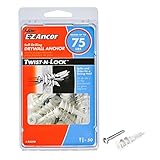
I remember the first time I had to hang something substantial on a concrete wall. It was a beast of a shelving unit for my garage, loaded with tools and paint cans. The salesman at the hardware store practically shoved a box of those little metal screw-in anchors into my hand, saying they were ‘the best for concrete.’ Fast forward a few months, and a particularly strong gust of wind rattling the garage door made me nervous. It got me thinking: are screw-in concrete anchors seismic? It’s a question that’s probably crossed your mind if you’ve ever wrestled with concrete and fasteners.
Honestly, the common advice often paints these anchors as a magic bullet for almost any concrete job. But having spent years wrestling with tools, materials, and the sheer stubbornness of concrete, I’ve learned that ‘best’ is rarely that simple.
How Those Little Metal Spirals Actually Work
Let’s break down the basic mechanics of a screw-in concrete anchor, often called an ‘expanding anchor’ or ‘self-tapping anchor.’ The idea is deceptively simple: you drill a pilot hole of a specific diameter, then you drive the anchor into that hole using a wrench or impact driver. As you turn it, the threads on the anchor bite into the concrete. The magic, so to speak, happens when the anchor’s body expands. Many designs have a tapered end and a sleeve that’s designed to wedge itself into the concrete as you drive the screw. This friction and wedging action are what create the holding power. It’s basically creating a tight, friction-based grip within the concrete material itself.
The key here is the engagement with the concrete. For this to work effectively, the concrete needs to be solid, dense, and free of large voids or cracks. Think about it like trying to screw something into a sponge versus a brick. The anchor needs something solid to bite into and expand against. The flutes or threads on the outside of the anchor are designed to cut into the concrete, creating a more positive mechanical interlock than, say, a simple wedge anchor that relies on expansion alone. The material of the anchor itself also plays a role – typically made of hardened steel, they’re designed to withstand significant shear and pull-out forces.
The physics are pretty straightforward: the rotational force translates into axial movement, and the design of the anchor causes it to expand, pressing outwards against the drilled hole. This outward pressure creates a tight fit. The rougher the concrete surface inside the hole, and the denser the concrete, the better the grip. I’ve seen cheap, poorly made anchors strip out the hole because the threads weren’t sharp enough or the expansion mechanism was weak.
It’s why spending a few extra bucks on a reputable brand, even for something as simple as an anchor, often saves you headaches and potential failures down the line. The tolerances for the drill bit size and the depth of the hole are also pretty important; too small a hole and you won’t get full expansion, too large and the anchor won’t have enough concrete to grip onto.
When you’re looking at manufacturers’ claims, you’ll often see pull-out and shear strength ratings. These are usually determined under ideal laboratory conditions. My experience? Those numbers are a decent guideline, but real-world performance can vary wildly based on the concrete quality, the installer’s technique, and the specific load applied. It’s not just about the anchor; it’s about the whole system – the concrete, the hole, and the force you’re applying.
The core principle is friction and mechanical interlock. The threads dig in, and the expansion creates pressure. It’s a solid system when done right, but it’s not infallible, and understanding its limitations is key. When we talk about are screw in concrete anchors seismic, we need to think about how this friction-based hold behaves under dynamic, oscillating loads.
Seismic Loads: A Whole Different Ballgame
Alright, let’s get down to brass tacks. When we talk about seismic loads, we’re not talking about the steady, downward pull of a shelf full of tools. We’re talking about sudden, violent shaking, horizontal forces, and repeated stress. This is where the rubber meets the road, or rather, where the anchor meets the concrete during an earthquake. Are screw-in concrete anchors seismic? The short, blunt answer is: not inherently, and certainly not to the same degree as anchors specifically designed for seismic applications. It’s a important distinction, and one that gets glossed over way too often in DIY forums and even by some product descriptions.
Seismic events introduce dynamic, cyclic loading. This means the forces aren’t just pulling straight down; they’re pushing, pulling, and shaking in multiple directions, rapidly. A screw-in anchor relies heavily on friction and the integrity of the concrete it’s embedded in. Under extreme shaking, the concrete itself can crack, spall (flake off), or even pulverize. If the concrete surrounding the anchor degrades, the friction that holds the anchor in place diminishes rapidly. Then, the mechanical interlock of the threads can start to shear off, or the anchor can simply work its way loose from the vibrating concrete matrix. It’s like trying to keep a tree planted in shifting sand – eventually, the sand gives way.
The problem is that many screw-in anchors are designed for static loads, or at best, moderate dynamic loads. Think about mounting a heavy piece of equipment that might vibrate, like a generator or a large fan. That’s one thing. But an earthquake is an entirely different beast. The repeated stress cycles can fatigue the anchor material itself, and more importantly, they can exacerbate any existing weaknesses in the concrete or the anchor-to-concrete connection. I’ve seen older concrete foundations with hairline cracks that you might not even notice. An earthquake can turn those hairline cracks into significant fractures, and an anchor that seemed perfectly solid before can become a weak point.
Building codes, especially in seismically active regions, have very specific requirements for anchors used in structural applications or for securing important equipment. These codes often mandate specific types of anchors that have been tested and approved for seismic loads. These are typically heavier-duty anchors, often with specialized expansion mechanisms or chemical bonding agents, and they are installed and inspected according to very strict guidelines.
A standard screw-in anchor, while great for many common DIY tasks, simply doesn’t have the rigorous testing or design features to reliably withstand the forces of a major seismic event. It’s not about being pessimistic; it’s about understanding the engineering and the physics involved. The common advice that ‘any anchor will do’ is dangerously misleading when seismic activity is a concern. (See Also: Can Concrete Anchors Be Used In Brick )
So, while they provide a solid hold for many everyday applications, asking if screw-in concrete anchors are seismic requires a nuanced answer: they can fail catastrophically under seismic stress. They are not engineered with seismic resistance as a primary design feature.
What to Look for (and What to Avoid)
When you’re staring down a wall that needs something attached, and you’ve got concrete staring back, what should you actually be looking for in an anchor? Forget the fancy packaging or the salesman’s pitch for a second. For general-purpose, non-seismic applications where you need a solid hold, I’ve had good luck with a few types. Firstly, expansion anchors, like the classic wedge anchor, are generally pretty reliable for heavier loads. You drill a hole, insert the anchor, and hammer it in, then tighten the nut. The expansion mechanism is solid. For lighter to medium loads, sleeve anchors can also work well, offering a decent expansion bite.
But let’s talk about screw-in anchors specifically, since that’s our main topic. When I buy them, I look for known brands – Simpson Strong-Tie, Hilti, DeWalt, Fischer. They might cost a bit more, but their quality control is usually better. I look for anchors made from hardened steel, often with a zinc-plated or corrosion-resistant coating, depending on the environment. The thread pattern should be sharp and deep, not worn or shallow. Some screw-in anchors have a specific design feature for concrete – a self-tapping capability where the threads actually cut into the concrete. These can be very effective if the concrete is in good condition.
What do I avoid? I steer clear of the cheapest, no-name brands you find in bulk discount bins. I’ve bought them before, thinking I was saving a buck, only to have them strip out or the metal bend under normal torque. That’s a waste of money and a potential safety hazard.
I also avoid anchors that feel flimsy or have rough, poorly formed threads. If the anchor itself feels light or poorly manufactured, it’s a red flag. Another thing to watch out for is the recommended hole size.
Manufacturers specify a drill bit size for a reason. Using the wrong size bit is one of the most common mistakes people make, and it completely compromises the anchor’s holding power. Too small, and you won’t get the expansion needed. Too large, and there’s not enough concrete for the anchor to grip.
When it comes to seismic considerations, the game changes entirely. If you are in an earthquake-prone area and need to secure something that could be a hazard if it falls – like a water heater, a heavy cabinet, or electrical equipment – you absolutely need anchors specifically rated for seismic applications. These are often heavy-duty, specialized anchors like chemical anchors (which use epoxy or resin to bond the anchor rod to the concrete) or certain types of heavy-duty expansion anchors that have undergone rigorous seismic testing. They will have specific certifications and documentation backing up their seismic performance.
A standard screw-in anchor is simply not designed for this kind of stress. I learned this the hard way when trying to secure some heavy machinery in a workshop; I used what I thought were strong anchors, but a minor tremor made me realize I needed something far more solid. The specs on seismic anchors are serious business.
The common advice is often to just get the ‘strongest’ anchor. But ‘strongest’ in a static sense isn’t the same as ‘seismic resistant.’ Always check the manufacturer’s specifications and, if seismic resistance is a concern, look for explicit ratings for that. Don’t guess.
Common Mistakes and How to Avoid Them
I’ve made my fair share of mistakes with anchors over the years, and I’ve seen plenty of others do the same. The biggest one, hands down, is using the wrong drill bit size for the anchor. Manufacturers provide specific drill bit diameters for a reason. If the hole is too big, the anchor won’t expand properly and won’t have enough concrete to grip. If it’s too small, you’ll struggle to get the anchor in, and you might damage the threads or the anchor itself. I used to think I could eyeball it, or that ‘close enough’ was good enough. Nope. Get the right bit, and measure it if you have to. A good set of masonry bits is a must-have.
Another common blunder is not drilling deep enough. The anchor needs to be seated fully within the concrete, and the expansion needs to happen at the correct depth. If the hole is too shallow, the anchor won’t engage the concrete properly, and its holding power will be significantly reduced. I once had a shelf pull out because I skimped on drilling the depth. It was embarrassing and a mess to clean up. Aim for the depth recommended by the anchor manufacturer, and then a little extra to account for any dust that might remain in the hole.
Speaking of dust, failure to clean the hole thoroughly is a major problem. When you drill concrete, you create a lot of fine dust. This dust acts as a lubricant and a barrier, preventing the anchor from making solid contact with the concrete. For wedge anchors and sleeve anchors, you absolutely need to blow out the hole with compressed air or a shop vac. For screw-in anchors, while they can sometimes punch through a little dust, cleaning the hole will still improve their grip. I always give the hole a few good blasts with compressed air. It takes seconds, but it makes a world of difference. (See Also: Can Cords Be Used To Make Anchors Climbing )
Over-tightening is another trap. While you want a snug fit, cranking down too hard, especially with a powerful impact wrench, can strip the threads of the anchor or even crack the surrounding concrete. This is especially true for some of the smaller, more delicate screw-in anchors. It’s a balance: tight enough to be secure, but not so tight that you damage anything. For screw-in anchors, I usually stop when I feel firm resistance and the anchor is fully seated. If it feels like it’s about to spin freely or I’m putting excessive force on it, I stop.
Finally, and this ties back to our main question, people often use anchors designed for static loads in situations that will experience dynamic or seismic forces. They assume any anchor will just hold. This is a dangerous assumption.
If you live in an earthquake zone or are securing something important, you MUST use anchors specifically rated for seismic applications. Don’t use a standard screw-in anchor for your water heater if you’re in California.
It’s not built for that. Understanding the load type – static, dynamic, shear, pull-out, and especially seismic – is fundamental to choosing the right fastener. I learned this the hard way when a cabinet I’d anchored came loose during a minor tremor, and I realized I’d used the wrong type of anchor for the potential forces.
Real-World Use Cases and Practical Tips
So, where do screw-in concrete anchors actually shine? Honestly, for a lot of common DIY tasks, they’re pretty handy. I’ve used them to mount electrical conduit boxes on basement walls, hang shop lights from a garage ceiling (provided it’s not a seismic zone!), and attach brackets for shelving units that aren’t going to be overloaded. They’re great for attaching things to concrete block walls too, as long as you’re not drilling into the hollow cores without proper backing or going into the mortar joints. The self-tapping nature means you don’t necessarily need a hammer or a separate nut, which can be convenient.
My rule of thumb for screw-in anchors: use them for light to medium loads where the primary force is shear (downward weight) and the environment is relatively stable. They’re good for things like hanging a garden hose reel, mounting a small workbench, or securing furring strips for a concrete wall renovation. I’ve even used them to anchor temporary structures, like framing for a small shed, where the load is predictable and the risk of major vibration is low. The ease of installation is a big plus – drill a hole, drive it in. Simple.
Here are a few practical tips that have saved me time and frustration:
- Use the Right Drill Bit: I can’t stress this enough. Get a good quality carbide-tipped masonry bit and use a drill that has a hammer setting. Measure the anchor shank if you’re unsure of the exact diameter required and use that bit size.
- Clean the Hole: Always blow out the dust. Compressed air is your friend. If you don’t have it, a turkey baster and some patience can work in a pinch, but it’s not ideal.
- Don’t Overtighten: Feel the resistance. Stop when it’s snug. For screw-in anchors, you’re looking for a firm seat, not to crush the concrete.
- Consider the Concrete Quality: Is it old, crumbly concrete? Are there visible cracks? If so, a screw-in anchor might not be the best choice, even for light loads. You might need a stronger anchor or even a chemical anchor in very questionable concrete.
- Check Manufacturer Specs: For any load-bearing application, always check the manufacturer’s stated load limits for shear and pull-out. These are usually listed in lbs or N.
I had a situation where I was mounting a heavy toolbox to a concrete wall. I used what I thought were beefy screw-in anchors. They held for a while, but after a few years of use and maybe a minor jolt, the toolbox started to sag. When I took it down, I found the anchors had actually worked their way slightly loose. It wasn’t catastrophic, but it was a clear sign that for that kind of sustained, heavy load, a stronger, more positive locking anchor like a wedge anchor or even a sleeve anchor would have been a better choice. Screw-in anchors are great when they’re used for what they’re designed for.
When Are They Not Enough? (the Seismic Question Revisited)
Let’s get back to the core of it: when are screw-in concrete anchors definitely NOT enough? The answer, overwhelmingly, is in seismic zones, especially for anything considered a life safety hazard or important equipment. If you live in a region prone to earthquakes – and that’s a lot of the West Coast, parts of the Midwest, and even some other areas where ground motion can be amplified – then relying on standard screw-in anchors for anything beyond decorative items is a gamble I wouldn’t take. Why? Because earthquakes introduce forces that these anchors are simply not designed to handle.
Think about the forces during an earthquake. It’s not just a simple pull. It’s violent shaking, often in orthogonal directions, and repeated cycles of stress. This can cause the concrete itself to crack, degrade, or even pulverize around the anchor. The friction hold of a screw-in anchor relies on the integrity of the surrounding concrete. If that concrete crumbles, the anchor is useless. The threads can shear off, or the anchor can vibrate loose from the degrading material. It’s like trying to hold a rope in a pile of gravel that’s being shaken – the gravel just shifts and lets go.
Building codes in seismic zones are very specific about what types of anchors can be used for structural connections or for securing heavy equipment like water heaters, furnaces, or electrical panels. These often require specialized anchors that have undergone rigorous seismic testing and are approved by relevant authorities. This can include heavy-duty expansion anchors with specific seismic ratings, adhesive anchors (chemical anchors), or cast-in-place anchors. These are designed to maintain their holding power even when the concrete is stressed and potentially fractured.
I’ve seen firsthand how even moderate seismic activity can cause failure. A friend in a moderately seismic area had a heavy bookshelf anchored with what he thought were solid screw-in anchors. During a noticeable tremor, the bookshelf didn’t just tip; the anchors pulled out of the concrete wall, and the shelf crashed down. Thankfully, no one was hurt, but it was a stark reminder. He had to re-anchor everything with seismic-rated wedge anchors. It cost him more time and money, but it was a lesson learned. (See Also: Can Anchors In Your Shoulder Break )
So, if your question is ‘are screw in concrete anchors seismic?’, the answer is a resounding ‘no,’ especially if you’re talking about protecting lives or property during an actual earthquake. While they are excellent for many common tasks, they are fundamentally not designed for the dynamic, multi-directional, and potentially destructive forces of seismic activity. For those situations, you need to invest in specifically engineered, seismic-rated anchoring solutions. Don’t cut corners here; the consequences can be severe. The common advice to just use ‘strong’ anchors often misses this important nuance.
Can I Use Screw-in Concrete Anchors for Heavy-Duty Applications?
For general heavy-duty applications like mounting a substantial workbench or a heavy storage rack in a non-seismic area, yes, they can often be suitable, provided you choose a high-quality anchor and adhere to the manufacturer’s load limits. However, for applications where dynamic loads, constant vibration, or seismic forces are a concern, you should opt for heavier-duty anchors like wedge anchors or specialized seismic anchors.
Are Screw-in Concrete Anchors Good for Exterior Use?
Many screw-in anchors are made of zinc-plated steel, which offers some corrosion resistance, making them suitable for exterior use in dry or moderately humid environments. For highly corrosive environments (like coastal areas with salt spray) or direct, prolonged exposure to moisture, you should look for anchors made of stainless steel or those with specific corrosion-resistant coatings, and make sure the surrounding concrete is also protected.
How Do I Choose the Right Size Screw-in Anchor?
The anchor’s diameter, length, and the required drill bit size are important. Always consult the manufacturer’s specifications for the anchor you are using. They will specify the exact drill bit diameter and the minimum embedment depth needed for their rated load capacity. Using the wrong size bit is a common mistake that severely compromises holding power.
What’s the Difference Between Screw-in Anchors and Wedge Anchors for Concrete?
Screw-in anchors (self-tapping) are driven directly into a pre-drilled hole, relying on their threads to bite into the concrete and expand. Wedge anchors require a specific hole size and depth, and after insertion, a nut is tightened, which pulls a wedge on the anchor, expanding it against the sides of the hole. Wedge anchors generally offer higher load capacities and are often preferred for heavier-duty applications where a more positive mechanical expansion is desired.
Do I Need Special Tools to Install Screw-in Concrete Anchors?
You will need a masonry drill bit of the correct size and a drill with a hammer function. For driving the anchor, a socket wrench set or an impact driver with the appropriate socket adapter is typically required. Make sure your drill is powerful enough for concrete, and use sharp bits for cleaner holes and easier installation.
A Few Last Thoughts on Concrete Fasteners
Look, I’m not saying screw-in concrete anchors are useless. Far from it. For a lot of the grunt work around the house – hanging shelves, securing brackets, running conduit – they can be a perfectly good, quick, and easy solution. I’ve got a few boxes of them in my workshop right now for exactly those kinds of jobs. They save time, they’re relatively inexpensive, and when used within their limitations, they hold up just fine.
The trap is thinking they’re a one-size-fits-all solution for every concrete anchoring need. That’s where the real-world experience kicks in, and it tells you that when forces get serious, unpredictable, or repetitive, you need to step up your game. That’s especially true when we’re talking about seismic activity. Asking ‘are screw in concrete anchors seismic?’ is a valid question, and the honest answer is they are not designed for that kind of stress. Relying on them in an earthquake zone for anything important is asking for trouble.
Always consider the forces your fastener will be subjected to. Static load? Dynamic vibration? High shear? Extreme seismic shaking? The answer to that dictates the fastener. Don’t be afraid to spend a little more on better quality anchors or to use a more solid type if the application demands it. Your peace of mind, and potentially your safety, is worth it. So, next time you’re staring at a concrete wall, remember that while a screw-in anchor might be your go-to for hanging a picture, it’s probably not your best bet for anchoring your water heater in an earthquake zone.
Final Thoughts
So, there you have it. Screw-in concrete anchors are incredibly useful for a wide range of everyday DIY tasks. They offer a good balance of holding power and ease of installation for light to medium loads. However, they are not designed to withstand the extreme, dynamic, and multi-directional forces associated with seismic events. If you’re in an earthquake-prone area and need to secure anything that could pose a hazard, you absolutely need to use anchors specifically rated for seismic applications.
The bottom line is that understanding the limitations of any fastener is just as important as knowing its strengths. Don’t let convenience blind you to potential failure points. For peace of mind and safety, especially when dealing with significant loads or seismic risks, invest in the right anchor for the job. Are screw in concrete anchors seismic? No, and knowing that can save you a lot of trouble.
Next time you’re at the hardware store, take a moment to look at the different types of anchors available and consider the actual forces they’re designed to resist. It’s a small detail that can make a huge difference.