The first time I saw a railing fail, it wasn’t a dramatic Hollywood-style collapse, but a slow, sickening wobble that made my stomach drop. The homeowner had used what I thought were perfectly good screw anchors. Turns out, not all anchors are created equal, and definitely not all are suitable for something as important as a railing. This whole idea of whether are screw anchors acceptable for railings is a question that pops up more often than you’d think, and honestly, it’s got shades of gray.
I’ve spent enough weekends wrestling with anchors that promised the moon and delivered a leaky shed. I’ve learned that the glossy packaging and the guy at the hardware store nodding sagely don’t always tell the whole story. Safety first, especially when it comes to anything people might lean on or hold onto.
When “good Enough” Isn’t Good Enough for Railings
Let’s get one thing straight right off the bat: when you’re talking about something as important as a railing, whether it’s on a deck, a porch, or stairs, “good enough” is a four-letter word. I’ve seen people try to cut corners on railings, thinking a few well-placed anchors will do the trick. This is where the question ‘are screw anchors acceptable for railings’ really bites. The short answer? It depends, and mostly, it’s a ‘hell no’ if you’re talking about your average, run-of-the-mill plastic or cheap metal screw anchor meant for hanging a picture frame.
My own screw-up with this involved a small garden fence post that needed a bit of extra stability. I grabbed a pack of those ribbed plastic anchors and some screws. They seemed solid enough for the light load I was applying. Fast forward a year, a couple of heavy rainstorms, and a kid leaning on it too hard, and the whole thing pulled out of the concrete block like it was made of wet tissue. It taught me a brutal lesson: the substrate matters, and the load matters. Railings, by their very nature, are designed to bear significant lateral and vertical force. People brace themselves, they lean, kids bump into them. That’s not the same as hanging a lightweight shelf.
The common advice you’ll find online often lumps all screw anchors together. They’ll talk about different types – expansion anchors, sleeve anchors, wedge anchors – and their holding power. But they rarely emphasize the specific demands of a railing system. A railing isn’t just decorative; it’s a safety feature. Building codes exist for a reason, and they usually specify a certain load-bearing capacity for railings and their attachments. Trying to meet those requirements with a generic screw anchor is like trying to build a bridge with popsicle sticks.
The real danger is the false sense of security. You put in anchors, they feel tight when you screw them in, and you think you’re done. But what happens when that plastic anchor slowly degrades, or the metal fatigues under repeated stress? Or worse, what if the hole you drilled isn’t quite right, and the anchor doesn’t expand or engage the substrate properly? It’s a recipe for disaster, and frankly, it’s irresponsible to rely on them for anything that could lead to someone falling.
What Most “screw Anchors” Actually Are (and Why They Fail)
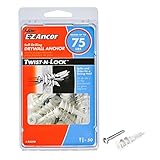
When most DIYers think of “screw anchors,” they’re probably picturing those little plastic doodads you hammer into a pre-drilled hole, then screw into. Or maybe the metal ones that expand as you tighten the screw. These are generally designed for lighter-duty applications – hanging a mirror, mounting a light fixture, securing a small bracket. They work by creating friction or by expanding within the material they’re inserted into. For drywall, they’re often just expanding into the hollow space. For masonry, they rely on the hole’s integrity and the anchor’s expansion. They’re cheap, they’re easy to install, and for what they’re designed for, they can be perfectly adequate.
But here’s the rub: railings are subjected to forces that these anchors are simply not built to withstand. Think about it. Someone loses their footing and grabs the railing hard.
That’s a sudden, significant lateral force. Or imagine a small child running and bumping into the railing. That’s an impact. These types of loads can easily exceed the shear strength or pull-out resistance of most standard screw anchors.
I remember a buddy who tried to save a few bucks by using sleeve anchors on his deck railing posts. He said they felt super solid. Six months later, after a particularly nasty winter storm followed by a few heavy-use weekends, one of the posts started to lean. (See Also: Can Concrete Anchors Be Used In Brick )
It turned out the anchors had worked themselves loose from the constant vibration and shifting of the deck. The masonry wasn’t the issue; it was the anchor’s inability to hold under dynamic stress.
There’s a whole class of anchors that are actually designed for structural applications, which is what a railing post attachment often is. These are typically called wedge anchors, sleeve anchors (the heavy-duty kind), or anchor bolts. They are designed to embed deeply into concrete or masonry and provide significant holding power. Even then, proper installation is key. Drilling the right size hole, cleaning it thoroughly, and torquing the fastener to spec are a must. Using the wrong size drill bit or not cleaning out the dust can completely compromise the anchor’s strength. It’s not just about jamming something into a hole; it’s a mechanical system that needs to be installed precisely.
The problem with the term “screw anchor” is that it’s a catch-all for many different devices. You’ve got your plastic plugs, your self-drilling drywall anchors, your toggle bolts, your molly bolts, your wedge anchors, your sleeve anchors, and even chemical anchors. Each has its intended purpose and material. Thinking that a generic “screw anchor” is suitable for a railing is like assuming any old screw can hold up a load-bearing beam. It’s a dangerous oversimplification.
The Real Anchors You Should Be Considering for Railings
Okay, so if those common screw anchors are mostly out, what should you be looking at for attaching railings? We’re talking about hardware that’s designed for structural loads. For concrete or masonry foundations, your best bets are typically heavy-duty mechanical anchors or chemical anchors.
Mechanical Anchors:
- Wedge Anchors: These are solid. You drill a hole, clean it out, insert the anchor, and then tighten the nut. As you tighten, the cone at the bottom of the anchor pulls up into the sleeve, expanding it against the sides of the hole. They offer excellent pull-out strength and shear strength. They are my go-to for solid concrete applications where a railing post needs to be absolutely secure.
- Sleeve Anchors: Similar to wedge anchors, sleeve anchors expand along their length. They come in various designs, some with a flange to sit flush with the surface. Good for concrete, brick, or block, but make sure you get the right type for the specific substrate.
- Anchor Bolts (J-bolts or L-bolts): These are bent rods that are set into wet concrete. The bend at the bottom provides the holding power. They require planning ahead, as they need to be set during the concrete pour. If you’re building a new deck or porch, this is often the most secure method for attaching posts.
Chemical Anchors (Epoxy or Resin Anchors):
- These use a two-part adhesive that you inject into a pre-drilled hole. Then, you insert a threaded rod or rebar. The adhesive cures, creating an incredibly strong bond. This is often considered the strongest option, especially in questionable or cracked concrete, or when dealing with very high loads. They are more expensive and require careful installation (mixing the resin, proper curing times), but the holding power is phenomenal.
Now, what about attaching to wood? This is where the discussion often gets muddied. If you’re attaching a railing post directly to a wooden deck joist or a ledger board, you’re looking at lag screws or through-bolts. For attaching railing sections (the balusters and top/bottom rails) to the posts, you’ll also be using screws and bolts, but the demands are different than attaching the primary support post.
| Anchor Type (General) | Typical Substrate | Railings Suitability (Verdict) | Why |
|---|---|---|---|
| Plastic Ribbed Anchors | Drywall, Soft Masonry (limited) | ❌ NO | Insufficient strength, degrade over time, poor in dynamic loads. |
| Metal Expansion Anchors (Light Duty) | Concrete, Brick, Block | ❌ NO (for posts) | Can pull out under significant lateral force or impact. |
| Toggle Bolts / Molly Bolts | Drywall, Hollow Materials | ❌ NO | Designed for light loads; will fail catastrophically under railing stress. |
| Wedge Anchors (Heavy Duty) | Solid Concrete, Dense Block | ✅ YES (with proper spec) | High pull-out and shear strength when installed correctly. |
| Sleeve Anchors (Heavy Duty) | Concrete, Brick, Block | ✅ YES (with proper spec) | Good holding power, designed for structural loads. |
| Chemical Anchors | Concrete (excellent for cracked/weak) | ✅ YES (often best option) | Superior bond strength, handles high loads and vibrations. |
| Lag Screws (Heavy Gauge) | Solid Wood (dense, structural) | ✅ YES (for wood-to-wood) | Good for attaching to solid wood framing members. Needs proper pilot holes. |
| Through-Bolts | Wood, Metal | ✅ YES (for solid connections) | Uses a nut and washer on the opposite side for maximum clamping force. |
Common Mistakes That Lead to Railing Failure
Even when using the right type of anchor, there are still plenty of ways to screw up a railing installation. I’ve seen it happen, and I’ve definitely made my own share of dumb mistakes over the years. The biggest one, hands down, is undersizing the fastener or the anchor. People see a railing post and think, “Yeah, a couple of these ought to do it.”
But they don’t consider the forces involved. A railing is designed to resist a lateral load of 50 pounds per linear foot, according to the International Residential Code (IRC) in many areas. That’s not a static load; it’s a force that can be applied suddenly. (See Also: Can Cords Be Used To Make Anchors Climbing )
If your anchors can’t handle that, you’ve got a problem waiting to happen. I once saw a deck railing where the posts were attached with lag screws that were just a tad too short. They went into the joist, but not deep enough. After a couple of years, with the deck being used frequently, the posts started to wobble.
Turns out, the wood had compressed slightly, and the lags weren’t engaging enough material to hold firm. It looked fine for a while, but it was a ticking time bomb.
Another huge mistake is improper hole preparation. For mechanical anchors, drilling the correct size hole is most important. Too small, and you can’t get the anchor in properly, or it gets damaged. Too large, and the anchor won’t have enough material to grip. And don’t even get me started on not cleaning out the dust from masonry holes. That dust acts like a lubricant, severely reducing the anchor’s effectiveness. For chemical anchors, not mixing the two parts correctly or not waiting for the proper cure time is a surefire way to end up with a weak bond.
Then there’s the issue of substrate integrity. You can put the strongest anchor in the world into crumbling concrete, and it’s not going to hold. You need to assess the material you’re anchoring into. Is it solid concrete? Is it hollow block? Is it old, spalled concrete? Each situation requires a different approach and often a different type of anchor. I’ve seen people try to anchor into the thin veneer of brickwork on a house, which offers almost no structural support. You need to anchor into the structural backing, usually concrete or studs.
One contrarian thought: many people think that more anchors are always better. While redundancy is good, simply cramming too many anchors into a small area can actually weaken the substrate. It’s about using the right anchors, in the right quantity, installed in the right way, into a sound substrate. Overcrowding can lead to stress fractures in concrete, making the whole area weaker.
People Also Ask
Can You Use Screw Anchors in Concrete for Railings?
Yes, but ONLY specific types of heavy-duty mechanical anchors designed for structural loads, like wedge anchors or sleeve anchors. Standard light-duty plastic or metal expansion screw anchors are NOT suitable for railings due to insufficient strength and susceptibility to failure under dynamic loads. Always check the anchor’s specifications and make sure it’s rated for the load requirements of a railing.
What Is the Best Anchor for a Railing Post on Concrete?
For a railing post on concrete, the best anchors are typically heavy-duty mechanical anchors like wedge anchors or sleeve anchors, or chemical (epoxy) anchors. Wedge anchors are very common and offer excellent pull-out and shear strength. Chemical anchors provide the strongest bond, especially in challenging concrete conditions. Always make sure the anchor is rated for the intended load, which for railings is substantial.
How Much Weight Can a Railing Anchor Hold?
The weight a railing anchor can hold varies dramatically by type and installation. Light-duty screw anchors might only hold 25-50 pounds per anchor. Structural anchors like wedge or sleeve anchors, when properly installed in solid concrete, can hold thousands of pounds. Building codes typically require railings to withstand a lateral load of 50 pounds per linear foot, meaning the anchors must be capable of handling significant forces, often in the hundreds or even thousands of pounds range for a single post anchor.
What Anchors Are Used for Deck Railings?
Deck railing posts are most commonly attached to the deck frame (joists or ledger) using substantial lag screws or through-bolts. If the deck is built on a concrete foundation, the posts are anchored to the concrete using heavy-duty mechanical anchors (wedge, sleeve) or chemical anchors, similar to any other railing on a concrete base. The specific fastener depends on whether you are attaching to wood framing or a concrete structure. (See Also: Can Anchors In Your Shoulder Break )
Practical Tips for Installing Railing Anchors (the Right Way)
Alright, so you’ve decided to do this properly. You’re not going to trust those flimsy plastic things. Here are a few practical tips I’ve picked up that can save you headaches and, more importantly, make sure your railing is safe and secure. First off, always check your local building codes. Seriously. They’ll specify load requirements and sometimes even approved fastener types for railings. Ignoring code is asking for trouble, both legally and physically. You don’t want to be the reason someone gets hurt.
Second, do a thorough substrate inspection. If you’re anchoring into concrete, tap it, poke it, look for cracks. If it’s crumbly or heavily spalled, you might need to use a chemical anchor, or even consider pouring a new, solid footing. If you’re anchoring into wood, make sure it’s solid, structural lumber, not rotten or punky. Use a good quality lag screw or through-bolt that’s long enough to get deep into the structural member – I’m talking at least 2.5 to 3 inches into solid wood for a typical post attachment.
When drilling holes, use a good quality masonry or wood drill bit, and make sure it’s the exact size specified by the anchor manufacturer. Don’t guess. For masonry, a hammer drill is usually necessary. And clean those holes out meticulously. A shop vac with a crevice tool or a brush and compressed air is your friend here. Dust is the enemy of a strong anchor bond. For chemical anchors, follow the manufacturer’s instructions to the letter. Mix the two parts thoroughly, inject it correctly, and give it ample time to cure. Don’t rush it, even if it feels like it’s set. A few extra hours of cure time can make a world of difference.
Finally, when tightening, use the correct torque. Overtightening can strip the threads or damage the anchor or substrate. Undertightening means it won’t be secure. For lag screws, use a socket wrench or a good impact driver with a clutch, and for mechanical anchors, follow the manufacturer’s torque specifications.
A little experience goes a long way here, but it’s better to be a bit too careful than not careful enough. I remember one time I was using wedge anchors on a concrete wall, and I got impatient and didn’t torque them quite enough. The railing post felt a little wobbly during installation, which is a big red flag. I backed them out, re-drilled the holes (they were a hair too big because I’d messed up the first time), and used new anchors, torquing them properly.
That post has been solid as a rock ever since.
Conclusion
So, to circle back to the main point: are screw anchors acceptable for railings? For the vast majority of standard, off-the-shelf screw anchors you find in big box stores, the answer is a resounding no. They are simply not engineered to handle the loads and stresses a railing is subjected to. Relying on them is a gamble with people’s safety. You absolutely need to step up to heavy-duty mechanical anchors like wedge or sleeve anchors for concrete, or solid lag screws and through-bolts for wood, ideally paired with appropriate structural connections.
Investing a bit more upfront in the right hardware and taking the time for proper installation will save you a world of potential grief, not to mention potential injuries. Don’t cut corners on safety features. When in doubt, always consult a professional or the manufacturer’s specifications for the hardware you’re using. Your railings should be a point of security, not a weak link.