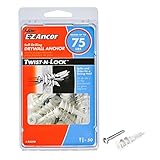
I remember staring at that freshly painted living room wall, dreaming of hanging my grandmother’s antique mirror. The wall looked solid, smooth, perfect. So, naturally, I grabbed the cheapest pack of plastic ribbed anchors I could find, figuring they’d do the job. Spoiler alert: they didn’t. That mirror ended up crashing to the floor a week later, taking a chunk of plaster with it. It was a brutal lesson in expecting too much from too little.
So, are plastic ribbed anchors okay with plaster walls? The short, blunt answer is: sometimes, but usually not the way you’d hope, especially for anything heavier than a picture frame.
This isn’t about fancy tools or complex engineering; it’s about understanding what actually holds stuff up on your wall without turning it into a repair job.
When the Plastic Ribbed Anchor Seems Like Enough (but Isn’t)
Look, I get it. You’ve got a lightweight item to hang – maybe a small, unframed print, a calendar, or a really thin piece of wall art. You’re staring at a bag of those ubiquitous white or blue plastic anchors, the ones with little ribs running down the side. They look simple enough, right? You drill a hole, shove the anchor in, and screw in your screw. It feels secure enough in your hand. I’ve been there. I’ve used them for things that, honestly, probably shouldn’t have been hung with them. The key here is ‘lightweight.’ We’re talking ounces, maybe a pound at most, and even then, you’re rolling the dice.
The problem with plaster walls is their inherent fragility. Unlike drywall, which has a paper facing and a gypsum core that can be relatively forgiving, plaster is a brittle material. It’s basically a cementitious coating applied over lath (wood strips or metal mesh). When you drill into it, you’re creating a void. The ribbed anchor is designed to expand and grip the material it’s inserted into. In drywall, this expansion can create a decent hold. But in plaster, those little ribs can easily just tear through the brittle surface if there’s any torque or weight applied. It’s like trying to grip a dry leaf – it crumbles.
I remember a particularly frustrating afternoon trying to hang a set of small, empty decorative shelves. Each anchor went in fine, and the shelves looked great. A day later, I noticed one shelf sagging. Then another. By the end of the week, they were all hanging at a jaunty angle, and when I took them down, the anchors just pulled right out of the plaster, leaving bigger holes than I started with. I’d wasted time and ended up with a bigger mess. The common advice often lumps plaster and drywall together, and that’s where the real trouble starts. They are not the same beast.
The ribbed anchor relies on friction and expansion. The ribs are supposed to dig into the wall material. But with plaster, the material can break away around the ribs before they can get a good bite. This is especially true if the plaster is old, crumbly, or has been damaged previously. You might think you’re getting a solid fix, but you’re often just relying on a few tiny points of contact that can give way under pressure. It’s a gamble, and usually, the house wins.
Why the Standard Ribbed Anchor Often Fails on Plaster
Let’s get real about why those cheap plastic ribbed anchors are usually a bad idea for plaster walls. It comes down to two main things: the material itself and the design of the anchor. Plaster, especially older plaster, is brittle. It’s not designed to flex or grip in the way drywall can. When you try to force a ribbed anchor into plaster, those ribs, which are meant to wedge and hold, can actually just break away the surface. Think of trying to hammer a nail into glass – it’s going to shatter. Plaster is a bit like that, albeit on a larger scale. The anchor needs something to bite into, and plaster often just crumbles around it.
Furthermore, most ribbed anchors are designed for a specific range of hole sizes and wall thicknesses, typically found in standard drywall construction. Plaster walls can be thicker, or the lath behind them might be uneven, leading to inconsistent anchor depth. If the anchor isn’t fully seated, or if it’s seated in a void created by a broken piece of plaster, its holding power is drastically reduced.
You might get lucky with a small, light item, but anything with a bit of weight or that might get bumped will likely pull free. I learned this the hard way trying to hang a coat rack. It worked for about three days before I heard a sickening crunch and all my jackets ended up on the floor.
The anchors were just… gone. Pulled right out of the plaster with barely a fight. (See Also: Can Concrete Anchors Be Used In Brick )
The common advice you’ll find online, or even from a well-meaning friend, often glosses over the nuances of plaster. They’ll say ‘just use an anchor,’ but they don’t differentiate. Drywall anchors are not universally plaster anchors. The ‘People Also Ask’ section on Google often shows this confusion: ‘Can I use drywall anchors in plaster?’ The answer is a complicated ‘no’ if you want reliability. While some people get away with it for very light items, it’s a recipe for disaster if you’re hanging anything substantial, like a TV mount, a heavy shelf, or even a substantial mirror. You’re basically relying on a weak point to hold something valuable, and the plaster is the weakest link in that chain.
The ribs on the anchor are designed to expand and grip. But in plaster, this expansion often just breaks the surface. It’s like trying to inflate a balloon inside a delicate teacup – it’s more likely to break the cup than hold the balloon. The anchor needs a material that can deform and grip, and plaster just doesn’t offer that reliably. This is why, for most plaster walls, you need anchors specifically designed for them, or you need to get creative with your fastening methods.
What to Look for Instead: Better Anchors for Plaster
So, if those cheap plastic ribbed anchors are a no-go for anything serious on plaster, what should you use? This is where you need to think about anchors that are designed to work with the brittle nature of plaster, or that bypass it entirely.
My go-to for plaster walls, hands down, are toggle bolts or molly bolts. These are a bit more involved than a simple ribbed anchor, but the payoff in holding strength is enormous. A toggle bolt has a spring-loaded wing that, once inserted through the hole, flips open behind the plaster and lath, creating a broad surface area to distribute the weight. This is important because it doesn’t rely on the plaster itself for grip; it uses the solid structure behind the plaster.
Molly bolts are similar in principle, expanding behind the wall. They often come with a metal sleeve that you screw into the plaster. As you tighten the screw, the sleeve expands and grips the wall. These are fantastic for medium to heavy items. I used molly bolts to hang a substantial bookshelf that’s now packed with books, and it hasn’t budged in years. The peace of mind is worth the extra effort. These anchors distribute the load over a much larger area, significantly reducing the stress on the plaster itself.
Another option, especially for lighter items where you still want a solid hold, are screw-in anchors. These are typically made of metal or a denser plastic and are designed to screw directly into the plaster and lath. They have a coarser thread that can grip better than the simple ribs of a plastic anchor. You pre-drill a pilot hole, and then you can literally screw the anchor in like a screw itself. I’ve found these surprisingly effective for things like curtain rods or heavy picture frames where a toggle bolt might be overkill, but a basic ribbed anchor would fail miserably. They provide a much more solid purchase into the wall structure.
When you’re shopping, look for anchors that explicitly state they are suitable for plaster or lath-and-plaster walls. Don’t just assume. Check the weight ratings on the packaging, but also understand that these are often estimates and can vary wildly depending on the condition of your specific wall. Always err on the side of caution. For any item where failure would be catastrophic (think flat-screen TVs, heavy mirrors, or anything that could fall and injure someone), it’s absolutely worth investing in the best possible anchor and making sure it’s installed correctly. The cost of a good anchor is a tiny fraction of the cost of replacing a damaged item or repairing your wall.
When the Ribbed Anchor might Work (but Proceed with Extreme Caution)
Okay, I know I’ve been pretty hard on the plastic ribbed anchor, and for good reason. But let’s talk about the rare occasions when you might get away with using them on plaster walls. This is for things that are incredibly light and will not be disturbed. I’m talking about a tiny, framed certificate that weighs less than a pound, or maybe a very thin, lightweight piece of artwork that is securely wired on the back and won’t see any lateral movement. Even then, I’d be looking at the condition of the plaster. Is it solid and firm, or does it feel crumbly and weak? If it’s the latter, forget it.
The key is minimal stress. If the item is just hanging there, not being pulled on, bumped, or subjected to vibration, and it’s very light, a ribbed anchor might hold. But the risk is still there.
A slight tremor from a door slamming, a curious pet, or even just the settling of the house could be enough to dislodge it. I once tried to hang a very light, small mirror in a guest bathroom using ribbed anchors. (See Also: Can Cords Be Used To Make Anchors Climbing )
It worked for about six months until a guest slammed the door a bit too hard. The mirror didn’t fall completely, but it pulled the anchors out enough that it was hanging crooked, and I could see the plaster starting to crack around the holes.
It was a clear sign that I’d pushed my luck too far.
My personal rule of thumb for ribbed anchors on plaster: if I can’t comfortably hold the item in my hand and feel like it has significant weight, I’m not using a ribbed anchor. And even then, I’m only considering it for things that are almost decorative. For anything functional, or anything valuable, it’s a hard pass. The temptation to use the cheap, easy option is strong, but the potential for damage and the cost of repairs almost always outweighs the initial savings. If you’re in doubt, which you probably will be, just go for a better anchor. It’s not worth the risk.
Common Mistakes When Anchoring Into Plaster
People mess up anchoring into plaster walls more often than you’d think, and usually, it’s because they’re treating plaster like drywall. The biggest mistake is using the wrong type of anchor. As I’ve hammered home, those flimsy plastic ribbed anchors are generally a bad idea. They rely on friction and expansion in a material that tends to crumble. Another common mistake is drilling the wrong size hole. Too small, and you can’t get the anchor in without forcing it, which can crack the plaster. Too large, and the anchor won’t have anything to grip, even if it’s the right type.
Always, always check the anchor manufacturer’s recommendations for hole size. They usually print it on the package.
If you’re unsure, it’s better to start with a slightly smaller drill bit and gradually increase the size if needed. I once tried to hang a very heavy framed picture, and I went with what I thought was a solid anchor – a self-drilling metal one. I drilled what I thought was the right size hole, but it was still too big for the anchor’s threads to bite into the plaster effectively.
The picture ended up tilting precariously, and when I checked, the anchor had just spun freely in the hole. I had to patch the hole and start over with a toggle bolt.
Another frequent error is not understanding the wall’s structure. Plaster is usually applied over wood lath or metal mesh. Knowing what’s behind the plaster can help you choose the right anchor. For instance, if you hit solid wood lath with a screw, you might not need an anchor at all for lighter items. However, relying on hitting the lath consistently is also a mistake, as the lath spacing can be irregular. If you’re using a toggle bolt, you need to make sure there’s enough space behind the plaster for the toggle to open up. If the lath is very close to the plaster surface or if there’s insulation packed in tight, a toggle might not have room to deploy properly.
Finally, people often rush the job. They don’t take the time to properly seat the anchor, or they don’t test its holding power before committing. Before you hang anything significant, give the anchor a good tug. See if it feels solid. For toggle bolts, make sure the toggle has fully opened and is pressing firmly against the back of the wall. It’s better to discover a weak anchor before your expensive TV is on the floor. Proper preparation and understanding the limitations of your wall material will save you a lot of headaches and potential damage. The integrity of your plaster wall is most important, and treating it with respect is key to successful DIY projects.
Practical Tips for Using Anchors in Plaster
When you’re tackling plaster walls, a little bit of preparation goes a long way. First, always use a dust mask and eye protection. Plaster dust is fine and gets everywhere, and drilling can send debris flying. I learned this the hard way after a plaster dust cloud filled my workshop; it took days to clean it all up, and my throat was sore for a week. So, protect yourself. For any anchoring project, invest in a small stud finder that can also detect metal, as this might help you identify the lath behind the plaster. While you’re not always aiming for the lath, knowing its general location can inform your anchor choice and placement. (See Also: Can Anchors In Your Shoulder Break )
If you’re using toggle bolts or molly bolts, which are highly recommended for plaster, make sure you have the right drill bit size. Measure the diameter of the anchor’s shaft (not the wings or sleeve) and select a drill bit that matches. It’s better to be slightly under than over. If the hole is too large, the toggle won’t have enough plaster to grip when it expands. If you’re drilling into an existing hole that’s too big, you might need to use a plaster repair product to fill it and let it cure before drilling a new, correctly sized hole. This is a common scenario when previous attempts have failed.
When you insert toggle bolts, make sure the wings are folded and that they deploy properly behind the wall. A common trick is to mark the wall where the toggle will open and drill a hole large enough for the wings to pass through, then attach the bolt. For molly bolts, follow the manufacturer’s instructions carefully. They usually involve drilling a specific size hole, inserting the molly, and then using a screw to expand the sleeve. Don’t overtighten, as this can strip the threads or damage the plaster. The goal is a snug, secure fit, not crushing the wall.
Here’s a table summarizing my general recommendations for different weights and anchor types on plaster walls:
| Item Weight | Recommended Anchor Type | Notes |
|---|---|---|
| Very Light (under 1 lb) | Plastic Ribbed Anchor (use with extreme caution, only if plaster is solid, item is static) | Only for decorative items that will never be bumped or disturbed. High failure risk. |
| Light (1-5 lbs) | Screw-in Anchors (metal or heavy-duty plastic) | Provides better grip than ribbed anchors. Make sure anchor is fully seated. |
| Medium (5-20 lbs) | Molly Bolts | Excellent holding power, distributes weight. Follow installation instructions precisely. |
| Heavy (20-50 lbs) | Toggle Bolts | Spring-loaded wings provide strong support. Make sure sufficient space behind plaster for toggle. |
| Very Heavy (50+ lbs, e.g., TVs) | Heavy-duty Toggle Bolts or specific mounting hardware designed for plaster. Consider finding studs if possible. | Requires careful planning and installation. Always check weight ratings and follow instructions. For TVs, professional installation is often wise. |
Finally, consider the age and condition of your plaster. Old, brittle, or cracked plaster will not hold anchors well. In such cases, you might need to repair the plaster first, or use a plaster-specific anchor that spreads the load. Sometimes, the best solution isn’t an anchor at all, but finding a wooden lath behind the plaster to screw directly into, if possible. This provides the most solid connection. However, locating lath consistently can be tricky, so anchors are often the more practical choice for many homeowners.
Can I Use Plastic Ribbed Anchors in Plaster Walls for Heavy Items?
No, absolutely not. Plastic ribbed anchors are generally unsuitable for heavy items on plaster walls. They rely on friction and expansion, which plaster cannot reliably provide. Heavy items require anchors like toggle bolts or molly bolts that distribute weight over a larger area or grip the structure behind the plaster. Using ribbed anchors for heavy items is a recipe for damage and failure.
What Is the Difference Between Plaster and Drywall Anchors?
The main difference lies in the material they are designed for. Drywall anchors are typically made to grip the gypsum core and paper facing of drywall, often expanding or wedging within it. Plaster walls are more brittle and often applied over lath. Anchors for plaster need to account for this brittleness, either by distributing force over a larger surface area (like toggle bolts) or by using a more solid gripping mechanism that doesn’t rely on the plaster’s integrity alone.
Are Screw-in Anchors Okay for Plaster Walls?
Yes, screw-in anchors can be a good option for plaster walls, particularly for lighter to medium-weight items. They have coarser threads that can bite into the plaster more effectively than ribbed anchors. However, make sure the plaster is solid and not crumbly. For heavier items, toggle bolts or molly bolts are still the superior choice as they offer significantly more holding power and distribute the load better.
How Do I Know If My Plaster Wall Is Too Old or Crumbly for Anchors?
You can test the integrity of your plaster by gently pressing on it with your finger or a blunt object. If the surface crumbles easily or feels soft and weak, it’s likely too crumbly for standard anchors. You might also notice visible cracks or chipping around existing holes. If your plaster is in poor condition, it’s often best to repair it before attempting to hang anything, or to use specialized anchors designed for weakened plaster, which may involve epoxy or larger backing plates.
Final Verdict
So, to wrap this up: are plastic ribbed anchors okay with plaster walls? For anything beyond a tiny, feather-light picture frame that you don’t care about, the answer is a firm no. I’ve seen too many things fall, too many walls get damaged, and too many people waste time and money trying to make them work.
Invest in the right tool for the job. Toggle bolts, molly bolts, and good quality screw-in anchors are your friends when dealing with plaster. They might take a few extra minutes to install, but the security and peace of mind they offer are worth their weight in gold. Trust me, your grandmother’s mirror (or your new TV) will thank you.
Before you grab that cheap bag of anchors next time, take a moment to consider the material you’re working with. A little knowledge goes a long way in preventing DIY disasters.