I remember staring at that massive, awkwardly shaped mirror, wondering how on earth I was going to get it onto the wall without it crashing down and taking half the drywall with it. I’d already used up the anchors that came with the kit, thinking I might need to reposition. Big mistake.
It’s a question that pops up more than you’d think for anyone who’s ever hung anything heavier than a postcard: are wall anchors reusable? The short, blunt answer is usually no, but the nuance is where things get tricky, and where you can save yourself a whole lot of frustration.
The Real Deal with Reusing Wall Anchors
Let’s cut to the chase. Most of the time, when you pull a wall anchor out of the drywall, it’s done for. Think of those cheap plastic expansion anchors, the ones that look like little ribbed tubes.
When you screw into them, they flare out behind the drywall, creating a wedge. Once you pull that wedge out, the plastic is often stretched, deformed, or even cracked. Trying to shove it back in the same hole?
It won’t expand properly, or it might just spin uselessly. I learned this the hard way trying to hang a bookshelf that ended up leaning precariously until I ripped it all out and started over with fresh anchors. It cost me an extra trip to the hardware store and about an hour of my weekend I’ll never get back.
The common advice you’ll see everywhere is a resounding ‘no’ for the plastic ones. And for good reason. They’re designed for a single, secure insertion. The whole point is that they expand and grip the inside of the wall. If they’ve already done that expansion, they’ve lost their ability to do it again effectively. You might get lucky with a very light picture frame if you’re gentle, but for anything with a bit of weight, you’re asking for trouble. It’s like trying to un-pop a balloon and expect it to inflate the same way twice. It just doesn’t work.
However, there are some types of anchors that are more forgiving. Toggle bolts, for instance, have a spring-loaded mechanism that folds flat to go through the hole and then springs open behind the wall. While the toggles themselves can often be reused, the screw you used with it might be stripped or worn from the initial installation. And, of course, the hole in the wall is still there, potentially a bit larger than before. So, ‘reusable’ needs a lot of context. For the average DIYer looking to hang a TV or a heavy mirror, assuming your anchors are single-use is the safest bet.
What to Look for: Beyond the Cheap Plastic
When I’m deciding what to hang and where, I’m not just grabbing whatever is cheapest. I’m looking at the type of anchor and what it’s designed for.
The ribbed plastic ones? Fine for a very light poster, maybe. For anything else, I’m looking at something more solid. The most common ‘better’ anchors are the self-drilling ones (sometimes called screw-in anchors) and the toggle bolts.
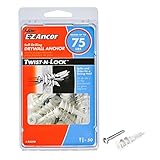
Self-drilling anchors are usually metal or a sturdier plastic. You just screw them directly into the drywall (they have a built-in drill bit or pointy end), and then you screw your item’s screw into the anchor.
These are generally better than the simple expansion ones, but their reusability is still questionable. If the hole they make gets a little too big, or the anchor itself strips out, you’re often out of luck. (See Also: Can Concrete Anchors Be Used In Brick )
Toggle bolts are a different beast. You drill a hole, push the toggle through, and it springs open behind the drywall. This creates a much stronger hold because the weight is distributed over a larger area.
Can you reuse the toggle mechanism? Yes, often. You can pull the toggle back out, and if it’s not bent or damaged, it should work again. The screw, however, is another story.
If the threads are damaged from the first use, or if the hole in the wall is too mangled, you might need a slightly larger screw or a new toggle. I once had a toggle bolt come loose because the drywall around the hole got crumbly. I managed to get the toggle back out, but the hole was a mess.
I had to patch it and use a different, larger anchor to be safe. It’s a gamble, and not one I like taking with valuable items.
Another type, and arguably the most reusable, is the molly bolt. These have a metal sleeve that expands behind the wall when you tighten the screw. You can usually remove the screw and the molly bolt sleeve can stay in place or be removed and reinserted. The sleeve itself is pretty durable. However, they require a larger hole to begin with. So, the initial installation is more involved. My personal preference for heavy items often leans towards these or a proper stud finder. If you can hit a stud, you rarely need anchors at all, and that’s the most secure method, period.
| Anchor Type | Typical Reusability | Best For | My Verdict |
|---|---|---|---|
| Plastic Expansion | No | Very light items (posters, small frames) | Avoid for anything substantial. Waste of time and potential drywall damage. |
| Self-Drilling (Screw-in) | Maybe, with caution | Medium-light items (small shelves, mirrors) | Better than basic plastic, but hole integrity is key. |
| Toggle Bolt | Mechanism Yes, screw/hole maybe | Medium-heavy items (shelves, cabinets) | Good hold, but hole damage can be an issue for reusability. |
| Molly Bolt | Yes (sleeve) | Heavy items (large mirrors, TVs) | Reliable hold, but installation is more involved. |
Common Mistakes People Make with Anchors
The biggest blunder I see people make, and one I’ve definitely committed myself in a rush, is underestimating the weight of what they’re hanging. That sleek, modern TV console looks light, but when you load it up with books, electronics, and that ridiculously heavy ceramic cat collection, it adds up fast. Anchors are rated for a certain weight, but that rating is usually for shear strength (hanging straight down) in ideal conditions, not pull-out strength (pulling away from the wall). So, that 50lb anchor might only be good for 20lbs in reality, especially if you’re hanging something that sticks out from the wall, creating use.
Another common mistake is reusing anchors that clearly show signs of wear. I’ve seen people try to cram a slightly bent plastic anchor back into a hole that’s already a bit too big. It never ends well. The anchor won’t seat properly, and the screw won’t grip. This leads to wobbly shelves or, worse, items falling. It’s like trying to use a bent nail; you’re fighting the tool itself. Also, people often don’t use the right size screw for the anchor. The screw needs to engage the anchor correctly to expand it or secure it. Too short, and it won’t work. Too long, and it might hit something behind the wall or not grip the anchor properly.
Finally, and this is huge, people often ignore the wall material. These anchors are designed for drywall. If you’re trying to use them in plaster, concrete, or wood, you’re going to have a bad time. Plaster can be brittle and crack, concrete needs specific masonry anchors, and wood usually just needs a good screw drilled directly into it (or a pilot hole). I once tried to use a standard drywall anchor in an old plaster wall, and it just crumbled the plaster into dust. Ended up having to patch a softball-sized hole and rethink my entire approach. It’s not rocket science, but you do need to know what you’re working with. Always check the packaging for the intended wall material.
When You might Get Away with Reusing an Anchor
Okay, so I’ve been pretty clear that reusing most anchors is a bad idea. But are there any scenarios where it’s not a complete disaster? Maybe, but with serious caveats. If you’re talking about a tiny, lightweight picture frame that you only had up for a week, and you’re now putting it back in the exact same spot, you might be able to gently remove the plastic anchor and reinsert it.
The key here is ‘gently’ and ‘same spot’. If the hole is still tight and the anchor isn’t visibly deformed, you might get away with it. (See Also: Can Cords Be Used To Make Anchors Climbing )
I’ve done this for very minor things, like rehanging a calendar after replacing the paper. It felt risky, but for something that weighed less than a pound, it held.
Toggle bolts are a bit more forgiving. If you’ve used a toggle bolt to hang something and you need to remove it temporarily, say to paint behind it or to swap out a picture frame that uses the same mounting hardware, you can often reinsert the toggle mechanism. The trick is to make sure the bolt and toggle are still in good condition. If the threads on the screw are stripped from over-tightening, or if the toggle itself is bent, don’t risk it.
I had a friend who reused a toggle bolt for a medicine cabinet. He’d installed it a year prior, removed the cabinet for a deep clean, and put the toggle back. It held for about three weeks before it decided to give up the ghost, taking the cabinet and all its contents with it. So, even with toggles, the ‘reusable’ aspect has a serious expiration date.
The absolute best bet for reusability, though, is often the screw itself from a molly bolt or a toggle bolt, provided the threads are clean and undamaged. The anchor mechanism (the sleeve or the toggle) is what you’re really concerned about. If you remove a molly bolt, the sleeve can often be left in the wall, and you can reinsert the screw.
Or, you can remove both and reinsert the sleeve and screw later. This is one of the reasons why molly bolts are often recommended for things that might need occasional removal, like certain types of shelving or wall-mounted fixtures where you might need access behind them. But again, the hole size matters.
If the hole has widened significantly from previous uses, even a molly bolt might not get a good grip.
Stud Finders: The Ultimate ‘reusable’ Solution
Honestly, if you’re constantly hanging things and worrying about anchors, or if you’re dealing with anything heavy, the best advice I can give you is to invest in a good stud finder. It’s not technically an anchor, but it’s the ultimate solution for secure mounting. Finding a wall stud means you’re screwing directly into the solid wood framing of your house. This is infinitely stronger than any drywall anchor, and it’s absolutely reusable. You can unscrew and rescrew into the same stud a hundred times, and it will hold. I’ve mounted everything from enormous flat-screen TVs to heavy-duty workbench cabinets using studs, and I’ve never once worried about them failing.
There are a few types of stud finders. The cheapest are the magnetic ones that detect the nails or screws holding the drywall to the studs. They’re not super precise but work okay. Then you have the electronic ones that use sensors to detect density changes in the wall. Some just beep, others have little screens showing you where the edge of the stud is. The better ones can even detect live AC wiring, which is a handy safety feature. I splurged on a mid-range electronic one about five years ago, and it’s paid for itself a dozen times over in saved frustration and avoided botched holes.
The process is simple: scan the wall until you find a reliable stud. Mark its edges. Then, use a drill bit to create a pilot hole directly into the center of the stud. Use a screw that’s long enough to go through the drywall and get a good bite into the wood – usually around 1.5 to 2 inches is sufficient. This method requires a little more effort upfront than just hammering in a plastic anchor, but the security and reusability are unparalleled. You’re not relying on expanding plastic or fragile toggles; you’re relying on solid wood. It’s the professional’s secret weapon, and it’s available to everyone.
When to Just Bite the Bullet and Buy New Anchors
Look, I’m all for saving money and being resourceful. But there comes a point where the risk outweighs the reward. If you’re hanging something precious, something that could cause significant damage if it fell, or something that’s just plain expensive, don’t cheap out on anchors. That $5 bag of anchors is peanuts compared to the cost of a broken TV, a ruined antique, or a damaged piece of furniture. I’ve learned this lesson not just with anchors, but with tools in general. A cheap drill might get the job done for a while, but a good one makes everything easier and safer. (See Also: Can Anchors In Your Shoulder Break )
If you’re removing an anchor and the hole looks noticeably larger than it should, or the drywall around it is crumbling, it’s time for new. If the anchor itself is cracked, bent, or looks stripped, it’s done. If you can’t remember what you used the anchor for last time, or how old it is, err on the side of caution and get new ones. It’s much better to spend $10 on a new box of anchors than to spend $500 on a replacement item.
Furthermore, if you’re buying anchors, check the weight rating. Don’t just guess.
The packaging will tell you how much weight they’re rated for in drywall, plaster, or masonry. Always choose anchors that can handle significantly more than you think you’ll need. Overkill is better than failure.
The only real exception I’d make is if you’re absolutely certain you’re using a high-quality, reusable anchor type (like a solid molly bolt or a specific metal toggle system designed for multiple uses) and you’ve inspected it thoroughly, and the hole in the wall is pristine. Even then, I’d be hesitant for anything truly important. For the vast majority of common DIY tasks, buying new anchors is the smart, safe, and ultimately more cost-effective decision when you factor in the potential for damage and the time wasted on failed attempts. It’s a small price to pay for peace of mind and a securely hung item.
Frequently Asked Questions About Reusable Wall Anchors
Can I Reuse a Plastic Wall Anchor?
Generally, no. Plastic expansion anchors are designed to deform and grip the drywall upon installation. Once removed, they are usually stretched or deformed, losing their ability to create a secure grip when reinserted. Attempting to reuse them for anything other than the lightest of items is risky and can lead to failure.
Are Toggle Bolts Reusable?
The toggle mechanism itself is often reusable if it’s not damaged. However, the screw you used with it might have stripped threads, and the hole in the drywall can become enlarged or weakened after the first use. This can compromise the anchor’s holding power on subsequent installations, so caution is advised.
What Is the Most Reusable Type of Wall Anchor?
Molly bolts are generally considered the most reusable type of drywall anchor. The metal sleeve can often be left in place or removed and reinserted multiple times. However, the integrity of the hole in the wall is still a factor in their long-term reusability and holding strength.
When Is It Okay to Reuse a Wall Anchor?
It’s only advisable to reuse an anchor in very specific, low-risk situations. This includes very lightweight items (like a small picture frame) that have been removed briefly and are being rehung in the exact same spot, provided the anchor shows no signs of damage or deformation. Even then, it’s a gamble.
What Happens If I Reuse a Wall Anchor and It Fails?
If a reused wall anchor fails, the item it was supporting will fall. This can cause damage to the item itself, the wall, and potentially any furniture or flooring below it. It can also be a safety hazard, especially if the falling item is heavy or sharp.
Final Thoughts
So, to circle back to the original question: are wall anchors reusable? For the most common, cheap plastic ones, the answer is a pretty firm no. They’re single-use items designed to do one job and do it well the first time. For more solid types like toggles and molly bolts, there’s a degree of reusability, but it’s always with the understanding that the wall itself is also compromised by the initial installation.
My personal rule of thumb is simple: if there’s any doubt, buy new. The cost of a fresh set of anchors is negligible compared to the potential damage or the hassle of a failed hanging job. Unless you’re dealing with a high-quality anchor specifically designed for multiple uses, and you’ve meticulously inspected both the anchor and the hole, I’d recommend starting fresh. It’s just not worth the risk.
Before you hang anything heavy, take a moment. Grab a stud finder, check the weight rating on your anchors, and if in doubt, make that quick trip to the hardware store. Your walls (and your belongings) will thank you.