I remember the first time I tried to hang a heavy mirror. The instructions said ‘find a stud or use anchors.’ I figured, ‘Studs are stronger, right? Why bother with little plastic things?’ So, I drilled right into what I thought was a stud. Big mistake. That mirror is now a very expensive, very broken pile of glass on my floor, and I learned a hard lesson about load-bearing, drywall, and when exactly are wall anchors needed for studs.
It’s easy to get confused. We see people drilling directly into walls for shelving, TV mounts, and more, and we assume they know what they’re doing. Sometimes they do. Other times, they’re just lucky. Or, they’re using the wrong type of anchor. Let me save you some grief and some shattered ceramics.
Forget the Stud Myth: When Anchors Are Your Best Friend
Look, everyone tells you to find a stud. It’s like this universal mantra for hanging anything remotely heavy. And yeah, a stud is absolutely the gold standard. It’s a solid piece of wood, usually a 2×4, that forms the skeleton of your wall. Drilling into a stud gives you a direct, strong connection to the framing, and for most heavy items – think a full-size bookshelf, a massive TV, or that antique armoire you inherited – that’s what you want. My own disastrous mirror incident? It turns out I’d drilled into a gap between studs, or worse, just some flimsy blocking. The drywall, bless its heart, put up a valiant fight but ultimately surrendered to gravity.
But here’s the kicker: you can’t always find a stud where you need one. What if you want to hang a picture frame exactly 18 inches from the corner? Or install a floating shelf above your toilet? Sometimes, your desired location just doesn’t align with the wall’s internal structure.
This is where the humble wall anchor steps in, and frankly, it gets a bad rap. People dismiss them as flimsy or temporary fixes.
I’ve been there, thinking, ‘Why use a plastic plug when I can just hit wood?’ Well, I’ve also seen perfectly good drywall ripped out by something that should have been anchored. The truth is, for many common household items, a properly chosen and installed anchor is not just sufficient; it’s the right way to go. It distributes the weight across the drywall, preventing it from crumbling.
It’s not about avoiding studs entirely; it’s about knowing when the drywall itself, with a little help, can do the job.
I’ve spent countless hours trying to locate studs with cheap electronic stud finders that beeped at every nail head and bit of wiring. It’s frustrating. One time, I spent twenty minutes mapping out what I thought was a perfect stud line, only to realize I was mostly hitting hollow spaces. The sheer amount of effort to find a stud exactly where you need it can sometimes outweigh the perceived ‘weakness’ of a good anchor.
We’re talking about hanging things like a medicine cabinet, a coat rack, or even a smaller TV. These aren’t skyscrapers; they’re household items that, with the right hardware, will stay put for years. The common advice to ‘always find a stud’ is practical, but it’s not the whole story.
Sometimes, the stud is an inconvenient myth, and an anchor is your pragmatic savior.
Demystifying Drywall Anchors: Not All Heroes Wear Capes (or Wood)
So, let’s talk about these anchors. They aren’t all the same, and the plastic ones you get free with a cheap shelf are often the worst offenders. We’re talking about real drywall anchors here – the ones designed to hold actual weight. The most common type you’ll encounter are expansion anchors, often called ‘toggle bolts’ or ‘molly bolts.’ These work by expanding behind the drywall. You drill a hole, insert the anchor, and then screw into it. As you screw, wings or legs deploy behind the wall, gripping the drywall from the other side. It’s clever engineering, really. They turn a flimsy sheet of gypsum board into a surprisingly strong mounting point. (See Also: Can Concrete Anchors Be Used In Brick )
Then there are screw-in anchors, often made of plastic or metal. These are generally for lighter loads but are incredibly easy to install. You just screw them directly into the drywall. They have threads that bite into the gypsum, providing a decent hold for things like picture frames, small shelves, or light sconces. I used a bunch of these for hanging a gallery wall of framed photos, and they held up perfectly. No stud finder headaches, just a quick drill and screw. The key with these is to not overtighten, which can strip the drywall.
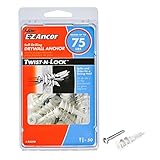
My personal favorite for medium-duty tasks are the self-drilling anchors. They have a sharp point and screw directly into the drywall without needing a pilot hole. They’re quick, clean, and surprisingly strong. I once hung a fairly heavy mirror using just four of these, placed strategically. It’s still there, solid as a rock, two years later. The trick is matching the anchor to the weight and the type of wall. Pushing a heavy object onto a lightweight anchor meant for a poster is a recipe for disaster. It’s like trying to hold up a bridge with a toothpick. You wouldn’t do that, so why do it to your wall?
| Anchor Type | Best For | Weight Capacity (Estimate) | Ease of Use | My Verdict |
|---|---|---|---|---|
| Plastic Expansion (e.g., conical) | Very light items (posters, small decorations) | < 10 lbs | Easy | Avoid unless absolutely necessary. Often fail. |
| Self-Drilling (plastic or metal) | Medium-light items (medicine cabinets, small shelves, mirrors) | 15-50 lbs | Very Easy | Great for most common tasks. Quick and reliable. |
| Toggle Bolts (traditional or snap toggles) | Medium to Heavy items (TV mounts, large shelves, cabinets) | 50-150+ lbs | Moderate (requires larger hole) | Excellent for serious weight. The go-to for heavy items. |
| Screw-in Anchors (threaded) | Light to Medium-light items (pictures, small decor, light fixtures) | 10-30 lbs | Easy | Good for quick, light jobs. Don’t overstress them. |
When Not to Rely Solely on Drywall (the Stud Is King!)
Okay, let’s be blunt. There are times when you absolutely, positively need a stud, and no amount of fancy anchor wizardry will save you. The golden rule?
If it’s heavy, important, or could cause serious damage if it falls, find a stud. We’re talking about major appliances that might be mounted, like a microwave or an oven.
Think about the sheer weight and potential kinetic energy if something like that came loose. My first apartment had a notoriously flimsy wall above the stove, and the landlord insisted on using anchors for the upper cabinets.
Every time I opened the oven door with a bit too much enthusiasm, I’d swear I heard a creak. It gave me the absolute heebie-jeebies. Eventually, I insisted they reinforce it with studs because I wasn’t willing to risk a cascade of cookware and glass.
The same applies to anything that will experience lateral stress or repeated jarring. A shelf that holds a lot of books, especially if you tend to shove them in rather than place them gently, will put sustained pressure on the mounting points. A TV wall mount, particularly for larger screens, is another prime candidate for stud mounting. These things are expensive, and the last thing you want is for your $1000 TV to end up on the floor because the anchors gave out. The force exerted on a wall mount can be significant, especially if the TV is bumped or if you’re leaning on it.
I’ve learned the hard way that ‘heavy’ is relative. A 30-pound mirror might seem manageable for an anchor, but what about the mirror, plus the frame, plus the glass?
It adds up. Always err on the side of caution. If the manufacturer of the item you’re hanging specifies stud mounting, listen to them.
They usually know their product’s weight and the forces involved. Trying to outsmart engineering with a plastic anchor is a fool’s errand. I once saw a friend try to mount a massive soundbar on a wall-mount bracket using only drywall anchors. (See Also: Can Cords Be Used To Make Anchors Climbing )
It looked promising for a week, then the bracket slowly started to sag, pulling drywall dust out of the holes. It was a messy, embarrassing failure that could have easily damaged the expensive soundbar.
The ‘people Also Ask’ Gauntlet: Tackling Common Confusions
Let’s address some of the burning questions swirling around this whole ‘studs versus anchors’ debate. One common query is, ‘Can you hang a TV without a stud?’ The short answer is: it depends entirely on the TV size and the mount. For a small, lightweight TV, maybe. But for anything over 30-40 inches, you’re really pushing your luck. Most TV mount manufacturers will explicitly state that you must mount to studs. They sell specialized mounts for this exact reason. Trying to hang a 55-inch TV with just drywall anchors is like trying to anchor a cruise ship with a fishing line. It’s asking for catastrophic failure.
Another one I see is, ‘What if I can’t find a stud?’ This is the scenario where anchors shine. As I’ve hammered home, there are plenty of solid anchors designed for this. The key is to know the weight of what you’re hanging and choose an anchor rated for at least double that weight. Overestimate. Always. It’s cheap insurance. If the item weighs 20 pounds, don’t grab an anchor rated for 25. Go for one rated for 50 or even 75 pounds. This gives you a massive buffer against any unexpected stress or settling.
Then there’s the question about plaster walls. Plaster is different from drywall. It’s often harder, more brittle, and doesn’t crumble in the same way. Anchors designed for drywall might not work as well in plaster. For plaster walls, you often need specific plaster anchors or, ideally, to find the lath behind the plaster and screw into that. Lath is the thin wooden strips that plaster is applied over. Finding it can be tricky, but it provides a solid base. If all else fails, toggle bolts that expand widely are often a better bet for plaster than simple screw-in types.
Finally, ‘How strong are drywall anchors?’ Their strength varies wildly. The cheap plastic ones you get free with cheap furniture might hold a picture frame. High-quality toggle bolts can hold hundreds of pounds. It’s not about the anchor being inherently weak; it’s about choosing the right one for the job. A properly installed, heavy-duty toggle bolt in good condition drywall is surprisingly strong. It’s a testament to how much weight the drywall itself can support when the load is distributed correctly.
Do I Need Anchors If I Hit a Stud?
Generally, no. If you’ve confirmed you’ve hit a solid stud with your screw or nail, you’ve got the strongest possible mounting point. Anchors are designed to provide support where there is no solid wood framing directly behind the drywall. Using an anchor in a stud is unnecessary and can actually weaken the connection. Stick to screws or lag bolts that go directly into the stud.
How Much Weight Can a Wall Anchor Hold?
This varies enormously by anchor type and quality. Cheap plastic anchors might hold only 10-20 pounds. Heavy-duty toggle bolts or molly bolts can support anywhere from 50 to over 150 pounds, sometimes even more, depending on the wall material and the specific anchor. Always check the manufacturer’s weight rating and err on the side of caution, choosing an anchor rated for significantly more than your item weighs.
Can You Hang Heavy Items Without Studs?
For lighter to medium-weight items, yes, with the right anchors. For truly heavy items like large TVs, substantial shelving units, or cabinets, it’s strongly recommended to mount directly into studs whenever possible. If studs aren’t available in the desired location, you’ll need very heavy-duty toggle bolts or specialized mounting systems designed for load distribution on drywall, and even then, proceed with extreme caution and research.
What’s the Difference Between Drywall Anchors and Studs?
A stud is a vertical structural support beam within your wall, usually made of wood or metal. It provides a solid, load-bearing point. A drywall anchor is a fastener that you insert into drywall (or other wall material) to create a secure mounting point where no stud is present. Anchors work by expanding, gripping, or threading into the wall material to distribute the load, making the drywall itself capable of holding weight.
Practical Tips: Anchoring Like a Pro (without Being One)
Alright, let’s get practical. You’ve decided you need anchors. What now? First, always overestimate the weight. If your item is 20 pounds, don’t grab an anchor rated for 25. Get one rated for 50 or 75. Trust me on this; I learned the hard way after a shelf full of books decided to redecorate my floor. Second, read the instructions. Seriously. Different anchors have different installation methods. Toggle bolts need a larger hole, some self-drilling ones don’t, and you need to make sure you’re using the right size drill bit. I once stripped out a hole because I used a bit that was too large for the anchor, and it just spun uselessly. (See Also: Can Anchors In Your Shoulder Break )
Third, consider the material of your wall. Drywall is common, but some older homes have plaster and lath. Anchors designed for drywall might not perform well in plaster. For plaster, look for anchors specifically designed for it, or try to find the lath behind it. Fourth, think about the number of anchors. For a long shelf, don’t just put two anchors at the ends. Distribute them evenly along the length. More anchor points mean more surface area for the weight to be distributed across, making each anchor less stressed and the whole setup much more secure. A 3-foot shelf might need at least three, maybe four, anchor points.
My own go-to strategy now is to always have a good assortment of heavy-duty toggle bolts and self-drilling anchors on hand. When I need to hang something, I first try to find a stud. If I find one, great, I use a long screw that goes well into the stud. If not, I grab the appropriate anchor.
I’ll often pre-drill the hole for toggle bolts just to make sure it’s clean and the right size. For self-drilling anchors, I drive them in slowly and steadily, making sure they’re flush with the wall. One final tip: always give the mounted item a good tug before you put anything on or in it. It’s a quick way to catch a loose anchor before it becomes a problem.
My Big Anchor Oopsie and What I Learned
I really thought I was clever. I was building a custom media console for my living room, and I wanted it to look like it was floating. The plan was to attach heavy-duty French cleats to the wall and then hang the console on that. Simple, right? Well, my wall had a funny layout, and the ideal spot for one of the cleats meant I couldn’t hit a stud. No problem, I thought, I’ll just use these beefy-looking metal toggle bolts. They looked like they could hold a small car. I installed them, screwed in the cleat, and it felt rock solid. I hung the console, loaded it up with electronics, and it looked amazing.
For about three months. Then, one morning, I heard this ominous creaking.
I looked over, and the cleat had started to pull away from the wall. The drywall around the toggle bolts had started to compress and tear. The weight of the console, combined with the constant slight movement from opening cabinet doors and placing things on it, had been too much.
The ‘beefy’ toggle bolts were still functional, but the drywall itself had failed. The whole console sagged precariously. Thankfully, nothing fell, but it was a terrifying reminder that drywall has its limits, even with the best hardware. I had to take it all down, find a way to reinforce the wall structure (which involved some creative framing), and then re-mount the cleat directly into those new studs.
It was a pain, a mess, and frankly, a bit embarrassing. It taught me that while anchors are fantastic, they are not magic.
Understanding the load, the wall material, and the anchor’s specific capabilities is absolutely most important. So, when are wall anchors needed for studs? Always when you can’t hit a stud for the weight you need to support, but never assume they’re a substitute for structural support when it’s available and necessary.
Conclusion
So, to wrap this up, are wall anchors needed for studs? Not if you’re drilling directly into a solid stud for a secure mount. That’s always the preferred method for heavy or important items. But here’s the real takeaway: don’t let the quest for a stud make you forget about the reliable strength of a good drywall anchor. For many common household items, a properly chosen and installed anchor is not just an option; it’s the smart, safe, and often the only practical solution when stud placement is inconvenient or impossible.
The world of wall anchors can seem daunting, but it boils down to matching the weight of what you’re hanging to the capacity of your chosen fastener. Overestimate your needs, read those little instruction pamphlets, and give that mounted item a good shake before loading it up. You’ll save yourself from headaches, damaged walls, and potentially broken possessions.
Next time you’re staring at a blank wall with a heavy item in hand, remember this. Find that stud if you can, but don’t be afraid of a well-chosen anchor. It’s a vital tool in your DIY arsenal, and knowing when and how to use it makes all the difference.