So, you’ve got a drill bit that’s wandered off the map, or maybe a wall anchor that’s decided to become a permanent, ugly fixture in your otherwise lovely tiled shower. It’s a common headache, and the first question that pops into your head is: can anchors be removed from tile without turning your wall into a holy mess?
I’ve been there. More times than I care to admit, I’ve stared at a chipped tile or a gaping hole where a screw used to be, cursing my DIY ambitions and the cheap anchors I probably bought. Let me tell you, the internet is full of advice, some good, some… well, let’s just say optimistic.
But before you grab a sledgehammer, let’s get down to brass tacks. It’s not always a straightforward ‘yes’ or ‘no’.
When a Simple Screw Just Won’t Cut It: Why Anchors Live in Tile
Look, I get it. You need to hang something on your tiled wall. Maybe it’s that fancy towel rack, a shelf for your shampoo collection, or even a bracket for a TV. Tile looks tough, right? It’s smooth, it’s waterproof, and it feels solid. But here’s the kicker: tile itself is brittle. You can’t just drill into it and expect it to hold anything substantial without some kind of support. Drill too deep or too hard without the right bit, and you’ll get spiderweb cracks faster than you can say ‘oops’.
That’s where wall anchors come in. They’re the unsung heroes, or sometimes the unwelcome villains, of home improvement. For tiled surfaces, especially in wet areas like bathrooms and kitchens, anchors are pretty much a must if you want your stuff to stay put. They create a secure base for screws, distributing the weight and preventing the screw from simply spinning uselessly in a hole that’s too big or, conversely, cracking the tile.
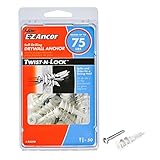
There are a few types you’ll commonly encounter. The most basic are the plastic expansion anchors, the kind that look like little ribbed barrels. You drill a hole, shove one in, and then drive a screw into it. The plastic expands, gripping the inside of the hole. Then you’ve got toggle bolts, which are a bit more heavy-duty, with wings that spring open behind the wall. And for really serious loads, you might see metal screw-in anchors or even epoxy anchors, which are basically a chemical bond. Each has its place, and each, when installed correctly, does a decent job of holding things up. The problem arises when you need them to leave. (See Also: Can Concrete Anchors Be Used In Brick )
I remember thinking, ‘How hard can it be to hang a shower caddy?’ Famous last words. I used some basic plastic anchors, drilled the holes (or so I thought), and they seemed solid. Six months later, with the weight of various bottles, the whole thing decided to take a dive, taking a chunk of tile with it. The anchors were still stubbornly lodged in the wall, mocking me. That’s when I learned that the removal is often a trickier beast than the installation, especially when you’re dealing with tile.
The Anchor’s Last Stand: What Happens When You Try to Get Them Out
Alright, so you’ve decided that anchor has to go. Maybe it’s damaged, maybe the item it held is gone, or maybe you just want a clean, unblemished tile surface. This is where things get… interesting. The first thing you’ll notice is that most anchors don’t have a handy ‘pull me’ tab. They’re designed to grip, and they grip hard. Trying to just yank them out with pliers is often like trying to pull a stubborn weed out of concrete – you might end up with a mess, but the weed (or anchor) might just break off, leaving the roots (or the body of the anchor) behind.
The most common scenario, especially with those plastic expansion anchors, is that the screw comes out, but the anchor body stays put, flush with the tile surface. This is infuriating. You might try to grab the edge of the plastic with needle-nose pliers and twist or pull. Sometimes, if it’s not too tight, you can get it to spin. But often, the plastic is fused or jammed so tightly that it just shreds or spins in place, refusing to budge. You’re left with a plastic ring embedded in your tile. Not exactly the look you were going for.
Toggle bolts are another beast. When you install them, you often have to shove them through a larger hole, and then they pop open behind the drywall. To remove them, you typically need to unscrew them and then try to collapse the toggle wings to pull the whole assembly back out through the hole. If the hole isn’t large enough, or if the toggle gets stuck at an odd angle, you’re in for a fight. Sometimes you can get the screw out and then push the whole thing through the hole into the wall cavity, but then you’ve got a loose metal thing rattling around inside your wall. Not ideal.
Screw-in anchors, which you twist directly into a pre-drilled hole, can also be a pain. They’re designed to bite into the material. Removing them can sometimes feel like unscrewing something that’s been glued in. If they’re really stuck, you might strip the head trying to get them out, leaving you with a useless metal protrusion. (See Also: Can Cords Be Used To Make Anchors Climbing )
Honestly, my worst experience involved an epoxy anchor. I was trying to hang a really heavy mirror. The instructions said ‘drill a hole, clean it, inject epoxy, insert anchor, let cure’. Sounded solid. It was solid. So solid, in fact, that when I decided the mirror was too heavy for that spot and I wanted to move it, the anchor was fused to the tile and the grout in a way that made it look like it had grown there. I spent an hour trying to chip it out, and ended up with a divot in the tile that required a full replacement. Lesson learned: sometimes the strongest solutions are the hardest to undo.
The Big Question: Can Anchors Be Removed From Tile? The Tools and Tactics
So, the million-dollar question: can anchors be removed from tile? Yes, but it’s rarely as simple as unscrewing them. It often requires patience, the right tools, and a willingness to accept that sometimes, you might do a little collateral damage. The goal is usually to either extract the anchor intact or to break it down into pieces small enough to be removed or hidden.
For those stubborn plastic anchors that won’t budge, here’s what I’ve found works, at least most of the time. First, try to get the screw out completely. If the anchor spins with the screw, you’ve got a bigger problem. If the screw comes out, leaving the plastic body, grab the edge of the plastic with a good pair of locking pliers (like Vise-Grips) and try to twist it counter-clockwise. If it starts to spin, great! Keep going. If it just snaps or spins uselessly, you’ll need to get more aggressive.
Sometimes, you can drill into the center of the plastic anchor with a small drill bit. The idea is to break it up from the inside. Go slow. You want to create space and weaken the anchor. Once you’ve drilled a bit, you might be able to grab the pieces with pliers and pull them out. Another trick is to use a thin, sharp utility knife or a chisel to try and carefully score around the edge of the plastic where it meets the tile. Then, try to gently pry it out. This is where you risk chipping the tile, so go easy.
For metal anchors or stubborn plastic ones, sometimes a bit of heat can help. A hairdryer on high or a heat gun on a low setting applied to the metal or the area around the anchor can sometimes soften adhesives or make the material slightly more pliable. Be very careful not to overheat the tile or grout, as you can cause cracking or discoloration. After heating, try the pliers again. (See Also: Can Anchors In Your Shoulder Break )
If all else fails, and you’ve got a small hole left, you might just need to patch it. For plastic anchors, you can sometimes use a bit of epoxy putty or a tile repair compound to fill the hole once the bulk of the anchor is out. Then, you can feather it smooth and, if you’re good, maybe even color-match it. Or, you might have to accept that the new item you hang will cover the scar.
Common Mistakes to Avoid When Removing Anchors
- Using the wrong tools: Trying to force things with pliers that aren’t strong enough or using screwdrivers that are too big will only strip the anchor or damage the tile.
- Applying too much force too quickly: Tile is brittle. Yanking or prying too hard will almost certainly lead to chips or cracks.
- Not clearing the hole properly: If you’re trying to drill out an anchor, make sure you’re clearing the debris so you can see what you’re doing and the drill bit isn’t getting jammed.
- Forgetting about the grout: Sometimes anchors are partially lodged in the grout. Be mindful of how your removal efforts might affect the surrounding grout lines.
Verdict
So, to circle back to the initial question: can anchors be removed from tile? The answer is yes, with caveats. It’s rarely a clean, effortless pop-out. You’re going to need the right tools, a good dose of patience, and a willingness to get your hands dirty. Sometimes, you’ll get lucky and the anchor will come out with a twist of the pliers. Other times, you’ll be carefully drilling, prying, or even patching small imperfections.
My own journey with anchors taught me that it’s often better to invest in a quality anchor for the job in the first place, one that’s rated for the weight and appropriate for the substrate. But even then, removal can be a battle. If you’re dealing with a particularly stubborn anchor, especially if the tile is delicate or expensive, it might be worth calling a handyman. Sometimes, a few dollars spent is cheaper than replacing a whole section of tile.
Ultimately, the success of removing anchors from tile hinges on understanding the anchor type, the tile itself, and not being afraid to try a few different methods. Just remember, go slow, be methodical, and don’t be afraid to cut your losses and patch if things go south.