I remember the first time I tried to hang a heavy mirror in my old apartment. I grabbed a screw, a plastic anchor that looked sturdy enough, and went to town. It held for about three days before the whole thing crashed down, taking a chunk of drywall with it. Lesson learned the hard way: not all screws and anchors are created equal, and the question of whether screws are supposed to be longer than anchors isn’t just a technicality; it’s the difference between something staying put and a DIY disaster.
It’s easy to grab whatever looks right off the shelf, but when you’re dealing with load-bearing situations or even just something you don’t want falling, you need to know the score.
So, let’s cut to the chase: are screws supposed to be longer than anchors?
The Screw-Anchor Relationship: It’s About Engagement
Look, the fundamental reason we use anchors is because the material we’re screwing into – usually drywall, plaster, or sometimes even brittle concrete – isn’t strong enough on its own to grip a screw effectively, especially under load. Drywall is basically paper-faced gypsum. It’s crumbly. A screw alone will just spin in it or rip right through. That’s where the anchor comes in. It’s designed to expand, wedge, or otherwise create a solid footprint within the wall material.
Now, about that length. The common advice, and generally the right advice, is that yes, your screw should be longer than the anchor it’s going into. Why? Because the screw needs to engage with the wall material behind the anchor, not just the anchor itself.
Think of it like this: the anchor is a collar or a sleeve that creates a strong point in the flimsy wall. The screw then needs to reach past that collar and bite into the denser, more stable part of the wall (like studs, if you’re lucky, or just a solid mass of gypsum and paper). If your screw is too short, it might only grip the plastic or metal of the anchor, and that’s a weak connection. The anchor might hold its ground, but the screw pulling out of the anchor is still a failure.
I learned this the hard way trying to mount a fairly hefty bookshelf. I used what I thought were appropriate anchors and screws that looked about the same length. They seemed tight going in, but within a week, the shelf started to sag noticeably.
One morning, I found it leaning precariously. Pulling the screws out, I saw that the threads had barely bitten into the back of the anchors, and the anchors themselves were starting to pull free from the wall. The screw length wasn’t sufficient to get a good purchase on anything solid beyond the anchor itself.
I ended up having to patch the wall and redo the job with longer screws that truly engaged with the studs I eventually found behind the drywall. It was a mess, and a frustrating reminder that paying attention to the details matters.
The general rule of thumb is that the screw needs to penetrate the wall material by at least an inch, and ideally more, beyond the end of the anchor. This means the screw will be longer than the anchor itself. The visible part of the anchor sticking out should be minimal, maybe a quarter-inch or less, with the bulk of it embedded in the wall. This makes sure the screw is doing the heavy lifting by gripping the solid structure, while the anchor provides the stable housing for that grip.
Different Anchors, Different Rules? Mostly No.
You see all sorts of anchors out there: the basic plastic expansion anchors (often called ‘chevrons’ or ‘ribbed anchors’), toggle bolts, molly bolts, screw-in anchors (like E-Z Ancor or T-plugs), and even specialized ones for concrete. Does this change the screw length rule? For the most part, no. The principle remains the same: the screw needs to bite into something solid.
Take the common plastic expansion anchor. When you drive the screw in, the anchor expands behind the wall. The screw needs to be long enough so that its threaded portion goes through the anchor and into the drywall itself. If the screw is too short, it might stop inside the anchor, and the anchor won’t expand properly, or the screw won’t have enough grip. For these, a screw that’s at least 1/2 inch longer than the anchor is usually a good starting point. For heavier loads, you’ll want more engagement, meaning a longer screw relative to the anchor. (See Also: Can Concrete Anchors Be Used In Brick )
Toggle bolts are a bit different. They have wings that open up behind the wall. Here, the screw is part of the mechanism. The toggle itself is quite bulky. The screw needs to be long enough to pass through the object you’re hanging, through the toggle mechanism, and still have enough thread engagement with the toggle itself to be secure. The length here is dictated by the toggle’s design and the thickness of what you’re mounting, but it’s not about the screw biting into the wall directly; it’s about the screw engaging securely with the anchor’s mechanism.
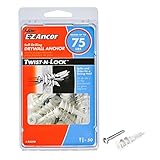
Screw-in anchors, the ones you just twist into the drywall, are designed to be self-drilling. The screw you use with them is often integrated or specifically sized. The threaded part of the anchor itself is what bites into the drywall. The screw then goes into the anchor. The length of the screw here is generally dictated by the anchor’s design; it needs to be long enough to engage fully with the anchor’s threaded body and provide clearance for whatever you’re hanging. Again, the principle is about a secure connection, and often the manufacturer will specify the correct screw size, which will typically be longer than the visible portion of the anchor.
Even with concrete anchors, while the anchor itself provides a solid base, the screw needs to be long enough to thread into the anchor properly. The anchor is drilled into the concrete, and the screw then engages with the internal threads of the anchor. Too short, and it won’t seat properly or provide full holding power. The overall length of the screw will often exceed the length of the anchor when installed, especially if you’re screwing through a bracket or fixture.
So, while the mechanism of engagement varies, the fundamental need for the screw to have sufficient grip, either through the anchor or directly into the wall material (when anchoring into studs), means the screw length is almost always a consideration that makes it longer than the part of the anchor you see sticking out, and often longer than the anchor’s body embedded in the wall.
When to Go Longer: Studs vs. Anchors
This is where a lot of people get confused, and frankly, it’s a good place to be confused because it means you’re thinking about structural integrity. When we talk about screws and anchors, we’re often talking about fixing things into drywall. But the real goal, the holy grail of hanging anything, is to hit a stud. Studs are the wooden or metal framing members behind your drywall. If you can screw directly into a stud, you often don’t need an anchor at all.
A screw going directly into a solid wood stud needs to be long enough to penetrate the drywall (typically 1/2 inch or 5/8 inch thick) and then bite into the stud by at least 1 to 1.5 inches. So, for a 1/2-inch drywall, you’d want a screw that’s at least 1.5 to 2 inches long. These screws will be significantly longer than any anchor you might use for drywall alone.
The common mistake is seeing a screw that looks long and thinking it’s overkill, or seeing a short screw with a big anchor and thinking that’s sufficient. The truth is, if you can hit a stud, you should. Using anchors in drywall is a compromise. It’s a way to get a decent hold when a stud isn’t conveniently located. But even the best drywall anchor is inherently weaker than a screw directly into solid wood. So, the question of whether screws are supposed to be longer than anchors takes on a new dimension when you consider hitting studs.
If you’re using an anchor, the screw needs to be long enough to get good grip within the anchor’s designed engagement zone, which usually means it extends beyond the anchor’s visible part and into the wall material. If you’re not using an anchor because you’ve found a stud, the screw needs to be long enough to get substantial purchase in the stud itself. In both scenarios, a screw that is longer than the visible portion of an anchor is the standard. For stud mounting, the screw will be considerably longer than the drywall thickness plus the desired stud penetration.
Here’s a simple way to think about it: the anchor expands or grips the drywall. The screw pulls against that expanded grip. For maximum security, you want the screw threads to be digging into the drywall material itself, past the anchor’s expansion point, or directly into the wood stud. This requires a longer screw thread engagement than what a short screw can provide when used with an anchor. So, yes, typically, screws are supposed to be longer than the anchors they are used with, especially if you want a truly strong fix.
Choosing the Right Combination: What to Look For
When you’re staring at a wall and planning to hang something, the first step is always to figure out what you’re hanging and how much it weighs. This dictates the type of fastener you need. For lightweight items like small pictures or curtain rods, basic plastic anchors and standard screws might suffice. But for anything heavier – shelves, mirrors, TV mounts, cabinets – you need to be more deliberate.
Here’s my personal checklist: (See Also: Can Cords Be Used To Make Anchors Climbing )
- Weight Rating: Always check the weight rating on anchors. Manufacturers provide these, and while I take them with a grain of salt (they’re usually tested in ideal conditions), it gives you a benchmark. Never load an anchor close to its maximum. Aim for half, or even less, for peace of mind.
- Screw Length vs. Anchor Length: As we’ve discussed, the screw should generally be longer than the anchor’s embedded portion. A good rule of thumb for plastic anchors is that the screw thread should extend at least 1/2 inch past the end of the anchor once installed. For toggle bolts and molly bolts, the screw length is important to engage the mechanism properly and often ends up being significantly longer than the anchor body.
- Material of the Wall: Drywall is different from plaster, which is different from concrete block or brick. Plastic anchors are okay for drywall and plaster. For concrete and masonry, you need specialized anchors (like concrete screws or sleeve anchors) and usually a hammer drill to install them. The screws for these are often hardened steel and specifically designed to thread into the anchor.
- Screw Type: For most general-purpose tasks in wood or drywall with anchors, a good quality zinc-plated steel screw is fine. For exterior use or high-moisture areas, you’ll want stainless steel or coated screws. Make sure the screw head type (flat head, pan head, etc.) matches what you need for your fixture.
- Finding Studs: Get a decent stud finder. Seriously, it’s worth the $20-$30. Learn how to use it. If you can hit a stud, use a screw that’s long enough to penetrate the drywall and get at least 1 to 1.5 inches of grip into the stud. This is almost always the most secure method.
Here’s a quick comparison table for common anchor types and what to consider regarding screw length:
| Anchor Type | Best For | Screw Length Consideration | My Verdict |
|---|---|---|---|
| Plastic Expansion Anchor (Ribbed) | Light to medium loads in drywall/plaster. | Screw should be ~1/2 inch longer than the anchor’s embedded length. | Basic, cheap, but can fail if overloaded or installed poorly. |
| Toggle Bolt | Medium to heavy loads, especially when studs aren’t available. Requires drilling a larger hole. | Screw length must engage the toggle mechanism securely. Often significantly longer than the anchor body. | Good holding power for the weight, but the hole size is a drawback. |
| Molly Bolt (Hollow Wall Anchor) | Medium to heavy loads in drywall. Expands behind the wall. | Screw length needs to allow the anchor to expand fully and grip. | Solid, reliable, but you can’t remove the screw and reuse the anchor easily. |
| Screw-In Drywall Anchor (e.g., E-Z Ancor) | Medium loads in drywall. Easy to install. | Screw size is usually specified by the anchor manufacturer. Generally, the screw engages the anchor body. | Convenient and generally effective, but check weight limits. |
| Concrete Anchor (Sleeve, Wedge) | Heavy loads in concrete, brick, masonry. | Screw must thread securely into the anchor. Length depends on anchor and fixture thickness. | The only way to go for solid masonry. Requires a hammer drill. |
The key takeaway is that the screw is the part that actually does the pulling. The anchor is just the intermediary that provides a solid surface for the screw to push against in weak material. If the screw can’t get enough thread engagement, the whole system fails. Thus, the screw needs to be long enough to achieve this, which almost invariably means it’s longer than the visible part of the anchor.
Common Mistakes and Why They Happen
I’ve seen people do some truly baffling things with screws and anchors. The most common mistake, by far, is using a screw that’s too short. This happens for a few reasons. First, people underestimate how much drywall thickness eats up screw length. If you have 1/2-inch drywall and a 1-inch anchor, and you use a 1-inch screw, it’s barely going to engage the anchor properly, let alone the wall behind it. The screw needs to be longer than the anchor plus have enough thread engagement past the anchor’s expansion point. I’d aim for a screw that’s about 1.5 to 2 inches long in that scenario, depending on the anchor’s design.
Another blunder is using the wrong type of anchor for the job. Putting a tiny plastic anchor up for a heavy TV mount is just asking for trouble. Even if you use a long screw with it, the anchor itself will fail. Always match the anchor’s capacity to the weight of the item you’re hanging. Some people also think that if an anchor looks big and sturdy, it’ll hold anything. Not true. The material, the design, and how it’s installed all matter.
Over-tightening is another classic error. With plastic anchors, if you crank the screw in too hard, you can strip the anchor’s threads or even crack the plastic, compromising its expansion. With screw-in anchors, you can strip the threads in the drywall itself. It should feel snug and secure, not like you’re trying to drill it into place with brute force. The screw should turn with moderate resistance, and the anchor should seat firmly against the wall without crushing it.
And then there’s the “drywall is strong enough” fallacy. Some folks will just drive a screw straight into drywall, ignoring anchors entirely, thinking they’ll be fine. This works for a very light picture frame with a small nail, maybe. But anything with a bit of weight or that might get bumped will pull out. Drywall is not a structural material. It’s a covering. If you’re not hitting a stud, you need an anchor. And if you’re using an anchor, you need a screw that’s long enough to engage it properly and then some.
I once helped a buddy install kitchen cabinets. He insisted on using short screws with heavy-duty toggle bolts because he didn’t want to drill pilot holes for longer screws. The cabinets looked okay for a week, then started to sag. Turns out, the screws he used were just long enough to engage the toggle wings, but not long enough to get any real bite into the cabinet frame itself.
The weight of the cabinet and its contents started pulling the screws out of the toggles. We had to take everything down, patch the wall, and re-drill using much longer screws that went through the cabinets, the anchors, and into the studs. It was a brutal but necessary lesson in screw length and proper anchor engagement.
Faq: Your Burning Questions Answered
Are Screws Supposed to Be Longer Than Anchors?
Generally, yes. For most drywall anchors, the screw needs to be long enough to extend past the visible portion of the anchor and engage with the wall material behind it. This makes sure the screw has a solid grip, with the anchor providing the stable housing in the weak wall material. The exact difference in length depends on the anchor type and its installation depth.
How Much Longer Should a Screw Be Than an Anchor?
For standard plastic expansion anchors, aim for a screw that’s at least 1/2 inch longer than the anchor’s embedded depth. For toggle bolts or molly bolts, the screw length is more about engaging the mechanism properly, which can make it significantly longer than the anchor body. Always check manufacturer recommendations if available.
Can I Use a Screw That Is Too Short with an Anchor?
Using a screw that is too short is a common mistake and will compromise the holding power. The screw may not engage the anchor correctly, or it may not get enough grip on the wall material, leading to a weak connection that can fail over time. (See Also: Can Anchors In Your Shoulder Break )
What Happens If the Screw Is Too Long for an Anchor?
If a screw is excessively long, it might bottom out inside the anchor or, if it goes past the anchor, it could hit obstructions like pipes or wiring behind the wall. For anchors designed for specific screw sizes, using one that’s too long can prevent the anchor from expanding or engaging properly, reducing its effectiveness.
When Can I Skip the Anchor and Just Use a Screw?
You can skip an anchor if you are screwing directly into a solid wood or metal stud. In this case, the screw needs to be long enough to penetrate the drywall and get at least 1 to 1.5 inches of grip into the stud for a secure hold.
Practical Tips for Success
Beyond the length, there are a few other things that make a difference when you’re hanging stuff. First, always pre-drill a pilot hole for your anchor. For plastic anchors, the hole size is important; the anchor should fit snugly, not be forced in with a hammer and risk cracking. For larger anchors like toggles, the correct drill bit size is key. A hole that’s too small makes installation difficult and can damage the anchor; too big, and it won’t grip.
When installing anchors, make sure they are seated flush with the wall. If they stick out, the item you’re hanging won’t sit flat, and the load won’t be distributed correctly. For plastic anchors, a slight tap with a hammer can help seat them, but don’t go overboard. Some screw-in anchors are designed to self-flush.
When you’re putting the screw in, do it slowly at first. Feel for resistance. If it’s too easy, the anchor might not have expanded or gripped properly. If it’s too hard, you might be cross-threading or forcing it, which can strip the anchor or the wall. Once the screw is snug, give it a gentle tug to test its security. Don’t go crazy yanking on it, but a firm pull should tell you if it feels solid.
Finally, don’t mix and match screws and anchors from different brands or types unless you’re absolutely sure they’re compatible. Anchor manufacturers often design their anchors to work with specific screw sizes and types. Using a random screw might not fit the thread pitch or diameter correctly, leading to a poor connection. It’s usually best to use the screws recommended by the anchor manufacturer or buy a screw that’s clearly stated to be compatible with that anchor type and size.
For many common household tasks, like hanging a framed picture or a lightweight shelf, you’ll find that using the right-sized screw with a good quality plastic anchor is perfectly adequate. The trick is understanding that the screw needs to get past the anchor and bite into something. If you’re dealing with anything heavier, or if you just want that extra peace of mind, finding studs is always the superior method. Even with drywall anchors, the difference between a screw that’s just long enough and one that’s slightly longer can be the difference between a secure fixture and a pile of junk on the floor.
Final Verdict
So, to wrap this up, are screws supposed to be longer than anchors? In most practical applications involving drywall or plaster, the answer is a resounding yes. The screw needs to reach past the anchor and get a good grip into the wall material. Think of the anchor as a specialized plug, and the screw as the thing that truly holds your item to that plug. If the screw doesn’t have enough thread engagement, the whole system is compromised.
My biggest takeaway from years of trial and error, and more than a few things falling off walls, is that you should always err on the side of caution. Use anchors rated for more than you think you need, and always make sure your screw has sufficient thread engagement. If you can hit a stud, do it. It’s the most reliable method. But when you can’t, a properly sized screw and anchor combination, with that screw extending adequately past the anchor, is your best bet for a fix that lasts.
Next time you’re hanging something, take a moment to consider the screw length. It’s a small detail that makes a world of difference.