I’ve seen it a hundred times. Someone wants to hang a decent-sized mirror, a shelf with a few books, maybe even a TV bracket, and they grab the first thing that looks like it’ll hold. Then, disaster. A ripping sound, a shower of drywall dust, and whatever they were trying to hang is on the floor, possibly broken.
This is where the question ‘can anchors go into a hollow wall’ really matters. It’s not just about whether it can, but how well it does it, and more importantly, what you’re actually putting your faith in. Trust me, I’ve learned the hard way that not all anchors are created equal, especially when you’re dealing with that hollow space behind your drywall.
Forget the fancy marketing jargon; we’re talking about keeping things on your wall without them deciding to take a nap on the floor. Let’s get real about what works and what’s just a recipe for a DIY headache.
The Nitty-Gritty: How Hollow Walls Betray You
So, you’ve got a wall, and you’ve got a hole. Simple enough, right? Well, not quite. When we talk about hollow walls, we’re mostly talking about drywall, also known as plasterboard or gypsum board. It’s basically a sheet of gypsum plaster pressed between two thick sheets of paper. It’s great for building quickly and cheaply, but it offers zero structural support on its own. When you drill into it, you’re not hitting solid wood or concrete; you’re hitting air. That void is your enemy if you’re trying to hang anything with significant weight.
The problem is that most standard screws, the kind you’d use in a solid wood stud, will just spin and spin in drywall. They have nothing to bite into. This is why we need wall anchors. These are the little gadgets that expand or grip behind the drywall, creating a solid anchor point.
But here’s the kicker: an anchor is only as good as the material it’s anchoring into. If that material is just flimsy drywall, even the best anchor can be pulled out if the load is too heavy or if there’s a sudden tug. I remember trying to hang a fairly heavy antique clock once. I used what I thought were good, sturdy plastic anchors.
Within a week, the clock was hanging crooked. A few days later, it wasn’t hanging at all. The anchors had just pulled straight through the drywall. It looked like a cartoon gag, but it cost me a chipped clock face and a lot of frustration.
The common advice often glosses over the reality of drywall’s limitations. People say ‘just use an anchor,’ but they don’t always tell you which anchor, or what the real weight limits are. And let’s be honest, those weight limits printed on the packaging? They’re often wildly optimistic and assume perfect installation in ideal conditions. In the real world, with slightly imperfect drywall or a bit of vibration from a nearby door slamming, those numbers can drop faster than a freefall stock.
Choosing Your Armor: Anchors That Actually Work
Alright, so we know plain screws are out. We need anchors. But which ones? This is where it gets a bit more nuanced, and frankly, where many DIYers get it wrong. For light-duty stuff – think a small picture frame, a lightweight curtain rod – your basic plastic expansion anchors might suffice. You drill a hole, hammer the anchor in, and then screw into it. They work by expanding as you drive the screw, pressing against the back of the drywall. They’re cheap, readily available, and easy to install.
However, for anything with more heft, you absolutely need to step up your game. My go-to for medium-duty loads, like shelves that will hold books or a decent-sized mirror, are toggle bolts or molly bolts. Toggle bolts have a spring-loaded wing that flips open behind the wall once you insert it through the pre-drilled hole. (See Also: Can Concrete Anchors Be Used In Brick )
They spread the load over a much larger surface area of the drywall, making them significantly stronger than plastic anchors. Molly bolts are similar; they’re metal anchors that expand as you tighten them, creating a strong grip. They often have a metal sleeve that stays in the wall, so you can remove and reinsert the screw multiple times without damaging the anchor itself. I’ve had shelves held up by molly bolts that have been carrying books for years without an issue.
The initial install takes a bit more effort, and you need to make sure you have the right size drill bit, but the peace of mind is worth it.
For really heavy items, like flat-screen TVs or very substantial shelving units, you’re looking at heavy-duty toggle bolts or, ideally, drilling into studs. If studs aren’t an option, you need anchors specifically designed for high loads. Some of the newer self-drilling anchors, made of metal, can also hold a decent amount of weight, but you still need to be realistic about the drywall’s inherent weakness. The key is understanding that ‘hollow wall’ means you need an anchor that grips behind the wall, not just in it.
Metal is generally better than plastic for strength and durability. Don’t be afraid to spend a few extra bucks on a better anchor; it’s cheaper than buying a new TV or fixing a hole in the wall.
The Art of the Install: Avoiding Rookie Mistakes
Installing anchors correctly is half the battle. It’s not just about drilling a hole and shoving something in. The first mistake I see constantly is using the wrong size drill bit. If the hole is too small, you’ll struggle to get the anchor in, and you might end up damaging the drywall trying to force it. If the hole is too big, the anchor won’t have anything to grip onto, and it’ll just rattle around loosely, rendering it useless. Always, always check the anchor packaging for the recommended drill bit size and use a sharp bit for a clean hole. A dull bit will just chew up the drywall.
Another common blunder is overloading the anchor. Those weight ratings?
They’re a starting point, not a guarantee. I like to play it safe and assume the real-world limit is about half of what’s printed.
If you’re hanging something heavy, consider using multiple anchors or, better yet, finding a stud. I’ve learned to tap walls and listen for the solid thud that indicates a stud. Stud finders are great, but sometimes a good old-fashioned ear works just as well.
If you can’t hit a stud, use the heaviest-duty anchor you can find that’s still appropriate for drywall, and spread the load if possible. For example, if you’re mounting a long shelf, use anchors at both ends and in the middle, rather than just at the ends. (See Also: Can Cords Be Used To Make Anchors Climbing )
Don’t forget about the material of the anchor itself. Cheap, brittle plastic anchors are fine for tiny things, but they can crack or crumble under pressure. Metal anchors, like molly bolts or toggle bolts, are generally more solid. Also, when you’re screwing into the anchor, don’t over-tighten. You want it snug and secure, but over-tightening can strip the threads in the anchor or even damage the drywall around it. I once stripped out a molly bolt by cranking on it too hard, and then I had to patch the hole and start over. It’s a lesson in patience and gentle persuasion, not brute force.
Real-World Use Cases: Where Anchors Shine (and Where They Don’t)
So, when is it a good idea to use anchors in a hollow wall, and when should you just accept defeat and look for a stud? Anchors are your best friend for hanging things that aren’t excessively heavy but still need a secure mount. Think about things like:
- Light to medium picture frames
- Small shelves for decorative items
- Curtain rods (if the curtains aren’t super heavy)
- Light fixtures (wall sconces, not chandeliers)
- Thermostats, smoke detectors, and other small wall-mounted electronics
- Toilet paper holders and towel racks in bathrooms
For these items, a well-chosen anchor installed correctly will do the job just fine. I’ve got a bunch of artwork hanging with medium-duty anchors that haven’t budged in years. It’s incredibly satisfying to have a wall that looks clean and functional without worrying about things falling down.
Where anchors are NOT a good idea, or at least a last resort, is for truly heavy items. I’m talking about:
- Large, heavy mirrors
- Heavy bookcases
- Wall-mounted TVs (especially larger ones)
- Anything you can’t afford to have fall
In these cases, the risk of the anchor failing is just too high. Drywall itself has very little shear strength, meaning it’s weak against forces pulling it sideways.
Even the strongest toggle bolt can eventually pull out of drywall if the load is significant enough. For these items, your absolute best bet is to find wall studs.
If you absolutely cannot find studs and must hang something heavy, you might need to consider specialized heavy-duty drywall anchors that are designed to spread the load across a very large area, or even use multiple anchors in a tight configuration to distribute the weight. But honestly, the safest bet is always a stud. My rule of thumb: if it’s worth more than $50 and could cause damage if it fell, find a stud.
A Quick Comparison: Anchor Types and My Verdict
When you’re staring at a wall full of options, it can be overwhelming. Here’s a quick rundown of common anchor types and what I generally think of them for hollow walls.
| Anchor Type | Best For | Pros | Cons | My Verdict |
|---|---|---|---|---|
| Plastic Expansion Anchors | Very light items (e.g., small pictures) | Cheap, widely available, easy to install | Low weight capacity, can crack, unreliable for anything heavier than a few pounds | Okay for absolute lightest jobs, but I usually skip them. |
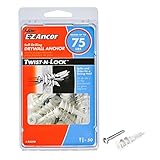
| Self-Drilling Anchors (Plastic) | Light to medium items | Easy to install (screw in directly), no pre-drilling needed | Weight capacity is still limited, can strip out easily | Better than basic plastic, but still not my first choice for anything important. |
| Molly Bolts | Medium to heavy items (e.g., shelves, mirrors) | Strong grip, metal sleeve is durable, reusable screw hole | Requires pre-drilling, can be fiddly to install | My workhorse for most medium-duty tasks. Reliable. |
| Toggle Bolts (Spring and Snaptoggle) | Medium to very heavy items | Excellent weight capacity, distributes load widely | Requires a larger hole, can be tricky to insert the toggle | Top tier for drywall. Snaptoggles are especially good for ease of use. |
| Self-Drilling Anchors (Metal) | Medium items | Stronger than plastic versions, easy to install | Still have a limit, can be removed and reinstalled, but can weaken the drywall | A decent option if you can’t pre-drill, but not for maximum load. |
When to Seriously Reconsider (or Just Find a Stud)
Let’s be blunt: there are times when the answer to ‘can anchors go into a hollow wall’ should be a resounding ‘NO, you idiot, find a stud!’ If you’re mounting something that is inherently dangerous if it falls – like a large TV that could crush a child, or a heavy cabinet that could tip over – then drywall anchors are just not going to cut it. The failure mode for drywall anchors isn’t usually a gentle sag; it’s a sudden, catastrophic pull-out. The drywall itself rips, and your item plummets. I’ve seen it happen, and it’s not pretty. The force involved when a large TV detaches from the wall can be immense. (See Also: Can Anchors In Your Shoulder Break )
Another situation where anchors can be problematic is in high-traffic areas or where there’s a lot of vibration. Think about a doorway where people might lean on the wall, or a workshop where tools are being banged around. Even a well-installed anchor can eventually be weakened or pulled out by repeated stress. In these scenarios, studs are your only real security. If you’re building a new structure or doing a major renovation, always plan to incorporate studs for anything that needs to be securely fastened. Retrofitting studs into an existing wall can be a pain, but it’s often worth the effort for peace of mind.
I’ve also found that some older drywall can be more brittle, especially if it’s a different type than modern gypsum board. When in doubt, test your anchor in an inconspicuous spot if possible, or be extra conservative with weight limits. The common advice to just use a toggle bolt for anything is good, but it’s not a magic bullet. It’s still a piece of metal expanding behind plaster and paper. Respect the limits of your wall material. My personal rule: if the item weighs more than 20 pounds, I’m looking for studs. If I can’t find them, I’m using the absolute beefiest toggle bolts I can find, and I’m still crossing my fingers a little.
Frequently Asked Questions About Hollow Wall Anchors
Can I Hang a TV on a Hollow Wall?
Generally, it’s a bad idea and not recommended. While heavy-duty toggle bolts can hold significant weight, the risk of catastrophic failure is too high for something as valuable and potentially dangerous as a TV. Always try to mount TVs directly into wall studs for maximum security.
What Is the Strongest Type of Hollow Wall Anchor?
Heavy-duty toggle bolts and specialized snap toggles generally offer the highest weight ratings for hollow wall applications. They work by expanding behind the drywall, distributing the load over a larger area, which provides much better holding power than basic plastic anchors.
Do I Need a Special Drill Bit for Hollow Wall Anchors?
Yes, you typically need a specific drill bit size, as recommended by the anchor manufacturer. For most toggle and molly bolts, you’ll need a masonry bit if drilling into plaster, or a wood bit if drilling into a hollow stud or wall. Always check the packaging for the correct size and type of bit.
Can Anchors Damage My Wall?
Yes, anchors can damage your wall if not installed correctly or if removed improperly. Drilling the wrong size hole, forcing an anchor, or yanking one out can leave larger holes or tears in the drywall. Some anchors, like molly bolts, allow you to remove and reinsert screws without damaging the anchor itself, which can help minimize repeated damage.
How Much Weight Can a Hollow Wall Anchor Hold?
This varies wildly by anchor type and installation. Basic plastic anchors might hold only a few pounds, while heavy-duty toggle bolts can sometimes be rated for 50 pounds or more. However, these ratings are often for ideal conditions. It’s always wise to use anchors at about half their rated capacity for safety and longevity.
Final Verdict
So, to circle back, can anchors go into a hollow wall? Yes, they absolutely can, and for a lot of common household tasks, they’re your best bet when studs aren’t an option. But it’s not a free-for-all. You need to choose the right anchor for the job, install it with care, and be realistic about the weight it can safely hold. Don’t just grab the cheapest plastic thing you see; invest in anchors that actually have the strength to do the job.
For anything truly heavy or important, the answer is always to find a stud. Anchors are a great tool, but they have their limits, and those limits are defined by the flimsy nature of drywall itself. Respect those limits, and you’ll save yourself a lot of frustration and potential damage.
Next time you’re staring at a blank wall and a heavy item, take a moment to assess. Is it worth the risk? Or is it time to put on your stud-finding hat?