You’re staring at that empty wall, picture frame in hand, ready to hang it. You’ve already made a few holes because, let’s be honest, finding the stud is a crapshoot. Now you’re wondering, can drywall anchors be reused? I’ve been there, staring at a handful of plastic or metal bits, thinking, ‘Waste not, want not, right?’ But the truth is, it’s not always that simple. That’s why I’m cutting through the BS to tell you what really works.
When ‘reuse’ Means ‘maybe, If You’re Lucky’
Look, I’m all for not creating unnecessary garbage. If I can squeeze another use out of something, I will. But when it comes to drywall anchors, the question of ‘can drywall anchors be reused?’
is a bit of a Schrödinger’s Cat situation. They might be reusable, and they might completely fail. It depends on a few things, mostly the type of anchor and how it was used the first time. I’ve definitely pulled out a plastic anchor that looked perfectly fine and thought, ‘Yep, this will hold my lightweight mirror.’
Then, six months later, the mirror’s on the floor. Was it the anchor?
Was it the wall? Was it the sheer weight of my questionable life choices? Hard to say, but I’ve learned to be more discerning.
The most common offenders here are the basic plastic expansion anchors – the ones that look like little ribbed cones or sleeves. When you jam one of these into a hole, the drywall around it gets compressed and, frankly, a bit mangled.
The anchor itself expands, creating friction. If you yank it out carefully, the anchor might look pristine.
It’s still got its shape, the ribs are intact. On the surface, it’s a perfect candidate for a second life.
The problem is, the drywall it was in is likely a little looser, a little more forgiving. The hole might be slightly oversized or the surrounding drywall material weakened.
So, when you shove that ‘reused’ anchor back in, it might not have the same grip, the same bite, because the material it’s supposed to be gripping is now a bit of a slob.
My first real screw-up with this was trying to hang a shelf in my laundry room. I used those classic ribbed plastic anchors. I installed them, put the shelf up, loaded it with detergent bottles.
Seemed solid. A few months later, I needed to move the shelf slightly to access a pipe.
I carefully unscrewed it, pulled out the anchors, and they looked fine. I shoved them back in the same holes, reattached the shelf. Within a week, the whole thing sagged. The anchors weren’t spinning, but they felt… soft.
Like they’d given up the ghost. That’s when I realized that even if the anchor itself looks okay, the wall it’s going back into might not be. (See Also: Can Concrete Anchors Be Used In Brick )
It’s a bit like re-using a blister pack for medicine – the blister pack might be intact, but the medicine inside has a shelf life. So, while technically ‘yes’ for some, ‘reusable’ often comes with a big asterisk.
The Anchors That Actually can Be Reused (sometimes)
Okay, so not all drywall anchors are created equal when it comes to reusability. Forget those flimsy plastic ones for a second. If you’re talking about the beefier types, you’ve got a much better chance. Think about toggle bolts.
These have a metal wing that folds up to go through the hole, then springs open behind the drywall. When you unscrew the bolt, the wings fold back down, and you can pull the whole assembly out. The anchor itself, the metal part, is usually pretty solid. I’ve taken out toggle bolts and re-used the anchor mechanism multiple times.
The key here is that the anchor itself isn’t really expanding or deforming the drywall much. It’s a mechanical grip.
You’re not relying on friction as much as you are on that wing holding firm behind the wall. So, if you need to move something that’s using toggle bolts, you can often just pull the bolt and the anchor out and use them again in a new spot, assuming the hole isn’t too wallowed out.
Another contender for reusability is the screw-in or molly bolt style anchors. These usually have a metal sleeve that expands when you screw in a bolt. The sleeve itself is often designed to be left in the wall, and you then insert and remove the bolt as needed.
So, in a way, the ‘anchor’ part (the sleeve) is designed for permanent installation, and the ‘fastener’ part (the bolt) is what you’re taking in and out. You can definitely remove the bolt and reuse it, and you can often remove the entire sleeve assembly to put it somewhere else. The caveat is that the sleeve might get a little compressed or the threads on it might get a bit stripped from being tightened and loosened.
But generally, these hold up better to being moved than your standard plastic plug.
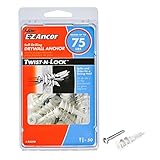
What about those clever self-drilling anchors? The ones that look like metal screws with threads designed to bite directly into the drywall? These are a mixed bag.
Some are definitely designed for one-time use. They create a pretty aggressive thread into the drywall. When you unscrew them, they can strip out the drywall material, making the hole larger.
However, I’ve had some luck with heavier-duty metal ones. If you’re careful when you unscrew them, and the drywall isn’t too crumbly, you can sometimes get them back out in decent shape. The trick is to go slow and try to reverse the screwing motion exactly. If it feels like it’s tearing the drywall apart, just stop.
You’re better off with a fresh anchor than a compromised wall.
When It’s a Bad Idea to Reuse Drywall Anchors
There are times when even thinking about reusing an anchor is just asking for trouble. The biggest red flag is if the anchor looks damaged. Did it crack when you removed it? Are the expansion ribs bent or broken? Is the metal part deformed? If the anchor itself isn’t structurally sound, there’s no way it’s going to hold weight reliably. This is the most obvious reason, but people still try it. I’ve seen people superglue broken plastic anchors back together. Don’t do that. Seriously. That shelf is going to end up on the floor, and your detergent bottles are going to explode. (See Also: Can Cords Be Used To Make Anchors Climbing )
Another major ‘don’t reuse’ situation is when the original hole was already problematic. If the anchor spun while you were installing it the first time, or if it felt loose even when it was supposedly tightened, that hole is compromised. The drywall material is already weakened or pulled away from the anchor. Trying to shove the same anchor back in there is like trying to get a second opinion from a doctor who already misdiagnosed you. It’s not going to end well. The anchor might seem to go in okay, but it won’t have the holding power it needs. You’ll end up with a sagging picture frame or, worse, a shelf that comes down.
I also steer clear of reusing anchors when the weight of the item is significant or important. If you’re hanging a lightweight piece of art that’s mostly for show, maybe you can get away with a reused plastic anchor. But if you’re hanging a heavy mirror, a medicine cabinet, or a bookshelf that’s going to hold books (which are surprisingly dense), you need to trust your anchors. The cost of a new anchor is pennies compared to the cost of replacing whatever you’re hanging, not to mention the potential damage to your wall or even injury if something falls.
Let’s talk about specific PAA questions here. People often ask, ‘Can you reuse plastic drywall anchors?’ My answer is usually ‘with extreme caution and only for very light items.’ The plastic deforms and weakens. Think of it like a rubber band you’ve stretched a bunch of times. It still looks like a rubber band, but it doesn’t have the same snap. Another is, ‘Can you reuse screw-in drywall anchors?’ Again, it depends on the material and the drywall’s condition, but the metal ones have a better chance than plastic.
| Anchor Type | Likelihood of Successful Reuse | Verdict |
|---|---|---|
| Basic Plastic Expansion Anchors | Low | Generally NO. High risk of failure, especially for anything beyond lightweight decor. The drywall material is usually too compromised. |
| Toggle Bolts (Metal Wings) | High | YES, often. The anchor mechanism itself is solid. Make sure the hole isn’t oversized. |
| Molly Bolts (Sleeve Type) | Medium to High | YES, the sleeve can usually be reused. The bolt itself is designed for repeated removal. |
| Self-Drilling (Metal Threaded) | Medium | Maybe, if very careful. Can strip drywall material. Best for lighter loads if reused. |
| Consequences of Failure | High | Anything you hang falling down, potential damage to wall, broken items, maybe even minor injury. |
How to Properly Remove and Potentially Reuse Anchors
If you’ve decided to try and reuse an anchor, there’s a right way and a very, very wrong way to remove it. The goal is to minimize further damage to the drywall. For those basic plastic anchors, forget about just yanking them out. That’s how you rip a chunk of drywall out with it.
The best method is to use a flathead screwdriver or a small pry bar to gently lever it out. Try to get under the lip of the anchor and work your way around, easing it out slowly.
Sometimes, you can even use a screw – if the anchor has a screw hole, thread a screw in partway, then use pliers to grip the screw head and pull. This gives you more control than just grabbing the anchor itself.
For toggle bolts and molly bolts, removal is usually simpler. You just unscrew the bolt that’s holding your item. If you need to remove the anchor mechanism itself, you’ll often need to pull the wings of the toggle bolt back down or collapse the molly bolt sleeve. Sometimes, you can use a thin tool to push the wings inward while you pull the bolt out from the front. For molly bolts, you might need to gently tap the sleeve inwards to get it to release its grip, then pull it out. The less force you use, the better the chance of keeping the anchor intact for reuse. Always try to pull straight out, perpendicular to the wall.
Once you have an anchor you think is reusable, inspect it closely. Check for cracks, bends, stripped threads, or flattened expansion ribs. If it looks even slightly compromised, toss it. If it looks good, clean off any debris. For plastic anchors, sometimes a quick rinse under water is all they need. For metal ones, a quick wipe down is usually sufficient. The real test, however, comes when you re-insert it. If it goes into the original hole and feels snug and firm when you tighten it, great. If it feels loose, spins, or doesn’t seem to expand properly, do not trust it. It’s better to grab a fresh anchor and create a new, properly sized hole.
Common Mistakes People Make with Drywall Anchors (and Reusing Them)
The biggest mistake people make is using the wrong anchor for the job. Period. They grab the cheapest plastic things from the hardware store for something that needs serious support. This is where the ‘can drywall anchors be reused?’ question becomes a non-issue because the anchor probably wouldn’t have held reliably in the first place, let alone for a second go. People think ‘anchor is an anchor,’ but that’s a rookie mistake. You need to match the anchor type and its weight rating to what you’re hanging. A little research goes a long way.
Another common blunder, especially when trying to reuse them, is not preparing the hole correctly. If you’re putting an anchor into a hole that’s too big from a previous failed attempt, or if the drywall around it is crumbly, even a new anchor might not hold. And trying to force a reused anchor into a slightly too-large hole?
Recipe for disaster. You need to make sure the hole is the correct size for the anchor.
If it’s slightly too big after a failed removal, you might need to use a slightly larger anchor or a different type altogether. Sometimes, I’ve even used wood filler or a specialized drywall repair compound to patch a hole that’s gotten too big, let it dry completely, and then drilled a new, clean hole.
The third major error is over-tightening. Whether it’s a new anchor or one you’re trying to reuse, cranking down on it too hard can strip the threads in the anchor or, worse, crack the drywall. Plastic anchors can mushroom out and get stuck in a way that doesn’t provide good grip. Metal anchors can have their expansion sleeves crushed or stripped. It’s about finding that sweet spot where the anchor feels snug and secure, not like you’re trying to break through the wall. This is especially true with reused anchors; they might not have the same tolerance for over-tightening as they did when they were new. (See Also: Can Anchors In Your Shoulder Break )
Finally, and this ties back to reusability, people don’t understand that the drywall itself is the weakest link. Even the best anchor can fail if the drywall it’s embedded in is old, water-damaged, or just inherently crumbly. Reusing an anchor in a wall that’s already questionable is just amplifying the risk. If you’re in doubt about the integrity of your drywall, especially in older homes, you might need to consider finding studs, using heavier-duty anchors, or even reinforcing the area. This is one of those situations where spending a few extra bucks on new hardware is the smarter play.
Real-World Use Cases: When Reusing Actually Works (and When It Doesn’t)
So, where have I actually had success reusing anchors? Honestly, it’s usually in very specific, low-stakes scenarios.
Think hanging a lightweight notice board in a home office. I’ve pulled out those little plastic anchors that came with it, put them back in the same holes (which were probably already a bit loose), and hung the board.
It’s held fine for years. The key is it’s lightweight, not going anywhere important, and the original install wasn’t problematic.
I’ve also had luck reusing the metal sleeves of molly bolts. I had a small cabinet that I moved from one spot on a wall to another in the same room.
The molly bolt sleeves came out clean, and they went back into the new holes with a good, solid feel. The key was that the original holes were well-drilled and the drywall was in good condition.
Where it definitely does not work? Anytime I’m hanging something in a bathroom where moisture might have affected the drywall. Those plastic anchors can get soggy and lose their grip. Also, if I’m hanging anything in a high-traffic area where it might get bumped, like a coat hook near the front door, I’m not messing around with reused anchors. The risk of it coming loose is too high. I remember trying to reuse anchors for a set of shelves in my garage, and within a month, one side sagged. It wasn’t a catastrophic failure, but it was annoying enough that I just bought new anchors and did it right. The weight of my tools was enough to expose the weakness.
A friend of mine, bless his optimistic heart, tried to reuse anchors to hang a large, framed mirror. He pulled the old anchors out, they looked fine. He put them back in, hung the mirror. A week later, the mirror slid down the wall about an inch, cracking the frame. Luckily, it didn’t fall completely, but it was a stark reminder that ‘looking fine’ isn’t the same as ‘being strong’. The anchor material had likely fatigued, or the drywall had been too compressed the first time. That experience cemented my ‘when in doubt, buy new’ rule for anything important.
Now, let’s address one of those People Also Ask questions: ‘How do I remove anchors without damaging the wall?’ As I’ve said, for plastic ones, use a prying motion with a flathead screwdriver or a small pry bar, working gently around the edges. For screw-in types, sometimes a gentle wiggle while unscrewing helps. For toggle bolts, you might need a thin tool to help fold the wings. The absolute key is patience and minimal force. If it feels like you’re ripping the wall apart, stop and re-evaluate. Sometimes, the damage is unavoidable, and you just have to patch and start fresh.
Practical Tips for Using and Reusing Drywall Anchors
Here are my hard-won tips for dealing with drywall anchors, whether new or potentially reused. First, always, always read the packaging. It will tell you the weight rating for that specific anchor. Don’t guess. If the packaging is long gone, assume it’s for light-duty items only. Second, for new anchors, use the correct drill bit size. Too small, and you’ll struggle to get it in. Too big, and it’ll be loose. Most anchor packaging will specify the drill bit size. For reused anchors, you might find the original hole is a bit looser, so you might need to be extra careful or consider a slightly larger anchor.
Third, if you’re attempting to reuse an anchor, consider the original hole. If it feels loose or the drywall is crumbly, it’s probably not worth the risk. You’re better off drilling a new hole nearby, if possible, or patching the old one and starting fresh. Fourth, never, ever reuse anchors for anything heavy or important. Mirrors, shelves holding books, medicine cabinets, TVs – these all demand fresh, correctly installed anchors. Think of reuse only for very light, non-key items like a small picture frame or a calendar.
Fifth, if you’re unsure about the integrity of your drywall, consider finding a stud. It’s always the most secure option. Stud finders aren’t foolproof, but they’re a good starting point. If you can’t find a stud, or the item you’re hanging isn’t positioned over one, then you need a good anchor. And if you’re going to reuse an anchor, make sure it’s the specific type that’s designed for it (like toggle bolts or molly bolts) and that it shows absolutely no signs of damage or fatigue. My personal rule of thumb: if I have to ask myself ‘Can this reused anchor really hold?’ the answer is no.
Finally, for those who asked ‘What is the best type of drywall anchor?’ in the PAA, my answer is: it depends on what you’re hanging. For light things, a good plastic expansion anchor (properly sized and installed) is fine. For medium weight, screw-in metal anchors or molly bolts are better. For heavy loads, toggle bolts or finding studs is your best bet. Always check the weight rating and match it to your needs. And if you’re ever in doubt about an anchor’s holding power, err on the side of caution and use a new one.
Conclusion
So, can drywall anchors be reused? The short, blunt answer is: sometimes, but usually not recommended, especially for anything important. Those cheap plastic ones are practically single-use items, even if they look okay after removal. The integrity of the drywall hole is just too compromised. If you’re dealing with more solid anchors like toggle bolts or molly bolts, you’ve got a better shot, but always inspect them for damage and test the hold carefully before trusting them with anything heavy.
Honestly, most of the time, the few dollars you spend on new anchors is worth the peace of mind. It prevents the frustration of something falling down and the potential damage that comes with it. Unless it’s something incredibly light where failure won’t matter, my advice is to just buy new ones. Your walls, and your sanity, will thank you.