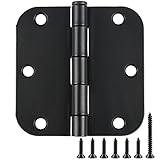
I remember staring at a pile of mismatched door hinges, wondering if I’d just bought a box of expensive paperweights. The project was simple: replace a squeaky bedroom door. How hard could it be? Turns out, figuring out if ‘Mastercraft’ hinges are standard can be a whole DIY headache on its own. You’ve probably seen them – shiny, in a familiar blue box. But does that mean they’ll actually fit your door frame without you turning into a carpenter overnight?
This isn’t about fancy, self-closing garage doors or anything complex. It’s about the basic, everyday door hinge. The kind that lets your interior doors swing open and shut without sounding like a haunted house. So, are Mastercraft door hinges standard? Let’s cut through the noise and get to what actually matters when you’re standing in the aisle, trying to make the right choice.
Do Mastercraft Hinges Follow the Rules?
When you’re staring at a wall of hardware, the word ‘standard’ feels like a lifeline. It implies compatibility, ease of use, and not having to reinvent the wheel (or the hinge, in this case). For interior residential doors in North America, the vast majority of hinges are indeed built to a common set of dimensions. This is largely thanks to ANSI/BHMA (American National Standards Institute / Builders Hardware Manufacturers Association) standards. These standards dictate things like the overall size of the hinge leaf, the diameter of the barrel (where the pin goes), and the placement of screw holes. If a hinge is meant for a standard interior door, it’s usually made to fit within these general guidelines.
Mastercraft, being a brand often found in big-box stores like Menards, generally aims for this market. Their products, especially for common items like interior door hinges, are designed to be replacements or installations for typical residential construction. This means that, in most cases, a standard Mastercraft interior door hinge should be interchangeable with other standard hinges. You’ll typically find them in the most common sizes: 3-1/2 inch by 3-1/2 inch with a 5/8 inch radius corner, or a square corner. These are the workhorses of the door hardware world. The pin is usually removable, and the leaves are designed to fit flush with the door jamb and the door edge.
However, here’s where my own frustration kicked in. I bought a pack of what I thought were standard hinges for a closet door.
They looked right, the size was right on paper, but when I went to install them, the screw holes didn’t quite line up perfectly. It wasn’t a huge difference, maybe a millimeter or two, but enough to make drilling new pilot holes and slightly widening existing ones a necessity.
It wasn’t a Mastercraft hinge specifically, but it was a stark reminder that ‘standard’ can have its fuzzy edges. Sometimes, the manufacturing tolerances, even within a standard, can vary slightly between brands or even batches. So while the intent is standard, the reality can sometimes require a little extra elbow grease.
What to Look for: Beyond the Brand Name
Forget the brand name for a second. The real ‘standard’ in hinges comes down to a few key physical characteristics that you can measure or verify yourself. This is what separates a hinge that will work from one that will have you cursing under your breath. First and foremost, the size. For interior doors, the most common size is 3-1/2 inches by 3-1/2 inches. You’ll also encounter 4-inch hinges, often for heavier exterior doors or larger interior ones, but for your average bedroom or closet door, 3-1/2 inch is the go-to.
Next, check the corners. Hinges come with either square corners or rounded corners. The most common radius corner is typically 5/8 inch. This means the curve at the corner of the hinge leaf is a 5/8 inch radius. Square corner hinges are often used in older homes or when a very specific, clean look is desired, and they’re not as common for standard replacements. Mastercraft hinges, like most brands targeting the general consumer, will likely offer the standard 3-1/2 inch with a 5/8 inch radius corner. Always double-check the hinge you’re replacing and the door/jamb mortise to see what you have.
The thickness of the hinge leaf is another factor, though less commonly a point of divergence for standard interior doors. For most residential applications, you’re looking at hinges around 1/16th of an inch thick. Thicker hinges are usually for heavier doors or more demanding commercial applications. Finally, the number of screw holes. (See Also: A Box Without Hinges Key )
Standard 3-1/2 inch hinges usually have three screw holes per leaf, but some might have four, especially if they’re designed for heavier use or specific mounting situations. When in doubt, bring the old hinge with you to the store.
Seriously, it’s the easiest way to confirm you’re getting the right thing. I once bought a set of hinges that were almost right, but the screw holes were spaced differently, and I had to fill and re-drill them all. It added about an hour to a 15-minute job, and I learned my lesson about bringing the old part.
My Hinge Swap Story: A Lesson in Corners
I was helping my neighbor swap out a bedroom door and its old, rusty hinges. We grabbed a shiny new pack from the hardware store, brand name totally forgotten, but they looked like standard 3-1/2 inch hinges. We got the door off, took out the old hinges, and went to put the new ones in.
Boom. The old hinges had square corners, and the new ones had the standard 5/8 inch radius corners.
The mortises (the cutouts in the door and frame) were cut for square corners. We couldn’t just jam them in. We had to carefully chisel out the mortises to accommodate the rounded corners.
It was a mess, took way longer than it should have, and looked less professional than we’d hoped. It taught me that even if the size is right, the details like corner radius can make all the difference between an easy swap and a woodworking session.
Common Mistakes and Why They Happen
The biggest mistake people make, myself included, is assuming ‘standard’ means ‘identical’. As I’ve touched on, manufacturing tolerances can mean that even two hinges labeled as standard might not be perfectly interchangeable down to the millimeter. This is especially true if you’re dealing with older homes where things might have settled or been modified over the years. A hinge that looks standard might have been a specific order for that house, or the mortise might have been cut slightly off.
Another common pitfall is ignoring the screw holes. Not just their position, but the type of screws included. Standard hinges usually come with wood screws designed for standard lumber. If you’re installing a hinge on a metal door frame, or a very old, soft wood frame, the included screws might not be appropriate. You might need to switch to machine screws with anchors, or heavier-duty wood screws. I once tried to install a hinge on a frame that felt like balsa wood. The screws just spun and spun, and the hinge was loose. I ended up having to use longer, thicker screws and wood filler to get a solid connection.
The third mistake is often related to the door itself. Is it a solid core door or a hollow core door? Solid core doors are much heavier and put more stress on hinges. While a standard Mastercraft hinge might be sufficient, for a truly heavy solid core door, you might want to consider a heavier-duty hinge, or at least make sure all three screws per leaf are biting into solid wood in the frame. (See Also: Are Integrated Washing Machine Door Hinges Standard )
Don’t skimp here; a failing hinge can damage the door, the frame, or even cause injury. People also sometimes forget to check the door swing. Hinges are typically handed (left or right swing), though many standard interior hinges are non-handed, meaning they work for either. But if you’re buying something more specialized, or if the hinge has a specific design feature, it’s worth confirming.
Finally, and this is a contrarian take for some DIYers, but I disagree with the ‘just buy the cheapest ones’ approach. Yes, Mastercraft can be affordable, and often the price is right. But I’ve found that paying a few extra dollars for a slightly better-quality hinge, one with a smoother pin action or slightly thicker steel, can save you headaches down the line. I’ve installed cheap hinges that felt flimsy right out of the box, and while they worked, they always felt a bit loose and prone to squeaking sooner. For a few bucks more, you can often get a hinge that feels more substantial and will likely last longer.
Mastercraft Hinges in the Real World: My Experience
Okay, let’s talk about Mastercraft specifically. I’ve used Mastercraft hinges on and off for various projects over the last decade. They’re readily available, especially if you shop at Menards, and their pricing is generally competitive, often more affordable than some of the premium brands. For standard interior doors – think your average bedroom, closet, or bathroom doors – they perform as expected, most of the time. I’ve replaced dozens of old, creaky hinges with new Mastercraft ones, and the process is usually straightforward.
The most common ones I grab are the 3-1/2 inch, 3-knuckle hinges with a 5/8 inch radius corner. They come in various finishes – satin nickel, oil-rubbed bronze, polished brass, and plain steel. The satin nickel ones I’ve used have held up reasonably well to everyday use, not showing excessive wear or peeling even after a couple of years. The pin is usually easy to remove and reinsert, which is a plus if you ever need to take the door off its hinges. I installed a set on my son’s bedroom door about three years ago, and they’ve been silent and smooth throughout. No squeaks, no sagging door.
However, it’s not all perfect. I did have one instance, a few years back, where I bought a pack of Mastercraft hinges for a heavier solid-core door. While they fit, the door felt noticeably heavier on its hinges after installation. It wasn’t a dramatic sag, but it was there.
I ended up going back and getting a set of heavier-duty hinges from a different brand. So, while Mastercraft hinges are generally ‘standard’ and suitable for most interior doors, it’s worth considering the weight and swing of your door. If it’s a particularly heavy door, or one that gets a lot of use, you might want to look at hinges specifically rated for heavier loads, even if Mastercraft offers a standard option.
Mastercraft Hinge Verdict Table
| Attribute | Mastercraft Standard Interior Hinges | My Verdict |
|---|---|---|
| Availability | Excellent (especially Menards) | Easy to find when you need them. |
| Price | Very Competitive | Good value for the money. |
| Standard Fitment (3.5″ x 3.5″, 5/8″ radius) | Generally good | Works for most common interior doors. |
| Build Quality (for price) | Decent | Not premium, but functional for typical use. |
| Durability (typical use) | Good | Lasts for years with normal wear and tear. |
| Heavier Doors | May be insufficient | Might need to step up to a heavier-duty option. |
| Finish Options | Good Variety | Plenty of choices to match decor. |
| Ease of Installation | Standard | Straightforward if your mortise is standard. |
The key takeaway for me is that Mastercraft hinges are standard in the sense that they adhere to the common dimensions and designs for residential interior doors. They are a reliable choice for most of your everyday door needs. Just remember to check your existing hinges for size and corner radius, and consider the weight of your door. For the vast majority of simple door swaps, they’ll do the job just fine without breaking the bank.
Are Mastercraft Door Hinges Standard for All Applications?
This is where we need to draw a line. When we talk about Mastercraft door hinges being ‘standard,’ we’re almost exclusively referring to their interior residential door hinges. These are the ones designed for lightweight to medium-weight wooden doors that you find in your home – bedrooms, bathrooms, closets, and living areas. These doors typically use the 3-1/2 inch or sometimes 4-inch hinges with a standard barrel diameter and leaf thickness. The vast majority of Mastercraft’s offerings in this category will meet the common ANSI/BHMA standards for residential use. This means they should fit into the mortises (the recessed areas in the door and frame) cut for standard hinges, and the screw holes should generally align.
However, ‘standard’ does not extend to every single application. If you’re dealing with an exterior door, especially an exterior entry door, you’ll likely need something more solid. Exterior doors are exposed to the elements, are often heavier (especially if they’re solid wood or metal-clad), and security is a much bigger concern. Mastercraft might offer hinges for exterior doors, but these will have different specifications – thicker steel, security pins to prevent the door from being lifted off its hinges, and weather-resistant finishes. You can’t just grab a standard interior hinge and expect it to perform adequately or safely on an exterior door. (See Also: Are Hinges Wheeels )
Similarly, specialty doors – like fire-rated doors, pocket doors, or barn doors – have their own unique hardware requirements. Fire-rated doors, for instance, need hinges that have been tested and certified to maintain their integrity during a fire. Pocket doors require specialized hardware that allows the door to slide into a wall cavity. Barn doors use visible, often decorative, track systems and roller hardware, not traditional mortised hinges. While Mastercraft might offer products for some of these categories, you can’t assume their standard interior hinge will work. Always check the specific requirements for the type of door you’re working with. Relying on a ‘standard’ interior hinge for a non-standard application is a recipe for disappointment, or worse, a functional failure.
People Also Ask: Addressing Common Questions
Are Mastercraft Hinges Good Quality?
For the price point, Mastercraft hinges are generally considered good quality for standard interior residential use. They aren’t premium, top-of-the-line hardware, but they are functional, durable enough for everyday use, and offer a good value. If you’re replacing a standard interior door hinge, they will likely serve you well for many years.
What Size Are Standard Interior Door Hinges?
The most common size for standard interior residential doors is 3-1/2 inches by 3-1/2 inches. They also commonly feature a 5/8 inch radius corner. You might also find 4-inch hinges, which are often used for larger or heavier interior doors, or sometimes exterior doors.
Can I Mix and Match Door Hinges?
It’s generally not recommended to mix and match door hinges on the same door, or even on doors that are adjacent and meant to look uniform. While you might get away with it for a while, hinges can wear differently, and mixing brands or types can lead to uneven door swing, sagging, or even binding. For the best performance and appearance, use matching hinges on all doors in a room, and ideally, use the same brand and model for a consistent look and feel.
What Is the Difference Between Square and Radius Corner Hinges?
The difference lies in the shape of the corners of the hinge leaf. Square corner hinges have sharp, right-angled corners, while radius corner hinges have a rounded curve. The most common radius corner is 5/8 inch. The type of corner you need depends on the mortise (the cutout) in your door and frame. If your existing mortise is cut for square corners, you’ll need square corner hinges. If it’s cut for a radius corner, you’ll need to match that radius.
Conclusion
So, to wrap it up: are Mastercraft door hinges standard? For interior residential doors, yes, they generally follow the common industry standards for size and function. They’re a solid, no-frills choice that will get the job done for most basic door-swapping needs. Just remember that ‘standard’ has its limits; always check your existing hinges and the door’s specifications before you buy.
Don’t get caught out by slightly different corner radii or the weight of your door. Bringing your old hinge to the store or taking good measurements is your best bet. Mastercraft hinges are a dependable option that won’t drain your wallet, and for the everyday user, that’s often exactly what you need.
Next time you’re faced with a squeaky door, you’ll know what to look for. And if all else fails, a little bit of patience and maybe some shims can often solve minor alignment issues, even with those ‘standard’ hinges.