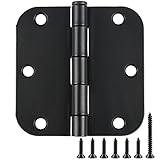
I remember staring at a wonky wardrobe door for about a month, convinced the hinges were shot. My dad, a man who once fixed a washing machine with a coat hanger and some serious swearing, just shook his head. “Those aren’t hinges, you numpty,” he grumbled, pointing at the plastic wheels that were supposed to be gliding along a track. It turns out, not all door hardware are rollers hinges. They look similar, they do a similar job, but they are fundamentally different beasts.
This whole confusion is surprisingly common, and it’s led more than a few people down the garden path when trying to fix or upgrade their doors. Let’s clear the air about what these roller things actually are and when you should (or shouldn’t) be using them.
What the Heck Are Rollers, Anyway?
So, we’ve established that not all door hardware are rollers hinges. The core difference is pretty simple: hinges are designed to pivot, usually on a pin, allowing a door to swing open and closed. Think of your standard interior doors, cabinet doors, or even your car doors. They have hinges. Rollers, on the other hand, are about smooth, linear motion. They’re designed to glide along a track or channel. Imagine a shower door, a barn door, or a sliding closet door. Those often use rollers.
The confusion probably stems from the fact that sometimes, roller systems are attached to a door in a way that mimics how a hinge is affixed. Both hinge and roller hardware attach to the door itself and to its frame or a mounting surface. But the mechanism of movement is entirely different. A hinge connects two pieces and allows rotation.
A roller system connects a door to a track and allows translation (sliding). Trying to use rollers where hinges belong, or vice-versa, is a recipe for disaster. I once tried to jury-rig a sliding door with what I thought were heavy-duty hinges, only to have the whole thing sag and scrape the floor within a week.
It was embarrassing and, frankly, cost me more in replacement parts than just buying the right setup initially.
The materials used can also be a giveaway. Hinges are typically made of metal – brass, steel, stainless steel – designed for strength and durability in a pivoting action. Rollers, while often having metal housings, will have components made of plastic, nylon, or rubber for that smooth glide. Think about the quiet hum of a well-oiled roller versus the solid clunk of a well-fitted hinge. They operate on different principles and feel different in use.
When Rollers Make Sense (and When They Don’t)
Rollers shine when you need a door to slide rather than swing. This is usually driven by space constraints or a specific aesthetic. Barn doors, for example, have become incredibly popular precisely because they slide along an exterior track, saving the floor space a swinging door would demand. Shower doors are another prime example; imagine trying to swing a glass shower door into a tiny bathroom. It just wouldn’t work. The rollers allow for smooth, often silent, operation along a channel. (See Also: A Box Without Hinges Key )
However, if you’re looking at a standard interior door that swings open into a room, rollers are almost certainly the wrong choice. Trying to adapt a roller system to a swinging door would require a complex and often unsightly track system and would likely result in a very unstable and difficult-to-operate door. The fundamental mechanics just don’t align. I saw a guy online try to install a roller system on a standard bedroom door because he thought it would be “modern.” It looked ridiculous and sounded like a freight train every time someone opened it. Stick to hinges for swinging doors; it’s what they’re designed for.
There’s also a distinction between simple roller hardware and more complex sliding door systems. A simple roller might just be a wheel that engages with a track. A full system will include the track, the rollers, guides, and often a soft-close mechanism. Knowing the type of door and the desired movement is key to picking the right hardware. For cabinets, you’ll find smaller, often ball-bearing rollers that allow for smooth drawer or sliding door action. These are specialized for that application and aren’t something you’d slap onto a full-sized door.
Common Mistakes People Make
The biggest mistake, as we’ve touched on, is confusing roller hardware with hinges and trying to use them interchangeably. This leads to doors that don’t hang properly, stick, scrape, or even fall off. Another common blunder is skimping on quality. I learned this the hard way with a cheap set of sliding wardrobe door rollers.
They squeaked like a chorus of mice after a few weeks and the wheels started to fray. I ended up spending more to replace them with a decent set than if I’d just bought the good ones from the start.
Good quality rollers often use ball bearings and more durable materials like nylon or reinforced plastic for the wheels, which make a huge difference in longevity and smoothness.
Improper installation is another huge pitfall. Roller systems, especially for larger doors like barn doors, require precise alignment of the track and the rollers. If the track isn’t level, or if the rollers aren’t spaced correctly, the door will bind, sag, or be difficult to operate. It’s not as simple as screwing in a hinge. You often need to make sure the track is perfectly parallel to the floor and that the door hangs plumb. I once spent an entire afternoon wrestling with a barn door because the track was a millimeter off. The door would catch halfway, and I was ready to throw the whole darn thing out the window. Patience and precision are key.
Overloading roller systems is also a common error. Each roller system has a weight limit. Trying to put a heavy solid wood door on a system designed for lighter hollow-core doors is a fast track to failure. Always check the manufacturer’s specifications for weight capacity. This is often overlooked, and people assume all rollers are created equal. They are not. A good set of rollers for a closet door might handle 50 lbs, while a heavy-duty barn door system could handle 200 lbs or more. Mismatching the load to the hardware is a surefire way to end up with a broken door. (See Also: Are Integrated Washing Machine Door Hinges Standard )
What to Look for in Roller Hardware
When you’re shopping for roller hardware, whether it’s for a barn door, a closet, or a shower enclosure, there are a few things that really matter. First off, the material of the wheels. Avoid cheap, hard plastic if you can. Look for nylon, POM (polyoxymethylene), or wheels with ball bearings. These offer much smoother, quieter operation and will last significantly longer. You can often feel the difference just by spinning a wheel in the package – a cheap plastic wheel will feel gritty, while a bearing-driven one will be smooth and almost silent.
The track material is also important. For most interior applications, aluminum or steel tracks are common and durable. Make sure the track is thick enough to support the door’s weight without flexing. If it feels flimsy in the store, it’s probably not going to hold up well in the long run. Also, check the mounting hardware that comes with the system. Are they solid screws, or tiny little things that look like they’ll strip out easily? Good quality mounting hardware is often overlooked but is important for a secure installation.
Consider the environment. If you’re installing rollers in a humid bathroom, look for corrosion-resistant materials like stainless steel or treated aluminum. For kitchens, where grease might be an issue, smoother, easier-to-clean surfaces are a plus. Also, think about the aesthetic. Roller systems come in a huge variety of styles, from industrial-looking barn door hardware to sleek, minimalist tracks for modern closets. Choose something that complements the overall look of your room.
Finally, always check the weight rating. This is a must. Compare it to the weight of your door. If you’re unsure how much your door weighs, it’s better to err on the side of caution and get a system with a higher weight capacity. I made the mistake once of buying a system that was “close enough” to the door’s estimated weight, and it started to bind within a year. Save yourself the headache and get it right the first time.
Real-World Use Cases and My Own Blunders
I’ve used roller systems extensively, mostly out of necessity due to awkward room layouts. My first real experience was with a pair of old sliding closet doors in an apartment I rented years ago. They were basically just wooden panels with a groove at the bottom and a primitive roller at the top that ran in a flimsy metal channel. They were constantly getting jammed, and it sounded like an ancient beast groaning every time I slid them open. It made me realize how much a decent roller system can improve everyday life.
Later, I tackled a DIY barn door project for a pantry. This was my first time installing a full system, and let me tell you, it was a learning curve. I completely misjudged the length of the track needed, and the door ended up hanging a bit too close to the wall, making it awkward to open fully.
The instructions were also a bit vague, and I ended up drilling holes in the wrong place initially. It took me a solid Saturday afternoon, a lot of head-scratching, and a few choice words to get it right. But once it was up and running, with the smooth glide of the rollers and the satisfying heft of the door, it felt like a huge accomplishment. That pantry door is now one of my favorite DIY projects, all thanks to a good set of rollers. (See Also: Are Hinges Wheeels )
I also installed a small roller system for a custom-built bookshelf that had sliding doors. This was a much smaller scale, using tiny ball-bearing rollers. It was a fiddly job, getting the alignment perfect on such a small scale, but the result was fantastic. The doors slide open with just a fingertip, revealing the books within. It’s these kinds of subtle improvements that make a huge difference in the usability and feel of a space. It taught me that even for small applications, the right roller hardware can be major.
People Also Ask: Roller vs. Hinge Differences
What Is the Difference Between a Hinge and a Roller?
A hinge is hardware that connects two objects and allows them to pivot relative to each other, like a door on its frame. A roller system, on the other hand, uses wheels to allow an object, typically a door, to slide along a track or channel. Hinges help swinging motion, while rollers help linear, sliding motion.
Can I Use Rollers Instead of Hinges for a Swinging Door?
Generally, no, you cannot effectively use rollers instead of hinges for a standard swinging door. Hinges are designed for pivoting movement around a central axis, while rollers are designed for linear movement along a track. Attempting to convert a swinging door to a roller system would be complex, likely unstable, and aesthetically unappealing, requiring a completely different mounting and track system.
Are Roller Systems More Expensive Than Hinges?
It varies greatly. Simple, basic hinges are usually less expensive than even basic roller hardware. However, high-end, specialized hinges can be much more expensive than many common roller systems. For comparable quality and application (e.g., heavy-duty barn door hardware versus standard door hinges), prices can be similar, but complex, premium roller systems can certainly surpass the cost of most residential hinges.
What Is the Best Type of Roller for a Sliding Door?
The best type of roller for a sliding door depends on the door’s weight, size, and the environment. For lighter doors, nylon or plastic rollers might suffice. For heavier doors, or where smooth, quiet operation is most important, ball-bearing rollers made of durable materials like nylon, POM, or even metal are preferable. Always check the manufacturer’s weight rating and consider the track material compatibility.
Conclusion
So, there you have it. Not all door hardware are rollers hinges, and understanding the distinction is key to avoiding frustration and wasted money. Rollers are for sliding, hinges are for swinging. It sounds obvious when you break it down, but the visual similarities can be deceiving, especially when you’re in the middle of a home project and just want to get things done.
My advice? Take a good, hard look at your door and how you want it to move. If it swings, you need hinges. If it slides, you need rollers. And for goodness sake, invest in decent quality hardware. It’s almost always worth the extra few bucks to avoid the squeaks, the jams, and the sheer annoyance of cheap, poorly made components. Spend a bit more now, save a lot of headaches later.
Before you buy, measure your door, check its weight, and look at the manufacturer’s specs. Don’t be like me and have to replace it a year down the line. Get the right roller system for the job, and your doors will glide like they were meant to.