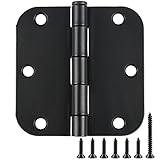
I’ll be honest, the first time someone mentioned ‘topper hinges,’ I pictured some kind of fancy, over-engineered cupboard door accessory for a dollhouse. Turns out, I was spectacularly wrong, and potentially poorer for it. We’ve all been there, right? Buying into the hype, only to discover the reality is… less shiny than the Instagram reel promised. That’s why I wanted to talk plainly about are topper hinges, what they actually do, and if they’re worth the cash you’ll shell out. Don’t expect any corporate fluff here; just the straight dope from someone who’s fiddled with enough gadgets to know the difference between a gimmick and a genuinely useful bit of kit.
What Exactly Are We Talking About?
Alright, let’s cut to the chase. When you’re looking at whether or not topper hinges are worth it, you’re usually dealing with a specific type of furniture component. These aren’t your grandad’s old-school butt hinges. Topper hinges, often also called ‘lift-up hinges’ or ‘stay hinges,’ are designed for furniture where a lid or door needs to lift upwards and, importantly, stay open without you holding it. Think about those storage ottomans, blanket chests, or even the cabinets above your kitchen counters where the doors swing up instead of out. The ‘topper’ part is key here – it suggests something sitting on top, which in furniture terms often means a lid or a top-opening door.
The magic behind these things is a mechanical system, usually involving a gas strut or a spring-loaded arm, that provides controlled lift and holds the door in place at various angles. This is a massive upgrade from just propping a lid open with a broom handle (a tactic I’ve employed more times than I care to admit) or dealing with a lid that slams shut on your fingers. The primary benefit is convenience and safety. No more fumbling to close a lid while trying to retrieve something, and no more surprise finger-pinching incidents. They make accessing the contents of whatever they’re attached to smooth and effortless.
I remember installing my first set on a DIY blanket chest I built for my living room. I’d seen them advertised, and the promise of a lid that would gracefully stay put while I rummaged for extra throws was too tempting. The old hinges I had were just basic, weak things that needed constant propping. This upgrade felt like moving from a horse and buggy to a Model T Ford in terms of functionality. The difference was stark. Before, opening the chest was a two-handed job requiring careful placement of a prop; after, it was a gentle lift, and the lid just… stayed there. Beautiful.
The ‘why’ Behind the Lift: Function and Form
So, why would anyone need these fancy hinges? It boils down to two main things: functionality and, surprisingly, a bit of aesthetics.
Functionally, as I’ve hammered home, they’re about making life easier and safer. Imagine a kitchen cabinet above your sink where you need to grab a spice jar.
If it opens outwards, you’re ducking or knocking your head. If it opens upwards and stays put, you can easily see and grab what you need, hands-free, while still having clear headroom. For heavy lids on toy boxes or chests, they prevent the lid from crashing down, which is a huge win for households with kids.
It’s not just about avoiding injury; it’s about smooth operation. The controlled movement – that gentle lift and soft close that many higher-end models offer – adds a touch of luxury to everyday items.
Aesthetically, topper hinges can contribute to a cleaner, more modern look. You don’t have bulky, visible prop mechanisms. The hardware is often concealed or integrated neatly, allowing the design of the furniture piece to take center stage. For built-in cabinetry or custom furniture, this smooth integration is a big deal. They allow for designs that might otherwise be impractical. For instance, a shallow cabinet with a top-opening door could be ideal for a small entryway or hallway, providing storage without encroaching on walking space. The hinge itself becomes a supporting actor, not the star, allowing the wood grain or the finish of the furniture to shine.
I’ve seen some really cheap versions where the lift is jerky and the hold is wobbly. That’s not what we’re aiming for. The good ones provide a consistent, smooth operation. They feel substantial. You can feel the engineering when you use them. It’s the difference between a tool that works and a tool that feels like a cheap knock-off. The weight and the feel of the mechanism as it opens and closes tells you a lot about its quality. It’s a small detail, but it matters for how you perceive the entire piece of furniture.
Shopping Smart: What to Actually Look For
Okay, so you’re convinced you might need these. Now comes the fun part: wading through the options. This is where things can get a bit murky, and you can easily end up with something that’s more frustrating than functional.
When I’m looking for these, I’m not just scanning for the lowest price. I’m looking at a few key things. First, the weight capacity. This is absolutely most important. (See Also: A Box Without Hinges Key )
Manufacturers will usually specify the weight of the lid or door the hinge can support. Exceed this, and you’ll have a lid that slowly sags open, defeating the whole purpose. I once bought a set that claimed to hold ‘heavy lids,’ but it struggled with a solid oak lid that probably weighed about 15 pounds. My mistake?
Not checking the specific weight rating versus the general description. Lesson learned the hard way.
Next is the opening angle. Some hinges allow the lid to open to 90 degrees, while others can go wider, maybe 110 or even 120 degrees. For deep chests, a wider opening angle is a lifesaver, letting you see everything at the bottom without having to practically lie down inside. Also, consider the closing mechanism. Many higher-end topper hinges feature a soft-close mechanism, which prevents the lid from slamming shut. This is a fantastic feature, especially for safety and for preserving the finish of your furniture. It’s that little bit of engineering that makes a product feel premium.
Material and build quality are also big indicators. Are they made of sturdy metal, or do they feel flimsy and prone to bending? Look at the mounting plates – are they solid? Are the pivot points smooth? Brands that provide clear specifications and good documentation are usually a safer bet. I’ve found that looking at reviews, specifically for comments on durability and ease of installation, can save you a lot of headaches. Also, consider the type of mechanism: gas struts are common and effective, while some use complex spring systems. Both can work well, but gas struts often offer more consistent support over time and are easier to find in a wide range of capacities.
| Feature | Why It Matters | My Verdict |
|---|---|---|
| Weight Capacity | Prevents sagging; makes sure lid stays open. | Must-have. Get it right for your lid weight. |
| Opening Angle | Determines how far the lid opens; affects access. | Important. Wider is better for deep storage. |
| Soft-Close Mechanism | Prevents slamming, protects fingers and furniture. | Highly recommended. Adds a premium feel. |
| Material Quality | Durability, longevity, and smooth operation. | Important. Avoid flimsy metal. |
| Adjustability | Allows fine-tuning of tension or opening angle. | Nice-to-have. Not always necessary, but useful. |
Common Mistakes and How to Avoid Them
Let’s talk about the pitfalls. The biggest mistake I see people make, and one I’ve definitely fallen into, is buying the cheapest option available without doing any homework. You see a pack of hinges for $15 online, and they look like they’ll do the job.
Often, they don’t. They’re either too weak, break quickly, or the mechanism is so stiff or loose that it’s more of a hindrance. I bought a set once for a small desk lid.
They were supposed to be strong enough, but they’d barely lift the lid, and if I opened it too far, they’d just let go and slam down. It was incredibly frustrating, and I ended up buying a more expensive, better-quality set a week later, which cost me more in the long run.
Another common error is misjudging the installation. These aren’t always super intuitive to install. You need to get the placement exactly right.
If they’re too high, too low, or too far back on the lid, they won’t function properly, and they can even damage your furniture. Measure twice, cut once, as they say, but with hinges, it’s more like measure, mark, double-check the mark, then install. Some manufacturers provide detailed templates or instructions, which are gold. If they don’t, look for online tutorials specific to that hinge type.
Don’t just wing it. I once installed a set slightly off-center, and it caused uneven wear on the lid and the cabinet frame. It looked crooked, and the lid didn’t close flush anymore.
Annoying. (See Also: Are Integrated Washing Machine Door Hinges Standard )
Overestimating the strength of a hinge is also a classic blunder. People see ‘heavy duty’ and think it covers everything. But what’s ‘heavy duty’ for a small jewellery box lid is not the same as for a substantial blanket chest. Always, always check the specified weight capacity for the hinge and compare it to the actual weight of your lid. Use a kitchen scale if you have to. It takes two minutes and can save you from a very expensive mistake. And on the flip side, don’t go overboard buying the strongest hinge you can find for a feather-light lid; it might be too stiff to open easily.
Can I Use Topper Hinges on Any Cabinet?
While topper hinges are versatile, they’re best suited for applications where a lid or door needs to lift upwards and stay open. This typically includes cabinet doors that swing upwards (like on some modern kitchen cabinets), lids on chests, toy boxes, or storage ottomans. They can also be adapted for some overhead compartments. However, they are not designed for standard cabinet doors that swing outwards on side-mounted hinges.
How Do I Know Which Weight Capacity I Need?
You need to weigh your lid or door accurately. Use a kitchen scale for smaller lids or a bathroom scale for larger ones. Then, choose hinges that can support that weight, ideally with a little buffer. Most manufacturers will list the maximum weight capacity per pair of hinges. It’s better to slightly over-spec than under-spec to make sure reliable performance and longevity.
Real-World Use: Where They Shine (and Where They Don’t)
I’ve fitted these things to a pretty wide range of projects. My blanket chest is still a prime example of where they shine. It’s a solid piece of furniture, and having a lid that stays open while I’m digging for the right throw blanket is genuinely useful. My kids can’t slam it shut, which is a peace of mind I didn’t realize I needed until I had it. The controlled lift makes it feel like a much more expensive piece of furniture than it actually is. It’s pure convenience.
Another win was a set of upper kitchen cabinets in a small galley kitchen. The doors swing upwards and stay put. This means I’m not banging my head every time I reach for a mug. They also make the kitchen feel more open because the doors aren’t sticking out into the walkway. It’s a subtle thing, but it improves the flow and usability of a cramped space. For these applications, especially where space is tight or heavy lids are involved, topper hinges are, in my opinion, a no-brainer. They solve real problems.
But they aren’t for every situation. For standard doors that swing outwards, like most lower kitchen cabinets or closet doors, you’re just going to make things more complicated than they need to be. Those doors are designed for side-mounted hinges for a reason – ease of access to the full width of the cabinet. Trying to adapt upward-swinging hinges for these would likely result in awkward operation and a less functional cabinet.
Also, if you’re dealing with very large, very heavy doors, you need to be extremely careful. While strong hinges exist, the sheer weight and use can put immense stress on the mounting points and the hinge mechanism itself.
You need solid furniture construction to back up strong topper hinges. For my own DIY projects, I stick to lids and doors that are within the typical range of what these hinges are designed for.
One time, I tried to put them on a workbench lid that was a bit warped. The hinge fought against the warp, and it made the lid stick and not close properly. It was a mess. So, the furniture itself needs to be reasonably well-constructed and not significantly out of square for these hinges to work their best. If the lid doesn’t sit flush or has a significant warp, the hinge will struggle to compensate.
Practical Tips for Installation and Use
Alright, you’ve got your hinges, you’ve weighed your lid, and you’re ready to go. Here are a few pointers that might save you some grief. First, read the instructions. I know, I know, it’s boring. But seriously, each hinge might have specific mounting recommendations. Pay attention to the distance from the edge of the lid/door and the height from the back. This is usually printed in millimetres, so have a tape measure handy. If the instructions are vague, look for diagrams online or even YouTube videos of similar hinge installations. Visual aids are your friend here.
Before you drill any holes, do a dry fit. Hold the hinge in place, mark your screw holes lightly with a pencil, and then hold the lid/door in position to see how it operates. You can even use painter’s tape to temporarily hold the hinge in place to test the swing and position. (See Also: Are Hinges Wheeels )
This is the best way to catch alignment issues before you commit with screws and potentially damage your material. I’ve learned that pre-drilling pilot holes for your screws is a good idea, especially in hardwood.
This prevents the wood from splitting. Use a drill bit that’s slightly smaller than the screw shank. For MDF or particleboard, use screws specifically designed for those materials or consider using inserts for added strength.
Once installed, test the operation gently. Open and close the lid a few times.
Does it move smoothly? Does it stay open at different angles? If it feels stiff or jerky, double-check your installation.
Sometimes, a slight adjustment in position can make a world of difference. If the lid doesn’t stay open, it could be that the hinge isn’t rated for the weight, or it’s installed incorrectly. If it slams shut too quickly, and it doesn’t have a soft-close feature, you might need to be extra careful.
Don’t force anything. If it’s not working right, something is wrong with the installation or the hinge itself. For any topper hinges, I always recommend using the correct screws that come with them or high-quality replacements. Don’t try to get away with using old, rusty screws; it’s a false economy.
Frequently Asked Questions About Topper Hinges
Are Topper Hinges Difficult to Install?
Installation difficulty varies depending on the specific hinge and your DIY experience. Generally, they require precise measurements and drilling. If you can follow instructions, measure accurately, and use a drill, you should be able to install them. Some higher-end models come with templates or clearer guides, making the process smoother. Always double-check measurements before drilling and consider pre-drilling pilot holes.
Can I Replace Existing Hinges with Topper Hinges?
Yes, you often can, but it depends on the type of furniture and the space available. You’ll need to make sure the new topper hinges are compatible with the existing cutouts or mounting points, or that you have sufficient space to create new ones. The weight capacity of the new hinges must also be appropriate for the lid or door you’re fitting them to. Careful measurement and planning are key to a successful replacement.
Are Gas Strut Hinges Better Than Spring Hinges?
Both gas strut and spring-loaded topper hinges have their pros and cons. Gas strut hinges are generally preferred for their smoother operation, consistent lift, and often better ability to hold a lid open at multiple angles. They tend to feel more premium. Spring-loaded mechanisms can be effective but might offer less controlled movement and can sometimes lose their tension over time. For most applications, gas strut hinges offer a superior user experience.
Do Topper Hinges Come in Different Finishes?
Yes, topper hinges are available in a variety of finishes to match your furniture. Common finishes include brushed nickel, polished chrome, black, and sometimes brass or antique bronze. When selecting, consider the overall aesthetic of the furniture piece you’re working on to make sure the hinges complement the design rather than detract from it.
Verdict
So, are topper hinges worth it? My honest answer is a resounding ‘it depends,’ but leaning towards ‘yes’ for the right applications. If you’re building something new or upgrading an existing piece with a lid that needs to stay open – like a toy box, a blanket chest, or an overhead cabinet – they are fantastic. They add a level of convenience, safety, and perceived quality that’s hard to beat for the price, provided you choose wisely.
The key is to avoid the cheapest options, understand the weight capacity, and install them accurately. I’ve wasted money on flimsy hinges that barely did their job, and I’ve also invested in good ones that have made my furniture genuinely more enjoyable to use. For me, the peace of mind and smooth operation are worth the extra few bucks. Don’t just buy them because they look cool; buy them because they solve a problem.
Before you click ‘add to cart,’ take a moment to measure your lid and consider the actual need. If you’re on the fence, and the existing setup is functional, maybe hold off. But if you’re dealing with a wobbly lid, a finger-pinching hazard, or just want that little touch of effortless class in your home, topper hinges are definitely worth considering.