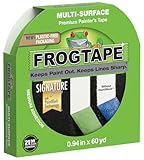
Look, I’ve been there. Staring at a roll of masking tape, a half-finished paint job, and a dwindling budget. The question pops into your head, “Can you use masking tape instead of painter’s tape?” It’s tempting. It’s cheaper, and you probably have a roll sitting in a drawer somewhere right now. But let me tell you, what seems like a clever money-saving hack can quickly turn into a sticky, paint-bleeding nightmare that costs you way more time and frustration than a roll of the good stuff ever would.
I remember one Saturday morning, bright and early, ready to tackle my bedroom walls. I’d bought this fancy mid-range paint, feeling all proud. Then I realized I was out of painter’s tape. Panic! My eyes landed on a roll of basic masking tape. “How different can it be?” I thought, smugly. Spoiler alert: Very different. Very, very different.
Masking Tape vs. Painter’s Tape: The Sticky Truth
Let’s get this straight from the jump: while both masking tape and painter’s tape are technically ‘tapes’ you can stick to surfaces, they are absolutely NOT interchangeable. Think of it like trying to use duct tape to hang a delicate watercolor. It might hold it up for a bit, but you’re going to regret it later. Painter’s tape is specifically engineered for painting. Its adhesive is designed to stick firmly enough to create a seal against paint bleed, but it’s also formulated to release cleanly without damaging the underlying surface when you pull it off, usually within a few hours or days of application, depending on the type.
Masking tape, on the other hand, is generally made with a more aggressive adhesive. Its primary job is usually to hold things together, like wrapping paper or securing light items during moving.
This stronger glue means it’s much more likely to leave behind sticky residue, especially on painted surfaces or delicate materials. Worse, when you try to peel it off after painting, that aggressive adhesive can pull paint right off with it, leaving you with jagged, awful lines and a whole lot of touch-up work. I once tried masking tape on a wooden trim job, and when I pulled it off, it took a chunk of the semi-gloss finish with it.
It looked like a miniature cliff face. Took me an extra hour to sand it down and re-coat just that tiny section. Never again.
So, when you’re asking yourself ‘can you use masking tape instead of painters tape,’ the short, brutal answer is: You can, but you shouldn’t if you want a good result. The difference in price is minimal when you consider the potential damage and the sheer amount of extra work you’ll likely end up doing. A good roll of painter’s tape might run you $5-$10, while a roll of basic masking tape might be $2-$4. For that extra few bucks, you’re buying peace of mind and a clean paint line. It’s a no-brainer for any serious DIYer or even a casual weekend warrior.
Why Painter’s Tape Wins (every Single Time)
The magic of painter’s tape lies in its construction. It’s not just about the adhesive; the backing material is also important. Painter’s tape is typically made from a thin, crepe paper backing. This material is somewhat flexible, allowing it to conform to curves and corners better than stiffer masking tape might. More importantly, this paper is porous to a degree. When you apply a wet coat of paint, the excess paint can be wicked into the tape’s backing, helping to create a sharper, cleaner edge. It’s a subtle mechanism, but it makes a world of difference.
There are different types of painter’s tape, and this is where people sometimes get confused. You have your standard blue or green tapes, which are great for most indoor walls and trim. These are designed for surfaces that have been painted recently or are in good condition.
Then you have specialized tapes for more demanding situations. There are low-tack tapes for delicate surfaces like wallpaper or freshly painted walls (wait at least 24 hours for those, though). There are also higher-adhesion tapes designed for rougher surfaces like brick, stucco, or unfinished wood, often in orange or yellow colors. These have a stronger adhesive and a thicker backing to withstand textured environments.
Understanding these nuances is key to choosing the right tape, not just defaulting to whatever’s cheapest. (See Also: Does Painters Tape Pull Off Paint )
I once had to paint a room with very old, slightly peeling wallpaper. I used a regular blue painter’s tape, thinking it would be fine.
Big mistake. The adhesive was too strong for the old wallpaper, and when I pulled the tape off, it lifted small bits of the paper along with it. It looked like a bad case of wallpaper acne.
I had to go back, painstakingly patch the areas, and then re-tape with a delicate-surface tape I had to run out and buy. It added hours to a job that should have taken half a day. That experience taught me that ‘painter’s tape’ isn’t a one-size-fits-all solution, but it’s still infinitely better than masking tape.
The key is picking the right painter’s tape for the job. For general interior walls, trim, and windows, the standard stuff is usually your best bet.
The Real Cost of Cutting Corners
When you’re weighing ‘can you use masking tape instead of painters tape,’ the immediate cost difference is alluring. A 3-pack of standard painter’s tape might set you back $15, while a similar amount of masking tape could be $6. That’s a $9 saving, right? But let’s break down what that $9 saving actually costs you in the long run. First, there’s the paint bleed. Masking tape’s adhesive isn’t designed to create a tight seal against liquid paint. You’ll get fuzzy, uneven lines where paint seeps under the tape. Cleaning this up means you’ll need a very fine-grit sandpaper to gently scrape away the errant paint, a small brush, and then a touch-up coat of your original paint.
This touch-up process is tedious and time-consuming. What might have been a clean peel-off and reveal now involves careful, detailed work that can easily take an hour or more, depending on the extent of the bleed. And that’s assuming you don’t accidentally pull off some of the base coat with the masking tape when you remove it. If that happens, you’re looking at more extensive patching, priming, and repainting of the affected areas. This can easily double or triple the time you spend on that specific detail, turning a quick masking job into a frustrating afternoon.
Then there’s the residue. Stronger adhesives on masking tape can leave a gummy, sticky film on your surfaces.
Trying to remove this residue often requires mineral spirits or adhesive removers, which can themselves damage certain finishes or require further cleaning. I once used masking tape on a piece of furniture I was refinishing and ended up with sticky spots all over the newly stained wood. It took a lot of elbow grease and a careful application of Goo Gone to get it off, and even then, I was worried about damaging the finish.
So, that $9 saving? It evaporates quickly when you factor in the cost of your time, potential damage to your surfaces, and the mental toll of dealing with a botched paint job.
It’s just not worth it for anything you actually care about looking good. (See Also: Does Painters Tape Rip Paint Off Walls )
My Mistake: The Case of the Uncooperative Trim
Okay, confession time. It was a few years back, and I was painting the trim in my living room a crisp white against a deep navy wall. I’d bought some nice, thick painter’s tape, the good stuff. But in my haste, I’d only bought one roll. I ran out halfway through the room. The local hardware store was closed, and I had guests coming over the next day, so I had to finish. I remembered a half-used roll of standard beige masking tape in my garage. “It’ll be fine for a few hours,” I rationalized. “I’ll just be super careful with the paint.” Famous last words.
I applied the masking tape with extreme care, pressing down the edges with my fingernail, trying to create the best seal I possibly could. I painted slowly, using a small brush, dabbing rather than brushing aggressively near the tape line. It seemed to be working! The navy paint was staying on the wall, and the white trim was looking sharp. I was feeling pretty smug, thinking I’d pulled off a minor miracle. Then came the moment of truth: peeling the tape.
As I gently pulled up the masking tape, I heard it. A soft tearing sound. Not the clean rip I’d hoped for, but a snagging, pulling sound.
The navy paint, instead of staying on the wall, was peeling away with the tape in little jagged strips. It looked awful. What should have been a crisp, clean line was a disaster zone of chipped paint and fuzzy edges. It wasn’t just a few spots; it was almost the entire length of the room.
I was mortified. I spent the rest of the evening, and well into the night, meticulously scraping and repainting that trim. It was a stark, painful lesson in respecting the tools of the trade.
My $3 masking tape cost me about five hours of my life and a significant amount of stress.
When might Masking Tape Be Okay? (spoiler: Rarely)
Alright, so I’ve been pretty hard on masking tape, and for good reason. But are there any scenarios where it’s a viable alternative to painter’s tape? Let’s be brutally honest: probably not for painting.
However, if you’re in a pinch and absolutely cannot get painter’s tape, and you’re dealing with a very forgiving surface and a type of paint that’s not going to bleed like crazy, you might get away with it. I’m talking about covering something you don’t care about too much, like a temporary protective layer during a messy, non-painting-related task. For instance, if you’re doing some rough sanding or cutting and want to protect a surface from dust and debris, and you plan to remove the tape within minutes, basic masking tape might suffice.
But even then, there’s a risk of residue or surface scuffing.
Some people might argue that if you’re using a very thin coat of paint, or a very thick, fast-drying one, the bleed might be less of an issue. I’ve heard folks say that if you run a bead of caulk along the edge of the masking tape after applying it, it creates a better seal. (See Also: Does Masking Tape Work The Same As Painters Tape )
While that’s a valid technique for creating a super-sharp edge, it’s an extra step that defeats the purpose of using masking tape as a quick, cheap alternative. You’d be better off using painter’s tape and caulk.
Ultimately, the situations where masking tape is a truly acceptable substitute for painter’s tape are so few and far between that it’s not worth considering as a general practice. The risk of a bad outcome far outweighs any perceived benefit.
The only time I’ve seen it work, sort of, is when someone is painting a very rough, porous surface like unprimed drywall or a heavily textured concrete wall, and they’re not aiming for razor-sharp lines anyway. In those cases, the tape isn’t really creating a seal so much as a general barrier. But for walls, trim, windows, or any surface where you want a clean break between colors, masking tape is going to let you down. It’s like using a butter knife to cut a steak – it’s technically a cutting tool, but it’s the wrong tool for the job.
Faq: Your Masking Tape Questions Answered
Will Masking Tape Leave Residue?
Yes, masking tape is much more likely to leave behind a sticky residue than painter’s tape, especially on painted or finished surfaces. The adhesive is generally stronger and not designed for clean removal. This residue can be difficult to remove and might require solvents, which can potentially damage the underlying surface.
Can I Use Masking Tape on Delicate Surfaces?
Absolutely not. Masking tape’s aggressive adhesive can easily damage delicate surfaces like wallpaper, freshly painted walls, or certain types of wood finishes. It’s very likely to pull off paint, tear wallpaper, or leave behind stubborn sticky marks.
How Long Can I Leave Masking Tape on a Wall?
While you can leave masking tape on for a while, it’s not recommended. The longer it stays, the more likely the adhesive is to bond strongly with the surface or become brittle, increasing the chances of residue or paint removal upon peeling. Painter’s tape is designed for specific removal windows; masking tape isn’t designed for removal at all after painting.
What’s the Difference in Adhesive Strength?
Masking tape typically has a stronger, more aggressive adhesive designed for holding things together. Painter’s tape has a specially formulated, lower-tack adhesive that balances adhesion for a good seal with clean removal. This is the primary reason why masking tape causes problems with paint.
Can You Use Masking Tape Instead of Painters Tape for a Rough Surface?
While some might try, it’s still not ideal. Rough surfaces are more challenging for any tape to adhere to, and masking tape’s aggressive adhesive might be more likely to cause damage if it grabs unevenly. For rough surfaces, a specialized high-adhesion painter’s tape is a much safer and more effective choice for creating clean lines.
| Feature | Masking Tape | Painter’s Tape | Verdict |
|---|---|---|---|
| Adhesive Strength | High (Aggressive) | Low to Medium (Formulated) | Painter’s tape is designed for clean removal. |
| Residue Left Behind | High Likelihood | Low Likelihood (especially fresh) | Masking tape is a residue nightmare. |
| Paint Bleed Resistance | Poor | Good to Excellent | Painter’s tape creates sharper lines. |
| Surface Damage Risk | High | Low (when used correctly) | Masking tape can pull off paint. |
| Conformability | Moderate | Good | Painter’s tape hugs edges better. |
| Best Use Case | Temporary holding, non-important tasks | Masking for painting, protecting surfaces | Painter’s tape is the clear winner for painting. |
Final Verdict
So, to wrap this up: can you use masking tape instead of painter’s tape? Technically, yes, you can slap it on. But will it give you good results, especially when painting? A resounding, emphatic NO. The small amount of money you save upfront is almost guaranteed to cost you more in time, frustration, and potentially damaged surfaces. It’s the kind of penny-pinching that makes you pay dollars later.
My advice? Unless you’re wrapping a birthday present or sealing a cardboard box for storage and don’t care about sticky residue, just buy the proper painter’s tape. It’s designed for the job, and it makes a world of difference. Invest in a good roll (or two) for your next project and save yourself the headache I’ve endured more times than I care to admit. Your walls, your trim, and your sanity will thank you.