I remember the first time I tried to do a two-tone finish on a dresser using chalk paint. Armed with what I thought was the best masking tape money could buy, I meticulously taped off the sections. Imagine my horror when, after pulling off the tape, ragged, fuzzy edges greeted me. It looked like a badger had attacked the paint job. So, can you use masking tape on chalk paint? The short answer is yes, but it’s a minefield if you don’t know what you’re doing.
Most people just grab whatever tape is lying around, and that’s where the trouble starts. It’s not as simple as just sticking it down and hoping for the best. There are specific things you need to consider, especially with the somewhat delicate nature of chalk paint finishes.
The Truth About Masking Tape and Chalk Paint
Look, I’ve been wrestling with furniture projects for longer than I care to admit, and the question ‘can you use masking tape on chalk paint?’ pops up more often than you’d think. My initial instinct, after that first disastrous dresser incident, was a resounding ‘NO’. But that’s not the whole story.
The real issue isn’t the tape itself as much as it is understanding how chalk paint behaves and how different tapes interact with it. Chalk paint, especially matte finishes, has a porous texture.
This is what gives it that velvety look and feel, and what makes it so easy to distress. But that porosity is also its Achilles’ heel when it comes to clean lines with tape. It can seep underneath, and it can grab onto the paint, pulling it up when you remove the tape.
It’s a recipe for frustration if you’re aiming for a crisp, professional-looking finish.
The common advice you’ll find online often boils down to ‘use painter’s tape’. Yeah, no kidding. But not all painter’s tape is created equal. You’ve got your basic blue stuff, the delicate green stuff, the purple stuff for tricky surfaces, and even specialty tapes. I’ve spent probably $180 across four different brands of blue painter’s tape trying to find one that consistently works, and let me tell you, it’s a gamble. Some are tacky enough to hold, but not so aggressive that they’ll rip the paint. Others? They’re like cling film for your paint job, just waiting to lift and leave you with a mess.
What most tutorials don’t tell you is that the cure time of your paint is absolutely vital. Pulling tape off too soon is like trying to peel a sticker off wet paper. Pulling it off too late can make it practically welded to the surface, and then you’re back to the ragged edges problem. I learned this the hard way on a set of nightstands. I got impatient, pulled the tape while the paint was still a little tacky, and ended up with edges that looked like they’d been gnawed by mice. It wasn’t pretty. It taught me to respect the drying process, no matter how much I wanted to be done.
So, while the direct answer to ‘can you use masking tape on chalk paint?’ leans towards ‘yes, with extreme caution and the right type,’ it’s key to manage expectations. It’s rarely going to give you the razor-sharp lines you might get on a glossy enamel finish. You’re often fighting the inherent nature of chalk paint. This isn’t a failure of the tape; it’s a characteristic of the medium. My advice? If you absolutely need perfect, sharp lines, chalk paint might not be your first choice, or you’ll need to be very, very patient and use specific techniques.
Choosing the Right Tape: It’s Not Just Blue
Alright, so you’re committed to chalk paint, and you need to tape something off. What tape are we talking about?
Forget that cheap, generic masking tape you might have in the garage for packing boxes. That stuff is too aggressive and often leaves residue. When I’m in a pinch and need to tape chalk paint, I reach for a good quality, low-tack painter’s tape. The key word here is ‘low-tack’.
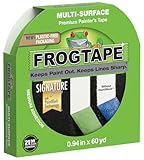
Brands like FrogTape (the green one) or 3M’s delicate surface tape (usually purple or yellow) are designed for this. They’re formulated to adhere just enough to create a seal but not so much that they’ll lift dried paint. I’ve found the green FrogTape to be particularly good because it has a sort of waxy coating that helps create a better seal against paint bleed, which is a common issue with porous surfaces like chalk paint.
The trick with these tapes is that they’re still not foolproof. You always need to do a test patch. Find an inconspicuous spot on your project, or even on a scrap piece of wood painted with the same chalk paint and sealed with the same topcoat, and test your tape. (See Also: Can I Print Petg On Painters Tape )
Apply it, press it down firmly, let it sit for a bit (mimicking the time you’ll leave it on during your actual project), and then pull it off. See how it behaves.
Does it lift the paint? Does it leave fuzzies? If it looks like it’s going to be a problem, don’t use it on your main project. This simple step has saved me countless hours of repair work.
I once spent three hours taping a complex pattern on a tabletop, only to pull it off and find that the tape I’d chosen, despite being labelled ‘delicate,’ had lifted entire patches of paint. That was a tough lesson learned, and now testing is a must.
Consider the surface preparation. If your chalk paint isn’t fully cured, or if you’ve applied a topcoat (like wax or polycrylic), the tape’s interaction will change. Wax, in particular, can make the surface slicker, but it can also gum up the tape’s adhesive. Polycrylic creates a harder, less porous surface, which is generally better for taping. So, the ‘how it works’ part of the question ‘can you use masking tape on chalk paint’ also depends heavily on what’s over the chalk paint.
Here’s a quick rundown of what to look for:
| Tape Type | Pros | Cons | Verdict for Chalk Paint |
|---|---|---|---|
| Standard Masking Tape (Brown) | Cheap, readily available | Too aggressive, leaves residue, pulls paint | Avoid. High risk of damage. |
| Blue Painter’s Tape (General Purpose) | Widely available, moderate tack | Can still be too aggressive for delicate chalk paint, variable quality | Use with caution, test thoroughly. Choose a reputable brand. |
| Green Delicate Surface Tape (e.g., FrogTape) | Low tack, designed for sensitive surfaces, often has good sealing properties | More expensive, can still lift if paint is not fully cured or if left on too long | Generally recommended. Your best bet for cleaner lines. |
| Purple/Yellow Delicate Surface Tape (e.g., 3M) | Very low tack, ideal for freshly painted or sensitive surfaces | Can be too low tack to create a perfect seal against bleed-through on very textured chalk paint | Good option, but make sure it adheres well enough to prevent bleeding. |
The Art of Application and Removal
This is where most people, myself included when I was starting out, mess up. Applying and removing tape on chalk paint isn’t just about sticking it down and ripping it off. It’s a delicate dance. First, make sure your chalk paint is completely dry. I’m not talking about dry to the touch; I mean fully cured. This can take days, depending on humidity and paint thickness. If you’re impatient, you’re asking for trouble. I’ve learned to set aside projects for a good 72 hours, sometimes even a week, before I even think about taping over chalk paint, especially if it’s a matte finish with no topcoat yet.
When you apply the tape, press it down firmly, especially along the edges. Use a putty knife, a credit card, or even your fingernail to burnish the edge. This creates a tighter seal, making it harder for paint to seep underneath. Think of it like creating a tiny dam. The better the seal, the cleaner the line. However, with chalk paint’s texture, it’s almost impossible to get a perfect seal, so you have to be prepared for a little touch-up work.
Now, for the removal. This is the moment of truth. Do NOT wait too long after you’ve applied your second color or topcoat.
The longer the tape sits, the more likely it is to bond with the paint, increasing the risk of pulling it up. The sweet spot is often when the new paint is dry to the touch but not fully cured.
This is where that ‘low-tack’ tape really shines. Peel it off slowly and at an angle, pulling away from the painted line rather than directly over it.
If you see any paint lifting or tearing, stop. You might need to score the edge of the tape with a craft knife to break the seal before continuing. This is particularly important if you’ve applied a wax topcoat over the chalk paint, as wax can sometimes create a sticky surface.
My first attempt at a striped effect on a bookshelf was a disaster because I left the tape on overnight after applying the second color. The next morning, the tape felt like it had become one with the paint. When I pulled it, huge chunks came off with it. I had to spend hours painstakingly scraping, sanding, and repainting. Now, I’m religious about removing the tape while the new paint is still slightly pliable, usually within a few hours of application. It’s a calculated risk, but it’s paid off more often than not. The question ‘can you use masking tape on chalk paint’ is really about timing and technique as much as it is about the tape itself. (See Also: Can You Leave Painters Tape On Too Long )
What If the Tape Bleeds Under?
If you notice paint bleeding under your tape, don’t panic. It’s a common issue with chalk paint due to its porous nature. Once you’ve removed the tape, you can carefully touch up the bleed marks. Use a small, fine-tipped artist’s brush and a steady hand to apply the original color precisely along the edge. Let it dry completely before applying the second color, or if you’re touching up the second color, be even more precise. For very small bleeds, sometimes a fine-grit sanding sponge can help gently buff out the imperfection without damaging the surrounding paint. Sometimes, a light coat of clear wax over the entire piece can help seal minor imperfections and make them less noticeable.
When to Ditch the Tape Altogether
Honestly, sometimes the best answer to ‘can you use masking tape on chalk paint’ is: you probably shouldn’t if you can avoid it. There are methods for achieving clean lines without tape that, while requiring more skill and patience, give superior results with chalk paint. One of my favorite techniques, especially for intricate designs or when I’m feeling particularly bold, is hand-painting the lines. This involves using a very fine artist’s brush and a steady hand to paint directly along the desired line. It’s not for everyone, and it takes practice, but the results can be incredibly crisp and professional.
Another method is using a stencil with a good quality adhesive backing. Stencils can be positioned precisely, and when used with a sponge or dry brush technique, they minimize the risk of bleed-through. You still need to be mindful of how much paint you’re loading onto your brush or sponge, but it’s often more controlled than tape. I used a stencil to create a geometric pattern on a sideboard, and the lines were far cleaner than any tape job I’d managed up to that point. It took longer to position the stencil, but the final look was worth the effort.
What about distressing? If your goal is a vintage, distressed look, tape is often counterproductive anyway.
You want those slightly softened edges. If you’re going for a two-tone look and want a clean separation, but you’re hesitant about tape, consider doing one color completely, letting it cure fully, and then very carefully painting the second color up to the edge. You can use a ruler or a straight edge as a guide, but paint to the line rather than relying on tape to stop the paint.
This requires a very steady hand, but it eliminates the risk of tape damage entirely. I’ve done this on smaller items like picture frames and drawer fronts with great success. It’s more time-consuming, but the clean separation you get is unmatched.
I also want to address the idea of sealing the edge with the base coat. Some people swear by painting a thin line of your base color over the edge of the tape before applying your second color. The idea is that this seals the tape edge. It can work, but it adds an extra step, and if you don’t do it perfectly, you can still get bleed. I’ve tried it, and while it sometimes helps, I find it’s not a guaranteed fix. For me, the most reliable methods are either incredibly careful hand-painting or using stencils. If I absolutely have to use tape, it’s the low-tack green stuff, and I’m still holding my breath during removal.
Real-World Scenarios and Tips
Let’s talk practicalities. You’ve got a piece of furniture you want to transform. Maybe it’s an old dresser, a coffee table, or even just some picture frames. You want a clean two-tone look. Here’s what I’d do, based on hard-won experience. First, clean your piece thoroughly. Degrease it. Chalk paint adheres well to many surfaces, but a clean slate is always best. Then, apply your first color. Let it dry completely. Now, decide on your design. If it’s a simple straight line, like the top of a dresser, you might get away with tape. If it’s a more intricate pattern, like stripes on a curved surface, I’d start thinking about stencils or hand-painting.
Let’s assume it’s a simple line. Clean the area where the tape will go. Apply your chosen low-tack tape (I’m still leaning towards the green FrogTape here).
Burnish the edge firmly. Now, the important part: applying the second color.
Don’t just slap it on. Use a good quality brush and apply thin, even coats. Avoid overloading your brush, which increases the chance of drips and bleed.
If you’re using a spray chalk paint, keep the can moving and use light, even passes. Once the second color is dry to the touch (and I mean dry, not just not-sticky), carefully remove the tape. Peel it slowly, at a low angle, away from the freshly painted line. Have a small artist’s brush and your original paint color ready for touch-ups. (See Also: Can You Use Painters Tape For Packages )
It’s almost inevitable that you’ll have a few small spots to fix.
Here’s a tip I picked up from a seasoned restorer: If you’re dealing with a particularly stubborn or textured surface, or if you’re worried about the tape lifting the underlying chalk paint, try applying a thin layer of clear wax over the first color before taping. Let the wax dry completely.
This can create a smoother, less porous surface for the tape to adhere to, and it acts as a slight barrier. However, be aware that wax can sometimes make the surface a bit slippery, so make sure your tape is pressed down well. This is a bit of a gamble, but I’ve seen it work wonders on tricky pieces. The question ‘can you use masking tape on chalk paint’ often has more to do with the entire finishing process than just the tape itself.
My personal nightmare scenario? Trying to tape off a delicate stencil pattern over a freshly painted chalk paint surface that I thought was dry. Turns out, it was a humid day, and it was still slightly soft underneath. The tape didn’t just lift the paint; it smeared it into a muddy mess. I had to strip the whole section and start over. It cost me a whole afternoon and a good chunk of paint. Now, I always check the weather and give projects extra drying time when humidity is high. Patience is truly a virtue in this hobby, and it’s the cheapest tool in your arsenal.
Can I Use Regular Masking Tape on Chalk Paint?
No, it’s strongly advised against using regular brown masking tape on chalk paint. This type of tape is usually too aggressive in its adhesive. It’s highly likely to lift, tear, or otherwise damage the chalk paint finish, leaving you with ragged edges and a lot of repair work. Always opt for a low-tack painter’s tape designed for delicate surfaces.
How Long Should I Wait Before Taping Chalk Paint?
You should wait until the chalk paint is fully dry and preferably cured, which can take anywhere from 24 hours to several days depending on the brand, thickness of application, and environmental conditions like humidity. Taping over paint that is still even slightly tacky is a recipe for disaster, as the tape can pull the paint up.
What Is the Best Tape for Chalk Paint?
The best tape for chalk paint is generally a low-tack painter’s tape, often colored green or purple/yellow. Brands like FrogTape (green) or 3M’s delicate surface tapes are formulated to adhere with minimal force, reducing the risk of paint damage. Always test the tape on an inconspicuous area or a scrap piece first.
How Do I Prevent Paint Bleed Under Tape on Chalk Paint?
To prevent paint bleed, make sure your chalk paint is fully dry. Apply the tape firmly, burnishing the edges with a tool like a credit card or putty knife to create a good seal. Some people also recommend applying a thin coat of the base paint over the tape edge before applying the second color to seal it. Removing the tape while the new paint is still slightly wet (but dry to the touch) also helps prevent bleed and lifting.
Final Verdict
So, to circle back to the question: can you use masking tape on chalk paint? Yes, but it’s a high-stakes game. You’re not just grabbing any old roll of tape. You need the right kind – think low-tack painter’s tape – and you need to be meticulous about application, burnishing, and especially removal. More often than not, you’ll still need to do some touch-ups. For truly crisp lines, especially on textured chalk paint, you might need to explore techniques beyond tape altogether, like hand-painting or stencils.
My biggest takeaway from years of wrestling with this is that chalk paint has its own personality. It’s beautiful, versatile, and forgiving in many ways, but it’s also delicate when it comes to sharp lines. Respect its nature, be patient, and always, always test your tape first. If you’re aiming for perfection, sometimes the less tape you use, the better your final result will be.
Don’t let tape woes get you down, though. Even with a few minor imperfections, a chalk-painted piece can still look fantastic. Just embrace the slightly imperfect charm that comes with the territory.