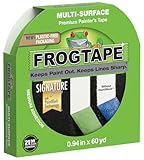
I remember the first time I decided to try printing PETG directly onto blue painters tape. I’d seen a few forum posts, some guys swearing it was the secret sauce for avoiding rafts and bed adhesion woes. Sounded too good to be true, right? Well, my first attempt looked like a bird’s nest exploded on my print bed. Total disaster.
So, can I print PETG on painters tape? The short answer is: it’s complicated, and frankly, often a waste of time and tape. People get it wrong, and I’ve certainly wasted my fair share of money learning that lesson.
Let’s cut through the noise and talk about what really happens when you try this.
Why You Might Think Painters Tape Is the Answer
Look, I get it. You’ve probably spent hours fiddling with your 3D printer bed. Maybe you’ve tried glue sticks, hairspray, specialized build surface sheets, and still, your PETG prints decide to go for a walk mid-print. The idea of just slapping down some cheap blue tape and being done with it is incredibly appealing. It’s accessible, readily available in almost any hardware store, and it’s designed to stick to surfaces without leaving a mess. That’s the theoretical upside.
PETG is known for being a bit finicky. It likes to stick, sometimes too much, to certain surfaces, leading to horrific gouges when you try to remove your print.
Other times, it just won’t stick at all, and you end up with spaghetti monster prints. It’s this delicate balance that has a lot of people looking for a simple, forgiving solution. Painters tape, with its slightly textured surface and moderate adhesion, seems like it could be that perfect middle ground.
The theory is that the tape provides enough grip for the initial layers of PETG to adhere without becoming permanently welded to your build plate. It’s supposed to act as a sacrificial layer that you can peel off, taking the print with it.
I’ve seen a lot of folks online talking about using painters tape for PLA, and that’s a whole different ballgame. PLA is much more forgiving.
PETG, with its higher printing temperatures and different chemical properties, presents a tougher challenge. The heat can also soften the tape’s adhesive, making it a sticky, gooey mess.
My own early experiments involved a lot of praying and a fair bit of scraping. The first few layers might go down okay, but as the print progresses, you start seeing those tell-tale signs of detachment or, worse, the tape itself starting to lift or warp. It’s enough to make you question your sanity and your life choices.
The allure of simplicity is strong, but the reality often falls far short of the promise. (See Also: Does Painters Tape Pull Off Paint )
There’s also the environmental aspect. People are increasingly conscious of waste. Using a disposable layer like painters tape for every print might seem like a quick fix, but it adds up. Consider the landfill impact. I’ve always tried to find solutions that are more sustainable in the long run, and constantly replacing rolls of tape doesn’t feel like the most responsible approach, even if it sometimes seems like the easiest one in the moment. The cost, too, can sneak up on you. While a roll of tape is cheap, if you’re redoing prints or replacing tape after every few failed attempts, that cost can quickly surpass a more durable build surface.
The Cold, Hard Truth About Petg and Tape
Let’s be blunt: printing PETG on standard blue painters tape is usually a bad idea. It’s the kind of advice that sounds good on paper but falls apart in practice. Why? PETG prints at higher temperatures than PLA, typically between 230-250°C.
That heat bakes the adhesive from the painters tape right into the plastic. You end up with a sticky, stubborn mess that’s incredibly difficult to remove, often taking chunks of tape and sometimes even damaging your print. I once spent nearly an hour trying to peel a PETG print off tape, and I ended up with shredded tape stuck to my build plate and a print that looked like it had been attacked by a badger. It was awful.
The tape’s adhesive is simply not designed to withstand those sustained temperatures and the strong bonding properties of PETG.
Beyond the adhesive issue, the surface of painters tape is generally too porous and uneven for PETG. While it might offer some grip initially, it doesn’t provide the smooth, consistent adhesion needed for PETG’s specific requirements. You’ll often see issues with layer adhesion, warping, and elephant’s foot because the tape doesn’t offer a stable, flat foundation. Think of it like trying to build a house on a lumpy, sandy beach versus a solid concrete slab. The tape is the beach.
Everyone says, ‘just use painters tape, it’s easy!’ I strongly disagree. It’s easy for PLA, maybe. For PETG, it’s a recipe for frustration. The tape can stretch, peel, and create air bubbles, all of which disrupt the first layer and cascade into print failures. Furthermore, the chemical composition of PETG can actually react with the adhesive in the tape, making it bond even more tenaciously. It’s not just about temperature; it’s about the interaction between the materials. I’ve seen people try to ‘fix’ this by using specific brands of tape or applying multiple layers, but honestly, you’re fighting a losing battle. You’ll spend more time and money on tape and failed prints than you would on a proper build surface.
The common advice often overlooks the fundamental differences between filaments and their ideal bed adhesion methods. PLA is like the friendly neighborhood dog – generally well-behaved. PETG is more like a wild cat – it needs respect and the right environment. Trying to force it onto a surface it dislikes, like painters tape, is just asking for trouble. It’s the equivalent of trying to wear flip-flops in a blizzard. It might seem like a quick solution, but you’ll regret it quickly.
When Painters Tape might Work (and How to Not Ruin It)
Okay, so I’ve been pretty harsh, and for good reason. But, in the spirit of honesty, are there any scenarios where painters tape could be a last resort for PETG? Maybe, but it requires a very specific, very cautious approach. If you’re absolutely desperate, have no other options, and are willing to accept a high likelihood of failure or a messy cleanup, you might be able to get a small, simple PETG print to stick. This involves keeping your nozzle temperature a bit lower than usual for PETG (maybe closer to 220-225°C), and critically, using a very, very low bed temperature, perhaps around 50-60°C. The goal is to minimize heat transfer that would melt the tape’s adhesive.
You’ll also want to use a high-quality, automotive-grade painters tape. These tend to have a stronger, more heat-resistant adhesive than the standard interior wall stuff. Apply it meticulously, making sure no overlap, no gaps, and no air bubbles. Smooth it down with something firm, like a credit card or a plastic scraper. Then, once the print is finished, you need to let the bed cool down completely, sometimes even putting it in the freezer for 20-30 minutes, to try and get the PETG to contract and release from the tape. Even with all these precautions, it’s a gamble.
My one successful (and I use that term loosely) attempt involved a tiny little calibration cube. I kept the print speed slow, the temperatures on the lower end of the PETG spectrum, and I basically held my breath the entire time. When it finished, I immediately turned off the printer and let it cool for hours. The cube popped off with a gentle nudge, leaving behind only a few stubborn tape fibers. It was a fluke, though. I tried it again with a slightly larger object, and it was back to the sticky nightmare. It’s not a reliable method for anything beyond the simplest of test prints, and even then, I wouldn’t count on it. (See Also: Does Painters Tape Rip Paint Off Walls )
The key takeaway here is that you’re basically trying to make a compromised surface work. It’s like trying to cook a gourmet meal with just a microwave and a spoon. You can do it, but it’s going to be a challenge, and the results might not be what you hoped for. For anything important or complex, save yourself the headache and invest in a proper build surface. It’s the difference between a frustrating struggle and a smooth printing experience. The proper tools make the job easier and the results better.
Real-World Use: When It’s Just Not Worth It
Let’s talk about the real implications. I’ve seen countless people online asking, ‘can I print PETG on painters tape?’ and getting wildly optimistic answers. These often come from people who might be printing very simple, small objects, or perhaps they’re using a very specific, high-tolerance combination of printer, filament, and tape that most people don’t have. The reality for the average user is that it’s a rabbit hole of failed prints, wasted filament, and a sticky mess that can take longer to clean than the print itself took to fail.
Imagine you’ve got an important print due tomorrow. You’ve spent hours dialing in your settings, you’re ready to go, and then you realize your usual build surface has a small tear, or maybe you’re out of your preferred adhesive. Your mind drifts to that roll of blue tape in the garage. It seems like a quick fix. You apply it, you start the print, and you walk away to grab a coffee. You come back to find your nozzle digging into the plastic because the first layer didn’t stick, or worse, the tape itself has peeled up, creating a tangled spaghetti monster that’s now fused to your nozzle. That’s not saving time; that’s costing you hours of reprints and cleaning.
I remember one time I was trying to print some custom brackets for a project. I had run out of PEI sheets and my usual glue stick. In a moment of desperation, I layered up some painters tape.
The first layer looked okay, but by the third layer, I could see lifting at the corners. I stopped the print, hoping to salvage it. Nope.
The tape had melted, the PETG was partially fused to it, and it was a gooey, frustrating mess. I spent a good 45 minutes with isopropyl alcohol and a scraper trying to get it clean.
That was $2 worth of tape and about 3 hours of my life I’ll never get back. I could have ordered a new build sheet for about $20 and had it next day, saving myself immense frustration.
The core issue is that painters tape is designed for painting — it’s meant to create a clean line and be removed easily from painted surfaces. It is NOT engineered to withstand the thermal cycling and adhesive demands of FDM 3D printing with a filament like PETG. It’s a tool for a different job, and trying to force it into this role is like using a butter knife as a screwdriver. It might work in a pinch for a very specific, low-stakes task, but it’s not the right tool, and it will likely lead to poor results and damaged equipment.
Alternatives That Actually Work
So, if painters tape is largely a bust for PETG, what should you use? Fortunately, there are plenty of reliable alternatives that will save you time, filament, and sanity. My go-to for PETG has always been a PEI (polyetherimide) sheet. It’s a bit more expensive upfront, maybe $20-$40 for a decent-sized sheet, but it’s incredibly durable and provides fantastic adhesion for PETG without needing any extra adhesives. Prints just pop right off once the bed cools. I’ve had the same PEI sheet for over two years and it’s still going strong.
Another solid option is using a layer of PVA glue stick (like Elmer’s Purple) on a glass bed. Apply a thin, even layer and let it dry completely before printing. PETG sticks to this well, but not too well, making removal a breeze. It’s cheap, readily available, and works reliably. For around $5-$10, you can get a few glue sticks that will last you ages. Some people also swear by hairspray (the unscented, extra-hold variety) applied in a light mist to glass, which can also work for PETG, though I personally find the glue stick more consistent. (See Also: Does Masking Tape Work The Same As Painters Tape )
Here’s a quick rundown of my preferred options:
| Build Surface | Pros | Cons | Verdict for PETG |
|---|---|---|---|
| PEI Sheet | Excellent adhesion, durable, no extra adhesive needed, easy removal. | Higher upfront cost, can get scratched if not careful. | Highly Recommended. The best option. |
| Glass + Glue Stick (PVA) | Inexpensive, readily available, good adhesion, easy removal. | Can be messy if over-applied, requires reapplication. | Recommended. Solid, budget-friendly choice. |
| Glass + Hairspray | Inexpensive, easy application. | Can be uneven, adhesion can be less consistent than glue. | Decent. Works, but not my first choice. |
| Buildtak/Similar Surfaces | Good adhesion, sticky surface. | Can wear out, sometimes prints adhere too strongly. | Good. Reliable, but wears out. |
| Painters Tape | Cheap, readily available. | Poor adhesion at PETG temps, messy, unreliable, often fails. | Avoid for PETG. Not worth the hassle. |
The key is finding a surface that offers consistent, controllable adhesion. PETG needs a surface it can grip onto without becoming permanently bonded.
PEI sheets are designed for this. Glue sticks and hairspray create a ‘release agent’ layer that helps prevent over-adhesion. Painters tape, unfortunately, does neither effectively for PETG.
Don’t fall into the trap of thinking it’s a viable workaround; it’s usually just a shortcut to frustration. You’re better off spending a few extra bucks on a proper build surface that will save you time and headaches in the long run. For example, a good PEI sheet might cost me about $30, but it lasts for years and I’ve probably saved hundreds in failed prints and wasted filament by avoiding bad bed adhesion methods.
Frequently Asked Questions About Petg Bed Adhesion
Will Petg Stick to Painters Tape?
While PETG might initially adhere to painters tape, it’s generally not a reliable or recommended method. The heat required for PETG printing (typically 230-250°C) can melt the tape’s adhesive, causing it to stick too strongly, become a messy goo, or lead to poor layer adhesion and print failures. It’s a gamble that rarely pays off.
Why Is Petg So Hard to Stick to the Bed?
PETG has a higher glass transition temperature and different adhesion properties compared to filaments like PLA. It requires a build surface that offers strong, consistent adhesion without being so aggressive that it fuses to the surface. Overly hot beds or surfaces that aren’t optimized for PETG can lead to poor first layers or prints that detach mid-print.
What Is the Best Build Surface for Petg?
The most recommended build surface for PETG is PEI (polyetherimide). It offers excellent adhesion when heated and allows prints to release easily once cooled. Alternatives like glass with a glue stick (PVA) or a light mist of hairspray also work well and are more budget-friendly.
Can I Use Blue Painters Tape for Petg Prints?
It’s strongly advised against using standard blue painters tape for PETG prints. The tape’s adhesive isn’t designed for PETG’s printing temperatures, leading to messy adhesion issues, difficulty in removal, and often, print failures. While it might work for very small, simple PLA prints, PETG demands a more solid solution.
Final Verdict
So, to circle back to the original question: can I print PETG on painters tape? The honest answer, based on my own frustrating experiences and seeing others struggle, is a resounding ‘don’t bother.’ It’s a tempting shortcut, but it’s a shortcut that usually leads you right back to square one, covered in sticky residue and disappointment. You’re far better off investing in a proper build surface like PEI or using a reliable adhesive like a PVA glue stick on glass. These solutions are tried and tested, and they’ll save you the headache of dealing with the mess painters tape creates with PETG.
Think of it this way: for the cost of a few rolls of tape and the inevitable failed prints, you could have a build surface that lasts for years and gives you consistently good results. I learned this the hard way, and I’m telling you now to skip the experiment altogether. Save your filament, save your time, and save your sanity.
If you absolutely have no other option, proceed with extreme caution, low temperatures, and very small prints, but even then, expect the worst. The question of whether you can print PETG on painters tape isn’t about possibility; it’s about practicality, and in this case, it’s simply not practical.