
Look, we’ve all been there. That trusty watch, the one that’s seen you through thick and thin, suddenly goes silent. The battery’s dead. And the last thing you want is to pay some shop $20 to swap out a tiny disc that costs about fifty cents. So, you’re wondering about how to change a screw back watch battery without tool. I get it. I’ve definitely been in that situation, staring at my dead timepiece, feeling that sting of annoyance and the urge to just wing it.
The good news is, sometimes you can. But let’s be clear: it’s not always a walk in the park, and sometimes ‘without a tool’ means improvising with stuff you already have lying around. We’re going to talk about what you’re up against and the most sensible ways to get that ticker ticking again without dropping cash on specialized gear you’ll probably never use again.
The Screw-Back Enigma: What You’re Actually Dealing With
Alright, first things first. A screw-back watch isn’t like those cheap plastic things where you can just pop off a cover. It’s got a case back that’s secured by tiny screws, usually two to four of them, sometimes more on higher-end models. These screws are minuscule, I mean, smaller than a grain of rice. The idea is to create a better seal against dust and water than a snap-back can offer, and also to look a bit more substantial. When you’re looking at how to change a screw back watch battery without tool, the main hurdle is getting those little screws out and then back in without stripping them or losing them into the abyss of your carpet.
The case back itself is usually a thin piece of metal, often stainless steel, that’s precisely fitted. There’s often a rubber gasket underneath to help with that seal. You’ll need to get under the lip of this case back to pry it off, and that’s where the ‘no tool’ part gets tricky. Most people would grab a tiny watch case knife or a specialized pry tool.
Without those, you’re looking for something thin, flat, and strong enough to get into the tiny gap between the case back and the watch case. Think very thin, like a razor blade, but those are dangerous. A sturdy fingernail file, the very thin metal kind, can sometimes work, but you’ve got to be super careful not to bend it or scratch your watch.
I once tried to use a coin edge on a very old, beat-up diver watch, and it just slipped, leaving a nasty gouge. Lesson learned: finesse over force, always.
The battery itself sits in a small holder, often secured by a tiny clip or a spring. Sometimes the battery just sits there, but more often, there’s some kind of retainer. You’ll need to carefully release this to get the old battery out. The key here is understanding that these parts are delicate. If you’ve got a really cheap watch, you might get away with some rougher handling. But on anything with even a little bit of craftsmanship, you’re risking damage that will cost way more than a professional battery change.
So, when you think about how to change a screw back watch battery without tool, you’re really facing two main challenges: removing the case back and then manipulating the tiny internal components. And the biggest enemy is usually your own impatience or lack of the right, albeit simple, tools. I’ve seen people try to use tweezers that are too big, or try to hammer in a tiny screwdriver bit that’s clearly not meant for the job. It’s a recipe for disaster, ending with a watch that’s not just dead, but broken.
Improvised Tools: What Actually Works (and What Doesn’t)
Let’s talk about what you can actually use when you’re trying to figure out how to change a screw back watch battery without tool. Forget trying to use your house keys or a butter knife. You need something that’s thin, strong, and has a relatively flat edge. My go-to in a pinch, if I don’t have my actual watch tools handy, is a very thin metal nail file. The kind that’s almost like a sliver of metal. You can sometimes slide the edge into the tiny gap between the case back and the watch case. It requires a bit of wiggling and patience.
Another thing that might work, but I’d be very hesitant to recommend, is the edge of a sturdy credit card or a plastic gift card. The problem is, these can bend or break, and they’re usually not thin enough to get a good purchase. They also tend to be too flexible, so you lose use. I tried this once on a watch for my nephew, and it just flexed uselessly. We ended up having to carefully use a very small, flathead screwdriver from a cheap eyeglasses repair kit.
What about those tiny screwdrivers that come with things like IKEA furniture? Some of them might be the right size for the watch screws, but they’re often made of soft metal. Use one of these, and you risk stripping the screw head. You’ll end up with a screw that’s impossible to remove, even with the right tool. I learned this the hard way with a cheap pair of sunglasses I was trying to fix; the included tiny screwdriver was so soft it basically turned into a rounded nub after one use. The screws were ruined.
A common piece of advice online is to use a sharp knife, like a utility knife or a razor blade. I flat-out disagree with this. While they are thin and sharp, they are also incredibly dangerous. You’re working with a tiny, precious piece of metal on your wrist. A slip of the hand could mean a deep cut on your finger or a permanent scratch on your watch face or case. It’s just not worth the risk. The potential for injury or damage is way too high for the minor convenience of not buying a $5 watch tool. (See Also: How To Fix Eyeglasses Arm Without Screw )
Here’s a little table of things I’ve seen people try, and my honest take:
| Improvised Tool | Potential Usefulness | My Verdict |
|---|---|---|
| Thin metal nail file | Can sometimes get under the case back. | Decent, but be gentle. Risk of bending the file or scratching the watch if you’re too rough. |
| Credit card/Plastic card | Might work on very loose case backs. | Generally too flexible and not thin enough. High risk of breaking the card or not getting use. |
| Small flathead screwdriver (eyeglasses kit) | Potentially the right size for screws. | Use with extreme caution. The metal is often soft and can strip screw heads easily. |
| Sharp knife/Razor blade | Thin and sharp for prying. | Absolutely not. Dangerous and high risk of damage to the watch. |
| Tweezers | For holding tiny screws or components. | Only if they are precision tweezers. Regular ones are too bulky and will likely slip. |
The truth is, a proper watch case knife or a set of precision screwdrivers for electronics isn’t expensive. You can get a decent set for under $20 online. And honestly, when you’re trying to figure out how to change a screw back watch battery without tool, you’re often just making the job harder and riskier for yourself.
The Delicate Dance: Removing the Case Back and Battery
So, you’ve got your improvised tool ready, or you’ve decided to just bite the bullet and buy a cheap watch repair kit. Let’s talk about the actual process of removing the case back. This is where patience is your best friend. You’re looking for a tiny lip or edge on the case back that slightly overhangs the watch case. You need to carefully insert your thin tool into this gap.
Once you’ve got the edge of your tool in, you need to apply gentle, steady pressure to pry the case back up. Don’t try to force it in one go. Work your way around the edge of the case back, carefully trying to lift it a millimeter at a time. It might feel like you’re not making progress, but small increments are key. If you feel a lot of resistance, stop and re-evaluate. You might be trying to pry from the wrong spot, or the gasket might be really stuck.
I remember trying to open a vintage Timex. It had been closed for probably fifteen years. I was using a very fine metal file, and I kept trying to jam it into what I thought was a gap. My watch guy later told me I was trying to pry against the wrong part of the casing. He showed me that on most watches, there’s a specific notch or a slightly weaker point designed for opening. You have to look closely for that. It’s not always obvious, and this is where experience or at least a quick look at your specific watch model online can help immensely.
Once the case back is off, you’ll see the battery. It’s usually a small, round, silver-colored disc. It might be held in place by a tiny metal arm or a spring-loaded clamp. You need to be able to release this retainer. Often, there’s a tiny screw that holds the retainer in place, or a small lever you can push with your improvised tool or a fine-tipped tweezers. Be incredibly gentle. These little metal arms are fragile. I once accidentally snapped one of these off trying to get a battery out with a pair of regular household tweezers. The watch was useless after that until I could find a replacement part, which is a whole other headache.
If there’s a screw holding the retainer, use your tiny screwdriver (preferably the right one!) and turn it counter-clockwise. Make sure you have something to catch the screw; they are notoriously easy to lose. I usually work over a white piece of paper or a small dish. Once the retainer is loose or removed, the battery should be easy to pop out. Again, be careful not to bend any other components inside the watch. The goal when figuring out how to change a screw back watch battery without tool is to replicate the care of a professional, even with makeshift items.
Common Mistakes and How to Avoid Them
Let’s be brutally honest. When you’re trying to figure out how to change a screw back watch battery without tool, the chances of messing something up are significantly higher.
The most common mistake I see, and honestly, one I’ve made myself early on, is using too much force. These watch components are tiny and often made of brass or other relatively soft metals. You try to pry too hard, you bend the case back, you deform the gasket, or worse, you damage the internal movement.
I had a nice Seiko dive watch that I tried to open with a kitchen knife once – just a tiny slip, and I gouged the bezel. It was a constant reminder of my impatience every time I looked at it.
Another huge mistake is using the wrong screwdriver for the tiny screws. People grab whatever flathead screwdriver they have. If it’s too big, you’ll strip the screw head. If it’s too small, it won’t engage properly, and you’ll also strip the head. And once a screw head is stripped, you’re in serious trouble. Removing it often requires specialized tools or even drilling it out, which is definitely not a ‘without tool’ solution. I’ve wasted probably $100 over the years on cheap screwdriver sets that were just slightly too soft or the wrong size for precision work like watch repair. Buy one good, small set if you plan on doing this more than once. (See Also: How Measure Metric Computer Screws )
Losing parts is also a classic blunder. Those tiny screws? They’re like miniature black holes. One minute they’re in your hand, the next they’ve vanished into another dimension. Always, always work over a tray, a piece of white paper, or a light-colored cloth. Even then, I’ve had screws bounce off things and disappear. If you lose a screw, finding an exact replacement can be a nightmare. Your watch might not seal properly, or it might just look unfinished. This is a big reason why I’ve started using a small magnetic mat for all my tiny screw jobs.
Not replacing the gasket, or replacing it incorrectly, is another pitfall. That little rubber ring around the edge of the case back is important for water resistance. If you lose it, damage it, or don’t put it back in the right place, your watch will likely no longer be water-resistant. For a dress watch, this might not be a huge deal. But for a diver or a sports watch, it can render it useless. I’ve seen people just jam the case back on without checking the gasket, and then wonder why their watch fogged up after they washed their hands.
Finally, using the wrong battery is surprisingly common. Batteries for watches come in specific sizes and voltages. They’re usually labeled with a number like ‘SR626SW’ or ‘CR2032’. Using a battery with the wrong voltage can damage the watch’s movement. Even if the size is right, the wrong voltage is a ticking time bomb. Always double-check the number on the old battery and get an exact match. This is one area where there’s really no room for improvisation or guessing. For a simple battery swap, though, you are usually just replacing like with like.
When to Call It Quits: Knowing When You Need Real Tools
There comes a point in figuring out how to change a screw back watch battery without tool where you have to admit defeat. It’s not a sign of weakness; it’s a sign of good sense. If you’ve tried for more than 10-15 minutes and haven’t made any progress, or if you’ve already made a mistake (like a scratch or a slightly stripped screw), it’s time to stop. Pushing your luck will likely lead to more damage and a more expensive repair bill down the line.
Here are some scenarios where you absolutely should not proceed without proper tools: if the case back screws are exceptionally tight, if you can’t find a clear gap to pry the case back, or if you notice any corrosion or damage on the case back or the screws. These are signs that the watch might have been assembled with a bit more torque, or that it’s developed issues over time that require a more careful approach.
Trying to force it will just make things worse. I remember a friend’s fancy chronometer; the screws were so small and so tight, I couldn’t even get my smallest precision screwdriver to grip them properly. We took it to a shop, and the guy used some kind of magnetic driver that just snapped them loose. My cheap set would have been useless and probably damaging.
Another big indicator is if you see any signs of water damage inside the watch, even before you open it. Fogging under the crystal, discoloration, or rust spots are bad news. Attempting to do a battery change on a water-damaged watch without the right tools and knowledge is a recipe for disaster. You need to make sure the seals are replaced correctly, which often requires specific lubrication and careful handling of the gasket. Trying to DIY this part, especially without the right tools to make sure a perfect seal, can lead to more water ingress later.
The truth is, a set of small precision screwdrivers, a case back opener tool (even a cheap plastic one), and a pair of fine-tipped tweezers can be purchased for less than what a single professional battery change might cost. If you own multiple watches with screw-back cases, or if you’re the type of person who likes to tinker, investing in these basic tools is a no-brainer. They make the job significantly easier, safer, and more likely to be successful. My own collection of watch tools probably cost me about $180 across four versions over the years, but it’s saved me hundreds in shop fees.
So, when you’re weighing the options, consider the value of your watch. If it’s a sentimental piece, an expensive timepiece, or something you rely on daily, the risk of a DIY ‘no tool’ attempt might not be worth it. Taking it to a reputable watchmaker or a jeweler who offers watch battery replacement services is often the smartest, safest, and ultimately cheapest option in the long run. They have the experience and the right equipment to do the job quickly and correctly, and they can often check your watch for water resistance afterward.
A Few Practical Tips for the Determined Diyer
If you’ve decided to press on with trying to figure out how to change a screw back watch battery without tool, here are a few more pointers to increase your odds of success. First, clean your workspace. Seriously. A clean, well-lit area is a must. Clear off your desk, use a bright lamp, and have a white piece of paper or a shallow tray ready to catch any tiny parts. I can’t stress this enough; losing those minuscule screws is the most infuriating part of this whole endeavor.
Second, work slowly. I mean, agonizingly slowly. Each movement, each turn of the screwdriver, each pry of the case back should be deliberate. Don’t rush. If you’re feeling frustrated, step away for a minute. Come back with a clear head. Haste is the enemy of precision, and watch repair is all about precision. I’ve found that the more I rush, the more likely I am to make a stupid mistake that costs me time and potential damage. (See Also: How To Adjust Eyeglass Screw )
Third, get the right battery before you start. Don’t open the watch and then go looking for a battery. Know the model number of your watch, and look up the battery it requires. You can often find this information online by searching for your watch model number and ‘battery type’. Most watch batteries are standard sizes, but it’s always better to be sure. Buying the wrong battery is a costly mistake, and it means you’ve gone through the whole opening process for nothing.
Fourth, when you’re putting the case back on, make sure the gasket is seated correctly. It should sit in its groove on the watch case. Then, carefully place the case back over it, making sure it aligns with the screw holes. If you’re having trouble with it, a tiny dab of silicone grease (used for watch gaskets) can help it seat properly and maintain its seal. If you don’t have that, a very, very light touch with a Q-tip can sometimes help position it without causing damage, but be careful not to leave any cotton fibers behind.
Finally, if you’ve got a screw-back watch, and you’re doing this yourself, consider getting a basic watch repair kit. They’re not expensive. A set of precision screwdrivers, a case back opener, and some tweezers can be had for under $20. I know the prompt is about how to change a screw back watch battery without tool, but the reality is, having those basic tools makes the job infinitely easier and safer. It’s like trying to build IKEA furniture without an Allen wrench – you might be able to do it, but it’s going to be painful, frustrating, and you’ll probably break something.
Faq: Common Questions About Watch Battery Replacement
Can I Use a Regular Screwdriver to Open My Watch?
Generally, no. Regular screwdrivers are too large and not precise enough for the tiny screws on a watch case back. Using one will likely strip the screw heads, making them impossible to remove even with the correct tools. It’s best to use a dedicated set of precision screwdrivers specifically designed for electronics or watch repair.
How Do I Know If My Watch Is Water-Resistant?
Water resistance is usually indicated by a rating on the watch dial or case back, often in ATM (atmospheres) or meters. For example, 3 ATM or 30 meters means it can withstand splashes, while 10 ATM or 100 meters might be suitable for swimming. Attempting to open a water-resistant watch without proper tools and re-sealing it correctly can compromise this resistance, so proceed with caution.
What If I Lose One of the Tiny Screws?
Losing a screw from a watch case back is a common and frustrating problem. It’s important to work over a tray or a piece of white paper to prevent this. If you lose one, you’ll need to find an exact replacement, which can be difficult. Sometimes watch repair shops have spare parts, or you might have to order a specific screw kit online for your watch model.
Is It Safe to Change a Watch Battery Myself?
For many basic watches, yes, it can be safe if done carefully with the right tools. However, if your watch is expensive, has a complex movement, or is particularly water-resistant, it’s often safer and wiser to take it to a professional. The risk of accidental damage increases significantly when using improvised tools or lacking experience.
How Often Do Watch Batteries Need to Be Replaced?
Watch battery life varies greatly depending on the type of watch and its features. Simple quartz watches might last 1-3 years, while watches with more complications (like chronographs or alarms) or those with brighter displays might need replacement every 6-18 months. It’s time to replace it when the watch stops running or the second hand starts to stutter.
Final Verdict
So, we’ve gone through the nitty-gritty of how to change a screw back watch battery without tool. The short answer is: it’s possible, but it’s often more hassle and risk than it’s worth. Your best bet for a quick, safe, and reliable battery change is usually to invest in a basic set of watch repair tools. They’re not expensive, and they’ll save you a world of frustration.
If you’re determined to go the ‘no tool’ route, be prepared to be incredibly patient, use extreme caution, and understand the risks involved. You might get lucky, but you also might end up with a scratched watch or a stripped screw that costs more to fix than a professional battery change ever would. It’s a gamble. I’ve definitely gambled and lost a few times, which is why I now keep a small toolkit handy.
Ultimately, whether you’re digging through your junk drawer for a makeshift pry tool or heading to the store for a proper kit, the goal is to get your watch working again without breaking it. And if at any point you feel you’re pushing your luck, just remember that a professional watch repair shop is always an option. They’ve seen it all, and they have the right tools for the job.
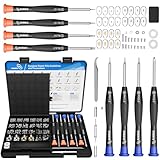
![AXTH 25-in-1 Small Precision Screwdriver Set, Professional Magnetic Mini Repair Tool Kit for Phone, Computer, Watch, Laptop, Macbook, Ring Doorbell, Eyeglass, Electronic, [Bearing Steel] Screw Driver](https://m.media-amazon.com/images/I/518YlLmPTcL._SL160_.jpg)
