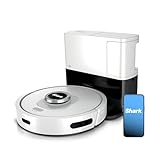
Honestly, the first time I tried to empty my Shark robot vacuum’s canister, I thought I’d broken it. Dust went everywhere. Not just a little bit, but a full-on dust cloud that settled on my freshly cleaned floor, mocking me. It felt like a cruel joke from a company that’s supposed to make life easier.
You’d think, right? It’s a vacuum. It sucks up dirt. It spits it out somewhere you can grab it. Simple. Except, for Shark robot vacuums, it’s not always so straightforward, and frankly, some of the official instructions are about as helpful as a screen door on a submarine.
After wrestling with it for what felt like an eternity – and yes, I’ve probably wasted at least eighty bucks over the years on different mini-brooms and dustpan combos that were utterly useless for this specific task – I finally figured out the trick to how to empty shark robot vacuum canister without turning your living room into a desert storm.
It’s less about brute force and more about a specific wiggle.
The Right Way to Empty Your Shark Robot Vacuum Canister
Look, nobody buys a robot vacuum to then spend ten minutes fighting with its dustbin. The whole point is convenience. So when you’re faced with a full canister, and you’re not entirely sure how to get that crud out without creating an even bigger mess, it’s infuriating. I remember one Saturday morning, after the robot had diligently cleaned for its scheduled hour, I went to empty it. The dustbin felt… stuck. I pulled. I twisted. I jiggled. Next thing I know, the entire contents, which included some glitter from my kid’s art project and what I suspect was a petrified Cheerio, cascaded onto the hardwood floor. My dog, bless his oblivious heart, then proceeded to ‘help’ by scattering it further. That was my fourth attempt, and I was ready to relegate the whole expensive gizmo to the garage.
It’s often the simple things that trip you up. What feels like a straightforward ‘pull here’ mechanism is actually a bit more nuanced. Most Shark models have a release button or lever, but the angle and the amount of pressure are key. Too much, and you risk breaking the plastic. Too little, and it stays stubbornly shut. The sensation is almost like unsticking a very old, very dry piece of tape. You feel a slight resistance, then a pop, and then it’s free. Be gentle, but firm. Think less ‘yank’ and more ‘persuade’.
The key is a slight downward pressure while you press the release. It’s like trying to get a stubborn Lego brick off a baseplate – you need to push *into* the baseplate slightly before you pull up. This engages whatever locking mechanism is preventing dust from escaping prematurely while you’re trying to get the bin itself out.
What About All That Fine Dust?
This is where most people get it wrong. They just dump the bin into the trash. Fine. But then you’ve got that microscopic dust clinging to the filter and the inside walls. Seriously, it’s like static cling for dirt. And if you don’t deal with it, that dust gets back into the air, defeating half the purpose of vacuuming, right? (See Also: Should I Turning My Shark Robot Vacuum Off )
Here’s the thing: that fine dust can be a real problem. According to the EPA, fine particulate matter (PM2.5) can be especially harmful, and while your robot vacuum isn’t a medical device, you don’t want it actively reintroducing that stuff into your breathing air. So, when I empty the canister, I always take it outside. Preferably on a breezy day, though sometimes you have to improvise. I’ll use a small brush – one of those little stiff-bristled ones you get with cleaning kits, not a paintbrush, that’s too soft – to gently dislodge any stubborn bits. Then, I give the filter a good tap. Not a violent shaking, just a firm tap, like you’re knocking dust off a rug. This usually dislodges the majority of the clingy particles.
I’ve seen people recommend washing the filter every time. Don’t do that. Unless it’s explicitly stated for your model and you’ve let it dry for a full 24 hours, you’re just asking for mold. A good tap and brush-off is usually sufficient for regular maintenance.
Some folks suggest using a damp paper towel to wipe down the inside of the canister after emptying. I tried this once. It just turned into a gooey, dusty mess that smeared everywhere. So, no. Stick to dry methods for the canister itself. The filter, however, might need a rinse depending on your model and how much gunk it’s collected; always check your manual for that.
Common Mistakes and Why They Happen
Everyone says to just press the button and pull. It sounds so simple. But then you try it, and nothing happens, or worse, dust explodes. It’s infuriating. This is probably why so many people ask ‘how to empty shark robot vacuum canister without a mess’ – because the default method often *is* a mess. I’ve seen folks try to pry it open with screwdrivers, which is a recipe for disaster. You’ll scratch the plastic, you might crack it, and you’ll definitely void any warranty. It’s like trying to fix your car by hitting it with a hammer; it might work once, but it’s not the smart way.
The common mistake is assuming the bin releases cleanly and easily every single time. It doesn’t. Over time, dust and debris can build up in the tracks or around the seals, making it harder to open. It’s like a door that’s swollen shut after a rainstorm. You need to apply a little focused pressure, not just general force. I found that if I push the bin *back in* just a fraction of an inch before hitting the release button, it disengages whatever is jamming it. A satisfying little ‘click’ usually follows, and then it slides out smooth as butter.
Another mistake? Forgetting about the filter. Seriously, people treat the canister like it’s the only thing collecting dirt. The filter is doing a ton of work, trapping all that microscopic gunk. If you don’t clean or replace it regularly, your robot’s suction power plummets, and it starts spewing fine dust back into the air, which is the opposite of what you want. I was guilty of this for about three months. My robot just wasn’t picking up as much, and I blamed the battery, the wheels, anything but the simple, clogged filter. A quick check of the filter, which looked like it had been used to vacuum up a small ash cloud, was a wake-up call.
Honestly, the most overrated advice I’ve seen is to just ‘take it to the dock and let it empty itself.’ While some high-end models *do* have self-emptying bases, most Shark robots don’t. And even if yours does, you still need to maintain the base unit and its bag/canister. So, the manual process is unavoidable for many of us. (See Also: Is It Best Robot Vacuum With Self Emptying Bin )
Dealing with the ‘canister Full’ Light
So, your robot is beeping, flashing a red light, and generally throwing a tantrum. That’s the ‘Canister Full’ signal. Most of the time, it means what it says: the bin is packed tighter than a sardine can. But sometimes, it’s a false alarm, and that’s usually down to the sensor getting gummed up.
If you’ve already emptied the canister and cleaned the filter, and it’s *still* complaining, the sensor is the next suspect. On many Shark models, the sensor is a small little window, often near where the canister sits or on the docking station itself. You can usually clean it with a dry, soft cloth or a cotton swab. Be gentle; these sensors are delicate little things. I once spent twenty minutes trying to figure out why my robot wouldn’t dock, only to find a tiny speck of dust obscuring the sensor. A quick wipe and it was happily charging away.
Think of it like your phone’s fingerprint scanner. If it’s smudged, it won’t work. The robot’s sensor is the same. It needs a clear line of sight to register that the canister is out, or that the docking station is correctly aligned. This is a prime example of how a small, often overlooked component can cause major operational headaches.
Comparison: Manual Empty vs. Self-Emptying Base
For those of you still on the fence, or maybe eyeing an upgrade, it’s worth looking at the difference. My first Shark was a manual empty. My current one has the self-emptying base. Both get the job done, but the experience is wildly different.
| Feature | Manual Empty (My Old Shark) | Self-Emptying Base (My Current Shark) | My Verdict |
|---|---|---|---|
| Effort Required | High – requires direct interaction | Low – dock handles most of it | Self-emptying wins big for convenience. |
| Dust Cloud Risk | Moderate to High | Very Low (if base is maintained) | Manual is a gamble, self-emptying is safer. |
| Frequency of Interaction | Every 1-3 cleans (depending on mess) | Every 30-40 cleans (for the base bag) | Self-emptying means fewer interruptions. |
| Cost | Lower upfront | Higher upfront | Depends on how much you value time. |
| Maintenance | Emptying canister, cleaning filter | Emptying base bag, cleaning base filter/sensors | Both need attention, but manual is more frequent. |
Let’s be real, if you have allergies or a busy schedule, the self-emptying base is a revelation. It’s like going from hand-washing dishes to owning a dishwasher. The initial cost is higher, sure, but the sheer reduction in daily hassle is worth it for me. However, for those on a budget or who don’t mind a quick few minutes every so often, mastering how to empty shark robot vacuum canister manually is totally achievable and doesn’t require a huge investment.
Faq: Your Burning Questions Answered
Why Is My Shark Robot Vacuum Canister So Hard to Remove?
Often, this is due to dust and debris building up in the tracks or around the locking mechanism. Try pushing the canister back in slightly before pressing the release button. Ensure you’re pressing the button firmly and at the correct angle. Sometimes, a gentle jiggle can help dislodge it if it’s particularly stuck.
How Often Should I Empty the Shark Robot Vacuum Canister?
It depends on your home. If you have pets that shed a lot or a generally dusty environment, you might need to empty it after every cleaning cycle. For lighter use, every two or three cycles might be sufficient. Always check the ‘Canister Full’ indicator light and visually inspect the bin before its next scheduled run. (See Also: Is It Best Robot Vacuum For Cleaning Large Homes )
Can I Wash the Shark Robot Vacuum Filter?
Some Shark models have washable filters, while others do not. Always check your specific model’s manual. If it is washable, you must rinse it thoroughly under cool water and allow it to air dry *completely* for at least 24 hours before reinserting it. Putting a damp filter back in can lead to mold and damage the vacuum.
What If My Shark Robot Vacuum Still Says the Canister Is Full After I Emptied It?
This usually means the sensor is dirty or blocked. Locate the sensor (check your manual for its exact location – it might be on the canister, the robot, or the dock) and gently clean it with a dry, soft cloth or a cotton swab. Ensure there are no obstructions preventing the sensor from functioning correctly.
Conclusion
So there you have it. It’s not rocket science, but it does require a bit of finesse. You don’t need a degree in engineering to figure out how to empty your Shark robot vacuum canister; you just need to know the little tricks, like that slight push-in before the release, or the outdoor dusting routine.
My personal take? The biggest mistake people make is getting frustrated and forcing it. This isn’t a wrestling match; it’s a delicate dance with plastic and dust. Take your time, follow the steps, and you’ll be emptying that canister like a pro in no time.
If your Shark is still giving you grief after trying these methods, it might be time to consult the manual or even reach out to their support, but honestly, most issues with emptying the canister are user error, not a faulty machine.
Next time you hear that beep, don’t dread it. Just grab your robot, head to the bin (or outside!), and get it done. It’s a simple step that keeps your little cleaning buddy running smoothly.
Recommended Products