I remember the first time I tried to hang a heavy mirror without bothering to find a stud. Let’s just say the resulting cascade of plaster dust and a cracked mirror face taught me a very expensive, very loud lesson about how things actually hold up.
It’s the same with so many things in life, and especially when we’re talking about anything that needs to be secured, whether it’s a shelf, a piece of equipment, or even understanding how our own bodies work. This isn’t about fancy jargon; it’s about understanding the fundamental connection – how a anchors to a muscle.
Forget the marketing hype. Let’s get down to what you need to know so you don’t end up with a pile of rubble or a wasted investment.
When Your Wall Says ‘nope’: Finding Real Support
Look, nobody likes reading instructions. Especially when you’ve just bought something that promises to be ‘easy to install.’ My first attempt at mounting a substantial bike rack to my garage wall involved a bag of those plastic doodads that came with it, the kind that look like tiny accordions.
I hammered them in, screwed the rack on, and felt pretty smug. Until a week later, when I heard this ominous creaking.
The rack, along with about a square foot of drywall, decided to part ways with the wall. It made a sound like a dying whale gargling gravel.
That’s when I learned about proper wall anchors. They’re not just pretty plastic things; they’re your first line of defense against gravity and shoddy workmanship.
The truth is, most walls aren’t solid concrete slabs. They’re usually drywall, plaster, or sometimes those crumbly concrete blocks. Just screwing into the surface is like trying to hold a battleship with a paperclip. You need something that expands, grips, or spreads the load behind the surface.
This is where the magic of a good anchor comes in. They’re designed to dig into the material behind your wall, giving you something solid to screw into. It’s not rocket science, but picking the right anchor for the right material and the right load is where most people trip up. I’ve seen folks try to hang 50-pound shelves with anchors meant for a picture frame.
It’s a recipe for disaster, and frankly, a waste of money on both the anchor and whatever you’re trying to hang.
The common advice is always ‘find a stud.’ And yeah, that’s gold. But what if your stud finder is on the fritz, or the exact spot you need to mount something isn’t near a stud? That’s where you need to understand the different types of anchors and their capabilities. It’s about knowing what you’re dealing with. Drywall is fragile. Plaster can be brittle. Concrete is strong but needs specific drill bits and anchors. Getting this wrong is the most common mistake I see, and it usually ends with something falling down, potentially hurting someone or breaking whatever you were trying to proudly display.
The Anchor Zoo: What the Heck Do I Buy?
Walking into a hardware store’s fastener aisle can be overwhelming. It’s a dizzying array of metal, plastic, and confusing names. You’ve got your basic plastic expansion anchors, the ones that look like little ribbed tubes.
They’re okay for lightweight stuff, like hanging a small mirror or a light shelf holding a few paperback books. Then you step up to the toggle bolts. These have wings that open up behind the drywall, creating a much larger surface area to grip.
They’re fantastic for medium-duty loads, like mounting a TV bracket (but always check the weight limit!). For heavier items, you might look at molly bolts, which are similar but often have a metal sleeve for extra strength. And for concrete or brick, you’re looking at masonry anchors, which often require drilling a larger hole and tapping the anchor in. (See Also: Can Concrete Anchors Be Used In Brick )
Here’s a little secret: the weight ratings on the packaging are often optimistic. They’re usually tested in ideal conditions with perfect installation. I always err on the side of caution.
If a bolt says it holds 75 pounds, I’m not trusting it with more than, say, 40 pounds. Better safe than sorry, right?
I once tried to hang a rather heavy antique medicine cabinet in a bathroom, figuring it would be fine with a heavy-duty toggle bolt. It held for about two weeks. Then, while I was brushing my teeth, it detached itself with a terrifying ‘CRACK!’ and ended up halfway on the floor.
Thankfully, nothing broke, but the sheer noise and shock were enough. I learned that day that ‘heavy-duty’ needs a healthy dose of ‘real-world’ skepticism.
The real confusion often comes with the sheer variety of plastic anchors. Some are self-drilling, meaning you just screw them directly into drywall. Others require a pilot hole. Some have wings that deploy, others just expand. Without understanding how they physically work – how they grip the material behind the wall – you’re just guessing. Think of it like this: a anchors to a muscle by providing a strong attachment point. If you use a weak or inappropriate anchor, you’re basically trying to attach something to a muscle with a thread. It’s going to snap.
Here’s a quick rundown of what I tend to grab for different situations:
| Anchor Type | Best For | My Verdict |
|---|---|---|
| Plastic Expansion Anchors (Ribbed/Conical) | Very light items (small pictures, decorations) | Okay for almost nothing. Seriously, only if it weighs less than a pound and won’t fall on anyone. |
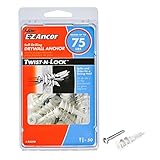
| Self-Drilling Drywall Anchors | Light to medium-light items (small shelves, curtain rods) | Convenient, but check weight limits closely. Can strip out if overtightened. |
| Toggle Bolts | Medium to heavy items (TV mounts, heavier shelves, cabinets) | My go-to for drywall when studs aren’t an option. Reliable spread of load. |
| Molly Bolts (Sleeve-Type) | Medium to heavy items, especially where a cleaner finish is desired. | Good, strong option. The metal sleeve adds durability. |
| Masonry Anchors (Screws, Lag Shields) | Brick, concrete, block walls | Absolutely necessary for these materials. Don’t use drywall anchors here, ever. |
The ‘stud Finder’ Debate: Friend or Foe?
Everyone tells you to find a stud. And look, if you can find a stud, that’s almost always your best bet for anything heavy. A stud is a solid piece of wood or metal that forms the structure of your wall. Screwing directly into it is like screwing into a tree trunk – it’s not going anywhere.
My stud finder, a cheap electronic one I picked up for about $20, has saved me a lot of grief, but it’s not infallible. Sometimes it gets confused by electrical wiring or pipes behind the wall, giving me false positives or negatives.
I’ve learned to use it in conjunction with a small finishing nail. After the stud finder indicates a spot, I’ll tap a tiny nail in. If it goes in easily, there’s no stud. If it hits resistance, bingo.
It’s an old-school method, but it works.
The contrarian opinion? Sometimes, chasing studs is more trouble than it’s worth. If you need to hang something that’s not excessively heavy, and you can’t get a stud exactly where you need it, a good heavy-duty drywall anchor (like a toggle bolt) will often do the job perfectly well and be just as secure, if not more so, than a poorly placed stud. People get so hung up on studs that they’ll move things around to accommodate one, even if it looks awkward.
I once saw a guy mount a whole entertainment center way off-center on a wall just because he found two studs there, making the whole setup look ridiculous. Sometimes, an anchor is the smarter, more practical choice for placement.
When you do find a stud, remember that not all studs are created equal. Older homes might have less uniform wood, and you still need to make sure you’re using screws long enough to get a good grip. A common mistake is using screws that are too short, so they only bite into the very surface of the stud and can pull out under load. Aim for screws that will go at least an inch and a half into the stud itself. And if you’re dealing with metal studs, you’ll need specific metal-to-metal screws, which have a self-drilling tip. Drywall anchors won’t work here either, obviously. It’s all about matching your fastener to the underlying structure. (See Also: Can Cords Be Used To Make Anchors Climbing )
What If My Stud Finder Is Unreliable?
If your stud finder is acting up, try the old-school method of tapping a small finishing nail into the wall where you suspect a stud might be. If the nail goes in easily, there’s no stud. If it meets resistance, you’ve likely found one. You can also try tapping gently on the wall; you’ll hear a difference in sound between a hollow spot (drywall only) and a solid spot (stud behind). Sometimes, measuring from the edge of the wall or a known stud can also help you locate others, as studs are usually spaced 16 or 24 inches apart on center.
The ‘oops, I Stripped It’ Syndrome and Other Anchor Fails
We’ve all been there. You’re screwing in that anchor, and suddenly, it just keeps spinning. You’ve stripped the threads, or worse, you’ve widened the hole in the drywall so much that the anchor has nothing to grip. This is a classic newbie mistake, and it’s incredibly frustrating. Usually, it happens because you’re trying to force an anchor that’s too big for the hole, or you’re using too much force with a drill on a setting that’s too high. For plastic anchors, over-tightening is the enemy. They can crack or deform, losing their gripping power. For self-drilling metal anchors, you can strip the hole they’re supposed to screw into, rendering them useless. It’s a delicate balance of firm but not forceful.
Another common fail is using the wrong anchor for the job. I had a friend who decided to hang a really expensive, heavy soundbar under his TV using just the little plastic anchors that came with the soundbar. He thought, ‘It’s just plastic, it’ll be fine.’ Within a week, it sagged precariously. The vibrations from the TV and music were enough to loosen those cheap anchors. He ended up having to patch the drywall and start over with proper toggle bolts. It cost him time, frustration, and a little bit of pride.
This is why understanding the material you’re drilling into is so important. Drywall is soft. Plaster can be brittle.
Masonry is hard. Each requires a different approach and a different type of anchor.
Using a drywall anchor in brick is like trying to hold a bear with a shoelace. It’s fundamentally mismatched. And never, ever underestimate the power of vibration or repeated stress. Even a secure anchor can fail over time if it’s constantly being jostled or if the load is heavier than it can consistently bear.
The best anchor is one that is correctly installed, matched to the wall material, and rated for significantly more weight than you intend to put on it. It’s about building in a safety margin.
How Do I Fix a Stripped Anchor Hole in Drywall?
If you’ve stripped a hole for a plastic anchor, you can sometimes try a slightly larger anchor, or use some wood filler or spackle to create a new base for the anchor to grip. For more serious stripping, especially with self-drilling anchors where the hole is too large, you’ll likely need to patch the hole completely with drywall compound, let it dry, sand it smooth, and then redrill a new pilot hole for a fresh anchor. Sometimes, if the hole is really mangled, you might need to use a drywall repair patch or even cut out a small section and replace it with a new piece of drywall before you can properly install an anchor.
Real-World Scenarios: When Anchors Save the Day
Let’s talk about practical applications. Think about mounting a TV. Those flat-screen TVs aren’t light, and they stick out from the wall. You absolutely cannot just screw them into drywall. You need a solid TV mount, and that mount needs to be secured to either studs or, more commonly for larger TVs, using heavy-duty toggle bolts or lag bolts into blocking (if you’re lucky enough to have it). I personally prefer using lag bolts into sturdy studs whenever possible for TVs, but if that’s not feasible, heavy-duty toggle bolts are the next best thing. I’ve helped friends mount TVs, and the difference between a wobbly mount and a rock-solid one is all in the anchors.
Kitchen cabinets are another big one. They hold dishes, pots, pans – a lot of weight. You’re typically screwing cabinets into wall studs. But what about that awkward corner cabinet where the stud just isn’t in the right place? Or if you’re adding extra shelving below existing cabinets? That’s where anchors become your best friend. For upper cabinets, I’d lean towards toggle bolts or molly bolts, especially if you’re adding a shelf that will hold significant weight. It’s not just about the weight of the items; it’s also the force applied when you open a drawer or door, or when you lean on the counter.
Then there are those less obvious applications. Hanging a heavy mirror? Anchors. Installing a ceiling fan? Studs or a specialized ceiling fan brace. Mounting a substantial piece of artwork? Depending on the weight, it could be anything from a strong drywall anchor to a direct screw into a stud. Even something as simple as a heavy-duty towel rack in a bathroom needs more than just a screw into drywall. It’s going to get yanked and pulled. The principle is always the same: a anchors to a muscle by providing a stable, load-bearing connection. You need to make sure your anchor is providing that stability.
What Are the Strongest Drywall Anchors?
For drywall, the strongest anchors are generally the toggle bolt or the molly bolt. These work by expanding or unfolding behind the drywall, distributing the weight over a larger surface area. They typically have much higher weight ratings than standard plastic expansion anchors. For very heavy items, especially if you can’t hit studs, you might consider specialized anchors designed for heavier loads, but always make sure the drywall itself is in good condition, as even the strongest anchor can fail if the surrounding drywall is weak or damaged.
Common Mistakes and How to Sidestep Them
I’ve already touched on a few, but let’s hammer them home (pun intended). The biggest mistake is almost always using the wrong anchor for the wall material. Trying to use a plastic drywall anchor in a brick wall is like trying to use a spoon to dig a trench. It’s not designed for it. Similarly, using a masonry anchor in drywall will likely just make a mess and won’t hold anything. Always identify your wall material first. If you’re unsure, a small test drill can tell you a lot. Drywall crumbles; plaster might be brittle; brick or concrete will resist. (See Also: Can Anchors In Your Shoulder Break )
Another common error is not using the correct screw size. Anchors come with specific screw requirements, or you need to select screws that are the right length and diameter. Too short, and the screw won’t engage properly with the anchor or the stud. Too long, and it might poke through the other side of the wall (if there is another side!). Too thin, and it might snap under load. Always check the anchor’s specifications for the recommended screw type.
Overestimating the weight capacity is a killer. Those ratings on the package are a guide, not gospel. I’ve seen enough anchors fail to know that you should always buy an anchor rated for at least double the weight of the item you’re hanging. If you’re hanging a shelf that will hold 30 pounds of books, get anchors rated for 60 pounds or more. Better yet, if possible, find studs. For anything truly heavy or important (like a TV mount), studs are the way to go. If you can’t use studs, then you absolutely must use heavy-duty anchors and respect their limits. It’s about making sure the connection is secure for the long haul, not just for the first week.
Can I Use Anchors in Plaster Walls?
Yes, you can use anchors in plaster walls, but you need to be more careful. Plaster can be brittle and prone to cracking, especially older plaster. For lighter items, a standard plastic expansion anchor might work, but for anything heavier, toggle bolts are often a good choice as they distribute the load over a larger area behind the plaster. You might need to drill a slightly larger pilot hole than usual to avoid cracking the plaster. If the plaster is in poor condition, it might be better to try and find a stud or consider a different mounting location.
Practical Tips for Anchor Success
First off, buy a decent drill. A cheap corded drill or a good cordless one makes a massive difference. It makes drilling pilot holes easier and less of a workout. For masonry, you’ll need a hammer drill setting and the right masonry bits. When drilling, maintain a steady pressure. Don’t try to force it, but don’t be timid either. Let the drill do the work. For drywall and plaster, start with a smaller pilot hole and work your way up if needed, especially if you’re using a self-drilling anchor. This helps prevent the material from crumbling around the hole.
Second, read the damn instructions. I know, I know, but seriously. Each type of anchor has its own quirks. Some require a specific drill bit size, some need to be hammered in gently, others screw in. Following the manufacturer’s guidance is usually the safest bet. If you’re using toggle bolts, make sure you collapse the wings correctly before inserting them through the hole, and make sure they deploy properly behind the wall. A little care goes a long way.
Third, consider the environment. Are you mounting something in a humid bathroom? Wood anchors might swell or rot over time. Are you mounting something outside? You’ll need weather-resistant anchors. Most standard anchors are designed for interior use in dry conditions. For exterior applications, look for galvanized or stainless steel options, and make sure the anchor material itself can withstand the elements. It’s another layer of thinking that often gets overlooked, but it’s important for longevity.
What’s the Difference Between an Anchor and a Screw?
A screw is a fastener that’s used to join two or more objects together, typically by creating its own threads in the material or by engaging with pre-existing threads. An anchor, on the other hand, is a device that is inserted into a material (like drywall or concrete) to provide a secure base for a screw or bolt to be fastened into. Basically, the anchor creates a strong point of attachment in a material that wouldn’t otherwise be able to hold a fastener securely on its own. You use a screw with an anchor, but the anchor is what gives the screw its holding power in weaker materials.
The Faq: Your Burning Anchor Questions Answered
Do I Need Anchors If I Hit a Stud?
No, if you hit a solid stud, you typically do not need an anchor. You can screw directly into the stud using an appropriate screw. The stud itself provides the strong, load-bearing surface. Anchors are specifically designed for situations where there is no solid backing, like drywall, plaster, or masonry. Relying on studs is generally the most secure method for hanging heavy items.
Can I Reuse Drywall Anchors?
Generally, it’s not recommended to reuse plastic drywall anchors. Once they’ve been expanded or inserted, they can lose their shape and gripping power, especially if they were under load. Reusing them can compromise their effectiveness and the security of whatever you’re hanging. For toggle bolts or molly bolts, it might be possible to remove and reuse them carefully, but their holding power can still be reduced. It’s usually best to use new anchors for new installations.
What Is the Best Anchor for Hanging a Heavy Mirror?
For a heavy mirror, your best bet is usually to find studs and screw directly into them. If studs aren’t available in the ideal location, then heavy-duty toggle bolts are a very good option for drywall. They distribute the weight across a larger area behind the wall, making them more secure than basic plastic anchors. Always check the weight rating of the anchor and make sure it significantly exceeds the weight of the mirror.
Are Self-Drilling Anchors Strong Enough for Shelves?
Self-drilling anchors can be strong enough for light shelves holding light items. However, for anything substantial, especially shelves that will bear a significant amount of weight (like books, decor, or kitchenware), they are often not the best choice. Their holding power can be limited, and they can sometimes strip out the drywall if overtightened or overloaded. For shelves, especially those intended to hold more than a few pounds, toggle bolts or securing to studs is generally a much safer and more reliable option.
Final Verdict
So, there you have it. It’s not complicated, but it does require a bit of common sense and knowing what you’re working with. Don’t be the person who ends up with a hole in the wall and a broken item because they skimped on the right hardware.
The next time you’re hanging something, take a minute. Figure out your wall type, estimate the weight, and choose your anchor accordingly. If you can hit a stud, do it. If not, grab a good quality anchor that’s rated for the job and then some. Understanding how a anchors to a muscle, in this context, means understanding how to create a truly solid connection.
My advice? Keep a small stash of decent toggle bolts and a reliable stud finder. They’ve saved me more headaches (and plaster dust) than anything else in my toolbox.