I remember the first time I tackled a big project with hollow wall anchors. I’d read all the forums, seen the slick product videos, and thought I was ready. Then I hit a wall – literally. Some anchors seemed to set in seconds, others felt like they took an eternity, leaving me hanging mid-job. It got me wondering: are all delta anchors considered fast setting? The short answer? No, not by a long shot. It’s a bit more nuanced than the marketing hype suggests.
Let’s cut through the fluff. When you’re up on a ladder, trying to get a shelf secured before the whole thing comes crashing down, ‘fast setting’ isn’t just a nice-to-have; it’s often the difference between a successful DIY and a trip to the emergency room, or at least a very embarrassing patch job.
The Speed Deception: What ‘fast Setting’ Really Means
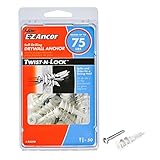
Look, the term ‘fast setting’ is a bit of a marketing siren song. What one manufacturer calls ‘fast’ might be what another calls ‘standard.’ It’s all relative. For most common hollow wall anchors – the kind you’d use for a picture frame or a lightweight shelf – ‘fast setting’ usually means they engage with the drywall or plaster fairly quickly after you insert them. Think of those plastic ribbed anchors that expand as you screw into them. They don’t need a special adhesive or a long curing time. You drive the screw, and they’re supposed to grab. Simple, right? Well, sometimes.
The real trick is understanding how they set and what affects that speed. It’s not just about the anchor material itself. The thickness and density of your wall material play a massive role. A thin, flimsy piece of drywall is going to behave differently than older, denser plaster.
Then there’s the screw you’re using. Too small, and it might not expand the anchor properly. Too large, and you risk tearing out the wall.
I once spent an embarrassing twenty minutes trying to get a simple mirror hung, convinced the anchor was faulty. Turns out, I was using a screw that was a hair too thin for the anchor’s expansion path. The anchor was ‘fast setting,’ but the screw wasn’t engaging it correctly to make it actually set fast and hold weight.
The core mechanism for many ‘fast setting’ anchors in drywall is mechanical expansion. The anchor is designed to spread out behind the wall surface as the screw is driven in. This expansion creates friction and a secure grip. The speed at which this happens depends on the anchor’s design – the ribs, the tapering, the material – and how well it interfaces with the wall. For true speed, you want an anchor that doesn’t require any secondary steps, like mixing epoxy or waiting for a chemical reaction. Just screw it in, and it’s good to go. But this mechanical approach has its limits, especially when you’re dealing with heavier loads or less-than-perfect wall conditions.
Beyond the Plastic Rib: When Speed Isn’t Everything
Not all anchors are created equal, and frankly, not all of them need to be ‘fast setting’ in the way you might imagine. Some of the most solid anchors, the ones you’d trust with a serious load like a TV mount or a substantial cabinet, rely on more than just simple mechanical expansion. These often involve chemical anchors, like epoxy or resin systems, or more complex mechanical anchors that engage the studs behind the drywall. These are almost never ‘fast setting’ in the DIY sense. They require mixing, curing time, and a bit more planning. And honestly? For those heavier jobs, I’d rather wait an hour or two for a rock-solid hold than risk a fast-setting anchor failing spectacularly.
My own experience with this came when I decided to mount a substantial bookshelf. I initially grabbed some heavy-duty toggle bolts, figuring they’d be quick and strong. I drove them in, screwed the shelf hardware on, and it felt… wobbly.
They looked secure, but there was a slight give. Turns out, my drywall was a bit thicker than average, and the toggles weren’t fully deploying flat against the back.
I ended up having to pull them out, patch the holes, and opt for a different system entirely: a few carefully placed lag screws directly into studs, supplemented by some really beefy molly bolts in the drywall sections. The molly bolts, while mechanical, took a bit more effort to set and felt significantly more secure than the toggles, even if they weren’t as lightning-fast as a basic plastic plug.
This highlights a key point: when people talk about ‘fast setting’ anchors, they’re usually thinking about the common, low-to-medium duty anchors designed for drywall. For heavier applications, the definition of ‘fast’ becomes irrelevant because the priority shifts to sheer holding power and longevity. You’re looking at anchors that spread out more broadly, anchor into studs, or use a chemical bond. These might have quick installation for the anchor itself, but the overall job isn’t ‘fast setting’ because you have to wait for adhesives to cure. So, while many common anchors are considered fast setting, it’s not a universal truth across all anchor types. (See Also: Can Concrete Anchors Be Used In Brick )
What to Look for: Decoding Anchor Packaging
Navigating the aisle of wall anchors can be a bewildering experience. Packaging is often a mix of vague promises and technical jargon.
When you’re trying to figure out if a delta anchor (or any anchor, for that matter) is going to set fast, here’s what I’ve learned to look for, and more importantly, what to be wary of. First off, if it’s a simple plastic or metal anchor designed to be hammered or screwed directly into a pre-drilled hole and expand, it’s likely aiming for ‘fast setting.’ These will often have visual cues like ribs, fins, or expanding wings that you can see in diagrams.
The packaging might use terms like ‘quick installation,’ ‘no tools required’ (beyond a drill and screwdriver), or show a graphic of it expanding behind the wall. These are your typical everyday anchors.
What you don’t want to confuse with ‘fast setting’ are anchors that require a separate setting tool, a special adhesive, or a significant waiting period. If the package shows a separate tube of epoxy, a two-part resin kit, or mentions a ‘cure time,’ then it’s not what most people mean by fast setting. Even some heavier-duty mechanical anchors, like snap toggles or some types of molly bolts, have a slightly more involved installation than just screwing them in. They might require you to insert a separate part or pull a string, which adds a few seconds or a minute to the process. These are still generally ‘fast’ in the grand scheme of things compared to chemical anchors, but they aren’t ‘instant grab’ like the most basic plastic plugs.
One piece of advice: don’t just trust the picture. Look at the specifications.
What weight rating is it for? What type of wall material is it designed for? If it’s for drywall and doesn’t mention anything about curing or special tools, it’s probably in the fast-setting camp. If it’s for concrete or masonry, the ‘setting’ process is entirely different and often involves a hammer drill and a more involved physical setting, which isn’t usually described as ‘fast setting’ in the same way.
I’ve found that reading the small print about the installation steps is often more revealing than the flashy headlines on the front of the box. For instance, I once bought anchors that claimed to be ‘super fast,’ but the instructions required me to hold a nut captive with pliers while I screwed the bolt in – hardly the speedy, effortless process I’d envisioned.
Common Mistakes That Sabotage Speed (and Security)
The biggest mistake people make when assuming all delta anchors are fast setting is not matching the anchor to the job or the wall. You can have the fastest-setting anchor in the world, but if your drywall is crumbly old plasterboard or you’re trying to hang something way too heavy, it’s going to fail. I learned this the hard way when I tried to hang a relatively heavy antique mirror in my hallway. I used a couple of those classic plastic anchors – the ones that look like little ribbed cones.
They’re super fast to install; you just screw them in. But the mirror, even with the anchors seemingly set, sagged within days.
The old plasterboard was just too weak to provide a good grip, and the anchor couldn’t expand effectively. I ended up having to patch the holes and use a stud finder to locate the precious few wooden studs behind the wall and screw directly into those.
Another common pitfall is using the wrong size screw. Most anchors are designed for a specific screw gauge and length. If your screw is too thin, it won’t expand the anchor properly, leading to a loose connection that might feel ‘set’ initially but won’t hold weight. (See Also: Can Cords Be Used To Make Anchors Climbing )
If the screw is too thick or too long, you can actually split the anchor or push it through the drywall. This is especially true for anchors that rely on a precise expansion. I’ve seen people try to force a slightly-too-large screw into an anchor, basically destroying the anchor’s ability to grip.
It’s a classic case of ‘trying to make it work’ when the right size screw is readily available. Always check the recommended screw size on the anchor packaging.
Over-tightening is another culprit. When you’re trying to make sure a ‘fast set,’ you might be tempted to just crank on the screwdriver until you feel resistance.
But with many plastic anchors, over-tightening can strip the internal threads or even break the anchor. For metal anchors, especially those that rely on a wing or toggle mechanism, over-tightening can cause the anchor to pull out of its hole or deform in a way that compromises its grip. You want a snug fit, not a death grip.
The anchor should feel firm and stable, not like it’s about to tear through the wall. This is why I always tell people to stop screwing as soon as they feel solid resistance, rather than muscling it further. A little gentle wiggling after it feels tight is a good way to test for stability without overdoing it.
Real-World Use: My Anchor Arsenal
Over the years, my toolbox has accumulated a pretty diverse range of anchors. I’ve got the cheap, cheerful plastic ones for hanging lightweight decorations like posters or fairy lights.
These are undeniably ‘fast setting’ – you drill a hole, tap them in, and screw. Takes about 15 seconds per anchor. They’re fine for anything that weighs less than a pound. Then I have the ribbed plastic anchors, the kind that expand as you screw.
These are my go-to for most shelves, mirrors, and wall-mounted organizers that aren’t holding anything too substantial. They’re still fast, maybe taking 30-45 seconds to install properly with the right screw, and they offer a decent hold for medium-duty tasks.
I’ve found brands like Molly or Fischer make reliable versions of these.
For anything heavier – like a TV mount, a substantial cabinet, or a heavy mirror that I really don’t want falling – I bypass the ‘fast setting’ temptation and go for more solid solutions. This often means toggle bolts (the larger, industrial-style ones, not the flimsy plastic kind) or molly bolts that spread out significantly behind the wall.
Even these aren’t ‘instant’ in the same way as a plastic plug, but their installation is still relatively quick once you get the hang of it. A toggle bolt might take a minute or two to install, and you have to make sure the wings deploy correctly. (See Also: Can Anchors In Your Shoulder Break )
Molly bolts can be a bit fiddly too. But the peace of mind is worth the extra minute or two.
I’ve also used a few different types of self-drilling drywall anchors, which are great because they often tap directly into the drywall without needing a pilot hole, saving time. They’re faster to install than toggles but often have a slightly lower weight rating.
My ‘anchor arsenal’ is built on the principle that ‘fast setting’ is a feature of convenience for light-duty tasks. For anything that matters, I prioritize holding power and security. I learned this lesson the hard way after a picture frame fell off the wall, taking a chunk of drywall with it, because I’d relied on a ‘fast’ but ultimately weak anchor. It was a mess, and the cheap anchors cost me more in repair materials than a better anchor would have initially. So, while many common delta anchors are considered fast setting, it’s important to know their limitations and when to step up to something more substantial.
A Quick Comparison Table
To help sort through the madness, here’s a quick look at common anchor types and their ‘setting speed’ from my perspective. This isn’t exhaustive, but it covers the bases for most home DIYers.
| Anchor Type | How it Sets | Approx. Installation Speed (per anchor) | Typical Use Case | My Verdict on ‘Fast Setting’ |
|---|---|---|---|---|
| Plastic Ribbed Anchors (e.g., Rawlplugs) | Expands mechanically as screw is driven. | 15-30 seconds | Light to medium duty: shelves, mirrors, wall art. | Yes, genuinely fast for their purpose. |
| Self-Drilling Drywall Anchors (Plastic & Metal) | Threads directly into drywall or requires minimal pilot hole. | 20-40 seconds | Light to medium duty: picture frames, small shelves. | Yes, very fast installation. |
| Toggle Bolts (Standard & Snap Toggle) | Spring-loaded wings or bars deploy behind the wall. | 1-3 minutes (depends on type and dexterity) | Medium to heavy duty: cabinets, heavy shelves, TV mounts. | Installation is quick, but ‘setting’ is mechanical and takes a moment. Not ‘instant’. |
| Molly Bolts (Open-Ended & Closed-Ended) | Expands behind the wall via a screw or nut. | 1-2 minutes | Medium to heavy duty: shelves, heavier wall-mounted items. | Similar to toggle bolts – quick installation, but requires deliberate action. |
| Chemical/Epoxy Anchors | Adhesive cures to form a strong bond. | 5-15 minutes (plus significant cure time: 30 mins to 24+ hours) | Heavy duty, specialized applications (e.g., concrete, masonry, structural). | Installation of the anchor itself might be quick, but the overall ‘setting’ process is long. Not fast. |
| Lag Screws (into Studs) | Direct mechanical connection into solid wood. | 30-60 seconds (if stud is easily located) | Heavy duty, when studs are accessible. | Very secure, installation speed depends on finding the stud. Not ‘fast setting’ in itself, but reliable. |
The Lsi Keywords in Action
When you’re looking at anchors, you might see terms like ‘hollow wall anchors’ a lot. This is basically the category for anything that works in drywall or plaster where there’s no solid stud behind it. Many of the ‘fast setting’ anchors I’ve talked about fall into this category. Understanding that these are designed for the void behind your wall is key. If you’re trying to use a ‘hollow wall anchor’ in solid concrete, you’re going to have a bad time, and it won’t set fast, or at all.
Another term that often comes up is ‘drywall anchors’. This is pretty self-explanatory, but it’s important to remember that drywall can vary in thickness and density. A cheap, thin drywall might not hold a ‘fast setting’ anchor as well as a thicker, higher-quality drywall. So, even within the ‘drywall anchors’ umbrella, performance can differ. Finally, you’ll often hear about ‘wall plugs’. This is a more general term that can encompass both plastic and metal anchors, and it’s often used interchangeably with ‘wall anchors’. Just remember the core principle: for something to be truly fast-setting and secure in a hollow wall, it needs to expand or grip effectively behind the surface quickly after the fastener is driven.
Faq Section
Are All Delta Anchors Considered Fast Setting?
No, not all delta anchors are considered fast setting. The term ‘fast setting’ typically applies to anchors that engage with the wall material quickly upon insertion of a screw, without needing adhesives or lengthy curing times. Many common plastic or metal expansion anchors designed for drywall fit this description. However, heavier-duty anchors like toggle bolts or those requiring chemical adhesives have longer installation or setting processes.
What Makes an Anchor ‘fast Setting’?
An anchor is considered ‘fast setting’ if it provides a secure hold almost immediately after the screw or fastener is driven into it. This is usually achieved through mechanical expansion, where the anchor physically spreads out behind the wall surface. The design of the anchor, its material, and the wall’s thickness all influence how quickly this expansion occurs and how effective it is.
When Should I Use a Fast-Setting Anchor?
You should use a fast-setting anchor for light to medium-duty applications where you need a quick and simple installation. This includes hanging pictures, mirrors, lightweight shelves, decorative items, or small organizers. They are ideal for DIY projects where speed is a factor, and the weight being supported is minimal, preventing undue stress on the anchor and wall.
Are There Any Downsides to Fast-Setting Anchors?
The main downside to fast-setting anchors is their limited weight-bearing capacity. Because they rely on mechanical expansion in drywall, they are not suitable for heavy items like large cabinets, heavy shelving units, or TV mounts. Attempting to use them for heavy loads can lead to failure, damaging the wall and potentially causing accidents. They also perform poorly in damaged or crumbly drywall.
Verdict
So, to circle back to the original question: are all delta anchors considered fast setting? Unequivocally, no. While many of the common, everyday anchors you’ll grab at the hardware store are designed for speed and convenience, the world of wall anchors is much broader. For the lightweight stuff, fast setting is great. It means you can get that picture hung in minutes. But when you start hanging anything that could cause damage if it falls, ‘fast’ takes a backseat to ‘strong’ and ‘secure’.
My advice? Always assess the weight of what you’re hanging and the condition of your walls. Don’t get lured by the ‘fast setting’ label if the anchor isn’t designed for the load. It’s worth the extra few minutes to choose the right anchor, even if it takes a bit longer to install. A little patience upfront can save you a lot of patching and frustration later.
Ultimately, understanding the mechanism behind how an anchor works – whether it’s expanding, toggling, or chemically bonding – is far more important than whether it claims to be ‘fast.’ This knowledge will guide you to the right choice for your project, making sure whatever you hang stays put, safely and reliably, for years to come.