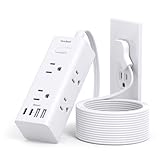
I remember the first time I bought an extension cord that felt genuinely flimsy. It was for a Christmas light display that required running power across the lawn. I grabbed the cheapest thing I could find at the hardware store, thinking, how different could they possibly be? Turns out, very. That cheap cord looked fine, but it got warm, flickered, and eventually just died. It made me wonder, are all extension cords the same? Spoiler alert: they absolutely are not.
You’d think a cord is a cord, right? Just some wire in plastic. But the devil, as they say, is in the details, and for extension cords, those details can mean the difference between a reliable power source and a fire hazard. Let’s cut through the noise and talk about what actually matters.
Why You Can’t Just Grab Any Old Cord
Look, if you just need to plug in a lamp for a few hours in your living room, maybe a basic, lightweight cord will do. But the moment you start needing more juice, or running that cord outside, or under a rug where it can’t breathe, things get serious. The core of any extension cord is its wire gauge, often referred to as AWG (American Wire Gauge). The lower the AWG number, the thicker the wire. Thicker wire means it can handle more current (amperage) without overheating. This is the single biggest factor that separates a decent cord from a dangerous one.
I learned this the hard way. I was setting up a temporary workbench in my garage and needed to power a couple of tools. I grabbed a long, thin cord I’d had lying around. Within minutes of running my circular saw, I could smell that acrid, plastic-burning odor. I unplugged it immediately, and the cord was hot enough to sting my hand. That was a wake-up call. I went out and bought a heavy-duty cord with a low AWG rating, and no joke, the tools ran smoother, and the cord stayed cool to the touch. It wasn’t just about avoiding a fire; it was about the tools actually performing better because they weren’t starved for power.
People often get confused by the length versus the gauge. A 100-foot cord might look impressive, but if it’s a high AWG number (like 16 or 18), it’s probably only suitable for very low-power devices like a string of LEDs or a small fan. Trying to run a power tool on something like that is asking for trouble. It’s like trying to drink a milkshake through a coffee stirrer – it just doesn’t work well and can cause a mess.
Another thing that makes extension cords different is the type of insulation. Are you going to use it indoors where it’s protected from the elements, or outdoors where it needs to withstand sun, rain, and temperature changes? Outdoor cords have special jacketing that’s more durable and resistant to UV rays and moisture. Using an indoor cord outside is a recipe for degradation and, you guessed it, potential safety issues. The plastic gets brittle, cracks appear, and exposed wires are a serious risk.
So, no, not all extension cords are the same. The wire gauge and the type of insulation are the two most important factors that determine its capability and safety. Get these wrong, and you’re gambling with your home and your well-being.
What’s Actually Under the Hood? Anatomy of a Cord
Beyond the wire gauge and insulation, there are other differences that matter. Let’s break down what makes one cord suitable for a heavy-duty job and another for something light as a feather. The conductors themselves are usually copper. Pure copper is the best conductor of electricity, offering low resistance. Some cheaper cords might use CCA, or Copper Clad Aluminum. It looks like copper, but it’s aluminum coated with a thin layer of copper. It’s lighter and cheaper, but it has higher resistance, meaning it heats up more and doesn’t conduct electricity as efficiently. For high-amperage applications, you absolutely want 100% copper conductors. It’s worth the extra few bucks, trust me.
The number of conductors also plays a role. Most common extension cords are ‘three-prong’ cords, meaning they have a ground wire. This is a safety feature.
The ground wire is connected to the metal casing of your appliance and to the ground pin on the plug. If there’s a fault within the appliance that causes the metal casing to become live, the electricity will flow harmlessly to the ground instead of through you. It’s a vital safety net.
You’ll also see two-prong cords, which lack this ground wire. These are generally for older appliances or devices that are double-insulated and don’t have a metal casing. However, for most modern tools and appliances, a three-prong cord is the standard and the safer choice. (See Also: Can Extension Cords Short Out )
Then there’s the plug and the connector end. The connectors on a heavy-duty cord will feel more substantial. They are designed to grip the prongs of your appliance firmly, preventing accidental disconnections, which can be annoying and also a safety hazard (imagine a power tool losing power mid-cut). Some cords even have locking connectors to make sure a secure connection. This might seem like overkill for a simple task, but if you’re working on a project where the cord might get bumped or pulled, a locking connector can save you a lot of hassle and potential danger.
The overall construction quality is also a giveaway. Does the outer jacket feel solid and flexible, or is it stiff and prone to cracking? Are the connections between the wires and the prongs solid, or do they look like they were put together with a prayer? A well-made cord will have smooth, uniform insulation, securely molded plugs, and a generally solid feel. A cheap one might have rough edges, inconsistent thickness, or plugs that feel loose and wobbly. I once bought a cord where the ground pin on the plug just kind of drooped. It looked ridiculous and felt incredibly unsafe. That thing went straight into the trash.
The length itself is a practical consideration. While not a quality indicator, choosing the right length avoids the temptation to stretch a cord too far or daisy-chain multiple cords together, both of which can lead to voltage drop and overheating. A 50-foot cord might be perfect for one job, but for another, you might need 100 feet. Just remember that the longer the cord, the more important a low AWG number becomes, as voltage drop increases with length.
The Great Gauge Debate: Finding the Right Size
Alright, let’s talk about the wire gauge, or AWG. This is where many people get tripped up, and honestly, it’s not that complicated once you get the hang of it. Remember: lower number = thicker wire = higher amperage capacity = safer for power-hungry tools. Higher number = thinner wire = lower amperage capacity = good for light-duty items.
For general household use with devices like lamps, radios, or phone chargers, a 16 AWG cord is usually sufficient. These are typically lighter and more flexible. However, if you’re powering anything with a motor, like a vacuum cleaner, a blender, or a small appliance that draws a bit more current, you should step up to a 14 AWG cord. This offers a good balance of flexibility and capacity for moderately demanding tasks.
Now, when you get into power tools, workshop equipment, or anything that needs a sustained, high electrical draw, you’re looking at 12 AWG or even 10 AWG. A 12 AWG cord is the workhorse for most DIYers and homeowners. It can handle drills, saws, sanders, and even some larger appliances. If you’re running a welder, a large air compressor, or multiple high-draw tools simultaneously, a 10 AWG cord is what you need. These are thick, stiff, and heavy, but they are built for serious power.
Here’s a quick comparison table to help you visualize:
| AWG | Typical Use | Amperage Rating (Approx.) | Flexibility | My Verdict |
|---|---|---|---|---|
| 18 | Holiday lights, small fans, clock radios | 7 A | Very Flexible | Only for the smallest loads. Overheats easily. |
| 16 | Lamps, radios, chargers, light appliances | 10 A | Flexible | Decent for indoor, low-draw items. Avoid for anything substantial. |
| 14 | Vacuum cleaners, blenders, power tools, medium appliances | 13 A | Moderately Flexible | A good all-arounder for many home tasks. |
| 12 | Heavy-duty power tools, workshop equipment, large appliances | 15-20 A | Less Flexible, Heavier | The go-to for serious DIY and workshop needs. |
| 10 | Welders, large air compressors, multiple high-draw tools | 20-30 A | Very Stiff, Very Heavy | For industrial-level power needs. Not for casual use. |
When people ask me about extension cords, this is the first thing I tell them to check. Don’t just look at the length. Look at the AWG. It’s printed on the cord itself, usually along the jacket. If you can’t find it, or it’s worn off, don’t use it for anything important.
The length of the cord also impacts its capacity. A 100-foot 14 AWG cord will have less capacity than a 25-foot 14 AWG cord due to voltage drop. This is why it’s often recommended to use the shortest cord that will do the job, especially with higher gauges. If you need to run power a long distance, you absolutely must use a lower AWG. Using a long, thin cord for a power-hungry device is a classic mistake that leads to overheating and potential fires. It’s like expecting a tiny stream to fill a bathtub quickly; it’s just not going to happen efficiently.
Common Mistakes and What to Avoid
Let’s talk about the dumb things people do with extension cords. First off, overloading. This is probably the most common and dangerous mistake. Every extension cord has a maximum amperage or wattage rating. It’s usually stamped on the plug or connector. If you plug in more devices than the cord can handle, it will overheat. Simple as that. And when plastic overheats, it melts, it smokes, and it can catch fire. Always check the rating and make sure your combined load doesn’t exceed it. Some cords are rated for specific applications, like “heavy duty” or “outdoor use,” which implies a certain capacity, but it’s always best to find the actual amp or watt rating. (See Also: Can Extension Cords Be Use With Electric Heaters )
Another big no-no is running cords under rugs or furniture. Why? Because it traps heat. Extension cords need to be able to dissipate heat into the surrounding air. When you cover them up, that heat builds up, and it’s a direct path to melting the insulation and starting a fire. I’ve heard stories of people finding smoldering cords under carpets. It’s terrifying. It’s much safer to have the cord visible, or run it along a wall where it can breathe. If you absolutely must run a cord under something, make sure it’s a heavy-duty cord designed for that purpose and that it’s not being pinched or stressed.
Daisy-chaining cords – plugging one extension cord into another – is also a terrible idea. While it might seem convenient to extend your reach, each connection point adds resistance and creates a potential failure point. It also makes it harder to track the total load on the circuit. Most electrical codes frown upon this for safety reasons. Stick to using the longest cord you need, or if you have to connect, make sure it’s a heavy-duty cord and that you’re well within its capacity. But honestly, just get the right length cord in the first place.
Fraying and damage are also huge red flags. If you see any nicks, cuts, or exposed wires on your extension cord, it’s time to retire it. Don’t try to tape it up. That tape isn’t rated for electrical insulation, and it won’t hold up under stress or heat. Damaged cords are a direct path to electrical shock or fire. It’s a small price to pay for a new cord to avoid a disaster. I’ve seen extension cords that look like they’ve been through a shredder. They should be immediately discarded. Even small nicks can compromise the insulation over time, especially if exposed to moisture or UV rays.
Finally, using the wrong type of cord for the environment. Indoor cords in wet locations? Bad idea. Outdoor-rated cords used for temporary indoor tasks? Usually fine, but might be overkill and less flexible. The key is to match the cord to the job. For outdoor use, look for cords with clear markings like ‘SJTW’, ‘STW’, or ‘W’. These codes indicate vinyl or thermoplastic jacketing that’s designed to withstand outdoor conditions. Don’t assume a cord is safe for outdoor use just because it looks sturdy.
Faq: Extension Cord Questions Answered
Can I Use an Indoor Extension Cord Outside?
No, you really shouldn’t. Indoor extension cords are not designed to withstand the elements like rain, sun, and temperature fluctuations. They lack the necessary UV protection and moisture resistance, causing the insulation to degrade, crack, and become a safety hazard. Always use a cord specifically rated for outdoor use when working outside.
What Happens If I Use a Thin Extension Cord for a Power Tool?
If you use a thin extension cord (high AWG number) for a power tool, it will likely overheat. The thin wires can’t handle the high amperage the tool requires, leading to increased resistance, heat buildup, and potential damage to the cord, the tool, or even a fire. The tool may also perform poorly due to insufficient power delivery.
How Do I Know If an Extension Cord Is Safe?
A safe extension cord will have clear markings indicating its gauge (AWG), maximum amperage or wattage rating, and whether it’s for indoor or outdoor use. The insulation should be intact with no nicks, cuts, or exposed wires. The plugs should be firmly attached and undamaged. If you have any doubts about the condition or specifications of a cord, it’s best to replace it.
Can I Plug Multiple Extension Cords Together?
It’s generally not recommended to plug multiple extension cords together (daisy-chaining). Each connection adds resistance and potential failure points, increasing the risk of overheating and fire. It also makes it difficult to determine the total load on the circuit. It’s safer to use a single extension cord of the appropriate length and gauge for your needs.
Real-World Use: From Garage to Garden Party
Let’s talk about where these differences really show up. In my garage, I’ve got a couple of heavy-duty 12 AWG cords, about 50 feet long, that I use for pretty much everything. They’re thick, a little stiff, but they’ll power my miter saw, my sander, or my shop vac without breaking a sweat. I’ve had them for years, and they’ve never once overheated or caused an issue. They feel substantial, and the connectors grip the plugs firmly. They are, frankly, a pleasure to use because I don’t have to think about them. They just work.
On the flip side, I’ve got a drawer full of those lighter 16 AWG cords that I’ve accumulated over the years. They’re great for plugging in my laptop on the couch when the outlet is just out of reach, or for running a string of LED lights during the holidays. They’re flexible, easy to coil, and don’t take up much space. But I would never, ever try to run my angle grinder on one. It just wouldn’t work, and it would be incredibly dangerous. (See Also: Are Outdoor Extension Cords 10 Or 12 Gauge )
For outdoor use, say for powering a leaf blower or a hedge trimmer, I use a bright orange 14 AWG cord that’s rated for outdoor use. The bright color is a lifesaver; I’ve tripped over a green cord in the grass more times than I care to admit. This outdoor cord is a bit stiffer than my indoor ones, and the insulation feels tougher. It’s survived being dragged across gravel, getting a bit damp, and sitting out in the sun for a few hours. It’s not as flexible as a pure indoor cord, but that’s the trade-off for durability and weather resistance.
I’ve also experimented with those retractable cord reels. They’re fantastic for keeping things tidy in the garage. Mine is a 12 AWG cord and holds about 75 feet. It’s great for when I need to work further away from the wall outlet. The mechanism for retracting is smooth, and it keeps the cord from becoming a tangled mess on the floor, which is a perpetual battle in my workshop. The key is that even though it’s on a reel, it’s still a heavy-gauge cord, so it can handle the power needs.
The most important thing is to have a variety. Don’t try to make one cord do everything. Have a couple of heavy-duty ones for the garage and workshop, some medium-duty ones for general household use, and a dedicated outdoor cord for yard work. This way, you’re always using the right tool for the job, which is the safest and most efficient approach. It saves you money in the long run, too, because you’re not constantly replacing cords that have been abused or failed prematurely.
When to Splurge vs. When to Save
This is where I tend to be a bit of a purist. When it comes to extension cords, I generally believe you get what you pay for, and for anything involving power tools or significant electrical draw, you should be prepared to spend a bit more. The extra cost for a heavy-duty, low-gauge (12 or 10 AWG), 100% copper cord is absolutely worth it for safety and performance. I remember paying around $40 for a decent 50-foot 12 AWG cord a few years back, and it’s been one of the best tool accessory purchases I’ve made.
You can sometimes find decent deals on these heavy-duty cords, especially during sales at hardware stores or online retailers. However, I would be extremely wary of suspiciously cheap “heavy-duty” cords. If it seems too good to be true, it probably is. Look for reputable brands that specialize in electrical supplies. Brands like Southwire, Iron Forge, Klein Tools, or even some of the better-known tool brands often have reliable options. Avoid generic, no-name brands for anything important.
Where can you save a little? For very low-power applications, like running a single lamp or a small fan, a less expensive 16 or 18 AWG cord is usually fine. You can often find multi-packs of these lighter-duty cords for a reasonable price. These are perfect for temporary setups or where flexibility and light weight are more important than brute force electrical capacity. I picked up a three-pack of 10-foot 18 AWG cords for about $15 last year, and they’ve been handy for charging stations and small electronics.
The key is to match your investment to the risk and the requirement. If you’re plugging in a Christmas tree that draws a few hundred watts, a cheap cord might be okay (though still not ideal if it’s going under a rug). But if you’re powering a workshop full of tools, the few extra dollars you spend on a quality 12 AWG cord could save you from a ruined project, a damaged tool, or worse. It’s a small price to pay for peace of mind. I’ve learned that skimping on electrical components is one of the fastest ways to invite trouble.
Conclusion
So, are all extension cords the same? Absolutely not. The difference between a reliable workhorse and a ticking time bomb often comes down to wire gauge, construction quality, and suitability for the environment. Don’t be that person who buys the cheapest cord and then wonders why their tools are sluggish or why they smell burning plastic.
Take a moment to check the AWG rating, assess your power needs, and consider where you’ll be using the cord. A few extra dollars spent on a properly rated cord can prevent headaches, protect your equipment, and most importantly, keep you and your home safe from electrical hazards. It’s a simple choice that makes a huge difference.
Next time you’re at the store, don’t just grab the longest one. Look at the numbers, feel the weight, and choose wisely. Your future self, and your electrical outlets, will thank you.