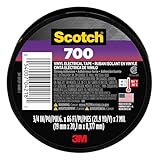
I remember staring at a bird’s nest of wires behind my old washing machine, a tangled mess that looked like it was designed by a caffeinated spider. I’d used electrical tape to secure a loose connection, feeling pretty pleased with my DIY fix. Then, a few weeks later, I noticed a… smell. A faint, acrid, plastic-y smell. Peeking behind the machine again, I saw it: the electrical tape had sagged, warped, and looked like it was about to ooze onto the floor. That’s when the question hit me, and probably you too: can electrical tape melt? The short answer is a resounding yes, and understanding why is key to not burning your house down.
It’s not rocket science, but it’s also not as simple as just grabbing any old roll of tape for that quick fix. Electrical tape isn’t magical, and when pushed beyond its limits, it’ll show you exactly what it’s made of – or what it turns into when things get hot.
When Your ‘fix’ Starts to Wimp Out
Look, I’ve been there. You’ve got a wire fraying, a connector looking a bit loose, and you grab the roll of black tape from the junk drawer.
It’s easy, it’s cheap, and it feels like a solid solution. I once used electrical tape to re-attach a snapped wire on my lawnmower’s starter pull cord.
Seemed genius at the time. It held for a few mows, but then one hot afternoon, after a particularly long session, I heard a sputtering noise. The tape had stretched and deformed, and the wire was sparking against the metal housing.
A small fire was licking at the plastic shroud. Close call, that one. It hammered home the point: electrical tape has limits, and heat is its arch-nemesis. The core reason electrical tape melts or deforms is its material composition.
Most standard electrical tapes are made from PVC (polyvinyl chloride) or vinyl. While vinyl is relatively flexible and a decent insulator when cool, it has a low softening point. When exposed to temperatures exceeding its rating – which can happen from high electrical current, ambient heat, or friction – the plastic begins to break down. It loses its structural integrity, becoming soft, sticky, and eventually gooey.
This isn’t just an aesthetic problem; it compromises the insulation and can lead to short circuits or even fires.
The amount of current flowing through a wire directly correlates to the heat generated. Think of it like a hose: the more water you push through, the more friction and pressure there is. In an electrical wire, that ‘friction’ is resistance, and it creates heat. If the tape isn’t rated to handle that generated heat, it will soften.
It’s like trying to hold a candle next to a heat lamp – eventually, the candle’s going to get messy. My lawnmower incident? The starter motor likely drew a lot of amps, generating enough heat to turn that vinyl tape into a sticky mess. It’s the same principle that applies to automotive wiring, appliance repairs, or even just tidying up a power strip.
You might think you’re just wrapping a wire, but you’re creating a tiny, potential heat generator. The tape’s job is to keep that heat contained and prevent contact with anything else, but if the tape itself can’t handle the heat, the whole system fails. It’s a chain reaction, and the weakest link is often that cheap roll of tape.
I’ve seen guys at work use standard electrical tape on high-amperage circuits, and it’s infuriating. They get away with it for a while, and then BAM – a melted mess that’s a nightmare to clean up and a real safety hazard. It’s not about ‘if’ it will fail, but ‘when’.
What to Look for (besides the Black Color)
So, if not all electrical tape is created equal, what separates the good stuff from the stuff that’ll turn into a melted puddle? It boils down to the material, the temperature rating, and the voltage rating. For starters, if you see tape that feels particularly thin, stretchy, or has a really plasticky smell even when new, be suspicious.
High-quality electrical tape has a certain heft to it and feels more rubbery or vinyl-like, not brittle or excessively slippery. The best ones will often have a slightly matte finish, not a super glossy one.
I’ve found that brands like 3M Super 33+ or 3M Temflex are generally reliable. They’re not necessarily the cheapest, but I’ve never had them melt or degrade on me under normal use. They cost me about $5 for a roll, which is way cheaper than replacing a fried appliance or dealing with a burnt wire.
That’s a lesson learned the hard way after a few instances where budget tape failed me spectacularly.
Beyond the feel, the packaging is your best friend. Look for clear temperature and voltage ratings. A common standard for general-purpose electrical tape is a temperature range of around 176°F (80°C).
Anything lower, and you’re asking for trouble in warmer environments or near heat-generating components. For higher-temperature applications, you need specialized tapes. For instance, vinyl tapes rated for higher temps might go up to 220°F (105°C). But if you’re dealing with serious heat, like in an engine bay or around a furnace, you’re probably looking at tapes made from materials like silicone or rubber, which can handle much higher temperatures, often 300°F (150°C) and above. (See Also: Can I Use Electrical Tape To Connect Wires )
I’ve used silicone self-fusing tape for exhaust system repairs (not electrical, but same principle of heat resistance), and it’s a different beast entirely – it vulcanizes into a solid, heat-proof sheath.
When it comes to voltage, most standard electrical tapes are rated for up to 600 volts. This is usually more than enough for household wiring. However, if you’re working with industrial equipment or high-voltage applications, you’ll need tape specifically designed for those environments, often with much higher voltage ratings and made from different insulating materials like rubber or specialized polymers. Don’t just assume black tape is black tape.
The branding, the specs, and the price often tell a story about what you’re actually getting. I once bought a multi-pack of generic electrical tape for about $10 for six rolls. Big mistake.
It felt flimsy and, predictably, started softening within months on a simple outdoor extension cord connection. Stick to reputable brands and check the specs.
It’s the difference between a lasting fix and a potential fire hazard.
Here’s a quick rundown of what to check:
| Feature | What to Look For | Why It Matters |
|---|---|---|
| Material | High-grade vinyl, rubber, or silicone | Determines flexibility, heat resistance, and durability |
| Temperature Rating | At least 176°F (80°C) for general use; higher for demanding environments | Prevents melting, sagging, and degradation under heat |
| Voltage Rating | At least 600V for most household uses | Makes sure adequate insulation for electrical safety |
| Brand Reputation | 3M, Scotch, ideal industries, etc. | Proven track record for quality and reliability |
| Feel/Texture | Slightly rubbery, not overly stiff or brittle | Indicates better material quality and flexibility |
My verdict? Spend the extra couple of bucks on decent tape. It’s a small price to pay for peace of mind and a repair that actually lasts.
Common Mistakes That Lead to Melted Messes
You know, the most common mistake people make isn’t buying the wrong tape; it’s using it for the wrong job or in the wrong conditions. People think, ‘Oh, it’s tape, it insulates, it’s fine.’ Wrong.
I’ve seen folks use electrical tape to wrap exhaust pipes, try to seal leaky garden hoses in direct sun, or even insulate wires that are constantly rubbing against something sharp. These are all recipes for disaster.
Electrical tape is designed for electrical insulation, primarily in relatively stable temperature and environmental conditions. Take my friend Dave.
He decided to tape up a leaky pipe under his sink with electrical tape because he’s notoriously cheap. The pipe was slightly damp, and the bathroom gets warm and humid. Within a month, the tape had stretched, sagged, and was peeling away, looking like a sad, black slug.
Water was still dripping, and now there was a sticky residue all over the pipe. It wasn’t a fire hazard, but it was a complete failure and a mess to clean up.
Had he just used proper pipe repair tape or called a plumber, he’d have saved himself the hassle.
Another classic blunder is using it as a substitute for proper connectors or heat-shrink tubing. I’ve opened up junction boxes where wires were just twisted together and then haphazardly wrapped with electrical tape. This is a huge no-no.
The tape can slip, the connection can loosen, and the inherent tension in the tape can actually pull the wires apart over time, especially if it gets soft. Plus, it’s a pain to take apart and inspect later. Heat-shrink tubing, when applied correctly, shrinks down to form a tight, protective, and often more heat-resistant seal around a connection. It’s a superior solution for most permanent wire splices.
Likewise, using wire nuts or crimp connectors provides a secure mechanical and electrical connection that tape alone can never achieve. Tape is for insulating the outside of a wire or a bundle, not for holding the actual electrical connection together.
Overlapping the tape is another area where people get it wrong. You don’t want to just slap on a few random strips. Proper application involves overlapping each layer by about half the width of the tape. (See Also: Can Electrica Tape Catch On Fire )
This creates a smooth, continuous insulating barrier. If you leave gaps, you create weak points where moisture or dust can penetrate, and where heat can escape or concentrate. And speaking of heat, don’t wrap it too tightly around a wire that’s already warm.
The tape needs to be applied with some tension, yes, but not so much that it’s stretching excessively, especially if the wire is already hot from use. This pre-stretches the tape, making it more prone to deforming later when it heats up again. Finally, and this one burns me up, using old, dried-out electrical tape. If you pull on it and it cracks or feels brittle, it’s lost its flexibility and its adhesive properties.
It’s useless and will likely peel off or fail completely. Throw it out.
People also often forget that electrical tape degrades over time, even if not exposed to extreme heat. UV rays from sunlight, ozone, and general aging can make it brittle and reduce its adhesion. So, if you’ve got a roll that’s been sitting in your toolbox for five years, especially if it’s been exposed to temperature fluctuations, it’s probably not going to perform as expected.
Real-World Uses: Where It Actually Works
Okay, so electrical tape isn’t useless. Far from it. It’s incredibly handy for specific tasks where its properties are actually beneficial. The primary and intended use is, of course, insulating electrical connections that aren’t subjected to excessive heat or mechanical stress.
Think about tidying up a bundle of wires in a low-heat area, like inside a cabinet or behind a control panel. Wrapping a cable harness with electrical tape not only insulates any minor nicks but also provides a degree of abrasion resistance and keeps everything neat. I use it all the time to wrap the ends of speaker wire before inserting them into binding posts, just to keep the fine strands from splaying out.
It’s a quick, clean way to make a better connection. It’s also great for temporary fixes, like securing a loose wire temporarily until a permanent repair can be made. Just don’t forget that temporary fix!
Another common and effective use is for labeling. While there are dedicated labeling tapes, a strip of electrical tape can be written on with a permanent marker to identify wires, circuits, or cables. It adheres well enough for this purpose and is easily removable later if needed, unlike some industrial label makers.
I’ve also found it useful for marking the ‘hot’ or ‘neutral’ wire in a temporary setup or extension cord, just to make things clearer, especially if I’m working in dim light. The distinct color, though usually black, can also be a visual cue.
Different colors of electrical tape (red, blue, yellow) are used to color-code wires according to their function (e.g., hot, neutral, ground), which is standard practice in electrical installations. This color-coding is vital for safety and troubleshooting.
Beyond actual electrical work, it’s surprisingly useful for general DIY and repairs. Need to temporarily hold a broken plastic piece together while glue dries? Electrical tape can do that. Need to create a better grip on a tool handle?
Wrap some tape around it. It’s also excellent for preventing squeaks – wrap a door hinge that’s developed a rattle, and the rubbery nature of the tape can often silence it. I once used it to temporarily patch a small hole in my child’s inflatable pool that was just big enough to be annoying but not important. It held for the entire summer.
It’s also fantastic for bundling things – like that collection of charging cables that always seems to tangle themselves into knots. A few wraps of electrical tape keeps them organized.
It’s not meant for heavy-duty structural repairs, but for light-duty insulation, bundling, and general ‘sticking things together’ tasks, it’s a workhorse. Just remember its limitations. If it’s going to get hot, wet, or be under significant mechanical stress, reach for something else.
There’s also a niche use in the musical instrument world, particularly for guitarists. Some people wrap their guitar cables with electrical tape to dampen microphonic noise caused by cable handling. It’s a bit of a debate among players, but it can sometimes help by providing a slightly softer, less rigid outer layer. It’s another example of using its flexible, slightly cushioned properties outside its primary electrical function.
When Things Get Hot: Speciality Tapes
So, we’ve established that standard vinyl electrical tape has its limits, especially with heat. But what if your job requires dealing with higher temperatures? That’s where specialty tapes come in. If you’re working on automotive wiring, appliances with heating elements, or anything near an engine or exhaust, you’re going to need more than just your average black tape. For moderate high-temperature applications, up to about 220°F (105°C), you can find vinyl tapes specifically rated for this. They’re often thicker and made with a more heat-resistant compound. However, once you start pushing past that, you’re looking at different materials entirely.
Silicone rubber tapes are a popular choice for higher heat resistance, often rated for continuous use up to 356°F (180°C) and sometimes even higher for short durations. These tapes are often self-fusing, meaning when you stretch and wrap them, they bond to themselves, creating a smooth, waterproof, and highly insulating layer. They’re great for sealing cable splices in harsh environments, like on boats or industrial machinery. I used a silicone tape to seal the wiring harness on my motorcycle that runs near the engine block, and it’s held up beautifully through heat cycles and vibrations. It has a slightly tacky feel when you first unroll it, but once it cures, it’s incredibly solid. (See Also: Can I Substitute Duct Tape For Electrical Tape )
Another class of high-performance tapes are fiberglass tapes, often impregnated with silicone or other high-temperature adhesives. These are incredibly strong, abrasion-resistant, and can handle extremely high temperatures, sometimes exceeding 500°F (260°C). They’re typically used in industrial settings, for wrapping motor leads, or for high-voltage applications where durability and extreme heat resistance are most important. They feel more like a fabric than a plastic tape. There are also specialized fluoropolymer tapes (like PTFE or FEP) that offer excellent chemical resistance and very high-temperature performance, though they are usually more expensive and less flexible.
When choosing a specialty tape, the key is to match the tape’s specifications to the environment and the electrical load. Don’t just grab the most expensive tape; make sure it’s the right tape for the job. For example, if you need something that can handle occasional high heat but also needs flexibility and good adhesion, a high-temperature vinyl might suffice. If you’re dealing with constant, intense heat or need a waterproof, solid seal, a silicone self-fusing tape is probably a better bet. For extreme industrial conditions, fiberglass or fluoropolymer tapes might be necessary. Always, always check the manufacturer’s specifications. That little bit of extra research can save you a lot of headaches – and potential meltdowns.
It’s important to note that even these high-temperature tapes have limits. Pushing any material beyond its rated specifications will eventually lead to failure. The difference is that the failure point is much, much higher, giving you a much larger margin of safety for demanding applications.
People Also Ask:
Can Electrical Tape Be Used for Permanent Repairs?
Generally, no. While it can serve as a temporary fix or insulation for low-stress applications, it’s not intended for permanent, high-strain electrical repairs. Its adhesive can degrade, and the material itself can become brittle or soft over time, especially with temperature fluctuations. For permanent repairs, consider heat-shrink tubing, crimp connectors, or wire nuts for secure and long-lasting electrical connections.
What Happens If Electrical Tape Gets Wet?
Standard vinyl electrical tape is not waterproof. If it gets wet, the adhesive can loosen, causing the tape to peel or slide off. Moisture can also seep underneath, compromising the insulation and potentially leading to corrosion or short circuits. While some specialty tapes are designed to be waterproof, most common electrical tapes will fail when exposed to significant moisture over time.
How Hot Can Electrical Tape Get Before It Melts?
Most standard vinyl electrical tapes have a maximum operating temperature of around 176°F (80°C). Exceeding this temperature can cause the tape to soften, deform, and lose its insulating properties. Higher-temperature rated vinyl tapes might go up to 220°F (105°C), while specialized tapes like silicone or fiberglass can withstand much higher temperatures, often 300°F (150°C) and above.
Is All Electrical Tape the Same?
Absolutely not. While they might look similar (usually black), electrical tapes vary significantly in material composition, temperature and voltage ratings, adhesion, and durability. Standard vinyl tapes are common for general use, but specialized tapes made from silicone, rubber, fiberglass, or fluoropolymers are designed for higher heat, harsher environments, or specific electrical demands.
Practical Tips for Using Electrical Tape Wisely
Alright, let’s wrap this up with some practical advice. First off, always buy decent quality tape. I know I’ve harped on this, but it’s worth repeating. Those generic multi-packs might seem like a bargain, but they’re often not worth the risk. Spend a few extra dollars on a reputable brand like 3M, Scotch, or Ideal Industries. You’ll thank yourself later when your repair holds and doesn’t turn into a melty mess. Aim for tape with a temperature rating of at least 176°F (80°C) for general household use.
Second, clean the surface before you apply the tape. If you’re wrapping a wire or a connection, make sure it’s dry, free of dirt, grease, or oil. This makes sure the adhesive grips properly and the tape stays put. A clean surface is key to a good, lasting wrap. Think of it like painting: you wouldn’t paint over dust, right? Same principle applies here.
Third, apply with consistent tension and overlap. Don’t just slap it on haphazardly. Stretch the tape slightly as you wrap, and make sure each new layer overlaps the previous one by about half the tape’s width. This creates a continuous, strong insulating barrier without weak spots. Avoid over-stretching, especially on warm wires, as this can pre-stress the material and make it more prone to deforming later. Go slow and steady for the best result.
Fourth, store your electrical tape properly. Keep it in a cool, dry place, away from direct sunlight or extreme temperature fluctuations. A dedicated toolbox is ideal. Old, brittle tape that cracks when you unroll it is useless and a hazard. If it looks dried out or feels stiff, it’s time to toss it and buy a fresh roll. I usually try to use a roll within a year or two of buying it, just to be safe.
Finally, know when not to use electrical tape. If the area is going to experience high temperatures, constant vibration, significant mechanical stress, or prolonged exposure to the elements (sun, rain, chemicals), you need a more specialized solution. Electrical tape is fantastic for its intended purpose, but it’s not a miracle material. For high-heat applications, consider silicone or fiberglass tapes. For structural or heavy-duty repairs, use appropriate mechanical fasteners or specialized adhesives. Don’t use it as a primary load-bearing or structural fix; it’s an insulator and a binder, not a glue for everything. Using the right tool for the job, including the right tape, is the best way to make sure your repairs are safe and effective.
One last tip: if you’re unsure about the temperature or voltage requirements of a specific job, err on the side of caution. It’s better to buy a slightly more solid tape than to risk a failure. A few extra dollars for a higher-rated tape can prevent much larger expenses and potential safety issues down the line.
Conclusion
So, to circle back to that initial question: can electrical tape melt? Yes, it absolutely can. And understanding why it melts – due to its vinyl composition and limitations with heat – is the first step to using it correctly. It’s not a universal fix-all; it’s a specific tool for specific jobs. When used within its limits, for insulating low-voltage wires or bundling cables in moderate temperatures, it’s incredibly useful. But push it too hard, expose it to too much heat, or use it on stressed connections, and you’re asking for trouble.
My experience has taught me that skimping on quality here is a false economy. A few bucks saved on a cheap roll of tape can end up costing you a lot more in damaged equipment or, worse, a safety incident. Always check the temperature and voltage ratings, especially if you’re working on anything that gets warm. If you’re in doubt, grab a higher-rated tape or look for alternatives like heat-shrink tubing or specialized silicone tapes for demanding applications.
Next time you reach for that roll of black tape, take a second to consider the environment it’s going into. A little bit of foresight can save you a lot of melted headaches. What’s the most unusual place you’ve used electrical tape successfully (or unsuccessfully)?