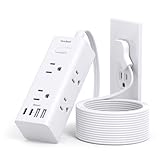
I swear, the first time I plugged in a cheap extension cord I bought online, the smell of burning plastic hit me before the lights even flickered on. It was terrifying. You see those deals, hundreds of feet of cord for what seems like pocket change, and your brain screams ‘score!’ But when it comes to powering your life, especially with anything that draws a decent amount of juice, the question of ‘are amazon extension cords safe’ isn’t just a formality, it’s a damn good one. I’ve wasted enough cash and nearly burned down my workshop to tell you the real story.
Don’t Get Fried: The Bare Minimum You Need to Know
Let’s cut to the chase. When you’re scrolling through Amazon, looking for that perfect length of cord to get your Christmas lights across the yard or power that new tool in the garage, you’re probably not thinking about joules or dielectric strength.
You’re thinking about price and length. I get it. I’ve been there.
But here’s the blunt truth: not all extension cords are created equal, and the cheapest ones you find on Amazon are often the sketchiest. We’re talking about electricity here, folks. It’s not a game.
A bad extension cord can cause fires, damage your appliances, and yes, even shock you. So, when you’re asking ‘are Amazon extension cords safe,’ the real answer is: some are, and some are definitely not.
It entirely depends on what you’re buying and what you’re using it for. Think of it like buying tools. You wouldn’t buy a cheap, no-name drill if you planned on drilling through concrete all day, would you?
The same logic needs to apply to your electrical connections. It’s not just about the cord itself; it’s about the gauge of the wire, the insulation quality, the plugs, and how it’s rated for outdoor or indoor use.
Ignoring these details is like playing Russian roulette with your house.
The biggest red flag? Cords that feel flimsy, have thin insulation that looks like it’ll crack in the sun, or have plug ends that don’t feel snug. I once bought a 100-foot cord that was so thin, I could almost see through the plastic.
It was rated for light-duty use, which in my book means powering a bedside lamp, not the industrial fan I thought it could handle. Guess what happened? Overheating, a melted plug end, and a frantic scramble to unplug it before it did any real damage. That’s the kind of ‘saving money’ that costs you way more in the long run.
Always check the gauge (AWG) and the intended use. A lower AWG number means a thicker wire, which can handle more amperage and is generally safer for higher-power devices. For most home use, 14-gauge is a good starting point for indoor cords, while 12-gauge is better for outdoor or heavy-duty applications. Don’t be afraid to spend a few extra bucks for a cord that’s properly rated. (See Also: Can Extension Cords Short Out )
Your peace of mind, and your home’s safety, are worth it.
The Devil Is in the Details: What to Actually Look For
Okay, so you’re convinced you need to look beyond the price tag. What are the actual specs that make an extension cord safe? First off, forget those super cheap, generic ones unless you’re powering a single LED string light for a few hours. When you’re browsing Amazon, even if the listing says it’s safe, you need to do your homework. Look for the UL (Underwriters Laboratories) or ETL (Intertek) mark. This isn’t a guarantee of perfection, but it means the product has been tested and meets certain safety standards. If a cord doesn’t have this mark, put it back in the virtual shopping cart and find something else. Seriously, it’s a a must for me now.
Next up is the wire gauge, or AWG. This is probably the most important factor for safety. Remember, a lower AWG number means a thicker wire, which can handle more electrical current without overheating. Here’s a quick rundown of what you’ll commonly see:
| AWG Gauge | Max Amps | Typical Use | My Verdict |
|---|---|---|---|
| 18 AWG | 7 Amps | Light-duty electronics (clocks, lamps with low wattage bulbs) | Only for the lightest loads. Can overheat easily. |
| 16 AWG | 10 Amps | Medium-duty (fans, portable radios, seasonal lighting) | Decent for occasional use with moderate loads. |
| 14 AWG | 13 Amps | General indoor use (power tools, small appliances, standard household needs) | Good all-around choice for many common tasks. |
| 12 AWG | 15 Amps | Heavy-duty indoor/outdoor (larger power tools, appliances, long runs) | My go-to for anything remotely demanding. Worth the extra. |
| 10 AWG | 20 Amps | Very heavy-duty (industrial equipment, temporary power) | Overkill for most homes, but key for serious work. |
The length of the cord also matters. Longer cords, especially thinner ones, have more resistance, which can lead to voltage drop and overheating. So, if you need a long cord, absolutely opt for a thicker gauge (lower AWG) to compensate. And for outdoor use, make sure it’s explicitly rated for it. Outdoor cords have tougher, more weather-resistant insulation to handle sunlight, moisture, and temperature changes. Don’t use an indoor cord outside; it’s a shortcut to failure and a fire hazard.
Common Mistakes That Lead to Disaster (ask Me How I Know)
I’ll tell you my stupidest mistake. I was setting up for a garden party, and I needed to power some extra lights and a small portable speaker. I grabbed a 50-foot extension cord from Amazon that looked decent enough, dark green, seemed pretty solid. I plugged it into an outdoor outlet, ran it along the patio, and powered everything up.
For about an hour, it was fine. Then, as the evening wore on and it got a bit damp, I noticed the cord felt… warm.
Not just a little warm, but uncomfortably hot to the touch. My heart sank. I yanked the plug out, and sure enough, the plastic around the outlet prongs was starting to melt. The cord was cheap, and even though it was supposed to be ‘outdoor,’ it clearly couldn’t handle the sustained load, especially in humid conditions.
That was a wake-up call. I could have easily started a fire right there on my wooden deck.
One of the most dangerous mistakes people make is using extension cords as permanent wiring. They’re designed for temporary use. Plugging something in and leaving it plugged in for months on end, especially if it’s behind furniture or in a high-traffic area where it can get pinched or damaged, is a recipe for disaster. Cords can fray, insulation can degrade, and a hidden short circuit is a serious fire risk.
Another huge no-no is daisy-chaining extension cords – plugging one into another to get more length. Every connection point adds resistance and potential for failure. It’s just asking for trouble. Overloading is another biggie. (See Also: Can Extension Cords Be Use With Electric Heaters )
Every cord has a maximum wattage or amperage rating. Exceeding that rating is like forcing a tiny engine to pull a semi-truck; it will overheat and fail, potentially catastrophically.
Always check the appliance’s power draw and compare it to the cord’s rating. Better to be safe than sorry. And please, for the love of all that is holy, do not run extension cords under carpets or rugs. They can be damaged by foot traffic without you knowing, and the carpet acts as insulation, trapping heat and increasing the fire risk.
Real-World Use: Powering Tools and Toys Safely
So, are Amazon extension cords safe for, say, your workshop? It’s a mixed bag. I’ve bought some surprisingly good heavy-duty cords from reputable brands sold on Amazon that have held up to serious abuse. These are typically the 12-gauge or even 10-gauge options, clearly marked for heavy-duty use, and with those solid, molded plugs. They cost more, but they’re worth every penny when you’re running a table saw or a compressor. They feel substantial, the insulation is thick and flexible even in cooler temperatures, and they don’t get alarmingly warm under load. These are the cords that give you confidence.
On the flip side, I’ve also bought cords that were advertised as ‘heavy-duty’ that felt suspiciously light and flimsy. They would get hot quickly and I’d find myself constantly monitoring them, which defeats the purpose of having a reliable power source. My rule of thumb now: if it feels too light for its advertised purpose, it probably is.
For power tools, you want a cord that’s at least 14-gauge for lighter tasks and 12-gauge for anything that draws significant power. Shorter is generally better, but if you need length, a 12-gauge cord is your best bet to minimize voltage drop and heat buildup.
For outdoor decorative lighting, especially for holidays, I lean towards cords specifically designed for that purpose, often called ‘Christmas light cords’ or ‘outdoor extension cords.’ They are usually 16-gauge and have weather-resistant plugs and sockets. While they’re not for heavy-duty tools, they are perfectly safe and effective for their intended use when bought from a reliable seller on Amazon. The key is matching the cord to the task and the power draw.
My Go-to Extension Cord Checklist
- UL or ETL Listed: Absolutely a must for peace of mind.
- Correct Gauge (AWG): Lower number = thicker wire = safer for higher loads. 14-gauge for general indoor, 12-gauge for heavy-duty/outdoor.
- Appropriate Length: Use the shortest cord possible for the job. Longer cords require thicker gauges.
- Rated for Intended Use: Indoor only? Outdoor rated? Heavy-duty? Match it to your need.
- Solid, Molded Plugs: Avoid cheap, flimsy plugs that look like they’ll crack.
- Durable Insulation: Should feel substantial, not thin and brittle.
- Reputable Brand/Seller: Stick with known brands and check seller reviews on Amazon.
Contrarian View: When Cheaper might Be Okay (but Rarely Is)
Here’s where I might step on some toes. Everyone, and I mean everyone, tells you to avoid cheap extension cords like the plague.
And for the most part, they’re right. But I disagree with the blanket statement that all cheap cords are inherently dangerous for any use.
My contrarian take? For extremely light-duty, short-term applications, like powering a single, low-wattage lamp for a few hours, or a very small fan, a cheaper, thinner gauge cord can be acceptable, provided it’s UL/ETL listed and you monitor it. I’ve got a couple of 18-gauge, 6-foot cords that I’ve had for years, used only for very specific, minimal power draws.
They’ve never given me an issue. The key here is ‘minimal’ and ‘monitored.’ These are not cords you’d plug your TV into, let alone a power tool or heater. The risk comes when people get greedy with the savings and try to push these cheap cords beyond their limits. (See Also: Are Outdoor Extension Cords 10 Or 12 Gauge )
The problem is that it’s incredibly hard for the average consumer to discern a safe cheap cord from a dangerous one without labels. The market is flooded with listings that are misleading. Often, even if a cord has a UL mark, the seller might be dubious, or the manufacturing process might cut corners elsewhere.
So, while theoretically, a cheap, light-duty cord could be safe for minimal loads, the practical reality is that the risk of buying a truly dangerous product is so high that it’s almost always better to just spend a bit more. The few dollars you save on a questionable cord can pale in comparison to the potential cost of a fire or damaged electronics.
It’s like buying a parachute – you don’t cheap out on that. For extension cords, especially those carrying any significant load or used in demanding environments, investing in quality from the start is the only sensible approach.
My personal philosophy has shifted from ‘can I get away with the cheap one?’ to ‘what’s the safest, most reliable option for this specific need?’
People Also Ask
Can I Leave an Extension Cord Plugged in Outdoors All Year?
No, it’s generally not recommended to leave extension cords plugged in outdoors all year. Even cords specifically rated for outdoor use can degrade over time due to exposure to UV rays, moisture, temperature fluctuations, and physical damage. Leaving them plugged in creates a constant potential point of failure and can increase the risk of short circuits or damage. It’s best practice to unplug and store outdoor extension cords when not in use to prolong their lifespan and make sure safety.
What Happens If You Use the Wrong Gauge Extension Cord?
Using an extension cord with the wrong gauge (specifically, a gauge that is too small for the electrical load) is dangerous. The thinner wire in a lower-gauge cord has higher resistance, causing it to heat up significantly when electricity flows through it. This overheating can melt the insulation, leading to short circuits, fires, or damage to the connected appliance. It can also cause voltage drop, meaning your appliance won’t receive the full power it needs, potentially causing it to malfunction or fail.
Are Heavy-Duty Extension Cords Safe for Indoor Use?
Yes, heavy-duty extension cords are generally safe for indoor use, provided they are rated appropriately and used correctly. In fact, using a heavier-gauge cord (like a 12-gauge or 10-gauge) for indoor applications that require more power, such as power tools or large appliances, is often safer than using a lighter-gauge cord. They are built to handle higher amperages and have more solid insulation, reducing the risk of overheating. Always make sure the cord’s rating matches or exceeds the power requirements of the device you are plugging into it.
How Do I Know If an Amazon Extension Cord Is Good Quality?
To determine if an Amazon extension cord is good quality, look for several key indicators. First, check for a UL or ETL certification mark, which signifies safety testing. Examine the wire gauge (AWG) – a lower number indicates a thicker, higher-quality wire capable of handling more current. The cord’s insulation should feel thick and durable, not thin or brittle. Molded plugs are generally more solid than assembled ones. Read customer reviews carefully, paying attention to comments about heat, durability, and performance under load. Also, consider the brand’s reputation and the seller’s ratings. Avoid cords that feel unusually light or flimsy for their advertised purpose.
Verdict
So, to circle back to the big question: are Amazon extension cords safe? The answer is a resounding ‘it depends.’ You can find perfectly safe, reliable cords on Amazon from reputable brands, but you have to be diligent. Don’t be seduced by the lowest price or the longest length without scrutinizing the specs. Always prioritize safety certifications like UL or ETL, understand wire gauge (AWG), and match the cord to your specific needs – don’t try to power your shop vac with a cord meant for a desk lamp.
My personal rule is now: if it feels too cheap to be true, it probably is. I’ve learned the hard way that a few extra dollars spent on a quality extension cord from a trusted seller is a small price to pay for avoiding potential fires, damaged equipment, or worse. So, when you’re shopping on Amazon, do your homework. Read the descriptions, check the reviews, and if in doubt, err on the side of caution and choose a thicker gauge and a known brand. It’s the only way to be reasonably sure you’re not bringing a hazard into your home.
Next time you need a cord, take a moment, check the details, and make an informed decision. Your home and your sanity will thank you.