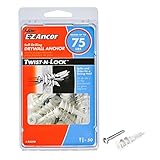
I remember the first time I hung a shelf in my new apartment. I grabbed a couple of screws, figured they’d be fine, and drilled straight into the wall. Thirty minutes later, the shelf, along with my favorite ceramic vase, was on the floor. It was a harsh lesson: not all walls are created equal, and sometimes, you absolutely need more than just a screw. That’s where the humble heroes of home repair come in: are anchors for drywall really necessary? My vase says yes. If you’re tired of things crashing down, let’s talk about what actually works.
Why You Can’t Just Screw Into Thin Air
Look, I get it. When you’re trying to hang a picture frame or a small piece of decor, the idea of wrestling with little plastic doodads or metal contraptions can feel like overkill. It’s tempting to just grab a screw, eyeball the drywall, and hope for the best.
I’ve been there. I’ve bought those fancy, minimalist wall shelves that come with tiny screws, and I’ve thought, ‘This is too small to need anything fancy.’ Then I remember the sound of that vase hitting the hardwood floor.
Drywall itself is basically compressed gypsum plaster between two sheets of paper. It’s not exactly a load-bearing material. It’s designed to be lightweight and easy to install, not to support the weight of your entire book collection or a flat-screen TV.
When you just drive a screw into drywall, you’re relying on the paper and the gypsum itself to hold. Over time, vibration, the sheer weight of whatever you’ve hung, or even just a good nudge can cause the screw to pull out, taking a chunk of drywall with it. It’s like trying to anchor a boat with a piece of string; it might hold for a while, but eventually, the sea will win. That’s why anchors exist.
They’re designed to spread the load, grip into something more substantial behind the drywall, or expand to create a secure point. Without them, you’re basically just decorating a ticking time bomb.
The Different Kinds of Drywall Anchors and Who They’re For
There’s a whole zoo of these things out there, and honestly, it’s enough to make your head spin. But once you break them down, it’s not so bad. For light-duty stuff – think small pictures, calendars, maybe a lightweight coat hook – the basic plastic expansion anchors are your go-to.
You drill a hole, tap the anchor in, and then screw into it. They’re cheap, readily available, and work fine for what they are. Just don’t expect them to hold up your entire entertainment center. Then you’ve got your self-drilling or screw-in anchors.
These are often made of nylon or metal and have a threaded end that you screw directly into the drywall. They’re a step up from the basic plastic ones, offering a bit more holding power and often requiring no pilot hole if you’ve got a decent drill. They can be a real time-saver. For anything with a bit more heft – shelves, curtain rods, bathroom fixtures, smaller TVs – you’re probably looking at toggle bolts or molly bolts.
These are the heavy hitters. Toggle bolts have a spring-loaded wing that expands behind the drywall once you pull the screw through. (See Also: Can Concrete Anchors Be Used In Brick )
Molly bolts are similar but often have a sleeve that expands. They provide a much stronger hold because they distribute the weight over a larger area of the wall. I’ve used molly bolts to hang substantial bookshelves, and they’ve held up beautifully.
When you’re choosing, always look at the weight rating. Manufacturers usually provide this, and while I’m not one to blindly trust every number on a package (more on that later), it gives you a ballpark. If you’re hanging something that weighs 10 pounds, don’t grab anchors rated for 5 pounds. Simple math, really.
And if you’re truly unsure, err on the side of a stronger anchor; it’s better to have too much holding power than not enough.
| Anchor Type | Best For | Holding Power (Opinion) | Ease of Use |
|---|---|---|---|
| Plastic Expansion | Lightweight decor, small frames | Basic, good for very light items | Easy – drill, tap, screw |
| Self-Drilling/Screw-in | Medium-light items, small shelves | Decent, better than basic plastic | Very Easy – screw directly in |
| Toggle Bolts/Molly Bolts | Shelves, curtain rods, TVs, heavy items | Excellent, spreads load effectively | Moderate – requires a larger hole, can be fiddly |
| Conical/Threaded Inserts | Heavy items, repeated use, furniture | Superb, very secure, almost like wood | Moderate – requires precise hole and tapping |
The ‘everyone Says This’ Fallacy: When Common Advice Misses the Mark
Here’s something that grinds my gears: the way some DIY tutorials will just casually say, “Oh, just use a couple of those plastic anchors; they’re fine.” No. They’re often not fine, especially if you’re a bit heavy-handed or the drywall is older and a bit crumbly. The real issue is that most people don’t realize how much weight ‘lightweight’ actually is.
A framed mirror that looks like it weighs nothing? Add the glass, the frame, and the sheer surface area, and it can surprise you. My contrarian opinion is this: if you’re hanging anything you’d be genuinely upset if it fell and broke, you should probably over-engineer your anchor choice.
That means opting for a toggle bolt or a molly bolt even for things that might be okay with a plastic anchor. Why? Because the difference in effort is minimal compared to the potential disaster of a fallen item. I once saw a friend hang a fairly heavy antique mirror using only those cheap plastic anchors.
It lasted about six months before one side gave way, leaving a horrible, jagged hole and a cracked mirror. He learned a hard lesson that day about respecting the limits of drywall.
It’s not about being overly cautious; it’s about being realistic. The common advice often assumes perfect conditions: new, firm drywall, perfectly installed, and a load that’s distributed evenly. That’s not always the reality in older homes or even in apartments where the walls might have been patched a dozen times.
My Epic Fail: The Time I Trusted the Wrong Anchor
Okay, story time. I was installing a new kitchen backsplash, and I figured I’d get clever. I bought these fancy, low-profile screw-in anchors designed for tile. The packaging showed them holding up cabinets, looking all smug and capable. (See Also: Can Cords Be Used To Make Anchors Climbing )
I was thrilled because they promised a clean look, no visible plastic. I installed them, feeling like a pro, and then hung a couple of relatively light upper cabinets. For about a week, everything was peachy. Then, one morning, while I was making coffee, one of the cabinets let out this horrifying groan, and the whole thing sagged down, tearing a massive chunk out of the drywall and leaving my beautiful new tile cracked.
It turns out those ‘fancy’ anchors had a important flaw: the threads were too fine, and the drywall just sort of crumbled around them under sustained load. They didn’t grip; they just spun and ripped. I should have stuck with a more traditional toggle bolt or even just a good old-fashioned molly bolt.
The sheer embarrassment and the cost of repairing the tile and drywall were a brutal reminder that sometimes the simplest, most proven methods are the best. I learned to check reviews specifically for the type of wall material, not just the anchor’s general rating.
The price of a good anchor is peanuts compared to fixing a mess like that.
How to Actually Use Anchors for Drywall Like a Pro (or at Least Not a Disaster)
So, you’ve got your anchors, you’ve got your item. What’s next? First, read the damn instructions.
I know, I know, it’s tempting to just wing it, but different anchors have different requirements. For most plastic or self-drilling types, you’ll need a drill bit of the size specified on the package. For toggle bolts and molly bolts, you’ll need a larger hole, and sometimes the anchor itself acts as the template.
Mark your spot clearly. Use a level! Nobody wants a crooked shelf, no matter how securely it’s hung. Drill your pilot hole.
If you’re using plastic anchors, gently tap them in with a hammer until they’re flush with the wall. If they don’t go in easily, you might have the wrong size bit or the drywall is too hard – don’t force it. For self-drilling ones, just screw them in until the collar is flush.
For toggles and mollies, you’ll drill a bigger hole, push the anchor through (the toggle wings might snap open or you’ll push a sleeve down), and then thread your screw. The trick with toggles is to keep the screw snugged up against the wall as you tighten it, so the wings stay engaged. If you’re hanging something heavy, consider using more anchors than you think you need. Spread the load. (See Also: Can Anchors In Your Shoulder Break )
And for the love of all that is holy, double-check the weight rating. I’ve learned this the hard way, and you don’t want to learn it with your TV. I’ve found that using a stud finder first is always a good idea.
If you can hit a stud, do it! That’s the absolute strongest attachment you can get.
Drywall anchors are your backup for when studs aren’t an option.
People Also Ask: Getting Your Specific Questions Answered
Can I Use Drywall Anchors for a TV Mount?
For a TV mount, it’s a hard NO on standard drywall anchors alone. TVs are heavy and can cause catastrophic failure. You must mount a TV directly into wall studs. If studs aren’t perfectly placed, you’ll need a heavy-duty TV mount designed to span between studs or incorporate specialized bracing systems. Drywall anchors are simply not designed for the sustained dynamic load of a television.
How Much Weight Can a Drywall Anchor Hold?
This varies wildly by type and quality. Basic plastic anchors might hold only 5-10 pounds. Self-drilling anchors can go up to 20-30 pounds. Heavy-duty toggle or molly bolts can hold anywhere from 50 to over 100 pounds each, but this is highly dependent on the specific anchor and the condition of your drywall. Always check the manufacturer’s stated weight rating for the specific anchor you’re using and understand that these are often best-case scenario numbers.
What Is the Strongest Type of Drywall Anchor?
Generally, the strongest types are large toggle bolts and some heavy-duty self-drilling metal anchors designed for significant weight. True toggle bolts, with their large wings that spread out behind the drywall, distribute weight over the largest surface area, making them exceptionally strong. Specialized threaded inserts or conical anchors that bite deeply into the gypsum can also be very strong, especially for applications where the fixture might be removed and reinstalled.
Can You Put Drywall Anchors in the Same Hole?
It’s generally a bad idea to put new drywall anchors in the exact same hole as old ones, especially if the old anchor failed or the hole is already enlarged. The drywall material in that area is likely compromised. You’ll need to patch the old hole with drywall compound, let it dry completely, sand it smooth, and then drill a new hole slightly offset from the original location to make sure a secure hold.
Final Thoughts
So, are anchors for drywall a necessity? In my book, for anything beyond a feather-light picture frame, the answer is a resounding yes. That little bit of extra effort and cost upfront can save you a world of headache, damaged belongings, and ugly holes in your wall. Don’t be the person who learns this lesson the hard way like I did with my cabinets. Always assess the weight of what you’re hanging and choose an anchor that’s rated for significantly more than you think you’ll need.
My final advice is simple: when in doubt, go stronger. A good toggle bolt is often worth its weight in gold, and it’s not that much harder to install than the flimsy plastic ones. Spend five extra minutes picking out the right anchor, and you’ll sleep a lot better knowing your stuff isn’t about to take a nosedive.
Next time you’re hanging something, take a moment, grab the right tools, and do it right. Your walls, and your possessions, will thank you.