I still have the scars. Not literal ones, thankfully, but the phantom ache of wasted hours and the ghost of that picture frame that plummeted to the floor, taking half a roll of toilet paper with it. It was a simple shelf, a few books, a small plant. What could go wrong? Apparently, everything. That’s when the question really hit me, the one I bet you’re asking right now: are anchors needed for drywall shelves?
The short, blunt answer is: it depends. But leaning too far on ‘it depends’ can lead to another disaster. Let’s cut through the marketing fluff and the endless DIY videos telling you it’s all sunshine and rainbows. We’re talking about holding stuff up on your wall, and gravity is a harsh mistress.
Drywall’s Weak Foundation: Why It’s Not as Strong as It Looks
Look, drywall itself is basically glorified gypsum plaster sandwiched between paper. It’s great for making smooth walls, painting, and generally looking decent.
But as a structural element that’s supposed to hold significant weight? Not so much. When you screw directly into drywall, you’re basically screwing into that paper and the soft gypsum core. It’s like trying to hang a heavy coat on a piece of cardboard.
It might hold for a bit, especially if the load is light and perfectly distributed, but eventually, it’s going to give way. I learned this the hard way when a shelf I thought was perfectly fine, holding a few lightweight novels, started to sag. The screws were pulling out of the drywall, creating little craters. That’s when I realized just how much I was relying on luck, not engineering.
The key takeaway here is understanding the material you’re working with. Drywall is brittle. It crumbles. It doesn’t have the inherent strength of wood studs or concrete. If you’re lucky enough to hit a stud with your screw or anchor, you’re golden. That stud is a solid piece of wood designed to bear weight. But walls are rarely lined up perfectly with studs where you want to put a shelf. You often end up with drywall anchors as your only recourse. And that’s where the real conversation begins about whether they’re good enough, or if you need something more solid.
Many people think any screw into drywall is fine. They see a shelf go up and stay up for a week, a month, maybe even a year, and they assume they’ve cracked the code. But drywall fatigue is real. Over time, even a static load can stress the material, especially if there are any vibrations or minor impacts. Think about slamming a door nearby – that little jolt can be enough to start the process of failure. It’s not always a dramatic, immediate collapse. Sometimes, it’s a slow, insidious sagging that precedes the big event.
The weight ratings you see on shelves, and even on some anchors, are often under ideal conditions. Ideal conditions usually mean hitting a stud. When you’re only relying on drywall, those ratings become wishful thinking. It’s like a car manufacturer saying a tire is rated for 100 mph; you’re not going to drive it that fast constantly, and there are a lot of other factors that influence its actual performance. The same applies to your shelves. Are anchors needed for drywall shelves? Yes, if you want them to stay up and not turn your prized possessions into floor decorations.
The Humble Anchor: How They Work (and When They Don’t)
Alright, let’s talk about the different types of drywall anchors. They’re not all created equal, and frankly, some of them are downright useless for anything more than a tiny picture frame or a very light coat hook. The most basic ones are those plastic conical things.
You drill a hole, shove it in, and screw into that. They work by expanding slightly and creating a friction fit within the drywall.
They’re cheap, they’re everywhere, and they’re often the first thing people grab. My first experience with these was trying to hang a set of floating shelves that promised ‘easy installation.’ Easy for them, maybe.
For me, it meant three trips back to the hardware store after the first two sets of anchors failed within days. (See Also: Can Concrete Anchors Be Used In Brick )
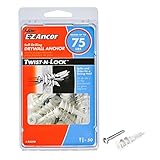
Then you have the screw-in anchors, often made of plastic or metal. These look a bit like a corkscrew. You twist them directly into the drywall, and they create their own threads. They offer a bit more surface area contact than the plastic plugs, which sounds better. I’ve had mixed results with these. For very light loads, they’re okay. But if you’re putting anything substantial on the shelf, the plastic ones can still strip out the drywall if you’re not careful during installation or if the weight shifts. Metal ones are a step up, but they can still be pulled out if the drywall itself is weak or if the load is concentrated.
The real workhorses are the toggle bolts and molly bolts. Toggle bolts have wings that spring open behind the drywall, creating a much larger surface area to distribute the weight. You drill a larger hole, push the toggle through, and then screw the bolt into the toggle. Molly bolts are similar, often made of metal, and they expand behind the drywall as you tighten the screw.
These are generally what you want for any shelf that’s going to hold more than a paperback novel. I remember installing a shelf in my garage for tools using molly bolts, and it’s held up for years without a shudder.
The key is that they spread the load across a much bigger piece of the drywall, reducing the stress on any single point.
However, even these heavy-duty anchors have limitations. They still rely on the integrity of the drywall itself. If the drywall is old, water-damaged, or just plain flimsy, even a toggle bolt might not be enough. Also, the size of the hole you need to drill for toggle bolts can be a bit intimidating for some DIYers, and if you mess up the placement, you’re left with a bigger hole to patch. The common advice is to always check the weight rating on the anchor packaging, but I’ve found those ratings can be optimistic. Always err on the side of caution and choose an anchor rated for more weight than you think you’ll need, especially if you can’t hit a stud.
The Stud Finder Myth and Other Installation Pitfalls
Ah, the stud finder. That magical little box that promises to locate the elusive wooden studs behind your drywall. I’ve owned three different kinds, from cheap battery-operated ones to more expensive laser-guided models. And you know what? They’re about as reliable as a weather forecast in April. Sometimes they work perfectly. Other times, they beep erratically, point to empty space, or declare that the entire wall is a stud. I once spent a solid hour trying to find a stud for a single shelf bracket, only to discover the ‘stud’ I was locating was actually a pipe. That was a fun surprise when I accidentally put a small drill bit through it.
My personal rule now is: if I’m not absolutely certain I’ve found a stud, I assume I haven’t. I’ll use a thin nail or a piece of stiff wire to probe the area after the stud finder gives me a ‘hit.’ If I hit solid wood, great. If I feel resistance and then it goes through, that’s not a stud. This careful probing saved me from drilling into electrical conduits more than once. The bottom line is, don’t trust that gadget blindly. Your wall is a mystery, and you need to investigate thoroughly.
Another common mistake is over-tightening. Whether it’s a plastic anchor, a molly bolt, or even a screw into a stud, cranking down too hard can strip the threads in the drywall or the stud itself. For plastic anchors, it can crack the anchor, rendering it useless. For metal anchors, you can strip the threads inside the anchor or the screw.
It’s a delicate balance. You want it snug and secure, but not so tight that you’re bending metal or cracking plastic.
I learned this when I was installing a heavy-duty shelf in my garage. I was so determined to make it ‘solid’ that I kept tightening the molly bolts.
One of them just kept turning and turning. When I finally got the shelf up, that bolt was basically useless, just spinning in a widened hole. (See Also: Can Cords Be Used To Make Anchors Climbing )
Finally, people often underestimate the weight of what they plan to put on a shelf. You might think, ‘It’s just a few books.’ But a hardcover book can weigh a pound or more. A row of 20 books? That’s 20 pounds. Add a decorative item, and you’re pushing 30 pounds or more, all concentrated on a few anchor points. This is where the rating on your anchors becomes important, but remember those ratings are often for shear strength (hanging straight down) and don’t account for use if something is placed far from the wall. So, when in doubt, always go for stronger anchors and assume your shelf will carry more weight than you initially plan.
When to Skip the Anchors (and When to Absolutely Not)
So, can you ever get away without using drywall anchors? Yes, but only under very specific circumstances. The golden rule here is simple: if you can hit a solid wood stud with your screw, you don’t need an anchor. Studs are the backbone of your wall. They’re designed to hold significant weight, whether it’s from a load-bearing wall or just a standard interior wall. When you screw directly into a stud, you’re creating a strong, reliable connection. I’ve hung heavy TVs, large mirrors, and substantial shelving units using nothing but screws driven firmly into studs.
How do you find studs? The best way, in my opinion, is a combination of a decent stud finder and a small probe. Many stud finders have a magnetic mode that can help locate the metal screws used to attach the drywall to the studs.
Once you think you’ve found a stud, use a thin nail (like a finishing nail) or a stiff piece of wire to gently probe the drywall. Drill a tiny pilot hole first to avoid splintering. If you hit solid wood about 1-1.5 inches deep, you’ve likely found your stud.
If you encounter resistance and then a void, it’s probably not a stud. I’ve also found that you can sometimes feel or see faint lines on the wall where the drywall seams are, and studs are usually located directly behind these seams.
Another scenario where you might skip anchors is if you’re mounting something extremely lightweight. We’re talking about a single picture frame that weighs less than a pound, or a small, empty decorative shelf that will never hold anything. Even then, I’d be cautious. Why risk it for a few extra minutes of work? My general rule of thumb is: if it’s something that could cause damage or injury if it falls, use anchors or hit a stud. This includes anything you plan to put books, electronics, plants, or heavy decorative items on.
The absolute worst time to skip anchors is when you’re dealing with anything that has weight, is placed high up (where falling objects can do more damage), or is in a high-traffic area where it might be bumped. This includes, but is not limited to, kitchen cabinets (though these should always be mounted to studs or with specialized hardware), bathroom shelves holding toiletries, bedside tables mounted to the wall, or anything that will be supporting a significant load. In these cases, the failure of a poorly anchored shelf can be dangerous. I’ve seen shelves holding towels in bathrooms just rip out of the wall, and that’s a relatively light load. So, if in doubt, always use the appropriate anchors. Always.
Choosing the Right Anchor for the Job: A Practical Guide
Okay, you’ve decided you need anchors. Great. Now, which ones? It’s not a one-size-fits-all situation. I’ve made a table to break down some common types and give you my honest verdict based on years of wrestling with these things.
| Anchor Type | Best For | My Verdict |
|---|---|---|
| Plastic Expansion Anchors (Conical) | Extremely lightweight items (e.g., small picture frames, very light coat hooks). | Generally avoid for shelves. They’re flimsy and prone to pulling out. Only for the absolute lightest loads. |
| Screw-in Anchors (Plastic/Metal) | Light to moderate loads (e.g., small floating shelves with few items, small decorative items). | Better than plastic plugs, but still questionable for anything substantial. Metal ones are a bit better but can still strip. |
| Toggle Bolts (Spring Wing) | Moderate to heavy loads (e.g., standard bookshelves, kitchen cabinet doors, heavier decor). Requires a larger hole. | Excellent for drywall. They spread the load effectively. My go-to for shelves I don’t want to risk. |
| Molly Bolts (Metal Expansion) | Moderate to heavy loads (e.g., heavy shelving, mirrors, wall-mounted TVs – check TV mount instructions!). | Very good, especially if you can’t use toggle bolts due to space. They expand well behind the drywall. |
| Heavy-Duty Toggle Bolts/Bolts with Wider Wings | Very heavy loads (e.g., substantial bookcases, heavy equipment on shelves). | The best for serious weight on drywall. Use these when you absolutely cannot miss or hit a stud. |
When you’re at the store, don’t just grab the cheapest pack. Read the packaging carefully. It will usually state a maximum weight capacity. Remember, this capacity is often based on the anchor being installed perfectly into undamaged drywall. I always add a buffer of at least 50% to that rating. So, if an anchor says it holds 20 pounds, I’m only comfortable putting about 10 pounds on it, and that’s if it’s a good quality anchor.
The size of your screw matters, too. The screw that comes with an anchor is usually sized appropriately, but if you’re using your own, make sure it’s long enough to engage properly with the anchor mechanism and doesn’t bottom out too early. For toggles and mollies, the screw needs to be long enough to go through the shelf bracket, the drywall, and into the expanded anchor behind the wall.
A screw that’s too short is a recipe for disaster. I once used screws that were a quarter-inch too short for molly bolts on a shelf in my workshop. The shelf looked solid, but the first time I put a can of paint on it, the screws popped out from the anchor, and the shelf clattered down. (See Also: Can Anchors In Your Shoulder Break )
Lesson learned. Always check screw length.
Finally, consider the material of your shelf and what you’re putting on it. A lightweight floating shelf made of hollow plastic is different from a solid oak plank. If you’re putting heavy items like multiple large books, plants, or electronics, you’re going to need a much more solid anchoring system. For these heavier applications, I almost always opt for toggle bolts or molly bolts. If the shelf brackets themselves are flimsy, that’s another weak point. Invest in good quality brackets that can handle the load and pair them with equally good anchors.
Real-World Shelf Use: What I’ve Learned From Experience
I’ve hung shelves in just about every room of my house, from the kitchen to the garage to the kids’ rooms. My most memorable shelf failure wasn’t a shelf holding books; it was a small, decorative shelf in my bathroom intended for a single bar of soap and a small bottle of hand sanitizer. Seems innocuous, right? Wrong. The anchors I used were those cheap plastic ones that came with the shelf kit. They looked fine when I installed them. A week later, I went to grab the hand sanitizer, and the whole shelf peeled off the wall, leaving two gaping holes and a shattered bar of soap. That was the moment I declared war on flimsy anchors.
Since then, I’ve adopted a philosophy: when in doubt, over-anchor. I’d rather drill an extra hole or two and have a shelf that’s rock-solid than have it fall down and potentially damage what’s on it or the wall itself. For any shelf that’s going to hold more than a very light decorative item, I now use toggle bolts or molly bolts. Even for floating shelves that look sleek and simple, I’m often reinforcing the drywall anchors or making sure I hit studs if at all possible. The aesthetic is great, but functionality and safety come first.
One trick I’ve learned, especially for lighter shelves where you might not need full-on toggle bolts but want more security than basic plastic anchors, is to use multiple screw-in anchors. Instead of using the two screws that might come with the shelf, I’ll often use four or even six smaller screw-in anchors spaced out along the mounting rail. This distributes the weight across more points in the drywall, making it less likely for any single anchor to fail. It’s not as strong as a toggle bolt into a stud, but it’s a damn sight better than two flimsy plastic plugs.
I’ve also learned to be incredibly picky about the shelves themselves. Some cheaper shelves have mounting brackets that are too small or made of thin metal. If the bracket is weak, it doesn’t matter how strong your anchors are; the bracket will bend or break. Always inspect the shelf and its hardware. If the brackets feel flimsy, consider reinforcing them or using stronger anchors than the shelf might technically require. The peace of mind is worth it. Are anchors needed for drywall shelves? For anything that matters, yes. And choosing the right ones and installing them correctly is a must if you want your stuff to stay put.
Are Anchors Needed for Drywall Shelves?
Yes, generally, anchors are needed for drywall shelves unless you are screwing directly into a solid wood stud. Drywall itself is not strong enough to reliably support the weight of most shelves and their contents on its own. Using anchors distributes the weight and provides a secure mounting point.
What Is the Strongest Type of Drywall Anchor for Shelves?
The strongest types of drywall anchors for shelves are generally toggle bolts and molly bolts. Toggle bolts, with their wing-like anchors that spread out behind the drywall, offer the widest surface area for weight distribution. Heavy-duty versions of these are best for significant loads.
Can I Hang a Heavy Shelf Without Hitting a Stud?
You can hang a heavy shelf without hitting a stud by using heavy-duty anchors like toggle bolts or molly bolts. However, it’s always best to hit a stud if possible, as this provides the most secure and weight-bearing mounting. Always check the weight rating of the anchors and never exceed it.
How Much Weight Can a Drywall Anchor Hold?
The weight capacity of a drywall anchor varies greatly by type. Plastic expansion anchors might hold only 5-25 pounds, while heavy-duty toggle bolts can hold 50-100 pounds or more. These ratings are often for shear strength and assume ideal conditions; it’s wise to use anchors rated for more weight than you intend to put on the shelf.
Conclusion
So, to circle back to the original question: are anchors needed for drywall shelves? My answer, based on years of trial and error and more than a few shattered ceramic knick-knacks, is a resounding yes, for most applications. Skipping them is a gamble, and the odds are usually stacked against you. Take the time to understand the different types of anchors, choose the right one for the job, and install it properly. It’s the difference between a shelf that proudly displays your belongings and one that becomes a cautionary tale.
Don’t be afraid to use more anchors than you think you need, especially if you can’t find a stud. A few extra holes in the wall are easily patched, but the damage and mess from a falling shelf are far harder to deal with. Invest in good quality hardware; it’s not worth saving a few bucks when the integrity of your wall hangs in the balance.
My final piece of advice? When you’re standing in the hardware store, looking at that wall of anchors, remember my stories. Choose wisely. Your future self, and your belongings, will thank you for it. Now go forth and hang something sturdy.