I remember the first time I tried to hang a heavy mirror in my apartment. The landlord had these flimsy plastic anchors that came with the screws, and I figured, hey, they’re anchors, they must work. Spoiler alert: they did not. The mirror ended up on the floor a week later, thankfully without shattering. It made me wonder, are anchors only for drywall, or am I missing something?
The honest truth is, most people assume anchors are just for those hollow walls, but the world of fastening is way more complex (and sometimes, way more frustrating) than that. You can’t just jam any old anchor into any old wall and expect it to hold your prized possessions.
It’s a common misconception, and one that’s cost me time, money, and a few minor heart attacks.
When Drywall Isn’t the Enemy: Understanding the Basics
So, let’s get this out of the way: the common, often annoying, hollow-wall anchors – the ones that look like little plastic cones or expanding wings – those are primarily designed for drywall. Why? Because drywall itself is brittle and crumbly. It doesn’t have the structural integrity to hold screws on its own, especially for anything with a bit of weight. These anchors work by expanding behind the drywall, creating a larger surface area for the screw to grip onto. Think of them as a little raft for your screw in a sea of plaster dust.
There are a few types of these drywall anchors. The most basic are the ‘plastic plugs’ or ‘expansion anchors.’ You drill a hole, tap the anchor in, and then screw into it. They’re cheap, readily available, and good for light-duty stuff – think small pictures, lightweight shelves, or curtain rods that don’t have a ton of fabric. I used these for years, until I learned the hard way that ‘light-duty’ is a very relative term. Hanging a coat rack with a dozen winter coats? Yeah, that’s a recipe for disaster with these.
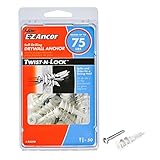
Then you have the ‘self-drilling’ or ‘threaded’ drywall anchors. These are usually made of nylon or metal. They have a screw-like thread that you can spin directly into the drywall with a screwdriver or drill. They’re generally stronger than the basic plastic plugs because they create a more secure connection within the drywall itself, distributing the weight better. I remember switching to these for a TV mount, and while it felt more solid, I still double-checked the specs. They’re better, but they still have their limits, especially if the drywall is old or crumbly.
The biggest mistake people make is assuming ‘drywall anchor’ means ‘any anchor for any wall.’ It’s like saying all tools are hammers. You wouldn’t use a hammer to tighten a screw, and you shouldn’t use a drywall anchor in solid wood or concrete. It’s not designed for it, and it won’t work, or worse, it could damage the wall you’re trying to attach something to.
The key here is understanding your wall material. Drywall is common, but it’s not the only wall material out there. If you’re in an older home, you might have plaster and lath. Plaster is harder, but lath (those wooden strips) can be uneven. Or you might have solid wood paneling, or even concrete or brick walls. Each requires a different approach. For plaster and lath, you might need longer screws or specialized plaster anchors, but often, hitting a stud is the best bet. For solid wood, you’re screwing directly into the wood, no anchor needed unless you want extra holding power.
The question of are anchors only for drywall is really about understanding what an anchor’s job is: to create a secure fastening point in a material that can’t hold a screw by itself. And while drywall is the poster child for this problem, it’s not the only material that might need a little help.
Beyond the Sheetrock: Anchors for Other Wall Materials
Okay, so we’ve established that drywall is a common culprit, but it’s far from the only place you’ll need some sort of anchoring system. The real question isn’t just ‘are anchors only for drywall?’, but ‘what kind of anchor do I need for this wall?’ Because trying to use a drywall anchor on a solid brick wall is like trying to nail jelly to a tree – it just doesn’t work. (See Also: Can Concrete Anchors Be Used In Brick )
Let’s talk about solid walls. If you’re lucky enough to have an older home with solid plaster and lath, or if you’ve got concrete block or brick walls, you’re dealing with a very different beast than drywall. These materials are dense and strong. You don’t need an anchor to expand behind them; you need something to hold into them. This is where masonry anchors come in. These are typically made of plastic, metal, or nylon and are designed to be used with a pilot hole drilled with a masonry bit (which is way tougher than a standard drill bit).
The most common masonry anchors are plastic expansion anchors, similar in concept to drywall ones but built for denser materials. You drill a hole the size specified by the anchor manufacturer, hammer the anchor in, and then drive your screw. These are great for hanging shelves, cabinets, or even a heavy-duty bracket on a brick or concrete wall. I used a set of heavy-duty masonry anchors to mount a massive workbench in my garage, and they’ve held up perfectly, even with me leaning on it all the time. It felt a lot more secure than any drywall setup I’d ever used.
Then there are lag shields and concrete screws. Lag shields are metal sleeves that you tap into a pre-drilled hole. You then drive a lag screw into the shield, and it expands, creating a very strong connection. Concrete screws (like Tapcons) are special screws with hardened threads that cut their own threads into concrete or masonry. These are generally considered stronger and more reliable than plastic anchors for heavy loads. I’ve used Tapcons to mount shelving units in my basement, and the ease of just screwing them in, without a separate anchor, was a huge time-saver.
What about wood? If you’re screwing into solid wood studs, you usually don’t need an anchor at all. A good, long screw driven directly into the stud is your best bet for maximum strength. The wood itself provides the grip. However, if you’re screwing into wood paneling that doesn’t have studs behind it, or if you want extra security for a heavy item mounted on wood, you might consider wood screws with a bit of wood glue in the pilot hole, or even specialized wood anchors designed for this purpose. But for most standard wood applications, just screw directly into the stud.
The takeaway is this: the type of wall material dictates the type of fastener you need. Thinking that all anchors are just for drywall is a dangerous oversimplification that can lead to things falling off walls. You need to identify your wall type first, then choose your fastener accordingly.
The ‘people Also Ask’ Corner: Common Fixes and Confusion
I’ve noticed a few questions popping up that show people are genuinely grappling with this stuff. Let’s tackle some of them head-on.
Can You Hang Heavy Items on Drywall?
Yes, but not just with any old anchor. For heavy items, you absolutely need to find the studs behind the drywall and screw directly into them. If you can’t hit a stud in the exact spot you need, you’ll need to use heavy-duty drywall anchors specifically rated for the weight of your item. Toggle bolts or molly bolts are much stronger than plastic anchors because they distribute weight over a larger area of the drywall on the back. Always check the weight rating on the anchor packaging and err on the side of caution.
How Do I Find Studs in My Wall?
The easiest way is with a stud finder. You can get electronic ones that beep when they detect wood or metal studs. Alternatively, you can tap on the wall; it will sound hollow in the empty spaces and more solid when you hit a stud. You can also look for clues like electrical outlets or light switches, which are almost always mounted on a stud. Sometimes, you can even see faint outlines of studs or nail/screw heads on the wall if the drywall tape is visible.
What Is a Toggle Bolt?
A toggle bolt is a type of anchor that’s great for heavy-duty hanging on drywall. It consists of a bolt with a spring-loaded, winged ‘toggle’ on one end. You drill a larger hole, push the toggle through with the bolt, and it springs open behind the drywall. You then tighten the bolt, and the toggle pulls against the back of the drywall, creating a strong hold. They require a bigger hole than most other anchors, but they can hold significantly more weight. (See Also: Can Cords Be Used To Make Anchors Climbing )
It’s this kind of problem-solving that makes DIY projects less of a headache. People ask these questions because they’ve run into walls (literally and figuratively) and are looking for real solutions, not just generic advice.
The Contrarian View: When Less Is More (and Sometimes, Nothing Is Best)
Here’s a hot take for you: everyone obsesses over anchors, but often, they’re completely unnecessary, and sometimes, they actually weaken the connection. Everyone says, ‘Oh, you need an anchor for that!’ And yeah, a lot of the time, they’re right. But I’ve seen people use anchors when they absolutely didn’t need to, especially in solid wood.
My contrarian opinion is this: before you grab an anchor, check if you can hit a stud or a solid structural element. For instance, if you’re hanging a shelf on a wall where you know there are studs every 16 inches, and you can locate one (or two!), why bother with any kind of anchor? Just drive a good, solid wood screw or a lag screw directly into the stud. The stud is the anchor. It’s part of the building’s structure. It’s designed to hold weight. Anything you put into it will be infinitely stronger than anything you put into just drywall, plaster, or even concrete with a basic plastic anchor.
I used to be the guy who would try to anchor everything. Picture hanging? Anchor. Light fixture? Anchor. Towel rack? Anchor. Then I started working on some older renovations, and I learned to find studs religiously. I installed a massive, heavy bookshelf in my living room that spans about 8 feet. It’s loaded with books, easily hundreds of pounds. I didn’t use a single drywall anchor. I located the studs, used long lag screws, and that thing is rock solid. It would take a literal act of God to pull it off the wall.
The reason anchors can sometimes be bad is that they create a larger hole than the screw alone. If you’re putting an anchor into solid wood, you’re basically drilling a hole that’s too big for the screw, and then you’re filling that hole with a plastic or metal sleeve that doesn’t grip the wood as well as the screw threads would. You’re sacrificing the natural strength of the wood for a system that’s designed for weak materials.
So, my advice? Always, always, always try to find a stud first. Use a stud finder, tap the wall, look for existing holes. If you can hit a stud, skip the anchor. If you can’t, then you assess the wall material and choose the appropriate heavy-duty anchor. But don’t default to anchors. They’re a solution for a problem, not a universal requirement.
A Practical Comparison: When to Use What
Deciding which fastener to use can be overwhelming. It’s not just about drywall versus not-drywall; it’s about the load, the material, and the environment. Here’s a quick rundown of common anchor types and my opinion on their best use cases. This isn’t exhaustive, but it covers the most frequent players you’ll encounter.
| Anchor Type | Best For | My Verdict (Usefulness/Strength) | Notes |
|---|---|---|---|
| Plastic Expansion Anchors (Cones) | Light-duty items on drywall (small pictures, light decor) | ⭐ (Low) – Okay for the absolute lightest loads. Easy to strip out. | Very common, very cheap. Not for anything that could cause injury if it falls. |
| Self-Drilling/Threaded Drywall Anchors (Nylon/Metal) | Medium-duty items on drywall (shelves, small cabinets, curtain rods) | ⭐⭐⭐ (Medium) – Decent holding power for their ease of use. | Good balance of strength and ease of installation. Be careful not to overtighten. |
| Toggle Bolts (and Strap Toggles) | Heavy-duty items on drywall (TV mounts, large shelves, heavy mirrors) | ⭐⭐⭐⭐⭐ (High) – Excellent for distributing heavy loads across drywall. | Requires a larger hole. Can be fiddly to install but are very secure. Strap toggles are easier for tight spaces. |
| Molly Bolts | Medium-to-heavy duty on drywall (cabinets, heavier shelves) | ⭐⭐⭐⭐ (High) – Similar to toggle bolts but often have a sleeker profile. | Expand behind the wall. Can sometimes require a bit more finesse than toggles. |
| Masonry Anchors (Plastic/Metal Expansion) | Medium-to-heavy duty on brick, concrete, block | ⭐⭐⭐⭐ (High) – Reliable for solid wall materials. | Requires a masonry drill bit. Make sure the hole size is correct for the anchor. |
| Concrete Screws (e.g., Tapcon) | Heavy-duty on concrete, brick, block (mounting brackets, structural items) | ⭐⭐⭐⭐⭐ (Very High) – Very strong, easy to install, and reliable. | Cut their own threads. Often the best choice for permanent, heavy fixtures in masonry. |
| Lag Screws (into studs) | Heavy-duty on wood studs (shelving, cabinets, structural connections) | ⭐⭐⭐⭐⭐ (Extremely High) – The gold standard for wood framing. | Always use a pilot hole. The stud is the anchor. |
This table should give you a clearer picture. The key is matching the anchor’s capability to the wall’s material and the item’s weight. Don’t skimp here; a few extra bucks on the right fastener saves you a lot of potential grief. I learned this after a shelf loaded with books decided to make a break for freedom one afternoon, taking a chunk of drywall with it. Not fun.
Common Mistakes and How to Avoid Them
People mess up fastening for a bunch of reasons, and it usually comes down to either not understanding the materials or not respecting the weight. So, let’s talk about the traps I’ve fallen into and seen others fall into, so you don’t have to. (See Also: Can Anchors In Your Shoulder Break )
The biggest mistake, and we’ve touched on this, is assuming all anchors are created equal or that they’re only for drywall. This is false. Using a plastic drywall anchor in concrete won’t hold anything because the concrete is too hard for the anchor to expand. It’ll just spin or break. Conversely, using a masonry anchor in drywall is overkill and might even damage the drywall itself.
Another common error is not matching the anchor to the weight of the item. Manufacturers put weight ratings on anchor packaging for a reason. They’re not just suggestions. I once tried to hang a fairly heavy mirror using self-drilling drywall anchors rated for 20 pounds. The mirror was probably 30-35 pounds. It held for about two weeks before it started to sag, and I had to remove it and use toggle bolts. It’s not worth the risk of the item falling and breaking, or worse, hurting someone.
Ignoring the wall material’s condition is also a huge mistake. Is the drywall old and crumbly? Is the plaster cracking? If the wall itself is compromised, even the strongest anchor might not hold because the material it’s embedded in is failing. In these cases, you might need to patch the wall, reinforce it, or find a different hanging spot altogether. I had a situation where I was trying to hang a TV bracket, and the drywall was soft and spongy behind the paint. No anchor was going to save that. I had to cut out a section and reinforce it with a piece of plywood screwed into the studs before I could even think about mounting the TV.
Over-tightening is another subtle killer. For many anchors, especially plastic ones, if you crank the screw in too hard, you can strip the threads within the anchor itself, or crack the anchor, rendering it useless. This is especially true for self-drilling types. You want it snug, not like you’re trying to screw it into steel. For toggle bolts, you want the toggle to be seated firmly against the back of the drywall, but you don’t need to Hulk-smash it.
Finally, not using the right drill bit size is a recipe for disaster. Each anchor type has specific instructions on the diameter of the hole you need to drill. Too small, and you won’t get the anchor in or it will bulge the drywall. Too large, and the anchor won’t have enough material to grip onto. Always read the instructions and use the recommended drill bit size. It sounds basic, but you’d be surprised how many people just grab a drill bit that looks about right.
Final Thoughts
So, to answer the lingering question: no, anchors are absolutely not only for drywall. While they are a lifesaver for those hollow walls, they are just one type of fastener in a much larger toolbox designed for a variety of materials. From brick and concrete to solid wood, different situations call for different solutions.
The key takeaway is always to assess your wall material and the weight of what you’re hanging. Don’t just assume any old anchor will do. Invest a little time in understanding your wall, and you’ll save yourself a lot of potential headaches (and broken items) down the line. It’s about using the right tool for the job, and that applies just as much to fasteners as it does to anything else.
Next time you’re staring at a blank wall with something heavy in hand, take a moment. Figure out what you’re dealing with. You might be surprised at how much stronger and more secure your project can be when you move beyond the simple drywall anchor.