I remember staring at a hollow wall, a heavy mirror in my hands, and wondering, ‘Can I just stick this thing in here?’ The answer, as I learned the hard way with a lopsided reflection and a cracked plaster surface, was a resounding ‘no.’ It’s a question many DIYers grapple with: are anchors used for studs, or do they have a different purpose entirely? It’s not as straightforward as you might think, and getting it wrong can lead to a world of frustration and damaged walls.
My first attempt at hanging something substantial involved pure optimism and a prayer. Spoiler alert: prayers don’t hold up drywall. This whole anchor business is about understanding what’s behind your wall. Are you hitting solid wood, or are you just drilling into empty space?
Why You Can’t Just Screw Into Empty Space
Let’s cut to the chase: are anchors used for studs? No.
Not in the way you’re probably thinking. If you’re lucky enough to find a stud – that solid piece of wood or metal framing inside your wall – you generally don’t need an anchor. A good, long screw driven directly into a stud is your strongest bet.
Think of it as the heavyweight champion of wall-hanging. It’s what professionals rely on for anything that needs serious support, like heavy cabinets, TVs, or even structural elements.
But here’s the catch: studs aren’t conveniently placed every six inches where you might want to hang a picture or a shelf. Most of the time, when you’re drilling into a wall, you’re hitting drywall. And drywall, bless its flimsy heart, is basically glorified plasterboard.
It’s strong enough to hold paint and wallpaper, but it’s got the structural integrity of a wet paper towel when it comes to supporting weight on its own.
When you try to screw directly into drywall without hitting a stud, the screw just spins. It has nothing to bite into. The weight of whatever you’re hanging will eventually pull the screw right out, often taking a chunk of drywall with it.
I learned this the hard way when I decided a fairly large, framed piece of art needed to go exactly in the middle of a wall, far from any stud. I used the screws that came with the frame, drilled into what felt like… nothingness.
Within a week, the picture was hanging at a jaunty, unintentional angle, and a small, sad hole was forming around the screw head. That’s where anchors come in. They are specifically designed to create a secure fastening point in hollow walls where studs are absent. They expand, grip, or wedge themselves into the back of the drywall, providing a solid base for your screw to hold onto.
So, while they aren’t used for studs, they are absolutely indispensable when you can’t reach a stud.
Understanding your wall’s anatomy is key. You can tap on the wall and listen for a solid thud (stud) versus a hollow sound (empty space). Stud finders, electronic or magnetic, are also your friends here. But even with a stud finder, you’ll often find yourself in a situation where the ideal spot for your item is smack in the middle of a stud-less expanse of drywall.
That’s the moment you reach for the anchor. It’s a workaround, a clever solution to a common building design oversight. Without anchors, hanging anything heavier than a feather in most interior walls would be a gamble. They are the unsung heroes for anyone trying to personalize their space without relying solely on the luck of the stud placement.
The Anatomy of an Anchor: What’s Really Going on?
Okay, so anchors aren’t for studs. What are they, then? They’re basically little gizmos designed to give your screw something solid to grip when there’s nothing behind the drywall. Think of them as creating a temporary, localized stud for your screw. There are a bunch of different types, and they all work on slightly different principles, which is why one type might be great for a light mirror but a terrible idea for a bookshelf. The common thread? They all need to expand, wedge, or otherwise secure themselves to the back of the drywall or plaster.
You’ve got your basic plastic expansion anchors. You drill a hole, shove the plastic plug in, and then screw into it. (See Also: Can Concrete Anchors Be Used In Brick )
As the screw goes in, it pushes outwards on the plastic, making it expand and wedge against the drywall. They’re cheap and okay for very light stuff – like a small picture frame or a lightweight coat hook. Then there are toggle bolts.
These are the heavy hitters for hollow walls. You drill a hole, often a bit larger, and then insert a mechanism with spring-loaded wings that fold out behind the drywall once it’s through the hole. You then screw into the bolt, and those wings provide a huge surface area of support.
They’re fantastic for heavier items, but you need a big enough hole to get them through. Another popular one is the molly bolt, which is similar to a toggle bolt but has a sleeve that expands behind the drywall and grips it.
These are great because they often have a neat, finished look on the front.
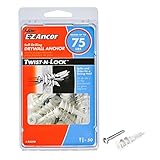
I’ve personally had a few surprises with anchors. Once, I used what I thought was a heavy-duty plastic anchor for a modest-sized mirror. It held for about six months, then just… gave up. The plastic had apparently fatigued, or maybe the screw had just worked its way loose. That’s when I discovered the world of self-drilling anchors, often made of metal. You just screw them directly into the drywall without pre-drilling, and they create their own threads. They’re super convenient for lighter loads, but I’m still a bit skeptical about their long-term holding power for anything truly heavy compared to a toggle or molly bolt.
The key takeaway here is that the anchor’s material and design dictate its strength. Plastic is generally for light loads. Metal, especially with expansion mechanisms like toggles or mollies, is for moderate to heavy loads. Always, always check the weight rating on the anchor’s packaging. They usually provide a dry-wall-only rating and a stud-supported rating. You want the dry-wall-only number, and you want to be well under it for safety. My rule of thumb is to buy an anchor rated for at least double what I plan to hang. Better safe than sorry, especially when your TV is on the line.
Choosing the Right Anchor: It’s Not One-Size-Fits-All
This is where most people trip up. They grab the first pack of anchors they see at the hardware store, assuming they’ll all do the same job. Big mistake.
Using the wrong anchor is almost as bad as using no anchor at all. It’s like trying to use a thumbtack to hang a brick – it’s just not built for the task. So, how do you pick?
First, you need to know how much weight you’re hanging. Be honest with yourself. That fancy full-length mirror might look light, but add the frame and the glass, and it’s heavier than you think. Always overestimate.
Second, consider the wall material. Are you dealing with standard drywall, plaster, or something else? Plaster can be more brittle and prone to crumbling, so you might need specific plaster anchors or to be extra careful with your hole size.
Here’s a breakdown of what I typically reach for, and when:
| Anchor Type | Best For | Weight Capacity (General) | My Verdict |
|---|---|---|---|
| Plastic Expansion Anchors | Very light items (small pictures, posters) | Up to 5-10 lbs | Use only if I have absolutely no other option for a tiny item. Easily fails. |
| Self-Drilling Anchors (Metal/Plastic) | Light to moderate items (shelves with few items, medium pictures) | 15-30 lbs (varies greatly by brand/type) | Convenient for quick, light jobs. Good for a quick fix, but I’m wary for anything substantial. |
| Toggle Bolts (Spring-wing, Strap) | Moderate to heavy items (shelves, cabinets, larger mirrors, TVs) | 50-100+ lbs (depending on size and wall condition) | My go-to for anything I want to feel really secure. Requires a larger hole but the holding power is fantastic. |
| Molly Bolts | Moderate to heavy items (similar to toggle bolts, often look cleaner) | 30-75+ lbs (depending on size) | Great alternative to toggles, especially if you prefer a cleaner look on the wall. Good for shelves and decorative items. |
When in doubt, go for the toggle bolt. They are the workhorses of the anchor world for hollow walls. I remember trying to hang a substantial antique mirror in my entryway. I used toggle bolts, and that thing is solid as a rock. It’s been up for three years now, and I don’t even think about it. Contrast that with a time I tried to hang a rather heavy floating shelf with just those basic plastic anchors – huge mistake. The shelf sagged dramatically within days, and I ended up having to patch the wall and start over with toggle bolts. It’s a lesson in respecting the weight ratings and the different mechanics of each anchor type.
Remember to always use the screw that comes with the anchor, or one of the exact same diameter and length. The anchor is designed to work with that specific screw. If you use a different screw, you could compromise its ability to expand or grip properly. And for plaster walls, be aware that they can be more prone to cracking. Sometimes, drilling a pilot hole slightly smaller than the anchor can help prevent excessive crumbling. It’s all about finding that balance between creating a secure hold and not damaging the wall in the process.
Common Mistakes and How to Avoid Them
I’ve made my fair share of mistakes when it comes to hanging things, and it usually comes down to one of a few common blunders. The biggest one, as we’ve touched on, is using the wrong anchor for the job. Thinking that a tiny plastic anchor can hold up a 50-pound mirror is just setting yourself up for a disaster. I once saw a friend’s TV fall off the wall because they used anchors that were clearly not rated for that kind of weight. It was a mess, and thankfully, no one was hurt, but that expensive TV was toast. That’s why checking weight ratings is a must. (See Also: Can Cords Be Used To Make Anchors Climbing )
Another common error is not drilling the correct size hole. If the hole is too small, you’ll struggle to get the anchor in, potentially damaging the drywall or the anchor itself. If the hole is too big, the anchor won’t have enough material to grip onto, and it’ll just spin loosely in the wall. Always follow the anchor manufacturer’s instructions for drill bit size. They usually specify it right on the package. I’ve been guilty of eyeballing it, and it’s rarely worked out well. Especially with toggle bolts, where the hole needs to be large enough for the folded wings to pass through, getting the size wrong means you’re either forcing it and risking damage, or it’s too loose.
Over-tightening is another sneaky problem. When you’re screwing into an anchor, you want it snug and secure, but you don’t want to strip the threads or crack the drywall around it. This is particularly true with plastic anchors and some metal ones. Just get it firm. If it feels like you’re forcing it too much, stop. You might be damaging the anchor’s ability to hold. On the flip side, under-tightening is just as bad – the item you’re hanging will be wobbly and could eventually fall. You need to find that sweet spot where it’s firm but not strained.
Finally, people often forget about the material behind the drywall. We’ve talked about studs, but what about electrical wires or plumbing?
It sounds obvious, but it’s astonishing how many people will drill blindly without considering what might be lurking in the wall. Always use a stud finder that also detects live electrical wiring and metal pipes.
It’s a simple step that can prevent a costly and dangerous accident. I had a scare once where my stud finder indicated something in the wall where I wanted to hang a shelf. I decided to investigate further with a small exploratory hole, and sure enough, there was a junction box for some old wiring I didn’t know about.
Dodged a bullet there. So, before you drill that first hole, know what’s behind your wall.
Real-World Use: When Anchors Save the Day
Let’s get down to brass tacks. When are anchors actually a lifesaver? Pretty much any time you’re mounting something to a hollow wall and you can’t hit a stud.
Think about it: hanging a TV mount? Unless you’re incredibly lucky with stud placement, you’ll need solid anchors, likely toggle bolts or specialized TV mount anchors that are designed for drywall. Trying to install a bathroom shelf for your toiletries or shampoo? That’s going to get wet and heavy.
Drywall alone won’t cut it; you need anchors. I installed a set of floating shelves in my living room to display some books and knick-knacks. The studs were miles away from where I wanted them.
I used heavy-duty toggle bolts, and those shelves are rock solid. I can lean on them without a second thought.
What about hanging kitchen cabinets? This is a big one. While ideally, cabinets are screwed directly into studs, sometimes you might need to add a cabinet in a spot where studs don’t perfectly align. In such cases, you’ll absolutely need heavy-duty anchors, often strap toggles or specialized cabinet anchors, to supplement the stud-mounted screws. The weight of pots, pans, and dishes adds up quickly, and a cabinet failure in the kitchen is a serious hazard and a massive cleanup job. It’s not a place to cut corners or rely on wishful thinking.
Even something as simple as a curtain rod needs to be considered. If the wall anchors aren’t strong enough, you’ll end up with sagging rods and curtains that don’t hang right. I had a neighbor whose curtain rod kept falling down because they used basic plastic anchors.
Every time they opened the curtains, it was a gamble. I suggested toggle bolts, and problem solved.
It seems like a small thing, but when you’re dealing with repeated stress, even lighter items can cause issues if they’re not properly secured. So, whether it’s a lightweight mirror, a heavy mirror, a shelf, a cabinet, or a curtain rod, if you can’t hit a stud, you need an anchor. (See Also: Can Anchors In Your Shoulder Break )
The strength of the anchor needs to match the weight and function of the item you’re hanging.
It’s also worth mentioning that some heavier items, like certain types of wall-mounted desks or large artwork, come with their own specific mounting hardware. Always check the manufacturer’s recommendations. Sometimes they’ll include heavy-duty anchors, or they’ll specify the type of anchor you need. Don’t assume the screws provided are sufficient for drywall-only installation. When in doubt, and especially for anything valuable or potentially dangerous if it falls, err on the side of caution and use a stronger anchor than you think you need. It’s a small investment that saves a lot of potential headaches and damage.
Practical Tips and a Few Word’s of Caution
Alright, let’s talk practical application. You’ve picked your anchor, you know the weight, you’ve checked for wires. What else? Always, always read the instructions. Yes, I know, instructions are boring. But different anchors have different installation quirks. Some you tap in, some you screw in, some require a special tool. Get it wrong, and you’ve wasted an anchor and potentially damaged your wall. It’s worth those five minutes to read the tiny print.
When you’re drilling the pilot hole, especially for toggle bolts, make sure you drill straight. A crooked hole can make it harder to get the anchor through and can weaken the hold. Use a level if you’re hanging something that needs to be straight, like a shelf or a TV mount. This also helps make sure your drill bit stays perpendicular to the wall.
For metal anchors, especially self-drilling ones, don’t go too fast with your drill. You can strip the threads the anchor makes in the drywall if you’re not careful. Slow and steady wins the race. Similarly, when you’re screwing into the anchor to attach your item, don’t crank it down like you’re trying to win a contest. Snug is good. Too tight can strip the anchor itself or the screw head.
A little trick I learned for toggle bolts: when you’re feeding them through the hole, you can sometimes tape the wings to the bolt shaft with a bit of painter’s tape to make them less likely to spring open prematurely while you’re maneuvering them. Once the bolt is through the hole, the tape usually tears away easily, or you can just pull it off. It’s a small thing, but it can save a lot of fumbling in the tight confines of a wall cavity.
Here’s my contrarian take: Forget those flimsy plastic anchors that come with most cheap picture frames or small shelves. They are universally terrible. They hold next to nothing and degrade over time. If you plan on hanging anything that isn’t an actual piece of paper, buy a good set of toggle bolts or molly bolts right from the start. It will save you the frustration of things falling down and the hassle of patching holes later. I’d rather spend $10 on a pack of decent anchors than have a picture frame crash to the floor.
Finally, remember that even the best anchors have their limits. Drywall is not concrete. For extremely heavy items, like a full bookcase or a large appliance that needs to be wall-mounted, you absolutely must anchor directly into studs or use specialized, heavy-duty mounting systems designed for that purpose. Anchors are fantastic for their intended use in hollow walls, but they aren’t a magic bullet for every conceivable weight-bearing situation. Always prioritize safety and structural integrity. If you’re unsure, consult a professional. It’s cheaper than replacing a damaged wall or dealing with an accident.
Frequently Asked Questions About Anchors and Studs
Can I Hang a TV on Drywall Without Hitting a Stud?
Technically, yes, but it’s highly NOT recommended for most TVs. You would need extremely heavy-duty, specialized drywall TV mounts with solid anchors like multiple large toggle bolts. However, the safest and most reliable method is always to mount your TV directly into wall studs. Check your TV mount’s instructions and weight limits carefully. If you can’t hit studs, consult a professional installer or consider a different mounting location.
Do Anchors Work in Plaster Walls?
Yes, anchors generally work in plaster walls, but plaster can be more brittle than drywall. You might need to be more careful when drilling to avoid excessive cracking or crumbling. Some anchors are specifically designed for plaster, or you might find that a toggle bolt or molly bolt, installed carefully, provides good support. Always use the recommended drill bit size and consider drilling a pilot hole slightly smaller than the anchor to minimize damage.
What Is the Strongest Type of Wall Anchor?
For hollow walls (like drywall or plaster), the strongest types of anchors are generally toggle bolts and some heavy-duty molly bolts. These distribute weight over a larger surface area on the back of the wall. Their holding power is significantly greater than simple plastic expansion anchors or self-drilling anchors, making them suitable for heavier items like shelves, cabinets, and even some TV mounts.
Conclusion
So, to finally put this to rest: are anchors used for studs? No, they are used when studs are not available. They are your indispensable allies when you’re navigating the treacherous territory of hollow walls, providing the grip and support that drywall alone can never offer. My own journey from a hopeful DIYer to someone who respects the power of a good anchor involved a few cracked walls and a lot of learning.
Don’t fall into the trap of using the wrong anchor or skipping this vital step. Invest in the right type of anchor for your project – whether it’s a light picture frame or a heavy shelf – and always respect the weight ratings. It’s the difference between a securely hung item and a potential disaster.
Next time you’re staring at a blank wall with something heavy in hand, remember this: find your stud if you can. If you can’t, grab the right anchor. Your walls (and your sanity) will thank you for it.