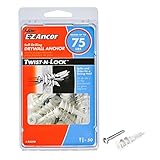
I learned the hard way that some DIY projects are best left to the pros, or at least require a hell of a lot more patience than I initially thought. I was putting up some seriously heavy shelving in my garage, the kind that requires anchors. I figured, ‘What’s the big deal? Concrete anchors are removable, right?’ Famous last words. Turns out, ‘removable’ is a relative term when you’re talking about drilling into a slab of hardened cement.
So, if you’re wondering if concrete anchors are removable, the short answer is yes, but it’s rarely a clean or easy process. It depends heavily on the type of anchor, how long it’s been in, and frankly, how much you value the surrounding concrete. This whole ordeal got me digging into what actually works and what’s just a headache waiting to happen.
This isn’t about fancy jargon or corporate speak. It’s about real-world experience and saving you from making the same mistakes I did. Let’s talk about getting those things out.
Understanding How Concrete Anchors Work (and Why Removal Isn’t Simple)
Look, the basic idea behind a concrete anchor is simple: you drill a hole, shove the anchor in, and when you tighten the bolt or screw, it expands or wedges itself, creating a strong hold. This is why they’re so popular for attaching things to concrete walls, floors, and ceilings – from heavy-duty shelving in a garage to a TV mount on your living room wall. The hold is meant to be permanent, or at least very long-lasting. That’s the whole point of a good anchor, right? To hold stuff up without budging.
But here’s where the ‘removable’ part gets dicey. Most common concrete anchors, like wedge anchors and sleeve anchors, are designed to expand and grip the concrete on a molecular level, or at least with significant mechanical force. Wedge anchors, for instance, have a threaded bolt with a conical end and a sleeve that splits into sections. As you tighten the nut, the bolt is pulled into the sleeve, forcing the sleeve’s sections outward against the walls of the drilled hole.
Sleeve anchors work similarly, with a threaded stud and an expanding sleeve that flares out. These aren’t designed for easy removal; they’re designed to be a permanent fixture. Think of it like a really stubborn splinter – once it’s in deep, getting it out without causing damage is a whole different ballgame.
Then you have lag shields and screw anchors. Lag shields are metal sleeves that expand when you drive a lag screw into them. Screw anchors (sometimes called concrete screws or Tapcons) are specialized screws with aggressive threads that cut their own mating threads into a pilot hole drilled in the concrete. These are generally considered more removable than wedge or sleeve anchors, but ‘more removable’ doesn’t always mean ‘easy.’ The threads can strip, or the anchor itself can seize up in the hole.
My first real ‘uh oh’ moment came when I tried to move a workbench I’d bolted down with what I thought were standard concrete anchors. I spun the bolts, expecting the anchors to back out. Instead, the bolts just kept spinning freely. Turns out, the anchor itself had just turned to dust inside the hole, or the sleeve had completely collapsed and wouldn’t budge. I spent a solid hour with a hammer and chisel, trying to break apart the concrete around the anchor, which, as you can imagine, did not end well for the aesthetics of my garage floor. It looked like a small, angry badger had been excavating.
So, while the promise of removability might be there with some types, the reality is often a battle against the very forces that make them so strong in the first place. The concrete has deformed around the anchor, and you’re often fighting against that. It’s not like unscrewing a regular bolt from a piece of wood where there’s nothing really holding it in place other than friction and the wood’s integrity. Here, the concrete itself has become part of the anchor’s holding mechanism. Understanding this fundamental difference is key to managing expectations when it comes to removing them.
Types of Concrete Anchors and Their Removability Verdicts
Alright, let’s break down the common culprits and what their ‘removable’ status really means in practice. This isn’t just theory; it’s based on wrestling with these things in my own workshop and garage over the years. Forget what the shiny packaging might say; I’ve learned to read between the lines.
Here’s a look at the usual suspects:
| Anchor Type | How it Works | Removability Verdict | My Experience |
|---|---|---|---|
| Wedge Anchors | Bolt pulls into an expanded sleeve, wedging into concrete. | Very Difficult / Destructive | These are the ones that make me break out in a cold sweat. Once they’re in, they’re practically welded. I had to cut one off flush with the concrete once, which was a pain. |
| Sleeve Anchors | Similar to wedge anchors, sleeve expands outwards. | Difficult / Destructive | Almost as bad as wedge anchors. They expand and grip like a vise. Trying to get them out usually means damaging the concrete surface. |
| Lag Shields | Metal sleeve expands when a lag screw is driven in. | Moderately Difficult | Better than wedge/sleeve, but still a pain. Sometimes the sleeve just spins with the screw, or it gets jammed. I’ve had to use pliers and a lot of force. |
| Concrete Screws (Tapcons) | Specialized screws that cut their own threads into concrete. | Moderately Easy to Difficult | These are the best bet for removal, IF you use the correct size pilot hole. If the hole is too big, they won’t grip. If it’s too small, they can break or strip the threads, making them a nightmare. I’ve had success, and I’ve had total failures. |
| Drop-In Anchors | Internal threaded anchor; bolt is dropped in, then a tool expands the internal plug. | Moderately Difficult | These are designed to be flush-mounted and usually require a special tool to set. Removing the internal plug can be tricky, and sometimes you have to destroy the anchor itself. |
| Epoxy/Chemical Anchors | Resin is injected, then a threaded rod or bolt is inserted. | Extremely Difficult / Impossible | These are meant to be permanent. There’s no mechanical expansion. You’re basically cementing a rod into the concrete. Don’t expect to remove these without significant concrete repair. |
My rule of thumb? If it expands, it’s going to be a fight. Concrete screws are the most forgiving, but even they can be stubborn. I once spent half a Saturday trying to back out a stubborn Tapcon from a patio slab. The screw head stripped, and I was left with a metal nub sticking out of the concrete. That was a day for the ‘lessons learned’ journal.
The key takeaway here is to choose your anchor wisely based on whether you ever plan on removing it. If removability is even a remote possibility, steer clear of wedge and sleeve anchors unless you’re prepared to do some serious concrete patching afterward. For most DIYers, concrete screws offer the best balance of holding strength and potential for removal, provided you do your homework on the correct pilot hole size.
The ‘how-To’ of Removing Concrete Anchors: When It Gets Ugly
So, you’ve decided you need to get rid of that anchor. Maybe you’re repurposing the space, maybe you messed up the install, or maybe you just hate the way it looks. Whatever the reason, prepare yourself. Removing concrete anchors isn’t like unscrewing a bolt from a wooden stud; it’s a wrestling match with hardened concrete. (See Also: Can Concrete Anchors Be Used In Brick )
Let’s start with the ‘easier’ ones, like concrete screws (Tapcons). If the screw head isn’t stripped, you’re in luck. Use a good quality screwdriver or impact driver with the correct bit (usually Torx or a specific driver bit).
Apply firm downward pressure and slowly try to back it out. If it’s stubborn, a bit of penetrating oil can sometimes help. Let it sit for 10-15 minutes, then try again.
If the head is stripped, you’ve got a few options. You can try using a screw extractor kit – these are designed to bite into a stripped screw head. It’s hit or miss, though. Another option is to carefully use a Dremel or angle grinder to cut a new slot into the screw head for a flathead screwdriver, but this requires a steady hand and can easily damage the surrounding concrete.
For lag shields, sometimes you can get lucky by using a pair of vise-grips to grab the edge of the shield and try to work it out as you turn the bolt. More often, the shield will just spin with the bolt. In this case, you might have to try and hammer the shield down into the hole, then try to pull the bolt out. If that doesn’t work, you might be looking at using a chisel to break away the concrete around the shield. This is where the concrete damage starts to become unavoidable.
Now, for the real beasts: wedge and sleeve anchors. These are the anchors that make you question your life choices. Since they’re designed to expand and grip, pulling the bolt often just pulls the expansion mechanism tighter. Your best bet here is usually destructive removal.
You can try to hammer the anchor deeper into the concrete, but that just buries it. The most common approach, and frankly the most effective if you want it gone, is to use a rotary hammer with a chisel bit. You’re basically chiseling away the concrete around the anchor until you can pry it out or break it apart. This will absolutely leave a divot or hole in your concrete that will need to be filled.
Another method for wedge or sleeve anchors, if you have the tools, is to cut the bolt flush with the anchor head. Then, use a punch to drive the anchor body down into the concrete, or as deep as it will go. This leaves a hole, but at least the protruding part is gone. Then you can patch over the hole.
I once had to remove several heavy-duty sleeve anchors from a concrete patio to make way for a new garden bed. After struggling for an hour with various tools, I ended up using a small jackhammer attachment on my rotary hammer. It was overkill, messy, and I ended up with several rather large, jagged holes that I then had to patch with concrete repair mix. It took far longer than I ever anticipated, and the finished patch job was… functional, but not pretty. This experience cemented my belief: choose anchors that are appropriate for the job, and if there’s any chance of removal, opt for concrete screws.
Common Mistakes People Make with Concrete Anchors
You know, it’s amazing how many people, myself included, dive headfirst into DIY projects without fully understanding the tools they’re using. When it comes to concrete anchors, there are a few classic blunders that turn a simple installation into a headache, or worse, a costly repair job. Learning these beforehand can save you a ton of grief.
The most common mistake? Using the wrong size pilot hole.
This is especially true for concrete screws (like Tapcons). If the hole is too small, you’re going to struggle to drive the screw, you’ll likely strip the head, or you might even snap the screw off inside the hole. If the hole is too big, the anchor won’t have enough material to grip onto, and your hold will be weak and unreliable.
I once drilled a pilot hole that was just a hair too big for a Tapcon, and the shelf I was installing wobbled like a drunk sailor. Had to pull it all down, drill a new hole next to it (which is another issue), and start over.
It’s infuriatingly simple, but so important. (See Also: Can Cords Be Used To Make Anchors Climbing )
Another big one is not cleaning the hole properly. When you drill into concrete, you create dust. This dust needs to be removed before you insert the anchor. If you don’t clean it out, the anchor won’t seat properly, and its holding power will be compromised. For wedge and sleeve anchors, the dust can get packed into the expansion mechanism, preventing it from working correctly. A good blast of compressed air or a vacuum with a crevice tool is your friend here. I learned this lesson when a heavy mirror I mounted kept shifting. Turns out, the hole was full of fine concrete dust, and the anchor was just sitting loosely.
Over-tightening is another classic. You think, ‘More torque equals stronger hold,’ right? Wrong. For many anchors, especially concrete screws, over-tightening can strip the threads in the concrete or even crack the concrete itself, especially if you’re near an edge. This not only weakens the anchor but can lead to the very failure you were trying to prevent. I’ve seen hairline cracks spiderweb out from anchor points on more than one occasion because someone really cranked down on it.
Then there’s using the wrong type of anchor for the job. People see ‘concrete anchor’ and think they’re all interchangeable. Not even close. Using a light-duty anchor for a heavy-duty application is asking for trouble. Conversely, using a massive, heavy-duty anchor for something light like hanging a picture frame is overkill and makes removal a nightmare if you ever need to. Always match the anchor’s load rating to the weight of the item you’re securing and the conditions it will face (vibration, shear stress, etc.).
Finally, and this ties into the ‘removable’ aspect directly: people often don’t consider future removal. They install the most solid, permanent-looking anchor they can find, thinking, ‘I’ll never need to take this down.’ But life happens. You move, you redecorate, you upgrade. Installing anchors that are unnecessarily difficult to remove is a mistake that future-you will curse you for. Think ahead! If there’s even a whisper of a chance you’ll need to take it down, opt for anchors that are designed with easier removal in mind, like concrete screws.
Real-World Applications: When Are Concrete Anchors a Must?
Despite the headaches of removal, there are plenty of situations where concrete anchors aren’t just recommended, they’re absolutely key. Trying to attach anything substantial to concrete without them is like trying to hold a skyscraper up with chewing gum. They are the workhorses of fastening to concrete for a reason.
In my own life, the most obvious place is the garage. I’ve got heavy-duty shelving units holding tools, storage bins, and equipment that would make the whole structure groan if it were attached to anything less solid. Then there’s the workbench. Mine is bolted down with substantial lag screws into lag shields. It doesn’t budge, even when I’m hammering away at metalworking projects. Without those anchors, that entire heavy steel bench would likely slide around or even tip over under stress, which is a serious safety hazard.
Outdoor projects are another big one. Attaching a railing to a concrete porch or steps? Anchors are a must for safety. Think about deck railings, pergolas attached to a concrete patio, or even securing a heavy outdoor grill or generator. These things are exposed to the elements, often need to withstand wind, and must remain stable. Concrete anchors provide the necessary security.
Inside the house, while I’m generally more cautious about permanent anchors unless absolutely necessary, there are still uses. Heavy-duty TV mounts, especially on larger screens, often require solid anchors. Attaching a large, heavy cabinet to a concrete basement wall, or securing a safe, are prime examples where you need that unwavering, long-term hold. I once helped a friend mount a massive aquarium on a concrete basement floor, and even though the tank itself sat directly on the floor, we used anchors to secure the support structure around it, just for extra peace of mind against seismic activity or accidental bumps.
You’ll also find them used in commercial and industrial settings all the time. Anything from machinery bases bolted to factory floors, to structural elements attached to concrete foundations, to temporary but secure barricades. The construction industry relies on them for everything from framing to securing fixtures. When you see things that absolutely cannot move, especially under load or stress, chances are concrete anchors are involved.
It’s also worth mentioning that sometimes, even when you think you’re attaching to wood or drywall, you might encounter a hidden concrete element. For example, a concrete pillar in a finished basement wall, or a concrete slab that extends up higher than expected. Always tap the wall or floor to listen for that solid, resonant sound that indicates concrete before you start drilling with the wrong bit.
The common thread here is weight, shear force, and safety. If the item you’re attaching is heavy, or if it could cause damage or injury if it fell or moved, and it’s being attached to concrete, you need anchors. The choice of anchor type depends on how permanent you want that attachment to be, but the need for an anchor is usually clear.
When to Call in the Pros or Cut Your Losses
After all this talk about drilling, hammering, and potentially destroying concrete, it’s important to know when to throw in the towel and call for backup, or just accept that some anchors are just not meant to be removed cleanly. I’ve been there, staring at a mangled piece of concrete and a stubborn anchor, wondering if I should just cut my losses.
If you’ve tried the basic removal methods for the type of anchor you’re dealing with, and you’re not making progress, or you’re causing more damage than seems reasonable, it’s time to reassess. For wedge and sleeve anchors, if you’ve tried chiseling around them and they’re still seized, you might be facing a situation where the concrete around the anchor has basically crumbled and fused with it. At this point, you’re looking at a larger concrete repair job anyway, so bringing in a concrete professional might be the smartest move. They have specialized equipment and experience to remove stubborn anchors with minimal collateral damage, or at least to repair the damage effectively afterward. (See Also: Can Anchors In Your Shoulder Break )
Another sign it’s time to call it quits is if you’re unsure about the type of anchor you’re dealing with. Some older homes might have unique or non-standard anchoring systems. If you can’t identify it or understand its mechanism, you risk making the problem worse. A professional will be able to identify it quickly and have the right tools to tackle it.
Safety is also a huge factor. If you’re dealing with an anchor that’s part of a load-bearing structure, or if you’re in a situation where you could injure yourself with power tools, or if there’s any risk of damaging important infrastructure (like pipes or electrical conduits hidden in the concrete, though you should always check for those beforehand), it’s best to step away and call an expert. My rule is: if I’m sweating profusely, cursing the anchor, and contemplating using a sledgehammer, I should probably stop and think about professional help.
Sometimes, the best decision isn’t about removal at all; it’s about acceptance. If you’ve drilled a hole and the anchor is stuck, but it’s in an inconspicuous spot and doesn’t interfere with your plans, you might just have to live with it. You can then try to patch over it as best you can. For instance, if you’re tiling over a concrete floor and a stubborn anchor is flush with the surface, you might just tile over it. It’s not ideal, but it’s a lot less work and stress than trying to dig it out.
I had a situation where a poorly installed anchor was deep in a basement wall, and I needed to hang a cabinet. The anchor was impossible to remove without major damage. So, I drilled a new pilot hole a few inches away, used a stronger anchor for the cabinet, and then simply filled the old hole with hydraulic cement, which hardens incredibly fast and strong. It wasn’t a perfect aesthetic, but it was secure and out of sight. It’s about finding the most practical solution, even if it’s not the ‘perfect’ one.
Frequently Asked Questions About Removable Concrete Anchors
Can You Remove Concrete Anchors Without Damaging the Concrete?
Generally, no, not without some level of compromise. Wedge and sleeve anchors, designed to expand and grip, are particularly difficult. While concrete screws (Tapcons) are the most likely to be removed with minimal damage if installed correctly, there’s always a risk of stripping the screw head or damaging the surrounding concrete, especially if the pilot hole was incorrect.
What Is the Easiest Type of Concrete Anchor to Remove?
Concrete screws, like Tapcons, are generally the easiest to remove, provided they were installed with the correct pilot hole size and the head hasn’t stripped. They are designed to be threaded in and out, unlike anchors that rely on mechanical expansion.
Can I Just Hammer Out a Concrete Anchor?
Hammering an anchor out is rarely effective and often leads to more damage. For expandable anchors like wedge or sleeve types, hammering might drive them deeper or cause the concrete to crack and break apart around them, making removal even harder.
What If the Screw Head on a Concrete Anchor Is Stripped?
If the screw head is stripped, you can try a screw extractor kit, which is designed to bite into damaged screw heads. Alternatively, you might be able to carefully cut a new slot into the head with a Dremel or angle grinder for a flathead screwdriver, but this requires precision to avoid damaging the concrete.
Are Chemical Anchors Removable?
Chemical or epoxy anchors are designed for permanent, high-strength applications. They bond the anchor rod or bolt directly to the concrete using a resin. Removing them is extremely difficult, often impossible, without significant damage to the surrounding concrete, requiring extensive repair.
Conclusion
So, to circle back to the main question: are concrete anchors removable? Yes, some are, but it’s rarely as simple as unscrewing a bolt. You’re often fighting against the very strength that makes them useful in the first place. My advice is always to think ahead. If there’s even a chance you’ll need to take it down, opt for concrete screws and get that pilot hole size perfect. I learned that lesson the hard way, ending up with more concrete dust and frustration than I ever cared for.
If you’re dealing with older, heavy-duty anchors, or if you’ve stripped a head and aren’t comfortable with DIY repairs, don’t be afraid to call in someone who does this stuff for a living. Sometimes, paying a professional to remove a stubborn anchor is cheaper and less stressful than trying to fix the mess you might make yourself.
Ultimately, understanding the type of anchor you’re using and its intended permanence is half the battle. Choose wisely, install carefully, and know when to admit defeat and call for help or accept a less-than-perfect removal.