I remember the first time I tried to hang a heavy mirror. The box said ‘easy to install,’ and I believed it. I hammered in a plastic anchor, screwed it in, and hung the mirror. Looked great. Then, three months later, it didn’t. The whole thing, mirror and mangled anchor, crashed to the floor. I’ve wasted enough money on flimsy hardware over the years to write a book. So, let’s get down to brass tacks: are drywall anchors cumulative?
It’s a question I hear a lot, and the short answer is… complicated. But mostly, no, not in the way you might think. The real issue isn’t some magical cumulative effect; it’s about understanding what these little gadgets are actually doing and where they fail.
Why That Mirror Took a Dive: The Truth About Drywall Anchors
Look, nobody wants to be that person who has to patch up holes in their walls. But the reality is, most of us, myself included, have a fundamental misunderstanding of how drywall anchors work. They aren’t magic. They’re basically wedges or expanders designed to give you something to screw into when you’re not hitting a stud.
That’s it. The common advice to just slap in a few more anchors if one seems loose? That’s often the fastest way to turn a small problem into a big one.
I learned this the hard way when I tried to hang a floor-to-ceiling bookshelf. I figured if one anchor held a small picture frame, a dozen would hold a few hundred pounds. Spoiler alert: they didn’t. The drywall itself is the weak link, and over-stuffing it with anchors just tears it up, creating a bigger, uglier hole than if you’d just used one proper anchor or found a stud.
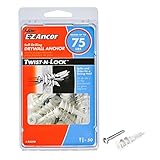
The primary mechanism of most basic plastic expansion anchors is simple: you drill a hole, shove the anchor in, and as you screw in a screw, the anchor expands or flares out behind the drywall. This creates a surface area for the screw threads to grip. It’s a clever idea for lightweight items like small pictures, keys, or very light curtains.
But they have a weight limit, and it’s usually much lower than you’d think. The real danger comes when you start stacking them or putting them too close together. Imagine tearing a piece of paper.
You can poke one hole and it’s fine. Poke ten holes right next to each other, and the whole section just rips out.
Drywall is surprisingly brittle when subjected to shear force, and too many anchors clustered in one area create exactly that scenario. It’s not cumulative in terms of adding strength; it’s cumulative in terms of creating failure points.
When ‘more Is More’ Is Actually ‘less Is Less’
This is where people get it wrong. They see a load rating on a package and think, ‘Okay, if one anchor holds 10 pounds, and I need to hang 30 pounds, I’ll use three anchors!’
That sounds logical, right? Wrong.
That’s like saying if one brick can support a small child, three bricks can support a car. It doesn’t work that way. Drywall anchors, especially the cheap plastic ones, are designed for single points of load distribution. When you group them, you’re not distributing the load; you’re concentrating the stress on a small patch of drywall.
The drywall panel itself has a certain structural integrity. Poking multiple holes in close proximity weakens that integrity significantly. You’re basically pre-damaging the drywall for the anchor that’s about to fail. (See Also: Can Concrete Anchors Be Used In Brick )
The common advice to ‘use multiple anchors for heavier items’ often misses the point. It’s not about the number of anchors in a small area; it’s about the type of anchor and its placement.
For anything more than a lightweight picture frame, you should be looking at anchors designed for higher loads or, ideally, finding a stud. I once saw a guy install a massive flatscreen TV mount using a dozen of those cone-shaped plastic anchors, all clustered together.
The TV lasted about a week before the whole section of wall gave way. It was a disaster.
The anchors themselves were fine; the drywall they were screwed into was pulverized. It looked like a giant, ugly mole had erupted from the wall.
My First Wall-Mounted TV Fiasco (not Recommended)
So, what happened with that TV? Well, it wasn’t mine, but a friend’s. He’d bought a new 55-inch TV and was so excited to get it mounted. He’d picked up a generic mounting bracket and a big pack of those ribbed plastic anchors.
His logic was that the bracket had six screw holes, and he needed to hang a 50-pound TV, so six anchors would be plenty. He carefully drilled his holes, hammered in the anchors, and screwed the bracket to the wall. It seemed solid. He hung the TV.
It looked amazing. A few days later, I was over, and we heard this ominous creaking sound. Before we could even react, the whole bracket, with the TV still attached, ripped clean out of the wall.
Thankfully, it fell onto a sofa, not the floor, but the drywall behind it looked like it had been punched by a giant fist. The anchors were all still in the bracket, but the drywall they had been embedded in was just… gone.
We learned that day that strength in numbers doesn’t apply to cheap plastic anchors in drywall.
The Right Anchor for the Job: It’s Not Just About Holding Power
This is where the real knowledge comes in, and it’s why I’m so adamant about understanding your hardware. Not all anchors are created equal, and ‘cumulative’ isn’t the right way to think about their strength. It’s about how they distribute force and what they’re made of. For instance, toggle bolts are a different beast entirely.
They have wings that deploy behind the drywall, creating a much larger surface area for support. You still can’t just cram them together endlessly, but one toggle bolt can hold significantly more than a handful of plastic anchors. Similarly, molly bolts offer a good balance of strength and ease of installation for medium-duty items like cabinets or shelves. The metal sleeve expands behind the wall, providing a solid, reliable hold.
Then you have screw-in anchors. Some are plastic, but the better ones are metal, often with coarse threads that bite into the drywall. These are generally better than simple expansion anchors for slightly heavier items. (See Also: Can Cords Be Used To Make Anchors Climbing )
They don’t expand in the same way; instead, their threads create a grip. Still, the drywall itself is the limit. If you put too many of these too close, you’re just creating a series of tiny, weak points that can still lead to failure.
The key takeaway is that the ‘strength’ of an anchor isn’t just its own material; it’s how it interacts with the drywall. You need an anchor that uses the drywall’s structure effectively, rather than simply tearing it apart. For truly heavy items, like a wall-mounted TV or a large cabinet, there is no substitute for hitting a stud or using a professional-grade mounting system designed for that specific load.
Trying to ‘cumulate’ cheap anchors is a recipe for disaster.
Anchor Types and My Verdict
| Anchor Type | Typical Use Case | My Verdict | Weight Capacity (Rough Estimate) |
|---|---|---|---|
| Plastic Expansion Anchor | Very light items (small pictures, keys) | Avoid for anything substantial. High failure rate. | 2-10 lbs |
| Ribbed Plastic Anchor | Light items (medium pictures, light shelves) | Slightly better than basic expansion, but still questionable for longevity. | 10-20 lbs |
| Screw-in Drywall Anchor (Plastic/Metal) | Medium-light items (small shelves, decor) | Decent for their price, but check load ratings carefully. Metal ones are better. | 20-30 lbs |
| Toggle Bolt | Medium to heavy items (cabinets, TVs, heavy shelves) | Excellent when studs aren’t available. Requires a larger hole. | 50-100+ lbs (depending on bolt size and wall condition) |
| Molly Bolt | Medium items (curtains, light cabinets, mirrors) | Reliable and good for consistent loads. | 30-50 lbs |
This table is a rough guide, mind you. The condition of your drywall, how you install it, and the specific brand all play a role. But it gives you a general idea of where to start. My personal rule of thumb is this: if I’m even thinking about using more than two anchors in a square foot, I’m doing something wrong, and I should be looking for studs or a different solution.
The ‘find a Stud’ Mantra: Why It’s Not Just Conventional Wisdom
I know, I know. Everyone says, ‘Just find a stud.’ It sounds like the boring, obvious answer, and frankly, finding studs can be a pain.
You need a stud finder, or you’re playing the ‘tap and listen’ game, which is about as accurate as a weather forecast from a magic eight ball. But here’s the blunt truth: when it comes to hanging anything remotely heavy or valuable – your TV, that antique mirror your grandma gave you, kitchen cabinets – finding a stud is, and always will be, the superior method.
It’s not about cumulative strength; it’s about tapping into the structural integrity of your home. Drywall is just a skin; the studs are the bones. Anchors are like putting a bandage on a broken bone – it might look like it’s holding for a bit, but it’s not a real solution.
The reason ‘find a stud’ is so prevalent is that it bypasses the entire problem of anchor failure. A screw driven directly into a solid wood stud can handle hundreds of pounds of shear and pull-out force. This is orders of magnitude stronger than any drywall anchor can provide. I once spent an afternoon trying to find a stud for a heavy quilt rack.
I ended up using my stud finder, marking the spots, and then confirming with a tiny nail poke. It took maybe 20 minutes longer than just screwing in anchors, but knowing that rack and the heavy quilts on it weren’t going anywhere was worth every second. The common advice is right because it’s fundamentally sound engineering, not just a trendy tip.
Don’t fall into the trap of thinking anchors are a substitute for structural support. They are a workaround for when structural support isn’t available, and even then, you need the right workaround.
Common Mistakes That Lead to Drywall Disaster
Beyond the ‘cumulative anchor’ fallacy, people make a host of other mistakes that lead to ripped-out walls. One of the biggest is not using the right size drill bit for the anchor. If the hole is too small, you’ll struggle to get the anchor in, potentially damaging the anchor or the drywall. If it’s too big, the anchor won’t have anything to grip, and it’ll just spin loosely.
Another common error is overtightening the screw. When you’re screwing into an anchor, you’re not trying to torque it down with all your might. (See Also: Can Anchors In Your Shoulder Break )
You want it snug, so the anchor expands properly or its threads engage, but overtightening can strip the threads of the anchor or the screw, or worse, crack the drywall.
I’ve also seen people install anchors in the wrong type of wall. Drywall anchors are for drywall. If you’re trying to hang something on plaster, concrete, or brick, you need entirely different fasteners.
Plaster, especially old lath and plaster, is brittle and requires specific anchors or techniques. Concrete and brick need masonry anchors.
Using a drywall anchor in concrete is like trying to nail Jell-O to a wall – it just won’t work. Finally, there’s the sheer impatience factor. Rushing the job, not reading the instructions, and assuming you know best are all shortcuts that often lead to needing a trip to the hardware store for spackle and paint.
My own impatience once led me to jam a screw directly into a hole that was supposed to have an anchor. It just went right through.
Cue the embarrassing patching job.
The ‘are Drywall Anchors Cumulative’ Faq
Do Multiple Drywall Anchors Add Up to More Strength?
No, multiple drywall anchors placed close together do not add up to proportionally more strength. In fact, they often weaken the drywall in that area, creating a larger failure point. Each anchor creates its own stress concentration, and when clustered, these stresses combine to tear out a larger section of the drywall. It’s better to use one properly rated anchor or find a stud than to rely on numerous weak anchors.
Can I Use Anchors to Hang a TV?
For most TVs, especially larger and heavier ones, using only drywall anchors is a very bad idea. While some heavy-duty toggle bolts might be rated for it, the risk of drywall failure is too high. It’s always best to mount a TV bracket directly into wall studs. If studs aren’t perfectly aligned with your desired TV position, consider using a heavy-duty mounting system designed for such situations, often involving wood or metal bracing behind the drywall.
What’s the Difference Between a Plastic Anchor and a Toggle Bolt?
A plastic expansion anchor works by expanding or flaring out behind the drywall when a screw is inserted, relying on friction and the material’s integrity. A toggle bolt has spring-loaded wings that open up behind the drywall, providing a much larger surface area for support and significantly greater holding power. Toggle bolts are generally much stronger and more reliable for heavier items than plastic anchors.
How Close Can Drywall Anchors Be Placed Together?
There’s no hard and fast rule, as it depends on the anchor type and drywall thickness, but generally, you want to keep anchors as far apart as possible. If you need to support a long item, distributing anchors across a wider area (ideally hitting studs) is better than clustering them. Placing anchors less than 6-8 inches apart significantly increases the risk of the drywall tearing out between them, especially under load.
Are Screw-in Drywall Anchors Any Good?
Screw-in drywall anchors, especially the metal ones with coarse threads, are generally better than basic plastic expansion anchors for medium-duty tasks. Their threads bite into the drywall, providing a decent grip without expanding in a way that can crack the wall. However, they still rely on the integrity of the drywall itself, and their weight ratings should be taken seriously. They are a good option for items that aren’t extremely heavy, but they are not a substitute for studs for significant loads.
Final Thoughts
So, to circle back: are drywall anchors cumulative? No. They don’t add up their strength in a positive, stacked way. Instead, they can create cumulative failure points if you’re not careful. My advice? Use the right anchor for the job, and if there’s any doubt – especially with heavy or valuable items – find a stud. It’s the most reliable, least headache-inducing method in the long run. You’ll save yourself the embarrassment and expense of patching holes.
Don’t be afraid to spend a few extra bucks on better quality anchors if you absolutely can’t hit a stud. A good toggle bolt or a heavy-duty screw-in anchor is a far cry from those flimsy plastic things you get in bulk. And always, always check the weight ratings. They’re there for a reason, and ignoring them is just asking for trouble. Learn from my mistakes and the mistakes of others; your walls (and your belongings) will thank you.