Look, I’ve got a garage full of things that were supposed to be revolutionary and ended up being glorified paperweights. And when it comes to hanging stuff on walls that aren’t solid studs, the question ‘are drywall anchors safe’ pops up a lot. I’ve had shelves groan under the weight of books, only to suddenly decide gravity is a better idea. I’ve also had things hang perfectly for years. So, yeah, I’ve got opinions.
The truth is, ‘safe’ is a relative term when you’re dealing with plaster and gypsum. It’s not about a magic bullet; it’s about understanding what you’re doing and what you’re asking your wall to hold. Let’s cut through the marketing fluff.
The Real Deal with Drywall Anchors: Not All Heroes Wear Capes
The first time I ever needed a drywall anchor, I was in my old apartment, trying to hang a fairly heavy mirror. I just grabbed whatever looked sturdiest from the hardware store – a couple of those ubiquitous plastic ones that flare out. I screwed them in, hung the mirror, and felt pretty smug. Then, about six months later, during a particularly violent thunderstorm (don’t ask), the mirror decided to take a swan dive. Luckily, no one was hurt, but the plaster around the anchor was completely pulverized. That was my first lesson: plastic anchors are fine for lightweight stuff, like a picture frame or a small calendar, but they are NOT your friend for anything substantial.
The whole point of a drywall anchor is to create a larger surface area or a mechanical lock behind the drywall so the screw has something more substantial to grip than just the crumbly paper and gypsum. Think of it like this: a screw alone in drywall is like trying to hold a heavy bag with just your fingertips. It’ll slip.
An anchor gives you a broader grip, or wedges itself in, so the screw has a better chance of staying put. But the type of anchor and the weight you’re hanging are everything.
There are plastic ones, metal ones, screw-in ones, toggle bolts, molly bolts – it’s a whole ecosystem designed to prevent your prized possessions from becoming floor art.
I remember trying to hang a set of upper kitchen cabinets once, a project I was woefully underqualified for at the time. My buddy, who’s a contractor, walked in and just about had a heart attack.
He explained that for cabinets, you don’t just grab random anchors; you find the studs. He said that’s the only truly safe way to hang something that heavy and important.
He wasn’t just being bossy; he was saving me from a potential disaster where those cabinets, full of dishes, could have crashed down. This is where the common advice gets muddled.
Everyone says ‘use anchors,’ but they rarely specify which kind or when the wall itself is the weak link, regardless of the anchor.
My own experience has taught me that the cheaper, simpler plastic anchors are really only good for things that weigh next to nothing. If you can press into the drywall with your thumb, that plastic anchor isn’t going to hold much. For anything heavier – say, a TV mount, a large shelf unit, or indeed, those kitchen cabinets – you’re looking at heavier-duty options, and frankly, sometimes you just have to accept that your drywall isn’t the right material for the job without a stud. This is why the question ‘are drywall anchors safe’ isn’t a simple yes or no; it’s a ‘depends on the anchor, the wall, and what you’re hanging.’
Understanding the Different Types: Beyond the Basic Plastic Cone
Let’s get down to brass tacks. When you walk into the hardware store, you’re bombarded with plastic cones, metal sleeves, and screws that look like they belong on a battleship. Most people grab the cheapest plastic ones because, well, they’re cheap and they come with screws. These are often called ‘expansion anchors.’ You drill a hole, jam the plastic sleeve in, and then screw into it. The idea is that as you screw, the plastic expands or flares out behind the drywall, gripping it. For a lightweight picture frame, they’re usually fine. Think about hanging a single diploma or a small, unframed print. The forces are minimal. (See Also: Can Concrete Anchors Be Used In Brick )
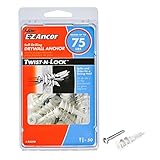
But then you have the screw-in anchors, often made of plastic or metal. These have threads that bite directly into the drywall. They’re generally better than the basic expansion anchors for a bit more weight because they distribute the load over a larger area of the drywall. I’ve used these for things like hanging a light coat rack or a small spice rack. They feel a bit more secure as you screw them in, like they’re actually gripping something. They don’t require a pre-drilled hole of a specific size; you just screw them in with a screwdriver. This convenience factor is a big draw for DIYers.
Moving up the ladder, we get to the real workhorses: toggle bolts and molly bolts. Molly bolts are usually metal sleeves with a threaded shaft. You drill a larger hole, insert the sleeve, and then as you tighten the screw, the sleeve flares out behind the drywall.
They’re pretty solid. Toggle bolts are even more heavy-duty. They have a spring-loaded wing that folds up to go through a drilled hole and then springs open behind the drywall. You then tighten the screw, and that wing acts as a solid brace.
These are the kinds of anchors you’d consider for mounting a TV, a heavy mirror, or bookshelves that will be loaded up. I’ve used toggle bolts to hang a surprisingly heavy antique mirror, and it’s been solid as a rock for years. The key with these is you must drill a hole of the correct size, and the wing needs clearance to flip open behind the wall.
Here’s a little table I’ve put together based on my own trial and error:
| Anchor Type | Typical Use Cases | Weight Rating (Estimate) | My Verdict |
|---|---|---|---|
| Plastic Expansion Anchor | Light pictures, calendars, small decorations | Up to 10 lbs | Good for practically nothing substantial. Use sparingly. |
| Screw-In Drywall Anchor (Plastic/Metal) | Medium-light shelves, coat hooks, small cabinets | 15-30 lbs | A decent upgrade if you can’t find a stud. Better grip. |
| Molly Bolt | Heavier shelves, mirrors, light fixtures | 30-50 lbs | Reliable for moderate loads. Requires careful hole drilling. |
| Toggle Bolt | Heavy shelves, TV mounts, large mirrors, cabinets | 50-100+ lbs | The king of drywall anchors. Handles serious weight if installed correctly. |
It’s important to look at the packaging for weight ratings, but always take those with a grain of salt. My own ‘real-world’ ratings are often a bit more conservative, especially if the drywall is older or compromised. The weight rating is usually for a single anchor, and if you’re hanging something large, you’ll likely need multiple anchors. More anchors spread the load, but they also mean more holes in your wall. It’s a balancing act.
Common Mistakes That Lead to Disaster (and Sad Walls)
The most common mistake I see, and one I’ve definitely made myself, is simply not reading the instructions or, worse, ignoring them. You get an anchor, you see a hole size, and you just drill it. But sometimes, the anchor needs a specific size hole, too big and it won’t expand properly; too small and you’ll never get it in. I once spent twenty minutes trying to force a molly bolt into a hole that was clearly too small, and all I did was mangle the bolt and the drywall. Eventually, I had to re-drill, making the hole even bigger and compromising the anchor’s grip. Lesson learned: follow the darn instructions.
Another massive blunder is using the wrong anchor for the job. People see ‘drywall anchor’ and think it’s a one-size-fits-all solution. So they’ll use those cheap plastic cones to hang a 70-inch TV. This isn’t just a mistake; it’s a recipe for destruction. The drywall itself can only take so much shear force before it crumbles. Even the strongest anchor is useless if the material it’s anchoring into gives way. I’ve seen friends try to hang heavy shelving units with only a few plastic anchors, and within weeks, the shelves were sagging like a tired old mattress. They were surprised when it failed. I wasn’t.
Over-tightening is another sneaky one. For some anchors, especially the plastic expansion types, over-tightening can strip the threads or even crack the anchor, rendering it useless. You want it snug, but not so tight that you feel like you’re going to break something. Conversely, under-tightening means the anchor won’t engage properly behind the wall. It’s a delicate dance. For toggle bolts, you need to make sure the toggle has a chance to flip open. If you’re screwing it in and it feels like it’s just spinning freely without any resistance, the toggle might not be engaged, or you might have drilled the hole too large.
Then there’s the “eyeballing it” method for placement. You want to hang a picture, you hold it up, mark a spot, and drill. But what if that spot is directly over a metal stud or a pipe you can’t see?
Or what if you’re trying to hang something that needs to be perfectly level, and your mark is slightly off? Using a stud finder (even for non-stud locations, as some can detect electrical wires or pipes) and a level are your best friends. Also, understanding your wall material is key. Older homes might have lath and plaster, which is more brittle and behaves differently than modern drywall. (See Also: Can Cords Be Used To Make Anchors Climbing )
You can’t just assume all walls are created equal. My first house had plaster walls, and I quickly learned that anchors designed for drywall often didn’t work as expected, requiring a different approach and a lot more patience.
Finally, and this is a big one for the ‘are drywall anchors safe’ question: underestimating the dynamic load. A static load is when something just sits there. A dynamic load is when something moves, vibrates, or is repeatedly stressed. Think about a towel rack in a bathroom – it gets yanked on. Or a shelf where things are constantly being placed and removed. These actions put more stress on the anchor and the wall than just having something hang passively. Always factor in a buffer for dynamic loads, especially if children or pets are around. They have a knack for testing the limits of your home’s structural integrity.
Real-World Use: When Anchors Are Your Only Option
Let’s be honest, finding a stud every single time you want to hang something is often impossible or impractical. Sometimes, the perfect spot for that art piece or that shelf is smack dab in the middle of a drywall expanse. This is where the ‘best’ drywall anchor isn’t a specific brand or type, but the one that’s appropriate for the weight and the conditions. I’ve learned to keep a variety pack of anchors handy. It’s like having a toolbox for different wall emergencies. I’ve got the cheap plastic ones for that framed photo that weighs less than a feather, the screw-ins for a lightweight spice rack, and a good stash of toggle bolts for anything that matters.
One situation where anchors are almost mandatory is when you’re hanging things in a rental property. Unless you want to forfeit your security deposit for putting too many holes in the wall, you learn to be precise and use anchors that hold well with minimal damage. I remember hanging a heavy mirror in my rented living room. I wanted it centered over the sofa, which meant no studs in sight. I used heavy-duty toggle bolts, carefully measured, and drilled the holes. The mirror has been up for three years now, through a couple of moves within the same building, and it’s still perfectly secure. It gave me peace of mind, knowing it wasn’t going to fall and crack the plaster.
Another area where anchors are often the go-to is in areas where you might not want to commit to a stud, or where studs simply don’t exist. Think about hanging a lightweight television on a bedroom wall that isn’t your primary viewing spot, or mounting a small soundbar. While finding a stud is always ideal for something like a TV, if it’s a smaller, lighter unit and you’re using appropriate, high-capacity anchors like toggle bolts, it can be a perfectly safe solution. I’ve mounted a small 24-inch monitor on a swing-arm bracket in my workshop using heavy-duty screw-in anchors, and it’s held up fine for over a year of adjustments and use. The key is over-engineering slightly: use anchors rated for more than you think you’ll need.
The question ‘are drywall anchors safe’ really boils down to responsible use. It’s not about blindly trusting them, but about understanding their limitations and choosing the right tool for the load. For lightweight items, most anchors will suffice. For anything with significant weight, or anything that will be subject to movement or vibration, you need to be much more discerning. If you’re in doubt, especially for heavy items like TV mounts or large furniture, the answer is always to find a stud or use a professional. But for the everyday items, the right anchor, installed correctly, is perfectly safe and incredibly useful.
The Stud vs. Anchor Debate: When to Always Find a Stud
Let’s get this out of the way: if you can hit a stud, you should. Period. There’s no debate. Anchors are a compromise; studs are the real deal. A 2×4 (or whatever the local code dictates) running vertically behind your drywall is designed to bear weight. When you screw directly into a stud, you’re basically using the framing of the house itself to support your item. It’s the most secure, most reliable method. I’ve hung everything from heavy tool chests in my garage to massive entertainment centers using studs. The peace of mind is unparalleled. You don’t worry about the anchor failing because there is no anchor; it’s just a screw going into solid wood.
So, when is finding a stud a must? Anything that carries significant weight or poses a safety hazard if it falls. This includes, but is not limited to:
- Heavy shelving units that will be loaded with books, equipment, or other dense items.
- TV mounts, especially for larger, heavier televisions. A falling TV can be incredibly dangerous and expensive.
- Bathroom fixtures like towel bars, toilet paper holders, or grab bars. These are subjected to constant, sometimes forceful, tugging and stress.
- Wall-mounted furniture, like desks or consoles.
- Kitchen cabinets or heavy wall-mounted storage.
- Anything that will experience significant lateral force or vibration.
I had a situation where I bought a beautiful, heavy antique dresser that I wanted to secure to the wall in my bedroom, just in case of an earthquake. It was already a substantial piece of furniture.
My first thought was to use heavy-duty anchors. But then I remembered my contractor friend’s advice about cabinets and thought, ‘What if this thing tips?’ I spent an hour with a stud finder, tracing every stud in the wall behind where the dresser would go. I ended up using multiple lag screws directly into studs.
It was overkill for some, but the thought of that dresser tipping onto my bed, or worse, me, was enough to justify the extra effort. That’s the kind of situation where anchors just aren’t the primary solution. (See Also: Can Anchors In Your Shoulder Break )
The common advice you’ll hear is that anchors are for when you can’t find a stud. And that’s largely true. But it’s also about your risk tolerance and the potential consequences of failure. If the item you’re hanging is relatively light, inexpensive, and its failure wouldn’t cause injury or significant damage, then a well-chosen anchor might be perfectly acceptable. However, for anything that could cause serious harm or financial loss, your first instinct should be to find that stud. Even if it means shifting the item’s placement slightly to align with a stud. It’s always better to be safe than to have to replace a broken TV or, heaven forbid, deal with an injury.
Practical Tips for Using Drywall Anchors Like a Pro
First off, get a decent stud finder. Not the cheapest one on the market.
I’ve found that the electronic ones that can detect AC current and metal also do a better job of finding studs than the basic magnetic ones. Learn to use it properly – calibrate it, run it multiple times, and confirm your findings. Sometimes, you might need to lightly tap the wall and listen for the hollow sound that indicates drywall versus the solid thud of a stud.
For anchors, always use the drill bit size recommended on the package. If you’re unsure, err on the side of drilling a slightly smaller hole and widening it carefully, rather than drilling too large a hole that compromises the anchor’s grip.
When you’re installing any type of anchor that flares out behind the wall (like molly bolts or toggle bolts), make sure there’s enough clearance. You can often tell by tapping on the wall or looking at where studs are located. You don’t want the anchor’s mechanism to be blocked by a stud or a pipe. If you’re using toggle bolts, make sure the toggle has a chance to flip open.
If it feels like it’s just spinning, the hole might be too big, or the toggle isn’t seated correctly. Sometimes, you can gently pull the screw outward while tightening to help seat the toggle. For screw-in anchors, make sure they are screwed in flush with the wall surface so that whatever you hang on them sits properly and doesn’t have a gap.
Always start with anchors that are rated for significantly more weight than you think you’ll need. If your item weighs 20 pounds, don’t just buy anchors rated for 20 pounds. Get ones rated for 40 or 50 pounds, especially if it’s going to be a dynamic load. This buffer is your insurance policy against anchor failure. I learned this the hard way when a shelf I’d anchored with what I thought were ‘heavy-duty’ anchors sagged considerably after I put books on it. I ended up replacing them with toggle bolts rated for double the weight, and it’s been solid ever since. It’s cheaper to over-anchor than to replace broken items.
When installing multiple anchors for a single item (like a shelf), mark all your hole locations precisely, drill them, and then install the anchors before attempting to hang the item. This makes sure everything lines up. Use a level religiously. Even with anchors, a crooked shelf looks bad and can put uneven stress on the anchors. Finally, periodically check your anchors, especially for items that are frequently used or are particularly heavy. A quick wiggle or visual inspection can catch a loosening anchor before it causes a problem. It’s basic maintenance, but it’s key to making sure your hangings remain safe over time.
Conclusion
So, are drywall anchors safe? Yes, when used correctly for their intended purpose and weight limits. But they are not a substitute for finding a stud when the load demands it. My own wall-hanging journey has been paved with a few too many minor disasters, teaching me that patience and understanding the materials are most important. Don’t just grab the cheapest option; consider the weight, the use, and the integrity of your wall.
If you’re hanging something substantial, or if the consequences of failure are high, always prioritize finding a stud. For lighter items, a well-chosen and properly installed anchor can be perfectly reliable. But always remember to read the package, use the right tools, and give yourself a safety margin. Your walls, and your belongings, will thank you for it.