I remember standing in my first apartment, a half-assembled bookshelf towering over me, its weight a tangible threat to the pristine drywall. My mission: get this beast off the floor and onto the wall. I grabbed a handful of those cheap plastic anchors, the kind that come in a hundred-pack for less than a latte. They looked innocent enough. Little did I know, the next hour would involve more fumbling, frustration, and frankly, a little bit of cursing than assembling the actual furniture. This whole ordeal got me thinking: are drywall anchors supposed to break?
The answer, as with most things involving home improvement and cheap plastic, is complicated. It’s not a simple yes or no. What you’re trying to hang and what kind of anchor you’re using makes a world of difference. Let’s cut through the BS.
When the Plastic Bites Back: Why Anchors Fail
Look, nobody wants their precious shelf, picture frame, or even a heavy mirror to end up on the floor, especially if it takes a chunk of drywall with it. That’s the nightmare scenario when you ask yourself, are drywall anchors suppose to break? The short answer is: no, they’re not supposed to break during normal use. They are designed to hold weight. However, many factors can lead to them failing, which often looks like breaking, snapping, or just pulling out of the wall like a loose tooth. It usually comes down to a few key culprits: user error, product quality, and load capacity.
First off, user error is a massive one. I’ve been there. You’re trying to jam a too-big anchor into a hole that’s too small. You force it, and it snaps before it even gets a chance to do its job. Or, you drill a hole that’s too big, and the anchor just spins uselessly, offering no grip. Then there’s the angle. If you’re hammering an anchor in at an angle instead of straight, it can fracture. It’s like trying to push a pencil through cardboard at a slant – it’s going to bend or break.
Product quality is another huge factor. Those super cheap, brightly colored plastic anchors you get in bulk packs? They’re often made from brittle plastic that can’t handle much stress. They might work for a feather-light picture, but ask them to hold a pound or two, and they can quickly become a liability. I once bought a pack of what looked like solid anchors, but they felt flimsy from the get-go. I should have known better. They were designed to look the part, not to perform. It felt like a total ripoff, and I ended up having to patch the wall anyway.
Finally, load capacity. Every anchor has a weight limit, and it’s not just about the anchor itself. It’s about how well it’s seated in the drywall, the thickness of the drywall, and even the type of wall material. Drywall is basically paper and gypsum – not exactly load-bearing concrete. If you exceed the recommended weight, the anchor will eventually fail. This failure might not be a loud ‘snap,’ but rather a slow pull-out or a crumbling of the drywall around the anchor. It’s still a break, just a more disheartening one.
The Right Anchor for the Job: It’s Not One-Size-Fits-All
This is where most DIYers, myself included when I started, really mess up. We grab whatever anchor is readily available or looks vaguely appropriate. The truth is, drywall anchors are a diverse bunch, and using the wrong type is a fast track to a broken anchor and a fallen object. You wouldn’t use a thumbtack to hang a heavy mirror, right? Same principle applies here.
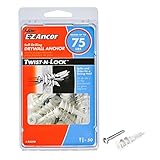
You’ve got your basic plastic expansion anchors. These are the workhorses for light to medium-duty items like small shelves, lightweight picture frames, or curtain rods. They work by expanding behind the drywall when you screw into them. Simple, cheap, and effective if used correctly and within their weight limits. Then there are self-drilling anchors, often made of metal or a tougher plastic. These screw directly into the drywall without needing a pre-drilled hole. They’re generally stronger than the basic plastic ones and easier to install. I found these to be a good step up when I needed something a bit more reliable for hanging a slightly heavier coat rack.
For heavier items, like large mirrors, heavy shelves, or even flat-screen TVs (though I’d always recommend hitting studs for those!), you need something more substantial. Toggle bolts and molly bolts are in this category. (See Also: Can Concrete Anchors Be Used In Brick )
Toggle bolts have wings that spread out behind the drywall, creating a much larger surface area for support. Molly bolts have a sleeve that expands and grips the back of the drywall. These are fantastic because they distribute the weight over a larger area, making them far less likely to pull out or break. The installation can be a bit more involved, requiring a larger hole, but the security they offer is worth the extra effort.
I used a few molly bolts to hang a substantial piece of art, and it’s held rock solid for years, no wobbles or creaks.
Here’s a little secret: for truly heavy items, especially those you don’t want falling on your head, like a massive TV mount or a heavy cabinet, anchors alone are often not enough. You really should be aiming for the studs. Anchors are a compromise for when studs aren’t an option. But if you must rely on anchors, choose the heaviest-duty ones you can find and understand their limitations. I learned this the hard way after a shelf sagged precariously, held up only by sheer hope and a prayer when the anchors started to give way. That’s when I realized I was asking too much of them.
| Anchor Type | Best For | Pros | Cons | My Verdict |
|---|---|---|---|---|
| Plastic Expansion | Light items (pictures, small shelves) | Cheap, widely available, easy to install | Low weight capacity, can crack brittle drywall | Okay for the lightest jobs, but always check weight limits. |
| Self-Drilling (various materials) | Medium items (coat racks, medium shelves) | No pre-drilling needed, generally stronger than basic plastic, good grip | Can strip if over-tightened, quality varies greatly | A good step up from basic plastic, but still heed weight limits. |
| Toggle Bolts | Heavy items (large mirrors, substantial shelves) | Excellent weight distribution, very strong grip | Requires a larger hole, installation can be fiddly | My go-to for anything I really don’t want falling. Worth the fuss. |
| Molly Bolts | Heavy items (cabinets, heavy mirrors) | Strong grip, good for thicker drywall, secure | Requires a larger hole, can be tricky to remove if needed | Reliable for serious weight. Use them when studs aren’t available. |
Common Mistakes That Lead to Anchor Annihilation
Let’s be honest, I’ve made most of these mistakes. We all have. The drive to just get it done can lead us to cut corners or ignore the little details. When it comes to drywall anchors, these shortcuts are usually what cause them to fail, leading to that frustrating moment of realization: are drywall anchors suppose to break? Well, they’re not supposed to break if you do it right, but here’s how people accidentally make them break.
The first cardinal sin is using the wrong size drill bit. It’s so tempting to just grab the bit that looks about right. But anchors are precision items, sort of. The manufacturer specifies a drill bit size for a reason. Too small, and you can’t get the anchor in, leading to forcing it and snapping it. Too big, and the anchor has no grip. I once spent twenty minutes trying to hammer in a plastic anchor that just kept wiggling. Turns out, my drill bit was a millimeter too large. Frustrating doesn’t even cover it.
Another common blunder is over-tightening. This is especially true with self-drilling and screw-in anchors. You keep turning, thinking tighter is better, and suddenly you hear a crunch or feel the anchor spin freely. You’ve stripped the hole or, worse, cracked the anchor itself. Sometimes, even if it doesn’t break immediately, over-tightening can stress the plastic or metal, making it prone to failure later. For some anchors, like toggle bolts, the mechanism itself can be damaged if you force the screw too hard.
People also forget about the drywall itself. Not all drywall is created equal. Older, thinner drywall is much more fragile than newer, thicker stuff. If you’re trying to hang something heavy on thin drywall, even the best anchor might eventually pull out because the surrounding material crumbles. You have to consider the wall as part of the support system. If the wall is weak, the anchor’s strength is limited. I had a situation in an older rental where no matter what anchor I used, things just wouldn’t stay put. It was the drywall, not the anchors, that was the weak link.
Finally, there’s the issue of sheer physics: weight distribution and shear force. Anchors are strongest when the weight is pulling directly away from the wall (tension). They are weakest when the weight is trying to pull the anchor sideways (shear force). Hanging a shelf that has items piled on top is putting shear force on the anchors. If the weight is too much or the use is too great, the anchors can bend, snap, or pull out. Always try to position your items so the weight is as close to the wall as possible. (See Also: Can Cords Be Used To Make Anchors Climbing )
Real-World Use: My War Stories and What I Learned
I’ve hung more things on walls than I care to admit, and I’ve seen my fair share of anchor failures. One particularly memorable incident involved hanging a rather large, heavy antique mirror in my dining room. I’d painstakingly chosen what I thought were the most solid molly bolts I could find. I installed them with care, double-checked the stud finder (or so I thought), and hung the mirror. It looked magnificent. For about three weeks.
Then, one afternoon, I heard a sickening creak. The mirror was visibly sagging, and I could see the molly bolt sleeves starting to pull away from the wall. My heart sank. It turned out one of the “studs” I thought I hit was actually just a particularly thick piece of wood framing, not a solid 2×4. The anchor on that side, bearing most of the weight, was giving way. It wasn’t a sudden crash, but a terrifying slow descent. I managed to brace the mirror just in time and carefully removed it. The wall around the anchors was a mess of torn drywall paper.
This taught me a brutal lesson: don’t trust your stud finder implicitly, and always, always err on the side of caution with heavy items. If there’s any doubt, use more anchors, or better yet, find a real stud. Another time, I was hanging a set of heavy ceramic planters on my patio wall (yes, I’ve tried anchors outdoors, don’t ask). I used heavy-duty plastic anchors. They worked for a while, but the constant exposure to moisture and temperature changes eventually degraded the plastic. They became brittle, and one morning, the planters were on the ground, shattered. Lesson learned: anchors have environmental limits too.
My contrarian opinion? Sometimes, the advice to “just use anchors” is lazy and dangerous. For anything more than a framed photo or a light clock, if you can’t find a stud, you should seriously consider alternative mounting solutions if possible. For example, if you can use French cleats or specialized mounting systems that spread the load across a wider area of the wall, do it. Those little plastic anchors are often pushed beyond their reasonable capabilities by well-meaning but uninformed homeowners. They are a convenience, not a miracle worker.
Practical Tips for Anchor Success (and Avoiding the Break)
After years of trial and error, here are a few things that have genuinely made a difference in my anchor installations. These aren’t revolutionary, but they are the practical, no-nonsense advice I wish someone had hammered into my head from day one. The goal is to prevent that sinking feeling when you wonder, are drywall anchors suppose to break?
First, read the damn package. Seriously. Every anchor type and brand will have a recommended drill bit size and a maximum weight rating. These aren’t just suggestions; they’re the manufacturer’s promise (and often, their liability waiver). Ignoring them is like guessing your medication dosage. Use a ruler or a measuring tape to make sure your drill bit matches the recommended diameter. It’s a tiny step that prevents a world of headaches.
Second, if you’re using expansion anchors, drill the hole clean and then insert the anchor straight. If it doesn’t go in with moderate pressure, stop. Either your hole is too small (use the recommended bit size!), or you’re hitting something behind the drywall. Don’t force it. If it’s too loose, try a slightly larger anchor (if one is available) or, better yet, patch the hole and start over with the right size. Forcing an anchor is the fastest way to crack it and render it useless.
Third, for heavier items, use more anchors than you think you need. Distribute the weight. If a shelf is rated for 20 lbs and you’re hanging 15 lbs, and it calls for two anchors, consider using three or even four if the shelf design allows. This spreads the load across more of the drywall, reducing the stress on any single anchor. It might look a bit crowded, but it’s far better than having your items end up on the floor. (See Also: Can Anchors In Your Shoulder Break )
- Measure Twice, Drill Once: Always confirm your drill bit size matches the anchor’s recommendation.
- Gentle Insertion: If an anchor doesn’t go in with hand pressure or light tapping, don’t force it. Re-evaluate the hole size or the anchor choice.
- Weight Distribution: For heavier loads, use multiple anchors to spread the stress.
- Consider the Wall: Be aware of drywall thickness and condition. Thinner or older drywall needs more careful consideration.
- Studs are King: If a stud is available, use it. Anchors are a secondary solution for when studs aren’t an option.
Finally, when in doubt, always go for a metal anchor or a toggle bolt. While plastic anchors are fine for very light items, metal self-drilling anchors, toggle bolts, and molly bolts offer significantly more holding power and are less prone to brittle failure. I’ve found that investing a few extra dollars in better quality anchors, especially for important applications, saves me a lot of time, frustration, and potential damage down the line. It’s the difference between a secure mount and a future repair job.
Are Drywall Anchors Supposed to Be Tight?
Yes, once installed correctly, drywall anchors should feel snug and secure in the wall. They should not wiggle or feel loose. If an anchor feels loose, it means it hasn’t properly engaged with the drywall or the hole is too large, compromising its ability to hold weight. This looseness is a sign that it will likely fail under load.
What Happens If a Drywall Anchor Breaks?
If a drywall anchor breaks, it means it has failed to support the weight it was intended for. This can result in the item attached to the anchor falling, potentially damaging the item itself, the wall, or even causing injury. The wall around the anchor will likely be damaged, requiring patching and repair before a new anchor can be installed correctly. It’s a clear indicator that the anchor was either overloaded, incorrectly installed, or of poor quality.
Can You Reuse Drywall Anchors?
Generally, no, you should not reuse drywall anchors. Most common types, especially plastic expansion anchors, are designed for a single installation. When you remove them, they can become deformed, brittle, or the hole in the wall might be enlarged. Reusing a compromised anchor significantly reduces its holding power and increases the risk of failure. Always use a new anchor for each installation.
How Much Weight Can a Drywall Anchor Hold?
The weight a drywall anchor can hold varies drastically by type, size, and the quality of installation in the specific drywall. Basic plastic anchors might hold only 10-25 pounds, while heavy-duty toggle bolts can support 50-100 pounds or more. However, these are often maximum ratings under ideal conditions. It’s always wise to use anchors rated for significantly more weight than you intend to hang and to consider the shear strength, which is typically lower than the tensile strength.
Should Drywall Anchors Go All the Way in?
Yes, drywall anchors should be fully seated and flush with the wall surface after installation. If an anchor sticks out or is only partially in, it won’t provide adequate support. For expansion anchors, the entire anchor needs to be within the wall cavity to expand properly. For self-drilling anchors, they should be screwed in until their collar is flush with the wall, creating a solid base for your screw.
Conclusion
So, to finally put it to rest: are drywall anchors supposed to break? No. They are designed to hold weight securely. When they break, snap, or pull out, it’s usually a sign of a mistake – either yours, or the manufacturer’s if you bought absolute junk. It’s a frustratingly common issue, but one that’s largely preventable with a bit of knowledge and care.
The real takeaway is to treat anchors with respect. They aren’t magic bolts that can hold anything. They are a specific tool for a specific job, and they have limitations. Understand those limits, choose the right type for the weight and wall, and install them properly. Don’t be afraid to spend a few extra bucks on better quality hardware; it’s cheaper than buying spackle and paint to fix the inevitable damage from cheap junk.
Next time you’re hanging something, take a breath, check the packaging, and use the right drill bit. If you’re unsure, over-engineer it a little. A slightly more involved installation now is way better than a wall repair project later.