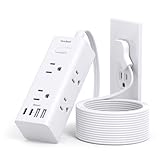
Remember that time you crammed three semesters’ worth of textbooks, a mini-fridge, a personal fan, and your laptop into a shoebox-sized dorm room? Yeah, I do. And I also remember the desperate scramble for an outlet, which inevitably led to a tangle of cords that looked like a snake convention.
This is where the question of ‘are extension cords allowed in dorms’ becomes less about rules and more about survival. But before you go plugging in every appliance you own, let’s get real about what you can and can’t use, and more importantly, what’s actually safe.
I’ve seen more than my fair share of dorm room electrical hazards, and trust me, a fire alarm going off at 2 AM because of a cheap power strip is not the college experience anyone signs up for.
The Truth About Dorm Room Electrics: Are Extension Cords Allowed in Dorms?
Look, the short answer to ‘are extension cords allowed in dorms’ is usually a hesitant ‘yes, but with serious caveats.’ Most colleges aren’t outright banning them, but they have rules. And these rules aren’t designed to be annoying; they’re there because dorms are old buildings, often packed with more electronics than they were ever designed to handle, and fire safety is a massive concern. I learned this the hard way during my freshman year.
I figured a heavy-duty surge protector was the answer to my outlet woes. It was a beast, cost me a decent chunk of change, and then I found out it was on the ‘forbidden list’ because it had too many outlets and no built-in circuit breaker.
Cue the walk of shame to the RA’s office to have it confiscated. It wasn’t confiscated forever, thankfully, but it was a stark reminder that ‘more is better’ doesn’t always apply when it comes to electrical safety in tight spaces.
The primary concern for most universities is fire risk. Overloaded circuits, faulty wiring in the building, and the use of subpar or damaged extension cords can all lead to overheating and fires.
This is why you’ll often see specific types of extension cords and power strips being permitted, while others are frowned upon or outright banned. They’re not trying to make your life harder; they’re trying to keep you and everyone else in the building safe. Think about it: a dozen students in a hallway, each with a laptop, a phone charger, a mini-fridge, maybe a gaming console, and then adding multiple extension cords to that mix. It adds up fast.
Understanding the ‘why’ behind the rules is the first step to actually complying with them and not ending up in a situation like mine, or worse.
So, what exactly do they look out for? It usually boils down to safety certifications and specific features. Look for cords that are UL-listed or ETL-certified.
This means they’ve been tested by a recognized safety laboratory and meet certain standards. Many dorm policies will also specify that extension cords should not have more than a certain number of outlets (often three) and should not have a long length unless absolutely necessary. And forget those massive power strips that look like they could power a small city. Smaller, more compact units are usually the way to go.
The goal is to avoid creating a ‘fire hazard’ in their eyes, which usually means avoiding anything that looks like it’s drawing excessive power or could easily overheat. It’s about managing the load and making sure the equipment itself is built to a decent standard.
The common advice you’ll find online, often from people who clearly haven’t lived in a dorm recently, is to just ‘get a good surge protector.’ While a good surge protector is indeed better than a cheap one, it doesn’t bypass the specific rules many dorms have.
It’s not just about the quality; it’s about the type and the quantity of outlets it offers. Some dorms even have a ‘one extension cord per student’ rule, regardless of its features.
So, while you might find a ‘safe’ extension cord, you might still be limited in how many you can have. This is where many students get caught out – assuming a product’s inherent safety is enough, without considering the specific environment it’s being used in. (See Also: Can Extension Cords Short Out )
What Kind of Extension Cords and Power Strips Are Actually Allowed?
Alright, let’s get down to the nitty-gritty of what you can actually get away with. When asking ‘are extension cords allowed in dorms,’ the devil is in the details of the specific appliance. Most dorms will allow what they call ‘appliance extension cords’ or ‘cord sets,’ which are typically shorter, heavier-duty cords designed for specific appliances, rather than the long, thin cords you might use for temporary outdoor lighting. These are usually limited to a certain gauge (thickness) of wire and a maximum amperage rating to prevent overheating. The key is that they are meant to connect a single appliance directly to an outlet, not to act as a general power hub for multiple devices.
The other common allowance is for a limited-outlet power strip, but this is where the rules get really specific. Many dorms will permit a power strip with a built-in circuit breaker, but it absolutely cannot have a surge protector component or more than, say, three outlets. The rationale here is that a circuit breaker can trip if the load becomes too high, providing a layer of protection that a simple fuse might not. Surge protection, on the other hand, is often seen as an unnecessary feature that can add to the complexity and potential failure points of the device.
My roommate once tried to argue that his fancy surge protector with USB ports was basically a smart power strip. The RA wasn’t impressed, and it ended up in the confiscated box anyway.
So, what does this mean for you? You’re likely looking for a cord that’s relatively short (think 3-6 feet), has a sturdy, grounded plug (three prongs), and is rated for the wattage of the device you need to plug in. For power strips, aim for something simple: a few outlets, a physical circuit breaker switch, and no fancy surge suppression features. Think utilitarian, not technological marvel.
It feels counterintuitive because we’re bombarded with messages about the importance of surge protection for our expensive electronics, but in a dorm setting, the priority shifts dramatically towards preventing fires. You might have to make a choice: protect your laptop from a power surge, or be able to plug in your lamp and phone charger simultaneously without violating dorm policy.
Often, the latter is the more immediate concern.
Here’s a quick breakdown of what to look for and what to avoid, based on common dorm policies:
| Item | Recommended for Dorms | Generally NOT Allowed | My Verdict |
|---|---|---|---|
| Standard Extension Cord (long, thin) | No | Yes (unless very short and heavy-duty) | Avoid. High fire risk if used improperly. |
| Appliance Extension Cord (heavy-duty, short) | Yes (check length and gauge) | No | Good for connecting a single, high-draw appliance like a mini-fridge. |
| Power Strip with 3 Outlets & Circuit Breaker | Yes | No | Your best bet for multiple low-power devices. |
| Surge Protector (any type) | Generally No | Yes | Usually banned due to fire risk and complexity. |
| Multi-outlet Adapters (cube tap style) | Generally No | Yes | Huge fire hazard. Don’t even think about it. |
| Power Strip with USB Ports | Generally No | Yes | Often considered a type of surge protector or too complex. |
It’s always best to check your specific dorm’s housing contract or student handbook for the most accurate list of prohibited items. They will usually spell out exactly what types of electrical accessories are permitted and which ones are a one-way ticket to the confiscated item bin.
The Dangers of Using the Wrong Cords in Dorms
Okay, let’s talk about why this even matters so much. Using the wrong kind of extension cord or power strip in a dorm isn’t just about breaking a rule; it’s about inviting genuine danger. I remember a story from a friend of a friend (okay, maybe it was a story I heard in a dorm safety seminar, but it feels real) about a student who daisy-chained three cheap power strips together to power a gaming setup, a TV, and a bunch of lamps. The cord wasn’t rated for that kind of continuous draw.
It started to melt, then smoke, and thankfully, someone smelled it before it became a full-blown fire. The damage wasn’t catastrophic, but the room was uninhabitable for weeks, and the student got a serious lecture about fire safety and faced disciplinary action. That’s the kind of scenario dorm policies are designed to prevent.
One of the biggest culprits for fire hazards is using cords that are too thin for the amount of electricity they’re trying to carry. This is measured by the wire gauge – a lower number means a thicker wire, which can handle more current without overheating. Cheap, generic extension cords often have a much thinner gauge than is safe for powering anything more than a simple lamp.
When you plug in a laptop, a monitor, a mini-fridge, and a desk lamp into a cord that’s not up to the task, the wires inside can get incredibly hot. This heat can melt the insulation, expose wires, and potentially ignite nearby materials like bedding or carpet. It’s a slow burn, literally, until it’s not slow anymore.
Another common mistake is overloading the circuit. Even if your extension cord is perfectly fine, plugging too many high-draw devices into it, and then plugging that into an already stressed wall outlet, can trip the building’s circuit breaker.
This is the ‘safer’ outcome, but it still means you’re pushing the limits of the electrical system. Worse, in older dorms, the wiring itself might be degraded or insufficient for modern power demands. This is why you’ll often see specific appliance limitations – you might be allowed a mini-fridge, but you might not be allowed a microwave or a portable heater, because those are known to draw a lot of power and put a significant strain on dorm electrical systems. (See Also: Can Extension Cords Be Use With Electric Heaters )
The key is that the building’s electrical infrastructure has limits, and exceeding those limits anywhere in the chain – from the wall to your device – is a recipe for disaster.
The ‘People Also Ask’ section often brings up questions about specific appliances. For example, ‘Can I use a mini-fridge in my dorm?’ or ‘Are space heaters allowed?’ These questions are directly related to the dangers of overloading.
Mini-fridges are generally allowed because they are designed for relatively low, continuous power draw and are usually ETL-certified. Space heaters, however, are often banned because they draw a massive amount of power and are a significant fire risk, especially in close quarters with flammable materials. It’s about understanding the power requirements of your devices and matching them to what the dorm’s electrical system and your permitted accessories can safely handle. Don’t be the person who causes a fire alarm at 3 AM because your gaming rig decided to overheat.
My Own Dumb Mistake: The Surge Protector Saga
I’ve already touched on it, but let me really lean into my own spectacular screw-up with electrical accessories in a dorm. It was my sophomore year, and I was determined to be ‘the guy’ who had all the gadgets for movie nights or late-night study sessions. I’d bought this relatively fancy power strip – it had more outlets than a Christmas tree, USB ports that promised faster charging, and importantly, what the box called ‘surge protection.’ I thought I was being smart, consolidating all my devices into one neat package. It looked pretty sleek plugged into the wall behind my desk.
Fast forward a few weeks. I had my laptop, my monitor, a desk lamp, my phone charging, and a portable speaker all plugged into this thing.
One evening, I noticed my laptop charger felt unusually warm, and the little LED light on the power strip itself seemed to flicker intermittently. I dismissed it as being tired or the room getting hot. The next morning, I woke up to a faint, acrid smell.
I traced it to my desk. The plastic casing around the power strip was slightly warped, and one of the USB ports had a faint brown discoloration. It wasn’t smoking or on fire, but it was clearly overheating. I unplugged it immediately, heart pounding.
It felt like I’d just dodged a bullet. That surge protector, which I’d assumed was the pinnacle of electrical safety, was actually a ticking time bomb waiting to go off in my tiny dorm room.
What I learned from that scare was that ‘surge protector’ is often a marketing term that doesn’t automatically mean ‘safe for dorms.’ Many dorms specifically ban surge protectors because they can have internal components that are prone to failure or overheating, and they often have more outlets than permitted. The simple, no-frills power strip with a circuit breaker, while less glamorous, is often the only acceptable option because its function is more basic and, in a controlled dorm environment, potentially safer. The manufacturer’s claims of ‘protecting your electronics’ become secondary to the institution’s primary concern: preventing fires.
I ended up replacing that surge protector with a basic, 3-outlet, corded power strip with a built-in breaker – the kind that looks like it belongs in a garage, not a tech enthusiast’s setup. It wasn’t pretty, but it was allowed, and it didn’t make my chargers feel like they were about to spontaneously combust.
Practical Tips for Dorm Room Power Management
So, how do you actually manage your power needs without setting off alarms or risking a fire? It’s all about being smart and a bit minimalist. First off, always check your dorm’s specific rules. I can’t stress this enough. What’s allowed in one building might be banned in another. Look for the official student handbook or housing contract. They’ll usually have a section on prohibited electrical items. If you’re unsure, ask your Resident Advisor (RA) before you buy anything. A quick email or chat can save you money and hassle.
When you are shopping for permitted items, prioritize safety certifications like UL or ETL. These are not just for show; they indicate that the product has undergone safety testing. For extension cords, stick to shorter lengths (3-6 feet is usually plenty for a dorm desk) and make sure they are grounded (three prongs).
If you need to power a larger appliance like a mini-fridge, get a heavy-duty appliance cord specifically designed for that purpose, rather than trying to make a general-purpose cord do the job. And for power strips, remember: simple is best. Look for models with a limited number of outlets (typically 2-3) and a built-in circuit breaker.
Avoid anything with surge protection, USB ports, or an excessive number of sockets. (See Also: Are Outdoor Extension Cords 10 Or 12 Gauge )
Here’s a practical approach to setting up your dorm room power:
- Assess Your Needs: List all the electronics you absolutely need. Then, identify which ones draw the most power (e.g., mini-fridge, gaming console) and which are low-draw (e.g., phone charger, desk lamp).
- Consult the Rules: Read your dorm’s housing contract thoroughly. Note down any restrictions on extension cords, power strips, or specific appliances.
- Prioritize Key Outlets: If you only have one or two wall outlets, figure out what’s most important. You might need an approved power strip for your desk area.
- Consider Appliance Cords: For devices like mini-fridges, make sure you have a sturdy, grounded cord that’s in good condition. Don’t use a frayed or old cord.
- Buy Approved Items: Once you know what’s allowed, shop for UL/ETL-certified, short, grounded cords or simple power strips with circuit breakers.
- Never Overload: Even with approved equipment, be mindful of how many devices are running. If a cord or outlet feels warm, unplug something immediately.
- Regularly Inspect: Take a moment every few weeks to check your cords and power strips for any signs of damage, fraying, or overheating.
The trend I’ve noticed over the years is that dorms are becoming stricter, not less so. They’ve had too many incidents to ignore. So, while you might be tempted to find loopholes or use ‘better’ equipment that’s technically banned, it’s usually not worth the risk. Stick to the approved list, and you’ll sleep better at night knowing your dorm room isn’t a fire hazard waiting to happen.
A Contrarian View: Why ‘safe’ Doesn’t Always Mean ‘allowed’
Here’s a thought that might go against the grain of what you’re hearing: everyone talks about ‘surge protectors’ and ‘heavy-duty cords’ being important for safety. And they are! But in a dorm, ‘safe’ is a relative term defined by the institution, not just the product’s specs. My contrarian take is this: many of the most ‘technically safe’ and feature-rich power solutions you can buy are precisely the ones banned in dorms, and it’s infuriating.
Consider a high-quality, multi-outlet surge protector with individual on/off switches for each outlet, USB-C ports, and advanced surge suppression technology. From a purely consumer electronics protection standpoint, this is a superior device. It protects your expensive gaming PC, your new tablet, and your smartphone from power spikes. It offers convenience and superior protection. Yet, almost universally, these are verboten in dorm rooms. Why? Because they have too many outlets, they have surge protection (which is often prohibited), and they simply look ‘too powerful’ or complex for the environment. The dorm admin sees a potential fire hazard; the student sees a way to power their academic and entertainment life.
This is the disconnect. The common advice is to get a ‘good’ cord or ‘good’ power strip. But what ‘good’ means in a dorm context is radically different from what ‘good’ means in your home office. In a dorm, ‘good’ means ‘compliant.’ It means it’s simple, it has minimal outlets, and it probably doesn’t have any fancy features that could be perceived as a risk. The fact that a $50 surge protector might save your $1500 laptop from a surge is irrelevant if the dorm’s policy states ‘no surge protectors allowed.’ It’s frustrating because you’re forced to choose between protecting your valuable electronics and following rules designed to mitigate a different kind of risk – fire.
Many students feel this frustration. They’ve invested in good equipment, only to have it confiscated. This leads to students trying to ‘hide’ their equipment or find workarounds, which is far more dangerous than using an approved, albeit basic, power strip.
The policy, while aiming for safety, can inadvertently encourage riskier behavior if it doesn’t offer practical solutions. The ideal scenario, which rarely exists, would be for dorms to allow a limited number of basic, UL-listed power strips with surge protection and circuit breakers, recognizing that students will have multiple devices and need a safe way to power them. Until then, the most ‘technically sound’ product often loses to the most ‘technically compliant’ one, and that’s a real pain for students trying to live comfortably and safely.
Frequently Asked Questions About Dorm Extension Cords
Are Extension Cords Allowed in Dorms?
Most dorms allow extension cords, but with significant restrictions. They must typically be UL or ETL certified, grounded, and often limited in length and the number of outlets. Many explicitly ban surge protectors and multi-outlet adapters. Always check your specific dorm’s housing contract for exact rules.
Can I Use a Surge Protector in My Dorm Room?
Generally, no. While surge protectors are great for protecting electronics, most dorms ban them due to fire safety concerns associated with their internal components and complexity. A simple, approved power strip with a circuit breaker is usually the permitted alternative.
What Kind of Power Strip Is Allowed in a Dorm?
The most commonly allowed power strips are basic models with a limited number of outlets (usually 2-3) and a built-in circuit breaker. They should be grounded and UL or ETL certified. Avoid any with surge protection, USB ports, or excessive outlets.
Can I Plug in a Mini-Fridge in My Dorm?
Mini-fridges are often allowed in dorm rooms, provided they are energy-efficient and meet specific size and power consumption limits outlined by the university. You’ll typically plug them directly into a wall outlet or use a specific, heavy-duty appliance extension cord if absolutely necessary and permitted.
What Appliances Are Usually Banned in Dorms?
Appliances that draw a lot of power or pose a significant fire risk are usually banned. This commonly includes portable heaters, microwaves, hot plates, toasters, electric kettles, and sometimes even coffee makers, as they can overload the dorm’s electrical system.
Final Thoughts
So, when it comes to whether are extension cords allowed in dorms, the answer is a qualified ‘yes,’ but the ‘qualified’ part is important. It’s not about finding the most powerful or feature-packed cord; it’s about finding the safest, most compliant one that meets your minimal needs. That means understanding the rules, prioritizing safety certifications, and opting for simplicity over fancy features.
My own experience taught me that what seems like a good idea – more outlets, more protection – can often land you on the wrong side of dorm policy and, more importantly, create a real hazard. Resist the urge to push the boundaries; it’s not worth the risk to your safety or your academic standing.
Before you pack that box of electronics, take five minutes to read your dorm’s policy. It’s the most important step you can take. If you need to power more than a couple of things, invest in a single, approved, basic power strip with a circuit breaker. That’s your safest bet.