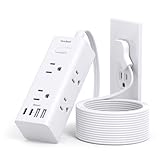
I once blew out half the circuits in my garage trying to run my big compressor off a flimsy, light-duty extension cord. Sparks flew, smoke puffed, and I learned a harsh lesson: not all cords are created equal, and treating them like permanent fixtures is a recipe for disaster. So, are extension cords safe for long term use? The honest answer is complicated, and depends entirely on what you’re plugging into them and how you treat them.
Most people think of extension cords as temporary fixes, but sometimes you’re stuck needing power where the outlet isn’t. That’s where the question of long-term safety really comes into play.
This isn’t about throwing around scare tactics; it’s about practical, real-world advice from someone who’s tripped over, overloaded, and generally abused more cords than I care to admit.
Why You Can’t Just Leave That Cord Plugged in Forever
Look, the idea of permanent indoor extension cord use is a myth most of us fall for. It’s tempting, right? You’ve got that one outlet that’s just too far away for the lamp or the printer. So, you snake a cord across the floor, maybe tuck it under a rug (don’t do that, by the way), and forget about it. But here’s the thing: extension cords aren’t designed to be permanent wiring.
They’re made with flexible insulation, which is great for portability, but over time, that flexibility can become a weakness. Think about it: you might tread on it, furniture might shift and pinch it, or even sunlight streaming through a window can degrade the rubber or plastic over years. This wear and tear isn’t just cosmetic; it can expose the internal wires, creating a fire hazard. I remember a friend who had a decorative runner rug over an extension cord for nearly two years. When she finally moved the rug to clean, the cord underneath was cracked and frayed in multiple spots. Thankfully, nothing caught fire, but it was a wake-up call.
The gauge of the wire is another huge factor. If you’re running a high-wattage appliance, like a space heater or a powerful tool, through a cord that’s too thin (under-gauged), the cord itself can overheat. It’s like trying to push a firehose through a drinking straw – the resistance builds up, and so does the heat.
This is a primary reason why fires start. You see those cheap, thin cords advertised everywhere?
They’re fine for a Christmas tree for a month, maybe, but definitely not for continuous, heavy use. The Underwriters Laboratories (UL) certification is your first line of defense here; always buy cords with a UL or ETL mark. It means they’ve met certain safety standards, but it doesn’t give you a free pass to abuse them.
Proper storage is also a big deal, even if you’re only using it intermittently. Coiling a cord too tightly for months on end can create kinks that weaken the internal conductors. Imagine bending a paperclip back and forth too many times; eventually, it snaps. Wires are similar. When I’m done with a cord, I coil it loosely, often using a Velcro strap, and store it somewhere cool and dry, away from UV light and potential physical damage. It takes an extra 30 seconds, but it makes a difference down the line.
What to Look for When Buying (and Using) Your Cords
So, if you absolutely must use an extension cord for an extended period – and I’m talking about a situation where permanent wiring isn’t an option, like a rental property or a temporary workshop setup – you need to be smart about it. The first thing you should be looking at is the wire gauge, often denoted by an AWG (American Wire Gauge) number.
The lower the AWG number, the thicker the wire, and the more current (amperage) it can safely handle without overheating. For general household use with devices like lamps or phone chargers, a 16-gauge cord is usually sufficient. But if you’re powering something with a significant draw, like a vacuum cleaner, a power tool, or even a small appliance that runs for a while, you should be looking at 14-gauge or even 12-gauge, especially if the cord is long.
A 100-foot 16-gauge cord is going to be much more prone to voltage drop and overheating than a 100-foot 12-gauge cord when powering the same device. (See Also: Are Dollar Store Extension Cords Safe )
Next, consider the cord’s construction. Are you using it outdoors or in a damp environment? If so, you need a cord specifically rated for outdoor use. These have heavier-duty insulation and weather-resistant plugs and receptacles. Using an indoor cord outside is a major fire and shock hazard. The rubber or vinyl casing needs to be thick and resistant to UV rays, moisture, and abrasion. I learned this the hard way when a supposedly ‘heavy-duty’ indoor cord I used for a temporary patio light setup started to crack and fray after just one summer season, exposed to sun and occasional rain. Swapping it for a proper outdoor-rated cord was a big deal.
The length of the cord matters too. The longer the cord, the more resistance there is in the wire, and the greater the voltage drop. This means the appliance at the end of the cord might not get the full power it needs, and the cord itself can get hotter.
If you need a long cord, try to use the thickest gauge you can reasonably afford and manage. For instance, if you need 75 feet, an 8-gauge cord is overkill for most things, but a 12-gauge or 14-gauge would be a much safer bet than a 16-gauge.
Always try to buy a cord that’s longer than you think you need, but not excessively so, to minimize voltage drop and the temptation to stretch it too tight or hide it unsafely.
Finally, inspect the plugs and receptacles. Are they damaged? Are the prongs bent? Is the grounding pin intact? A damaged plug can easily lead to a poor connection, arcing, and overheating. If a plug looks worn out, or if the prongs feel loose, it’s time for a new cord. Don’t try to tape up a damaged plug or receptacle; that’s just asking for trouble. A frayed cord end is a direct route to disaster.
Common Mistakes That Turn Extension Cords Into Fire Hazards
This is where most people really screw up, and it’s often out of ignorance or laziness. The biggest mistake? Using an extension cord as a permanent wiring solution. As I’ve said, they aren’t designed for that. They get stepped on, furniture gets placed on them, they can get nicked by vacuum cleaners or pet claws. All these minor damages accumulate, compromising the insulation and the wires inside. This is how you get shorts and sparks, which can easily ignite nearby flammable materials like dust bunnies, curtains, or carpet.
Another massive no-no is overloading the cord. Every extension cord has a wattage or amperage rating. You have to know what your appliance is drawing and make sure the cord can handle it, with a bit of buffer.
If you’re plugging in a small fan, fine. But if you’re plugging in a space heater, a toaster oven, or multiple high-draw devices into a single cord or a power strip connected to a cord, you’re asking for trouble. I once saw a friend’s apartment smoke alarm go off because he was running his gaming PC, a monitor, and a desk lamp all off a single, relatively thin extension cord.
The cord got so hot it was almost too hot to touch. Thankfully, he unplugged it immediately, but it was a close call. Always check the label on your appliance and on the extension cord.
If the appliance’s wattage is close to or exceeds the cord’s maximum rating, use a heavier-duty cord or a different outlet.
Then there’s the classic ‘tucking and hiding.’ Running cords under carpets, behind furniture that’s pushed flush against the wall, or through doorways where they get repeatedly pinched is a huge fire risk. Carpets and rugs can trap heat, and the constant abrasion or pinching can damage the cord’s insulation, leading to exposed wires. If a cord needs to run across a walkway, use a cord protector or a cable management ramp designed for that purpose. It might look a bit clunky, but it’s infinitely safer than the alternative. I’ve seen people try to nail cords to baseboards or staple them – absolutely not. This damages the insulation and can create a severe electrical hazard. (See Also: Are Extension Cords Allowed On Cruise Ships )
Finally, never daisy-chain extension cords – that is, plug one extension cord into another. This dramatically increases the risk of overheating, voltage drop, and potential failure points. Each connection is a potential weak link. Stick to one cord for one appliance. If you need more reach, get a longer, heavier-duty cord. It’s not worth the risk.
| Common Mistake | Why It’s Bad | Verdict/Solution |
|---|---|---|
| Using as permanent wiring | Wear and tear, damage from furniture/foot traffic, insulation degradation. | Avoid! Use only temporarily, inspect frequently. |
| Overloading the cord | Cord overheats, insulation melts, fire hazard. | Important! Match appliance wattage to cord rating. Use heavy-duty for high-draw items. |
| Running under carpets/rugs | Traps heat, causes abrasion, hides damage. | Danger Zone! Use cord covers or run cords visibly along walls. |
| Daisy-chaining cords | Increases resistance, voltage drop, multiple failure points. | Never do this! Use a single, longer cord. |
| Using indoor cords outdoors | Exposure to elements degrades insulation, shock/fire risk. | No way! Use only cords specifically rated for outdoor use. |
Real-World Scenarios: Where Extension Cords Get a Bad Rap
Let’s talk about where extension cords often get a bad reputation, and it’s usually because people are misusing them. Take temporary outdoor lighting for holidays. People buy the cheapest cords they can find, leave them out for weeks, sometimes through rain and snow, and expect them to be fine. Then, a cord sparks, or it just dies. That’s not the cord’s fault for not being safe for long-term use in that specific scenario; that’s the user’s fault for not using a cord rated for outdoor conditions and for not inspecting it. A proper outdoor-rated cord, used correctly for the season, is generally safe for that limited duration.
Another common place is in workshops or garages. You need power for tools, chargers, and maybe a radio.
It’s tempting to run a cord along the wall permanently. I’ve done it, and I’ve seen plenty of others do it. The key here is using the right cord. I use a 12-gauge, 50-foot cord for most of my garage needs.
It’s thick enough for most of my power tools, and it’s durable. I still inspect it regularly – especially where it might get scuffed or pinched – and I make sure it’s not lying where I’ll trip over it or where something heavy might fall on it. It’s not permanent wiring, but it serves a long-term function because I chose a solid cord and I’m mindful of its condition.
What about running power for equipment in an attic or basement that doesn’t have enough outlets? This is where things get dicey. If you’re talking about just plugging in a dehumidifier or a shop vac for a few hours a day, and the cord is laid out carefully, not hidden, and inspected regularly, it might be acceptable temporarily. But if you’re looking to power something continuously, like a sump pump or a server rack, you really need to consult an electrician about extending your permanent wiring.
Extension cords are not a substitute for proper electrical infrastructure. The materials and safety standards for permanent wiring are far more stringent because they are designed to be a fixed part of your home’s electrical system, unlike a portable cord.
I once had a situation where I needed to power a large air compressor in my backyard for a project that took several weekends. The nearest outlet was inside the garage. I bought a very heavy-duty, 75-foot outdoor-rated extension cord. I made sure to lay it out carefully, avoiding any sharp edges or areas where it could be driven over by my car.
I unplugged it and coiled it neatly after each use, storing it in a weather-protected bin. It wasn’t the most convenient setup, but for that specific, extended-duration need, using the correct equipment and treating it with respect made it safe enough for the job.
The key takeaway is that ‘long term use’ for an extension cord means ‘extended, but still temporary,’ and requires a higher standard of care and equipment selection.
When Is an Extension Cord Truly Unsafe for Long-Term Use?
An extension cord becomes unsafe for long-term use when it exhibits any signs of physical damage such as cuts, frays, or cracked insulation. It’s also unsafe if it’s consistently used to power appliances that exceed its rated wattage or amperage, leading to overheating. Furthermore, any cord that is permanently routed under carpets, through walls, or in areas where it’s subjected to constant stress, crushing, or abrasion is inherently unsafe for prolonged reliance. Using indoor-rated cords outdoors is another important safety violation. (See Also: Are Extension Cords Allowed In Hospitals )
Practical Tips for Extending the Life and Safety of Your Cords
You want your extension cords to last and, more importantly, to be safe. It’s not rocket science, but it does require a bit of mindfulness. The absolute number one rule, even if you’re using a cord for months on end, is to inspect it before every single use. Seriously.
Take a quick look for any nicks, cuts, or damage to the outer jacket. Check the plugs and receptacles for bent prongs or loose connections. If you see anything suspect, do not use that cord. It’s not worth the risk of a fire or electric shock.
I’ve found tiny nicks on cords that I swear looked fine the week before, usually from them getting slightly scraped against something. Catching those early is key.
As mentioned, proper storage is huge. Don’t just shove it in a drawer or leave it in a tangled mess. Coil it loosely, avoiding tight bends or kinks. Use a Velcro strap or a cord organizer to keep it neat. Store it in a cool, dry place away from direct sunlight, which can degrade the insulation over time. If it’s an outdoor cord, make sure it’s stored in a container that protects it from moisture and pests. I have a big plastic bin in my garage specifically for my heavier-duty cords, and it’s made a noticeable difference in how long they last and how they look when I pull them out.
Another tip is to avoid using extension cords in ways they weren’t intended. For instance, don’t use them to bypass a safety device like a GFCI (Ground Fault Circuit Interrupter) outlet. If you need GFCI protection, use a GFCI-rated extension cord or have a GFCI outlet installed by an electrician. Also, be mindful of heat. If a cord feels warm to the touch during use, unplug it immediately. It’s likely overloaded or there’s a bad connection. Don’t just assume it’s normal. I’ve had cords get slightly warm on very long runs with moderate loads, but ‘warm’ is different from ‘hot.’ Hot is a warning sign.
Consider the environment. If you’re using a cord in a high-traffic area, or where it might be exposed to chemicals, oil, or extreme temperatures, you need a cord specifically designed for those conditions. There are heavy-duty cords with oil-resistant jackets, for example, that are key in a mechanic’s garage. Similarly, in extremely cold temperatures, some plastics can become brittle and crack more easily. Always select a cord that’s appropriate for its intended use environment. Buying a generic cord for a specialized task is a false economy.
Finally, and this might sound obvious, but always buy quality. Cheap, unbranded cords from questionable online sellers or discount stores are almost guaranteed to be made with lower-quality materials and less stringent safety testing. Stick to reputable brands and look for those UL or ETL safety certifications. The few extra dollars you spend on a good quality, properly gauged cord from a reliable manufacturer can save you a lot of potential headaches and hazards down the line. It’s an investment in safety.
How to Choose the Right Gauge for Your Extension Cord?
Choosing the right gauge (AWG) is important for safety. The lower the AWG number, the thicker the wire and the more current it can safely handle. For light-duty tasks like lamps or phone chargers, a 16-gauge cord is usually fine for shorter lengths (up to 50 feet). However, for moderate loads like vacuum cleaners or power tools, or for longer runs (over 50 feet), a 14-gauge cord is recommended. For heavy-duty appliances, high-draw power tools, or very long distances, a 12-gauge cord is the safest bet. Always check the wattage or amperage of your appliance and compare it to the cord’s rating, erring on the side of a thicker gauge if in doubt.
How Long Can an Extension Cord Be Used?
There isn’t a fixed ‘expiration date’ for an extension cord. Its lifespan depends entirely on its quality, how it’s used, and how it’s maintained. A well-maintained, high-quality cord used for appropriate tasks can last for many years. Conversely, a cheap cord that’s constantly abused, overloaded, or left exposed to the elements might only last a short time before becoming unsafe. Regular inspection for damage is the best way to determine if a cord is still safe for use, regardless of how old it is.
Verdict
So, to circle back: are extension cords safe for long term use? My take is that ‘long term’ is relative. They are NOT a substitute for permanent wiring, and relying on one indefinitely, especially if it’s showing any wear, is a bad idea. However, with the right gauge, the right type (indoor/outdoor), diligent inspection, and proper care, an extension cord can serve a necessary function for extended periods without becoming a major hazard.
Think of it like using a tool. A good hammer can last you decades if you keep it clean, the head is secure, and you don’t try to use it to pry open a paint can. An extension cord is similar. Choose wisely, treat it well, and inspect it often. If you’re unsure about the load or the condition of a cord, err on the side of caution and replace it. It’s a small price to pay for peace of mind and preventing a potential disaster.
The next time you need to run power, take that extra minute. Check the gauge, check the rating, and give it a once-over. Your future self, and your home, will thank you.