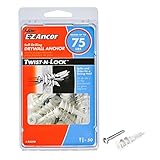
I remember the first time I tried to hang a heavy mirror. I grabbed what I thought were standard wall anchors, the kind that look like little plastic sleeves. Turns out, I’d picked the smooth kind. Needless to say, that mirror ended up on the floor a week later, taking a chunk of drywall with it. It was a costly mess and a hard lesson.
So, are knurled anchors better than smooth? My gut reaction, based on that initial disaster and years of trial-and-error since, is a resounding yes. But like most things in DIY, it’s not quite that simple. There are nuances, and knowing them can save you a lot of headaches and damaged walls.
Let’s cut through the noise and talk about what actually works.
Why the Texture Matters: Grip and Hold
Okay, let’s get down to brass tacks. The core difference between knurled anchors and smooth anchors, and the reason this whole debate even exists, is pretty simple: texture. Knurled anchors have those little ridges or grooves running along their exterior. Smooth anchors, well, they’re like a polished bowling ball – slick and uniform. This texture is not just for looks; it’s the primary mechanism that dictates how well an anchor grips the material it’s inserted into.
Think about it this way: when you try to twist something smooth against a surface, it’s more likely to slip. But if that surface has ridges, it has something to ‘bite’ into, providing significantly more friction and resistance to rotation. That’s exactly what’s happening inside your drywall or plaster when you install an anchor. The knurling on the anchor digs into the surrounding material, creating a much stronger purchase. This is especially important in softer materials like drywall, which can crumble or strip out if an anchor just spins or pulls out.
I learned this the hard way, as I mentioned. I was trying to hang a floating shelf that was probably pushing the limits of what a basic drywall anchor could handle. The smooth anchor went in easily enough, but over time, the vibrations from walking across the floor, or maybe just the sheer weight, caused it to slowly rotate and loosen. It didn’t just fall out; it gradually worked its way loose, creating a bigger and bigger hole until the shelf finally gave way. It was a slow-motion disaster. If I’d used a knurled anchor, that texture would have prevented it from rotating in the first place, keeping it firmly in place.
The amount of grip you get from a knurled anchor is directly proportional to the quality of the knurling itself and the material it’s going into. A well-formed knurl will create small, consistent indentations that resist pull-out and rotation much better than a smooth surface. This is why you see knurled designs on many types of fasteners and anchors, from screw heads to wall anchors. It’s a principle based on friction and mechanical grip.
However, it’s not always a slam dunk. The effectiveness can also depend on the density of the material. In very dense materials like solid wood or concrete, the difference might be less pronounced because the anchor is being held by sheer compression. But for the common task of hanging things on drywall, plaster, or even some softer woods, that texture is a genuine advantage. It’s the difference between an anchor that just sits there and one that actively helps hold your item securely.
When Smooth Anchors Might Still Get a Nod
Now, before I completely trash smooth anchors, let’s be fair. They aren’t always the useless plastic tubes I sometimes make them out to be. There are situations where a smooth anchor might be perfectly adequate, or even preferred, and understanding these is part of figuring out which anchor is right for your job.
The biggest factor is the type of screw and the material you’re fastening into. If you’re using a screw that is designed to self-tap directly into a very soft material, like thin particle board or very soft wood, the screw itself is doing most of the gripping. In these cases, the anchor’s texture becomes less of a deciding factor. The anchor is primarily there to provide a hole of the right size for the screw threads to bite into. A smooth anchor will work just fine as a guide for the screw.
Another common scenario where smooth anchors can hold their own is when they are used in conjunction with a specific type of screw or bolt that expands them significantly. Think of some of the older style toggle bolts or certain types of compression anchors. These anchors don’t rely solely on friction with the wall material; they work by creating a mechanical wedge or expanding behind the wall. The smooth exterior is less important because the holding power comes from the anchor’s own expansion mechanism, not its interaction with the wall material. For these types, the hole needs to be clean and the anchor needs to fit snugly, which a smooth anchor can provide.
I’ve also found that if you’re not dealing with significant shear or pull-out forces, a smooth anchor can be surprisingly effective. Hanging a small, lightweight picture frame with a smooth anchor and a small screw is unlikely to result in disaster. The forces are minimal, and the screw is doing most of the work by threading into the drywall itself. The anchor is more like a spacer or a loosely fitted guide. (See Also: Can Concrete Anchors Be Used In Brick )
The real issue with smooth anchors arises when you’re dealing with heavier loads, vibration, or materials that are prone to crumbling or stripping. Drywall, especially older or lower-density types, is a prime example. The smooth surface offers very little resistance to the anchor spinning, and once it starts to spin, it’s only a matter of time before it loosens and the load fails. It’s like trying to screw a bolt into a greased hole; it just doesn’t grab.
So, while knurled anchors generally offer superior grip in most common drywall scenarios, smooth anchors have their place. They’re often cheaper and perfectly suitable for light-duty applications or when used with specific types of expanding fasteners where their smooth surface doesn’t hinder the primary holding mechanism. It’s about matching the anchor to the load and the material.
The Mechanics: How They Actually Work (and Fail)
Let’s peel back the layers and look at the engineering, or lack thereof, behind these little plastic doodads. Understanding how they’re supposed to work, and where they typically go wrong, is key to choosing the right one. For both knurled and smooth anchors, the basic idea is to create a stable point in a soft material like drywall for a screw to engage with.
When you hammer or screw in a typical plastic anchor (often referred to as an expansion anchor), the material of the anchor is compressed and forced into the pre-drilled hole. In a perfect world, the anchor expands slightly as it’s seated, creating a friction fit. Then, as you drive the screw into the anchor, the screw threads engage with the interior of the anchor, and the anchor itself is supposed to engage with the surrounding wall material.
Here’s where the texture (or lack thereof) becomes important. With a knurled anchor, those external ridges are designed to dig into the fibers and material of the drywall. As you drive the screw and the anchor expands, the knurls push outward and create small indentations in the wall. This mechanical keying action provides resistance against both pull-out (the anchor being pulled straight out of the wall) and rotation (the anchor spinning within the wall). If the anchor tries to spin, the knurls are meant to catch and stop it. If the load tries to pull it out, the knurls help to wedge it in deeper and provide more surface area for friction.
With a smooth anchor, there are no such external ridges. Its holding power relies almost entirely on the friction between the smooth plastic surface of the anchor and the smooth surface of the hole in the drywall. This is a much weaker bond. The primary way a smooth anchor holds is by the outward pressure from the screw threads expanding the anchor against the hole. However, if the material around the hole is at all crumbly or if there’s any slight rotation during installation or under load, that smooth surface can easily slip. It’s like trying to hold a slippery rod in a smooth tube – there’s not much to grip.
My worst failure with a smooth anchor wasn’t a sudden crash, but a slow, creeping disaster. I had a fairly heavy framed print in my hallway. I used smooth anchors, and for months, it was fine. Then, I noticed the picture was starting to tilt.
I figured the screw had just loosened a bit. I tightened it, and it seemed okay. A few weeks later, it was tilting again, but this time, the anchor was actually starting to pull out. The smooth plastic had just worn away the drywall around it, and the friction grip was gone.
It was basically spinning freely in a larger, rounded-out hole. That’s the common failure mode for smooth anchors under sustained load or any kind of minor vibration.
A properly designed knurled anchor, on the other hand, provides that important extra layer of security. The material might deform slightly, but the knurls will still have some purchase, or at least offer more resistance to spinning than a perfectly smooth surface. It’s the difference between something that just sits in a hole and something that actively tries to wedge itself in.
Common Anchor Mistakes to Avoid
We’ve all been there, staring at a pile of anchors, wondering which one is the ‘right’ one. And we’ve probably all made mistakes. Here are a few common blunders that can turn a simple DIY task into a frustrating ordeal. (See Also: Can Cords Be Used To Make Anchors Climbing )
- Using the Wrong Anchor for the Job: This is the cardinal sin. Thinking one type of anchor fits all materials and all loads is a recipe for disaster. A lightweight plastic anchor won’t hold a heavy shelf, and a masonry anchor will just fall out of drywall.
- Drilling the Hole Too Big (or Too Small): Too big, and the anchor won’t have enough material to grip; too small, and you’ll struggle to get it in, potentially damaging the anchor or the wall. Always check the anchor’s packaging for the recommended drill bit size.
- Not Seating the Anchor Properly: Anchors need to be flush with the wall surface, or slightly recessed if designed that way. If an anchor sticks out, the screw won’t seat properly, and the load won’t be distributed correctly.
- Over-tightening the Screw: While you want a snug fit, cranking down too hard on the screw can strip the anchor’s internal threads or even crack the anchor itself, compromising its holding power.
- Ignoring Weight Ratings: Those numbers on the packaging aren’t just suggestions; they’re often the result of testing. Exceeding the weight rating, especially with smooth anchors, is a fast track to a repair job.
The Real-World Difference: My Anecdotal Evidence
Look, I’m not an engineer, and I don’t have a lab with fancy testing equipment. What I have is years of screwing things into walls, some of them successfully, and some… less so. My experience with knurled anchors versus smooth anchors is largely anecdotal, but it’s based on a lot of real-world applications, from hanging pictures and mirrors to mounting heavier items like shelves and even a small television bracket.
My story with the falling mirror is a textbook example of smooth anchor failure. It was a standard plastic anchor, smooth on the outside, and the mirror was probably only 15 pounds. Yet, within a week, it was tilting, and eventually, it took a chunk of drywall with it. This happened in a high-traffic hallway where there’s constant minor vibration. The smooth anchor simply couldn’t maintain its grip against that subtle movement.
Contrast that with an experience I had a few years back when I was building some custom shelving in my garage. I had some moderately heavy tools I wanted to mount on a pegboard, but I knew the pegboard alone wouldn’t be enough. I ended up using a set of knurled drywall anchors to secure the pegboard to the studs, and then mounted some solid hooks to the pegboard. These anchors have held up for years, supporting tools that easily weigh 20-30 pounds. The knurling definitely seemed to bite into the drywall, creating a solid base for the pegboard to attach to, and subsequently, for the tools to hang from. I’ve never had a single issue with them loosening.
Another time, I was installing a curtain rod bracket in my bedroom. It’s a pretty standard bracket, but the curtains themselves are quite thick and heavy. I used smooth anchors initially. Within a few days, the rod was sagging noticeably. I swapped out the smooth anchors for knurled ones, making sure to drill the pilot hole to the exact recommended size. The difference was immediate. The rod stayed perfectly level, and the brackets haven’t budged since. It felt like the knurled anchors were actively resisting the downward pull of the curtains in a way the smooth ones just couldn’t.
It’s not just about the weight; it’s about the sustained load and any potential movement. When you hang something on a wall, it’s not a static load. There’s always some micro-vibration, air movement, or even just the act of opening and closing doors nearby. These small forces can cause a smooth anchor to gradually loosen and strip out the drywall around it. The knurling provides that extra bit of mechanical resistance to prevent this rotation and slippage.
Now, for the contrarian view: I’ve heard people say that for really heavy loads, you should skip drywall anchors altogether and go straight for finding studs or using toggle bolts that expand behind the wall. And they’re not entirely wrong. For anything truly substantial, like a TV mount or a very heavy bookshelf, relying solely on plastic drywall anchors, knurled or smooth, is asking for trouble. That’s where proper structural support comes in. But for the vast majority of everyday hanging tasks – pictures, mirrors, light shelves, curtain rods, cabinet fronts (if the load isn’t too extreme) – a good knurled anchor offers a significant improvement over its smooth counterpart.
What to Look for: Beyond Knurled vs. Smooth
So, we’ve established that knurled anchors generally have the edge for better grip in drywall. But picking the right anchor involves more than just checking for texture. Several other factors come into play, and ignoring them can lead to the same frustrating failures, even with a knurled anchor.
First and foremost is material quality. Not all plastic is created equal. Cheaper, brittle plastic anchors can crack when you try to install them, or they can become brittle over time and lose their holding power. Look for anchors made from a slightly more flexible, durable plastic. Sometimes, you can feel the difference; it’s less rigid and prone to snapping. While I haven’t bought tons of different brands, I’ve found that anchors that feel a bit ‘softer’ and less prone to sharp creaking sounds when squeezed tend to perform better long-term.
Next is design specifics. Even within ‘knurled’ anchors, there are variations. Some have a more aggressive, deep knurling, while others have fine, shallow grooves. Some have a tapered body, designed to expand more as the screw goes in. Some have flanges or collars that sit flush against the wall, preventing the anchor from being pulled too deep. These design elements can all impact holding power. For general use, I tend to prefer anchors with a moderately aggressive knurling and a design that clearly expands as the screw is driven in.
Then there’s the intended use and weight rating. This is a must. Anchors are rated for specific materials (drywall, plaster, concrete, etc.) and have maximum weight capacities. Always check the packaging. And remember, these ratings are often for shear strength (holding something down) and pull-out strength (holding something from being yanked out). For things like shelves, you’re dealing with both. I personally like to halve the stated weight rating for any anchor I use, just for peace of mind and to account for factors not explicitly tested, like vibration or uneven loading. It’s a bit of a conservative approach, but it’s saved me a lot of trouble.
We’ve touched on this, but proper installation technique is most important. Always use the drill bit size recommended by the anchor manufacturer. If you can’t find it, err on the side of drilling a hole that’s a tight fit for the anchor. Too loose and it won’t grip; too tight and you risk cracking the drywall or damaging the anchor. The anchor should require a firm push or tap to seat it flush with the wall. Then, drive the screw in smoothly, without excessive force, until it’s snug. (See Also: Can Anchors In Your Shoulder Break )
Finally, consider the type of screw. While most anchors are designed for standard wood screws, some specialized anchors might require specific screw types. Make sure the screw you’re using has threads that will properly engage with the inside of the anchor. The screw shouldn’t just spin freely inside the anchor. A good match between the screw and the anchor is important for optimal holding power.
Here’s a quick comparison table to help illustrate the general differences:
| Feature | Knurled Anchors | Smooth Anchors | Verdict |
|---|---|---|---|
| Grip in Drywall | Excellent | Poor to Fair | Knurled wins |
| Resistance to Rotation | High | Low | Knurled wins |
| Ease of Installation | Slightly more resistance sometimes | Generally easier | Slight edge to smooth, but not significant |
| Holding Power (Light Duty) | Very Good | Adequate | Knurled better |
| Holding Power (Medium/Heavy Duty) | Good to Very Good (if rated) | Poor to Fair (often fail) | Knurled wins significantly |
| Price | Often slightly more | Typically cheaper | Smooth wins on cost |
For most applications where I’m not hitting a stud, I’ll reach for a knurled anchor. It’s just a more reliable choice for peace of mind.
Frequently Asked Questions About Anchors
Are Knurled Anchors Better Than Smooth Anchors for Heavy Items?
Yes, generally speaking, knurled anchors are significantly better than smooth anchors for heavy items. The external ridges on knurled anchors dig into the surrounding material, like drywall, providing much greater resistance to pull-out and rotation. Smooth anchors lack this texture, relying solely on friction, which is far less reliable for heavier loads that exert more force and are more susceptible to vibration or slight movement.
Can Smooth Anchors Be Used in Concrete?
While some smooth anchors are designed for masonry, their effectiveness in concrete is limited. Concrete anchors, whether smooth or ribbed, typically work by expanding or wedging into pre-drilled holes. Smooth plastic anchors are primarily intended for softer materials like drywall or plaster, where their texture is a key factor in grip. For concrete, you’ll need specialized concrete anchors designed to withstand the material’s density and hardness.
How Do I Know If I Have a Knurled or Smooth Anchor?
Visually inspect the anchor’s exterior. Knurled anchors will have a textured surface with visible ridges, grooves, or diamond patterns running along their length. Smooth anchors will have a uniform, untextured surface, appearing sleek and often shiny if made of plastic or metal. The texture is the defining characteristic you’ll see.
Will Knurled Anchors Damage My Drywall More Than Smooth Ones?
If installed correctly, knurled anchors should not cause excessive damage. The knurling is designed to grip the material, not tear it apart. In fact, their superior grip means they are less likely to spin and enlarge the hole, which is a common cause of drywall damage from failing anchors. An improperly installed anchor of either type, or an anchor that fails, can cause damage, but the knurling itself is not inherently more destructive when used properly.
Is It Better to Use Screws or Nails with Wall Anchors?
It is almost always better to use screws with wall anchors. Wall anchors are designed to receive and grip the threads of a screw. The screw then expands the anchor or engages with its internal structure to create a secure hold. Nails are generally not compatible with wall anchors, and attempting to use one would likely damage the anchor and result in a very weak connection.
The Final Verdict: Are Knurled Anchors Better Than Smooth?
After years of wrestling with various anchors and experiencing the frustration of things falling off the wall, my stance is clear. For the vast majority of DIY hanging tasks on drywall or plaster, yes, knurled anchors are unequivocally better than smooth anchors. The superior grip provided by the textured surface directly combats the primary failure modes of smooth anchors: slippage and rotation. This translates to a more secure hold, greater peace of mind, and fewer unexpected repairs.
While smooth anchors have their place for very light loads or specific applications where their texture isn’t important, the added security and reliability of knurled anchors make them my go-to choice. It’s a small difference in manufacturing that makes a big difference in performance when you need your items to stay put. So next time you’re at the hardware store, pay attention to that texture. It really does matter.
Conclusion
So, there you have it. My blunt, honest take on whether knurled anchors are better than smooth ones. The evidence, from my own clumsy experiences and the basic physics of grip, points towards the knurled option being the superior choice for most wall-hanging jobs.
Don’t get me wrong, neither type is a magic bullet for incredibly heavy items. For those, you’re still looking at studs, heavier-duty anchors like toggles, or even specialized mounting hardware. But for the everyday stuff – the pictures, the shelves, the decorative bits – going knurled is simply a smarter bet for a lasting hold.
Next time you’re hanging something, take a moment to consider the anchor. It’s a small component, but it’s the difference between a secure fixture and a trip to the hardware store for spackle and paint. You know what to do.