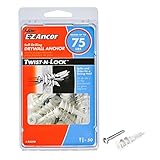
I remember staring at a half-finished shelf, a pile of drywall anchors beside me, and a growing dread. The wood looked solid, too solid for those plastic doodads. My buddy Dave had sworn by them for years, but this felt different. So, I started digging, wondering if the common wisdom about anchors applied at all, and specifically, are lead anchors used in wood? Turns out, the answer is a bit more nuanced than a simple yes or no, and it’s saved me from some serious frustration (and maybe a few falling pictures).
Why You’re Asking About Wood Anchors (and Why It’s Confusing)
Look, the world of home improvement and DIY can feel like a minefield of jargon and conflicting advice. You’ve got your drywall anchors, your toggle bolts, your concrete anchors, and then there’s the seemingly simple question: are lead anchors used in wood?
It’s a fair question. Most of us grew up seeing hammered-in nails for wood, so when we encounter situations requiring more holding power, we start looking for specialized hardware. The confusion often stems from the fact that ‘anchor’ is a broad term. Many anchors are designed for masonry or drywall, materials that are inherently weaker or more crumbly than a solid piece of wood.
When you’re dealing with wood, especially thicker, structural lumber, you often don’t need a complex anchor system at all. A good screw, properly sized, is usually your best friend. Think about hanging a heavy mirror or a bookshelf.
If you’re hitting a stud, a solid screw will hold that weight indefinitely. The problem arises when you can’t hit a stud, or the wood itself is softer, like particleboard or older, drier lumber.
That’s where the idea of an ‘anchor’ in wood starts to feel necessary, even if the terminology gets mixed up. I’ve seen countless times where people try to use a standard drywall anchor in a piece of plywood, and it just pulls out because the material doesn’t have the density or integrity to grip the anchor’s flanges. It’s a common mistake born out of a lack of specific knowledge.
The key is understanding the material you’re fastening into, not just the fastener itself.
My own little screw-up involved a cheap particleboard bookshelf I bought online. The instructions called for these little plastic doodads, which looked suspiciously like the smallest drywall anchors I’d ever seen.
I hammered them in, then tried to screw the shelf supports into them. The particleboard just crumbled around the plastic, and the whole thing wobbled like a drunk sailor.
I ended up having to take it all apart, fill the holes with wood filler, let it dry for two days, sand it down, and then use actual wood screws that went deep enough to grip the more solid edges of the particleboard. It was a mess and cost me time I’ll never get back. That experience taught me that not all ‘anchors’ are created equal, and definitely not all materials are suitable for the same fastening methods.
The question of are lead anchors used in wood really hinges on what you mean by ‘lead anchor’ and what you mean by ‘wood.’
The Truth About ‘lead Anchors’ and Wood Fastening
Let’s clear the air right away. When people talk about ‘lead anchors,’ they’re usually not talking about anchors made of lead. Lead is a soft metal, and while it was historically used for plumbing and other things, it’s not generally used for mechanical anchors that need to withstand shear and tensile loads.
The term ‘lead anchor’ is often a misnomer or a confusion with older types of fasteners. You might be thinking of: 1) Expansion anchors (which might be made of zinc, steel, or plastic, and expand when a screw is driven in), or 2) Lag shields. Lag shields are a type of anchor that creates a female thread in a hole drilled into masonry or concrete. You then screw a lag bolt into the lag shield.
These are not designed for wood. They rely on the brittle nature of concrete or brick to expand and grip.
So, to directly answer the core of the question: are lead anchors used in wood? Generally, no, not in the way you might imagine. The common ‘lead anchors’ you find in hardware stores are almost exclusively for masonry (brick, concrete, block). They work by expanding or wedging themselves into the material. (See Also: Can Concrete Anchors Be Used In Brick )
Wood, on the other hand, is a much more forgiving and structurally different material. It has grain, it has fibers, and it can be quite strong on its own.
When you need to fasten something securely into wood, you typically use a screw that bites directly into the wood fibers. The screw threads engage with the wood, providing the holding power. If you need more holding power than a standard screw can provide, or if the wood is soft or compromised, you might consider specialized wood fasteners, but rarely a ‘lead anchor’ as you’d find for concrete.
There are products that look like they might be for wood but are actually for masonry. For instance, some plumbers might use a lead wool or lead-based sealant in certain pipe fittings, and this might get confused with an anchor.
But for general construction or hanging things, it’s not a thing. The closest you might get to an ‘anchor’ in wood is something like a threaded insert or a specialized wood dowel for repairs, but these aren’t called ‘lead anchors.’
The common advice you’ll find online, and the products marketed as ‘anchors,’ are almost always for drywall or masonry. Trying to use a concrete anchor in wood is like trying to hammer a nail into a marshmallow – it just won’t hold. You’ll likely end up with a damaged hole and a fastener that pulls right out under load.
When Screws Are Enough (and When They Aren’t)
The beauty of wood is its inherent strength and ability to hold screws. For most everyday tasks – hanging a picture frame, mounting a small shelf, attaching a bracket – a good quality screw is all you need. The key is choosing the right type and size of screw.
For softwood like pine or fir, you’ll want a screw with coarser threads that can bite deeply. For hardwoods like oak or maple, finer threads might be better. And importantly, you need to consider the length.
A screw that’s too short simply won’t engage enough of the wood’s fibers to provide secure holding power. I learned this the hard way when trying to mount a heavy coat rack onto a thin piece of beadboard paneling. I used short, stubby screws, thinking they looked sturdy enough.
Within a week, the screws were starting to pull out, taking chunks of the paneling with them. The weight of the coats was just too much for the limited grip. I had to remove the rack, replace the paneling (since it was too damaged to repair), and this time, use much longer screws that went through the paneling and well into the studs behind it.
That was about $40 in lumber and a whole Saturday I wasn’t planning to spend.
So, when are screws not enough? Several scenarios come to mind. First, soft, composite woods like particleboard or MDF.
These materials lack the density of solid wood and can crumble around screw threads, leading to pull-out. In these cases, you need fasteners that can create a more substantial grip.
Second, when you absolutely cannot find a stud. If you’re hanging something very heavy on a wall and you’re relying solely on drywall and the thin wood framing behind it, even a long screw might not provide sufficient support if it misses the stud. Third, if the wood itself is old, rotted, or significantly damaged.
In such cases, the wood fibers are no longer strong enough to hold a screw effectively. This is where the idea of an ‘anchor’ or a specialized fastener becomes relevant, but again, not typically a ‘lead anchor’ for masonry. (See Also: Can Cords Be Used To Make Anchors Climbing )
For situations where a standard screw won’t cut it in wood, you’re looking at fasteners that either expand within the wood material or create their own solid threading. Think of threaded inserts designed for wood – they screw into a pre-drilled hole and provide a metal thread for subsequent screws. Or, for very specific structural applications, there are specialized wood screws designed for enhanced holding power. But these are not ‘lead anchors.’ The common mistake is trying to force a masonry anchor into a wood application, which rarely ends well. It’s like trying to plug a hole in a leaky boat with a cork meant for a wine bottle – wrong tool for the job.
When You think You Need an Anchor in Wood…
Okay, so you’re in a situation where you can’t just use a regular screw. You’ve got that wobbly shelf, or you’re hanging something surprisingly heavy on particleboard. You start thinking, “I need an anchor.” This is where you have to pause and ask yourself: what kind of wood am I dealing with, and what kind of ‘anchor’ am I considering?
If you’re looking at those little metal or plastic things that are supposed to go into concrete or brick, stop right there. Those are for masonry. Trying to use them in wood is like trying to use a chef’s knife to chop down a tree – it’s the wrong tool and you’re going to damage both. There are specific fasteners designed for wood that act like anchors by providing a more substantial grip or a reinforced thread.
One of the best options for compromised wood or particleboard is a self-tapping screw or a wood insert. Self-tapping screws have aggressive threads that can cut their own path and grip more effectively, especially in softer woods. Wood inserts, on the other hand, are small metal cylinders with external threads that you screw into a pre-drilled hole.
Once installed, they provide a strong internal thread that can accept a standard machine screw. This is fantastic for furniture assembly or for situations where you might need to repeatedly remove and reattach something. I used wood inserts to build a workbench from scratch, and the ability to screw and unscrew the legs without worrying about stripping the wood was a huge relief. It cost me about $30 for the inserts and the specialized drill bit, but it was worth every penny for the peace of mind.
Another consideration, though less common for typical DIY, are specialized heavy-duty wood fasteners. These might look like oversized screws with unique thread patterns designed to maximize grip in wood, often used in construction for joining beams or structural elements. They are not ‘lead anchors’ but are anchors for wood in the functional sense. The key is to identify what you’re trying to achieve. Are you trying to pull two pieces of wood together strongly? Are you trying to attach something to a weak wood-like material? The answer will guide you to the right fastener, which, in most cases, will be a type of screw or a specialized wood insert, not a masonry anchor.
Here’s a quick comparison of what you might encounter:
| Fastener Type | Primary Use | Works in Wood? | Opinion/Verdict |
|---|---|---|---|
| Drywall Anchor (Plastic/Metal) | Drywall | No (will pull out or crumble material) | Useless in wood. Don’t even try. |
| Masonry Anchor (Expansion/Lag Shield) | Concrete, Brick, Block | Absolutely Not | Designed for hard, brittle materials. Will fail in wood. |
| Wood Screw (Standard) | Solid Wood | Yes (primary fastener) | Your go-to for most wood applications. Choose length wisely. |
| Self-Tapping Wood Screw | Softer Woods, Particleboard, MDF | Yes (improved grip) | Good for materials that crumble easily. Cheaper than inserts. |
| Wood Insert | Particleboard, MDF, Compromised Wood | Yes (creates strong internal thread) | Excellent for furniture or repeated assembly. Worth the cost. |
Common Mistakes and How to Avoid Them
The biggest mistake, hands down, is assuming any anchor you buy will work in any material. People see a shiny metal object with threads and think, “Anchor!” Then they try to jam it into particleboard or softwood and are shocked when it doesn’t hold. The confusion around ‘are lead anchors used in wood’ is a prime example of this flawed thinking. There’s no such thing as a ‘lead anchor’ for wood in the common sense. You need to match the fastener to the substrate. Trying to use a masonry anchor in wood is like trying to sail a canoe across the Atlantic – it’s fundamentally the wrong application.
Another common error is using screws that are too short. For wood, especially if you’re not hitting a stud, you want that screw to have as much purchase as possible.
If you’re fastening a bracket to a piece of 3/4-inch plywood, a 1-inch screw is a joke. You need a screw that goes through the plywood and bites at least an inch, ideally more, into whatever is behind it. If you’re only fastening to the plywood itself, you need a screw long enough to engage the wood fibers effectively, perhaps 1.5 inches or longer, depending on the screw’s diameter and thread pitch. I once saw a guy hang a massive TV mount on a wall using screws that were barely longer than the drywall thickness.
It was terrifying to watch, and inevitably, it failed. Thankfully, no TV was harmed, but the wall looked like a train wreck.
Over-tightening is another pitfall, especially in softer woods or particleboard. You crank that drill down too hard, and you can strip the threads you’ve just created, or worse, crush the material, rendering it unable to hold anything. It’s a delicate balance.
You want the fastener snug and secure, but not so tight that you’re damaging the integrity of the wood. My rule of thumb is to tighten until you feel firm resistance, then give it just a quarter-turn more.
If it feels like it’s starting to spin freely or the material is deforming, stop. You’ve gone too far. Always pre-drill pilot holes, especially in hardwoods or when using larger screws. (See Also: Can Anchors In Your Shoulder Break )
This prevents the wood from splitting and makes driving the screw much easier. The pilot hole should be slightly smaller than the screw’s core diameter, but larger than the threads.
Finally, people often underestimate the load-bearing capacity of their chosen fastener and material. Just because a screw fits doesn’t mean it’s strong enough for the job. Always consider the weight of the object you’re hanging and choose a fastener that is rated for significantly more than that weight. If in doubt, opt for a heavier-duty option. It’s better to have a fastener that’s slightly overkill than one that fails.
Practical Tips for Wood Fastening
When you’re dealing with wood, forget about those masonry anchors. Your primary tools are screws, and knowing how to use them effectively. First, always use the right screw for the job. For general construction and furniture, wood screws with sharp threads are your best bet. For particleboard or MDF, self-tapping screws with aggressive threads can make a world of difference. If you’re going to be assembling and disassembling furniture, or dealing with very soft materials, wood inserts are a godsend. They provide a durable metal thread that won’t strip out.
Second, pilot holes are your friend. Always pre-drill a pilot hole, especially in hardwoods or when using larger diameter screws. The general rule of thumb is to drill a hole that is about 60-75% of the screw’s shank diameter. This prevents the wood from splitting and makes driving the screw much smoother. For particleboard or MDF, a pilot hole is even more important to prevent the material from crumbling. I learned this the hard way with a cheap IKEA-style cabinet I was assembling. I skipped the pilot holes for the cam locks, and the particleboard around the holes just disintegrated. It looked like a beaver had gone to town on it. Took me hours to patch and repair it.
Third, consider the length and depth. A screw needs to penetrate deep enough into the wood to get a good grip. For attaching something to a wall with studs, you want the screw to go through the drywall (typically 1/2 inch) and at least 1 to 1.5 inches into the stud itself. If you’re fastening wood to wood, make sure the screw is long enough to embed itself significantly into the second piece. Don’t be afraid to use longer screws if necessary – they provide much better holding power. I’ve found that spending an extra $10 on a box of longer, better-quality screws often saves me hours of frustration and potential damage.
Fourth, don’t overtighten. This is a common mistake that strips the wood’s fibers and weakens the connection. Drive the screw until it’s snug, then stop. If you’re using a power driver, set the clutch to a lower torque setting. You want a secure connection, not a crushed piece of wood. Finally, if you’re really unsure about a heavy load, double up. Use more screws than you think you need, or use a larger diameter screw. Better safe than sorry. For example, when mounting a heavy bookshelf, instead of four evenly spaced screws, I might use six, or switch to slightly thicker screws. It’s cheap insurance.
Faq: Are Lead Anchors Used in Wood?
What Is a Lead Anchor?
A ‘lead anchor’ is a bit of a misnomer in the context of common home hardware. It typically refers to anchors designed for masonry (like concrete, brick, or block), not for wood. These anchors expand or wedge into the hard, brittle material of masonry to provide a secure fastening point. They are not made of lead metal but are designed for applications where you can’t simply drive a screw into solid wood.
Can I Use Drywall Anchors in Wood?
No, you absolutely should not use standard drywall anchors in wood. Drywall anchors are designed to grip the relatively soft, crumbly material of drywall. Wood has much denser fibers. If you try to use a drywall anchor in wood, it will likely just pull out easily or cause the wood to crumble around it, offering very little holding power.
What Should I Use Instead of a Lead Anchor in Wood?
Instead of a ‘lead anchor’ in wood, you should use appropriate wood fasteners. For most situations, this means using wood screws of the correct length and diameter. If the wood is soft, particleboard, or MDF, consider using self-tapping wood screws or installing threaded wood inserts for a much stronger and more durable connection.
Why Are Screws Better Than Anchors in Wood?
Screws are generally better in wood because their threads are designed to bite directly into the wood fibers, creating a strong, integrated connection. Anchors, especially masonry anchors, are designed to work by expanding or wedging into brittle materials. Using an anchor in wood defeats its purpose and is likely to cause damage or provide poor holding power compared to a properly chosen screw.
Final Verdict
So, to put it plainly: are lead anchors used in wood? No. The term is almost always a confusion with anchors meant for masonry. If you’re dealing with wood, forget about those concrete-style anchors. Your best bet is almost always a well-chosen screw. For softer materials or situations requiring extra durability, look into specialized wood inserts or self-tapping screws.
The real trick is matching your fastener to the material. Don’t waste your time and money trying to force the wrong tool into the job. Invest a few extra minutes figuring out what you’re fastening into, and you’ll save yourself a lot of headaches.
Next time you’re at the hardware store, steer clear of anything labeled ‘lead anchor’ if your project involves wood. Trust the screws, and happy building.