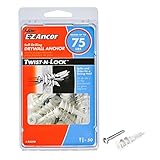
I remember the first time I tried to hang a heavy mirror in my apartment. The landlord, bless his heart, had used the thinnest, flimsiest drywall imaginable. I grabbed a handful of those plastic doodads from the hardware store, figuring they’d do the trick. That mirror lasted maybe three weeks before it decided to take a nosedive, taking a chunk of my wall with it. It was a brutal lesson in weight-bearing realities, and it got me thinking: are studs more secure than drywall anchors? The short answer is: usually, but it’s not always that simple.
It’s easy to get lost in a sea of plastic anchors, metal screws, and hollow-wall aspirations. You see a picture online of a perfectly mounted TV, and you think, ‘How hard can it be?’ Turns out, when you’re not hitting solid wood, it can be a recipe for disaster.
Hitting the Jackpot: Why Finding a Stud Is King
Let’s cut to the chase. When you’re talking about pure, unadulterated security for hanging things on your wall – especially heavy stuff like TVs, large shelves, or even just big, framed pictures that you’d hate to see crash – finding a stud is the gold standard. Period. Why? Because studs are the structural bones of your wall. They’re usually made of solid wood (like 2x4s or 2x6s) or sometimes metal, and they run vertically between the top and bottom plates of your wall frame. When you screw directly into a stud, that screw is biting into solid material. It’s got nothing to do with expanding plastic or wedge mechanisms; it’s just pure mechanical grip.
Think about it like this: imagine trying to hang a heavy coat on a thin sheet of paper versus screwing that same coat hook into a solid oak beam. The difference in holding power is astronomical. A screw going into a stud can often handle hundreds of pounds of direct pull-out force. The exact amount depends on the type of screw, the stud material, and how well it’s seated, but the principle remains. It’s about connecting your object directly to the core structure of your house, not just the decorative outer layer.
The problem for most DIYers, myself included initially, is actually finding those studs. Walls are like a mystery box. You can tap, you can listen, and you can even buy fancy electronic stud finders that beep when they think they’ve found one. I’ve owned at least three different electronic stud finders over the years, and frankly, their reliability is a bit of a crapshoot.
The cheap ones are almost useless, and the fancier ones can be fooled by pipes, wires, or even just dense drywall. My go-to method now is a combination of tapping (listening for the change in sound from hollow to solid) and, if I’m really unsure, a tiny pilot hole with a very thin drill bit to ‘feel’ for resistance. If you hit solid wood, you know you’re golden. If you drill through and nothing stops you, you’re in the hollow void, and you’ll need a different approach.
The security of a stud mount isn’t just about holding weight up; it’s about longevity and peace of mind. When something is properly secured to a stud, you don’t worry about it shifting, sagging, or suddenly detaching. It feels… permanent. It feels right. And for anything that isn’t just a lightweight piece of decor, that feeling is worth its weight in gold.
The Wild World of Drywall Anchors: When Studs Aren’t an Option
So, what do you do when your desired hanging spot is smack-dab in the middle of nowhere, miles away from the nearest stud? This is where drywall anchors come into play, and boy, is there a bewildering array of them. They’re designed to create a secure point in hollow walls, basically by expanding or wedging themselves behind the drywall when you insert a screw. It’s a clever workaround for a structural limitation.
The most basic type is the plastic expansion anchor. You drill a hole, hammer in the plastic sleeve, and then screw into it. The plastic flares out behind the drywall, providing some grip. These are fine for very light things – a small picture frame, a towel rack in a bathroom that won’t see much abuse, maybe a lightweight curtain rod. But load them up, and you’re asking for trouble. I once used these for a set of small shelves in my kitchen, and within a month, one side started to sag visibly. The plastic had started to deform under the pressure.
Then you get into the more heavy-duty options. Toggle bolts are a classic. They have a spring-loaded wing that folds up to go through a hole, then springs open behind the drywall. You pull them tight against the back of the wall, and they offer significantly more holding power than plastic anchors. I’ve used toggle bolts for hanging heavier things, like a medium-sized flat-screen TV mount (though I’d still prefer a stud for a TV), and they held up. The key is making sure the wing is seated properly behind the wall and that you use the right size for the job. (See Also: Can Concrete Anchors Be Used In Brick )
Molly bolts are another step up. These are metal sleeves with a threaded section and a flange. You drill a hole, insert the molly bolt, and then tighten the screw. As you tighten, the sleeve expands behind the drywall, and often, the screw itself is what you’ll hang your item on. They feel more solid than toggle bolts and can often handle a good amount of weight. I used a few molly bolts to hang a substantial floating shelf that holds a collection of books, and they’ve been solid for years.
The biggest difference between studs and anchors is the material they rely on. Anchors are entirely dependent on the integrity of the drywall itself, and the small anchor mechanism creating a larger surface area behind it. Drywall, while strong in tension (resisting being pulled apart), is relatively weak in shear and pull-out forces, especially older or damaged drywall. So, even the best anchor is fundamentally working with a weaker foundation than a solid piece of wood.
Common Mistakes with Drywall Anchors
One major mistake I see people make (and have made myself) is not matching the anchor to the weight of the item. Manufacturers usually provide weight ratings, but these are often optimistic and assume perfect installation. Always overestimate the weight and choose an anchor rated significantly higher.
Another blunder is using the wrong tool or technique. Forcing a screw into a plastic anchor that’s not seated properly, or not drilling the correct size hole for a toggle or molly bolt, can mean the anchor won’t engage correctly behind the wall, drastically reducing its holding power. And, of course, just assuming any anchor will do for any job is a fast track to a fallen item.
Weight Ratings and Real-World Holding Power
This is where things get a bit murky, and frankly, where a lot of marketing fluff can obscure reality. Manufacturers slap weight ratings on everything, and it’s easy to look at a plastic anchor rated for ’50 lbs’ and think, ‘Great, that’ll hold my TV!’ But those ratings are often theoretical, measured under ideal lab conditions, and usually refer to shear strength (weight pulling down) rather than pull-out strength (weight trying to yank it straight out of the wall). In the real world, forces are rarely so simple. Things get bumped, vibrations happen, and the weight might not be perfectly distributed.
I’ve learned to take these numbers with a hefty grain of salt. For instance, a toggle bolt rated for 100 lbs might realistically offer 40-50 lbs of reliable, long-term pull-out strength in typical drywall. A good molly bolt might push 70-80 lbs.
A simple plastic anchor? Maybe 10-20 lbs if you’re lucky and the drywall is pristine. When I’m installing something like a ceiling-mounted projector screen or a shelf meant to hold dozens of books, I’m not looking at the anchor’s rating; I’m looking for a stud.
If I absolutely must use an anchor, I’ll buy the beefiest toggle or molly bolt I can find and still use way more than I think I need. For a TV, unless it’s a tiny one, I’m finding studs. It’s just not worth the risk.
My own personal rule of thumb is to always double or even triple the required weight capacity when selecting an anchor. If I need to hang something that weighs 20 lbs, I’m looking for anchors rated for at least 40-60 lbs, and I’d prefer them to be toggle or molly bolts. If the item weighs 50 lbs or more, it’s studs or nothing. It’s better to spend an extra few dollars on a better anchor or take the time to find a stud than to deal with the mess and potential damage from a falling object. (See Also: Can Cords Be Used To Make Anchors Climbing )
Consider the forces at play. A TV mount, for example, doesn’t just hold the TV’s weight; it often pulls outwards slightly as well, especially if you extend it. This pull-out force is what really tests the limits of drywall anchors. Studs, on the other hand, are designed to handle the entire load of the wall structure, so they have an inherent strength that anchors can only approximate.
How to Find Studs Accurately
This is where a little old-school know-how can beat fancy gadgets. Start by locating the electrical outlets or light switches. These are almost always attached to a stud. If you can find one outlet, you can usually determine the spacing of studs in your home. Standard interior wall studs are typically spaced 16 inches on center (meaning 16 inches from the center of one stud to the center of the next), though sometimes they might be 24 inches on center. Measure 16 inches from the stud you know exists, and that’s likely another stud. Measure 16 inches again, and so on.
Another trick is to look for nail pops or drywall seams. Sometimes, you can see slight imperfections or faint lines on the wall surface that indicate where drywall sheets were joined or where nails were driven. These often align with the underlying studs. Tapping the wall with your knuckle or a small rubber mallet is also effective. A hollow sound means you’re over drywall and air; a solid, thudding sound indicates you’ve hit wood.
Finally, the most reliable, albeit slightly invasive, method is to use a very thin drill bit (1/16 inch or so) and drill a small pilot hole in an inconspicuous spot. If you hit resistance immediately and the bit doesn’t go far, you’ve found a stud. If you can drill about an inch or more with minimal resistance, you’re in the hollow space. You can then patch the tiny hole with a dab of spackle.
Comparing Anchor Types: A Quick Guide
When you absolutely have to use an anchor, understanding the differences can save you headaches. Here’s a simplified rundown of what I’ve found useful:
| Anchor Type | Holding Power (Est.) | Best For | My Verdict |
|---|---|---|---|
| Plastic Expansion Anchor | Very Light (5-15 lbs) | Small frames, lightweight decor | Barely adequate. Only for the lightest jobs. |
| Self-Drilling Screw-In Anchor (Plastic/Metal) | Light to Medium (15-30 lbs) | Medium frames, small shelves, bathroom accessories | Better than basic plastic, but still limited. |
| Toggle Bolt | Medium to Heavy (40-70 lbs) | Medium TVs, shelves, mirrors, cabinet fronts | Reliable for many mid-weight items if installed correctly. |
| Molly Bolt (Sleeve Type) | Medium to Heavy (50-100 lbs) | Heavier shelves, mirrors, light fixtures, TVs | Solid choice for significant weight when studs aren’t an option. Feels very secure. |
| Snap Toggle (Heavy Duty) | Heavy (100+ lbs) | Large TVs, heavy shelves, cabinets, anything really heavy | My go-to for serious weight without studs. Requires a larger hole. |
The key takeaway here is that while anchors provide a solution, they are always a compromise compared to a direct connection to a stud. The more weight you’re dealing with, the more you’re pushing the limits of what drywall itself can support, no matter how clever the anchor.
Real-World Scenarios: When I Grab Anchors vs. Studs
I’ve got a whole arsenal of mounting hardware in my garage, and I’ve learned when to reach for which. My rule is simple: if it’s heavy, important, or something that would cause a disaster if it fell, I’m finding a stud. This includes my main living room TV (a 65-inch beast), the floating shelves in my kitchen that hold all my cookware, and any major bathroom fixtures like towel bars or toilet paper holders that get yanked on regularly.
On the flip side, I’ll happily use anchors for lighter tasks. The small, decorative mirror in my hallway? Plastic anchor. The lightweight artwork in my office? A couple of small self-drilling anchors. Even the rod for my lightweight bedroom curtains uses a medium-duty anchor. I recently installed a small spice rack in my pantry using snap toggles, and they feel rock solid. The key is knowing the weight of the item and understanding the limitations of the wall material and the anchor.
A personal anecdote: a few years back, I was helping a friend mount a relatively inexpensive, small TV in their guest room. They didn’t want to pay for a professional, and they were convinced the plastic anchors they bought would be fine. I warned them, but they insisted. Less than six months later, the TV, along with a good chunk of drywall, ended up on the floor. No one was hurt, thankfully, but it was a mess. That experience cemented my belief: when in doubt, find the stud. If you can’t find a stud, get the most solid anchor available and use multiple anchors if possible. (See Also: Can Anchors In Your Shoulder Break )
The type of drywall also plays a role. Older homes might have thicker, more brittle plaster and lath walls, which behave differently from modern drywall. New construction often uses thicker drywall sheets (5/8 inch) which are inherently stronger than the standard 1/2 inch. So, your wall’s construction can influence how well an anchor performs. For any truly important or heavy mounting, it’s always best practice to consult the manufacturer’s recommendations and, if possible, over-engineer your solution. Prioritizing safety and structural integrity means understanding that are studs more secure than drywall anchors, overwhelmingly so.
I also consider the environment. In a high-humidity area like a bathroom, moisture can degrade drywall over time, making it weaker. This is another reason to lean towards studs whenever possible for anything substantial. For lighter items like a toothbrush holder, a good quality plastic anchor might still be fine, but for a heavy medicine cabinet, studs are a must.
A Note on Professional Installation and Standards
When it comes to mounting anything that involves significant weight or is in a public or high-traffic area, professional installation is often the safest bet. Professionals have the experience, tools, and knowledge to accurately locate studs, assess wall structure, and choose the appropriate fasteners. They understand load-bearing capacities and building codes. For instance, according to the International Residential Code (IRC), while specific fastener requirements for general wall hanging aren’t detailed to the point of naming specific anchors, the emphasis is on making sure structural integrity and safe load support. This implies that fasteners must be adequate for the intended load, which often means direct attachment to framing members (studs).
When you’re dealing with a professional, they’re usually looking for studs first and foremost. If studs aren’t perfectly aligned for a specific mount, they might use specialized heavy-duty anchors, but they’ll do so with a clear understanding of the forces involved. They’re not just guessing; they’re applying known principles of physics and engineering to your specific situation. This is often why professional TV mounting services come with a guarantee – they know how to do it right, and ‘right’ usually means studs.
For the average homeowner, the DIY path requires a bit of education. It’s about recognizing the limitations of your materials and making informed choices. Don’t be afraid to spend a little extra on better hardware if it means your shelves won’t fall down. And always, always err on the side of caution. When in doubt, find a stud.
Verdict
So, when it comes down to it, the question of are studs more secure than drywall anchors has a pretty clear winner. For any significant weight or anything you absolutely cannot afford to have fall, hitting a stud is the only way to go. It’s the fundamental difference between securing something to the skeleton of your house versus relying on the skin.
Drywall anchors are clever inventions that bridge the gap when studs aren’t available, and the heavy-duty ones can be surprisingly strong. But they are always a compromise, relying on the integrity of the drywall itself and the mechanical advantage of their design.
My advice? If you’re hanging anything heavier than a framed diploma, do yourself a favor and spend the time to find a stud. If that’s truly impossible, invest in the best toggle bolts or snap toggles you can find, use more than you think you need, and always, always double-check the weight capacity against what you’re hanging. Your walls (and your belongings) will thank you.