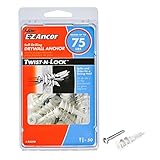
I remember the first time I saw a set of those fancy, supposedly industrial-grade 41 kc anchors. They looked like they could hold up a bridge, and the box promised they were the be-all and end-all for any heavy-duty fastening job. I bought them, naturally, because who wouldn’t want that kind of peace of mind? Well, let me tell you, sometimes the most expensive options are just that – expensive.
This whole question of whether the 41 kc anchors are married is less about marital status and more about whether they’re suited for the job they claim to do. It’s about separating the hype from the honest-to-goodness utility.
We’ve all been there, right? Staring at a wall, a piece of equipment, or some other project, wondering if the fastener you’ve got will actually hold. And then you see it – the ‘heavy-duty’ label, the solid-looking design, and you think, ‘This is it. This is the one.’ But is it really?
So, Are the 41 Kc Anchors Married to the Job?
Look, when you’re talking about anchors, especially ones that boast a name like ’41 kc,’ you’re expecting some serious muscle. The ‘kc’ often refers to a kilocount, implying a load-bearing capacity. But here’s the blunt truth: ’41 kc’ can mean a lot of things depending on the material it’s being tested in, the shear force versus tensile strength, and even the specific brand or model. It’s not a single, universally recognized, foolproof number stamped on every anchor.
I once bought a set of anchors, advertised with a massive load rating – I think it was north of 500 pounds in concrete. Sounded amazing, right? I was mounting a rather heavy workbench in my garage. Followed the instructions to the letter. Within two weeks, under normal use, one side started to sag. The anchor itself looked intact, but the material around it – the concrete block wall – had just crumbled. The anchor wasn’t the weak link; the wall was. But the anchor’s design, or perhaps the marketing, made it seem like it was the ultimate solution when it was really just part of a system.
This is where the ‘married’ analogy comes in. Are these 41 kc anchors truly suited and designed to be a permanent, reliable partner for the kind of loads they imply? For some applications, absolutely. For others, they might be overkill, or worse, misleading. You have to consider the substrate – the material you’re actually screwing into. Drywall? It’s a joke for anything beyond a picture frame. Poured concrete? That’s where these types of anchors usually shine, but even then, the quality of the concrete matters. Is it old, crumbly block, or dense, solid poured concrete?
Another thing that bugs me is the general advice you see online. ‘Just buy the strongest anchor you can find!’ is a common refrain. That’s like saying you should only ever drive a monster truck because it can tow anything. It’s inefficient, impractical, and sometimes, the heavy-duty anchor can actually damage the material it’s supposed to be holding. For instance, expanding anchors in brittle masonry can crack the material if over-tightened or if the anchor is too aggressive.
I remember a buddy of mine was putting up some shelves in his basement, which had poured concrete walls. He grabbed some massive, double-expansion anchors that had insane load ratings. He hammered them in, cranked them down, and crack. A spiderweb of fissures spread from one of the anchor holes. The shelves held, sure, but he permanently weakened the wall. Was it the anchor’s fault? Partially. Was it the wrong anchor for the job and the wrong approach? Absolutely. We often focus on the fastener itself, forgetting that the performance is entirely dependent on its environment. It’s the anchor’s relationship with the wall that determines success, not just the anchor’s inherent strength.
What to Look for: Beyond the ’41 Kc’ Hype
So, if ’41 kc’ isn’t the magic bullet, what should you actually be looking for when you need a serious anchor? First off, understand the load. Are we talking about static load (just sitting there, like a shelf) or dynamic load (things that move, vibrate, or are subject to impact, like a swing set)? Static loads are generally less demanding. Dynamic loads require much more solid solutions, often involving through-bolting or specialized structural anchors, not just something you screw into a hole.
Then, you need to know your substrate. Seriously, take a minute. Is it hollow-core concrete block? Solid poured concrete? Brick? Wood? Each material has its own limitations and requires a specific type of anchor. For concrete and masonry, you’re often looking at wedge anchors, sleeve anchors, or concrete screws. These are the types of fasteners that can handle significant weight because they expand or grip the material effectively. Anchors designed for drywall, like toggle bolts or molly bolts, are a different beast entirely and simply won’t cut it for heavy loads, no matter what their marketing claims. (See Also: Can Concrete Anchors Be Used In Brick )
I’ve wasted money on various types of anchors over the years, thinking I was being smart by buying something with a high-numbered rating. My biggest surprise was when a simple, relatively inexpensive concrete screw, designed for masonry, outperformed a much more complex and expensive ‘heavy-duty’ sleeve anchor in a specific application. The screw was designed to cut its own threads directly into the concrete, creating a strong mechanical lock. The sleeve anchor relied on expansion, which, in the particular batch of concrete I was working with, was less effective. It was a lesson learned: simplicity and the right design for the substrate often trump raw, uncontextualized load ratings.
Here’s a little table I put together from my own experiences, which might give you a clearer picture than just staring at numbers on a box:
| Anchor Type | Substrate Best For | Typical Load Capacity (General Estimate) | My Verdict |
|---|---|---|---|
| Wedge Anchor | Solid Concrete, Block | High (hundreds to thousands of lbs, depending on size/material) | Reliable workhorse for serious jobs. Make sure you drill the right size hole. |
| Sleeve Anchor | Solid Concrete, Block | High (similar to wedge, can vary based on expansion) | Good, but sometimes expansion can be less consistent than wedge. |
| Concrete Screw (e.g., Tapcon) | Concrete, Block, Brick | Moderate to High (good for many common tasks) | Often underrated! Excellent choice for convenience and solid hold when loads aren’t extreme. |
| Toggle Bolt (Large) | Hollow Walls (Drywall, Hollow Block) | Moderate (can be surprisingly strong in the right situation) | Lifesaver for hollow walls, but requires a larger hole and careful placement. |
| Lag Shield Anchor | Masonry (Brick, Concrete) | Moderate | Older tech, still effective, but can be fiddly to install. |
When you’re looking at those 41 kc anchors, ask yourself: what is the actual load I’m putting on this? What is the wall made of? Is this anchor designed for that wall and that load? If you can’t easily find that information, or if the anchor seems overly complex for what you need, it might be a sign to look elsewhere. Sometimes, the best anchor is the one that disappears into the wall and just does its job without complaint.
Common Mistakes When Choosing and Using Anchors
Let’s talk about screw-ups. We all make them, and usually, they cost us time and money. The biggest mistake I see people make with heavy-duty anchors, including those marketed as ’41 kc,’ is the hole. You MUST drill the correct size hole. Too small, and you won’t get the anchor in properly, or you’ll split the substrate. Too large, and it won’t have enough material to grip or expand into. Manufacturers usually provide precise drill bit sizes. Don’t eyeball it.
Another massive blunder is not understanding the difference between shear and tensile strength. Tensile strength is how much a fastener can be pulled straight out. Shear strength is how much it can resist being cut or bent sideways. Many anchors are rated for tensile strength in ideal conditions. But what if you’re hanging something that sticks out from the wall, creating a lever arm? That’s a shear force scenario, and the anchor’s performance might be significantly less than its tensile rating suggests. It’s like the difference between pulling a rope straight up versus trying to snap it over a sharp edge.
I learned this the hard way when I was mounting a very heavy tool cabinet in my workshop. The cabinet was designed to be bolted to the wall.
I used what I thought were super-strong anchors. The cabinet was fine for a while, but then I started leaning on it, putting tools on top, basically creating a massive lever arm.
One morning, I found the cabinet had sagged significantly. The anchors were still in the wall, but the wall material around them had started to give way under the continuous shear stress. I had used anchors rated for a high tensile load, but they weren’t designed for the constant, directional force I was applying. I ended up having to switch to a different type of anchor that distributed the load better and was more resistant to that kind of sideways pull.
It was a frustrating, expensive lesson in physics and anchor selection. (See Also: Can Cords Be Used To Make Anchors Climbing )
People also get lazy with tightening. For some anchors, like wedge anchors, there’s a specific torque spec. Over-tightening can strip the threads or damage the substrate. Under-tightening means it won’t engage properly. For concrete screws, you just tighten until snug, but you need to feel that resistance. For toggle bolts, you need to make sure the wings have fully deployed behind the drywall. It requires a bit of feel and understanding of how the anchor works.
Finally, there’s the issue of using the wrong anchor for the wrong material, which we touched on. Putting a heavy-duty masonry anchor into drywall is like trying to anchor a battleship with a string. Conversely, using a delicate drywall anchor in concrete is just asking for failure. Always, always, always match the anchor to the wall.
Real-World Use: When 41 Kc Anchors (or Similar) Shine
Okay, so when are those heavy-duty anchors, the ones that might have ratings around 41 kc or higher, actually the right choice? They’re typically designed for situations where you need to secure substantial weight or structural components to solid materials like poured concrete or dense concrete block. Think about things like:
- Mounting heavy machinery or industrial equipment.
- Securing structural elements like support beams or posts.
- Installing large, heavy fixtures such as commercial bathroom partitions or very substantial shelving units in a commercial setting.
- Anchoring safety equipment like railings or fall arrest systems to concrete structures.
- Attaching significant loads to exterior concrete walls, like a heavy gate or a substantial trellis.
In these scenarios, the anchor needs to be able to handle significant stress without failing. The ’41 kc’ rating, if accurate and verified for the specific conditions, indicates a high load-bearing capacity. These anchors often work through mechanical expansion, wedge action, or by cutting threads deep into the substrate, creating a very strong bond.
I remember helping a friend install a large, professional-grade generator in his garage. It weighed a few hundred pounds. The manufacturer explicitly stated it needed to be bolted down to prevent movement during operation, especially during power outages when it would be under load. We used heavy-duty sleeve anchors, drilled into the thick, poured concrete slab floor. The anchors were rated well above the generator’s weight and the forces it would exert. The installation was straightforward: drill the hole, insert the anchor, and tighten. The generator has been running flawlessly for years, no vibration issues, no movement. That was a case where a solid anchor was absolutely necessary and performed perfectly.
The key here is that the substrate is sound and capable of supporting the load. If you’re drilling into a thin concrete slab that sits on dirt, or a block wall that’s crumbling, even the ‘strongest’ anchor will eventually fail because the material it’s embedded in can’t handle the stress. It’s a partnership. The anchor needs a good foundation, just like a marriage needs a solid base.
The Contrarian View: Are We Over-Anchoring?
Here’s where I might go against the grain a bit. Everyone says, ‘When in doubt, over-anchor.’ And sure, if you’re dealing with important safety components or truly massive loads, that’s probably wise. But for a lot of DIY projects, I think we’ve become obsessed with the idea of needing the strongest possible anchor, and it’s not always the best solution. I disagree because over-anchoring can lead to unnecessary complexity, damage to the substrate, and frankly, wasted money and effort.
Take the example of hanging a TV on a solid concrete wall. You can buy these ridiculously beefy anchors that could probably hold up a car. But most modern TVs, while heavy, aren’t subject to the kind of dynamic or shear forces that would necessitate that level of brute force. A good quality concrete screw (like a Tapcon, which is usually rated for hundreds of pounds in concrete) is often more than sufficient. It’s easier to install, less likely to cause damage if you make a slight mistake, and significantly cheaper. The aggressive expansion of a heavy-duty anchor in a thinner concrete wall could actually weaken it more than a properly sized concrete screw.
I’ve seen people use massive wedge anchors to hang relatively light-duty shelving units in their homes. It’s overkill. It requires a larger drill bit, more effort to install, and if they ever want to remove it, they’re left with a big, ugly hole that’s harder to patch. For many standard home applications – hanging cabinets, shelves, curtain rods, even some furniture – the ‘standard’ heavy-duty anchors, or even quality medium-duty ones, are perfectly adequate. (See Also: Can Anchors In Your Shoulder Break )
The market pushes these super-rated anchors because they sell, and people buy them out of fear of failure. But often, a well-chosen, appropriately rated anchor is all you need. The goal isn’t just to make it impossible to pull out; it’s to make it secure for its intended purpose without causing damage or unnecessary expense.
Practical Tips and Tricks for Anchor Success
Let’s boil this down to practical advice. If you’re staring at a project and need to anchor something securely, here’s what I’d do:
- Identify Your Substrate: Seriously, tap on the wall. Is it solid? Hollow? What’s it made of? Get a small sample if you can, or at least understand its composition. This is the single most important step.
- Estimate the Load: Weigh the item you’re hanging. Consider if it will be static or dynamic. Add a safety margin – usually, doubling the weight is a good idea for DIY.
- Research Anchor Types for Your Substrate and Load: Don’t just grab the biggest anchor. Look for anchors specifically designed for concrete if you’re in concrete, or for hollow walls if that’s what you have. Check load ratings, but more importantly, look at application guides.
- Drill the Correct Hole Size: Use a sharp masonry bit for concrete/block. Measure your drill bit if you’re unsure. A plugged hole can be fixed; an incorrectly sized hole for an anchor is often a redo.
- Install with Care: Follow the manufacturer’s instructions. For expansion anchors, make sure they expand properly. For screws, tighten until snug but don’t strip. For toggles, make sure the wings are engaged.
- Test Gently: Before putting the full load on, give the mounted item a gentle tug. Listen for creaks or signs of loosening.
I had a situation where I was mounting a very heavy mirror to a plaster wall (which is basically plaster over lath, a bit like drywall but more brittle). I initially thought I’d need some massive toggle bolts. But the mirror wasn’t that deep, and the plaster was quite solid. I ended up using heavy-duty self-drilling drywall anchors, the kind that bite directly into the plaster. I screwed them in, gave them a good tug, and they held firm. The mirror has been up for years without issue. It was a case of using a specialized anchor that was strong enough for the load in that specific, slightly unusual substrate, without going overboard.
One last tip: if you’re ever unsure, or if the stakes are high (like safety equipment), consult a professional. It might cost a bit upfront, but it’s cheaper than fixing a major failure.
Frequently Asked Questions About 41 Kc Anchors
What Does ’41 Kc’ Mean for an Anchor?
The ’41 kc’ designation typically refers to a load-bearing capacity, often in pounds or kilonewtons (kc for kilonewtons), suggesting it can withstand a significant force. However, this rating is highly dependent on the specific anchor design, material it’s installed in (substrate), and whether it refers to shear or tensile strength. It’s a starting point, not a definitive answer on its own.
Are 41 Kc Anchors Suitable for Drywall?
Almost certainly not. Anchors rated at ’41 kc’ are intended for heavy-duty applications in solid materials like concrete or dense block. Drywall is a relatively weak substrate and requires specialized anchors like toggle bolts or molly bolts designed to distribute weight across a larger surface area behind the wall. Using a heavy-duty anchor in drywall would likely damage the wall and provide no secure fastening.
When Should I Consider Using a 41 Kc Anchor?
You should consider anchors with high load ratings, like those that might be advertised as 41 kc, when you need to fasten very heavy items to solid materials such as solid poured concrete or structural concrete block. Examples include mounting heavy machinery, structural supports, large industrial fixtures, or safety equipment where failure is not an option.
What Is the Difference Between Shear and Tensile Strength for Anchors?
Tensile strength refers to an anchor’s ability to resist being pulled straight out of the material it’s installed in. Shear strength, on the other hand, measures an anchor’s resistance to forces applied sideways, perpendicular to the anchor’s shaft, which can cause it to bend or break. For many applications, shear strength is a more important factor, especially when items are mounted away from the wall, creating a lever arm.
Conclusion
So, are the 41 kc anchors married to the concept of ‘ultimate strength’? Well, they’re certainly designed for serious relationships with solid materials. But like any partnership, success depends on the right conditions. They’re not a magic bullet for every wall or every job.
My advice? Don’t get blinded by big numbers. Understand your substrate, understand your load, and choose an anchor that’s built for that specific union. Sometimes a simpler, well-matched anchor is a far better companion for your project than an overly aggressive, mismatched heavy-hitter.
Before you grab the biggest, baddest anchor you can find, take a moment to ask yourself what kind of wall you’re dealing with and what you’re actually trying to hang. A little thought now can save you a lot of headaches and damaged materials later.