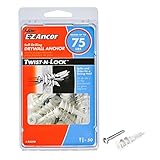
I remember the first time I tried to hang a heavy mirror. I grabbed a handful of what looked like generic plastic doodads from the hardware store, hammered them in, and screwed the mirror’s bracket on. Looked solid. For about three hours. Then, with a sickening crunch, the whole thing came crashing down, taking a chunk of drywall with it. That’s when I learned a brutal lesson: no, there aren’t just one-size-fits-all drywall anchors. You absolutely have to care about the size, and here’s why.
Ignoring the nuances of anchor size isn’t just a minor oversight; it’s a recipe for frustration, damaged walls, and potentially broken possessions. You see, different anchors are designed for different weights and different types of wall material. Get it wrong, and you’re just decorating your wall with future repair patches.
So, before you grab the next handful of plastic gizmos, let’s get clear on one of the most fundamental questions for anyone tackling DIY: are there different size drywall anchors?
Why You Can’t Just Wing It with Anchor Size
Look, I’m all for simplicity. If there was one anchor to rule them all, I’d be shouting it from the rooftops. But there isn’t. The reason drywall anchors come in a bewildering array of shapes and sizes is pretty straightforward: drywall itself is surprisingly weak. It’s basically compressed gypsum sandwiched between paper. It’s great for creating smooth walls, but it’s not exactly structural steel. When you’re hanging something, you’re not screwing into the solid wall stud (most of the time); you’re screwing into that gypsum core.
This is where anchor size becomes most important. The anchor’s job is to distribute the weight you’re hanging over a larger surface area of the drywall, or to expand and grip the backside of the wall, preventing the screw from just pulling out. A tiny anchor meant for a picture frame is going to be useless for a 50-pound shelf. Conversely, a massive toggle bolt is overkill and makes a unnecessarily big hole for a lightweight item. You need the right tool for the right job, and for anchors, that means the right size and type.
I once tried to hang a heavy antique clock using what I thought were appropriate anchors. They were medium-sized plastic ones, and I figured that was good enough. The clock swayed ominously for a week before one side finally gave way, leaving a jagged tear in the drywall and the clock tilted precariously. It was a mess. The problem? The clock’s weight, combined with vibration, was more than those anchors, at that specific size, could handle in that particular section of drywall. I should have gone bigger, or better yet, used a toggle anchor. It’s a classic case of assuming one size fits all, and it blew up in my face – literally, with dust.
The size isn’t just about length, though that’s important too, but also about the diameter of the screw it accepts and the spread or grip mechanism. A small ribbed anchor might take a #6 screw, while a heavy-duty toggle anchor might take a much larger screw and have wings that spread wide behind the wall. Understanding these differences means you won’t be making a second trip to the hardware store for more anchors after your first attempt fails spectacularly. It’s about matching the anchor’s capacity to the weight of the object you’re hanging and the strength of the wall material you’re fastening into.
The Different Types of Anchors and Their Size Implications
So, are there different size drywall anchors? Absolutely. And the size often correlates with the type of anchor, which in turn dictates its load-bearing capacity. Let’s break down the common players and what size means for each.
First up, the ubiquitous plastic expansion anchors. These are the most common and usually the cheapest. They come in a range of sizes, often identifiable by color, but more reliably by the diameter of the hole they require (e.g., 1/4 inch, 3/8 inch) and the screw size they accommodate (e.g., #6, #8, #10).
A smaller, thinner plastic anchor is generally for lighter loads, perhaps a few pounds, suitable for small shelves or hanging lightweight decor. A larger, thicker one can handle more, maybe 20-30 pounds, but you’re still relying on the plastic expanding inside the hole.
The key here is that the diameter of the anchor and the size of the screw it holds are direct indicators of its strength. Don’t be fooled by a longer anchor if it’s skinny; it’s the load-bearing surface and screw size that matter most.
Then you have self-drilling or screw-in anchors. These often have a sharp point and threads that bite directly into the drywall. They also come in various sizes, again distinguished by their diameter and the screw they accept. Some are quite slim and designed for very light items, while others are chunkier. The advantage here is often ease of installation – no pilot hole needed for many. But the principle remains: a bigger anchor can typically handle more weight because it creates a larger contact area with the drywall and accepts a larger screw.
Next, the heavy hitters: toggle bolts and molly bolts. These are what you reach for when you’re hanging something substantial – a TV mount, a large cabinet, a substantial bookshelf. Toggle bolts have a spring-loaded wing that folds to pass through a hole, then springs open behind the drywall, gripping a large surface area. (See Also: Can Concrete Anchors Be Used In Brick )
Molly bolts work similarly but often have a sleeve that expands. These anchors require a much larger hole, and that larger hole is precisely why they can handle significant weight, sometimes 50-100 pounds or more, depending on the specific anchor and drywall thickness.
Their size is their strength. You won’t find a tiny toggle bolt for a picture frame because it would be ridiculous; the hole alone would be the problem. The size here is measured by the diameter of the hole needed, and the length of the bolt assembly.
Here’s a quick comparison:
| Anchor Type | Typical Use | Size Indicator | Load Capacity (General Estimate) | My Verdict |
|---|---|---|---|---|
| Plastic Expansion | Light decor, small shelves | Hole diameter, screw size | 5-25 lbs | Okay for the lightest stuff. Easy to strip out if overloaded. |
| Self-Drilling/Screw-in | Medium decor, small cabinets | Diameter, screw size | 15-50 lbs | Convenient, but check weight ratings carefully. |
| Toggle Bolts / Molly Bolts | Heavy shelves, TV mounts, cabinets | Hole diameter, bolt length | 50-100+ lbs | The go-to for serious weight. Don’t skimp here. |
When you’re looking at anchors, pay close attention to the packaging. It will usually specify the recommended screw size and, importantly, the maximum weight it’s rated to hold in drywall. This rating is your best friend. Remember, these are often conservative estimates, but it’s better to be safe than to have your prized possession end up on the floor.
How to Choose the Right Size Anchor for Your Project
Choosing the right size anchor isn’t rocket science, but it does require a little thought. First, and most obviously, what are you hanging? A framed photo is a different beast than a mounted flat-screen TV. Get a rough estimate of the item’s weight. If it’s something you can’t easily weigh, err on the side of caution and assume it’s heavier than you think. I once underestimated the weight of a heavy ceramic garden stool I wanted to hang indoors. I used a couple of beefy-looking plastic anchors, and within a month, the whole thing was drooping. Turns out, that thing weighed a good 30 pounds, and my anchors were rated for 15.
Next, consider your wall. Is it standard 1/2-inch drywall? Or maybe 5/8-inch, which is more common in commercial settings or for fire-rated walls? Thicker drywall can generally hold a bit more, but the anchor needs to be long enough to engage that thickness properly. The packaging on anchors will often specify the minimum drywall thickness required for optimal performance. If your anchor is too short, it won’t grab effectively, even if it’s otherwise strong.
Now, let’s talk about the screw. The anchor is only as good as the screw that goes into it. The anchor packaging will tell you the correct screw size (e.g., #8 screw). Using a screw that’s too small won’t engage the anchor’s expansion or gripping mechanism properly, and one that’s too large might split the anchor or simply not fit.
The screw should also be the right length. For most common anchors, the screw needs to be long enough to go through the anchor and then engage at least an inch into the drywall (for plastic anchors) or firmly grip the wall behind (for toggles). For heavy items, you want screws that go deep. Always use the screw size recommended on the anchor’s packaging.
Finally, and this is where many people get tripped up: are there different size drywall anchors based on the type of wall material behind the drywall? Yes, indirectly. While most anchors are designed for drywall, some might offer better grip in plaster or other wall substrates. However, the most important factor is still the weight. If you’re dealing with a hollow wall, you absolutely need an anchor that expands or grips on the other side. For solid walls (like brick or concrete), you’d be using a different type of fastener altogether – a masonry anchor. Trying to use a drywall anchor in solid masonry is a recipe for disaster, as it simply won’t hold.
A good rule of thumb: if the item is delicate, valuable, or could cause significant damage if it falls, use a heavy-duty anchor like a toggle bolt, even if the item feels lighter than its rating. It’s cheap insurance. Always check the weight rating on the packaging. If it’s not clearly stated, or if you’re unsure, find a different anchor. Don’t guess. I’ve learned that lesson the hard way, and my wallet (and my walls) have paid for it.
Common Mistakes People Make with Anchor Size
You’d think something as simple as picking an anchor would be straightforward, but the sheer variety, combined with a bit of overconfidence, leads to a mountain of mistakes. The biggest one? Assuming the anchor that came with the picture frame or fixture is sufficient for anything beyond a feather. Manufacturers often include the absolute cheapest, smallest anchors they can get away with. They’re usually just enough to hold the item itself in place in perfect conditions, not for the item plus any dynamic load (like someone bumping into it) or the weight of books on a shelf.
Another massive blunder is not understanding the difference between weight ratings for drywall versus wood studs. Many people see a hole in the wall and think, “Yep, that’s a stud!” but it’s actually just an empty space. Drywall anchors are designed to work in that empty space or within the drywall itself. (See Also: Can Cords Be Used To Make Anchors Climbing )
If you do hit a stud, you don’t need an anchor at all – you can screw directly into the wood. The problem is, most people don’t confirm they’ve hit a stud. They just drill a hole, insert an anchor, and screw it in. If that hole was actually empty space, they’re relying solely on the anchor.
If they think they hit a stud but actually just drilled through a thick piece of drywall and the anchor is sitting in air, that anchor’s weight rating is effectively zero.
Related to this is the over-reliance on plastic anchors for anything remotely heavy. These are fine for very light duty – a small mirror, a lightweight wall calendar. But anything more, and you’re asking for trouble. I’ve seen people hang 30-pound TV consoles on plastic anchors meant for 10 pounds. It’s a ticking time bomb. The plastic can crack, the threads can strip, or the anchor can just pull out of the wall like a cork from a bottle.
Then there’s the issue of screw size and length. People often use whatever screw they have lying around. If the screw is too small for the anchor, it won’t expand or grip properly. If it’s too long, it might bottom out in the wall cavity, and if it’s too short, it won’t engage enough of the anchor to provide proper support. Always, always, always use the screw size and length recommended on the anchor packaging. It’s there for a reason.
Finally, the hole size. For expansion anchors, you need to drill the correct size hole. Too small, and you can’t get the anchor in without damaging it. Too large, and the anchor won’t have enough drywall to grip. For toggle bolts, you need a large, clean hole. Trying to force a large toggle bolt through a too-small hole will break the mechanism. Always use the drill bit size recommended by the anchor manufacturer. It’s usually stamped right on the anchor or clearly stated on the packaging. Ignoring these seemingly small details is how you end up with a wall full of useless holes and a pile of broken dreams (and decor).
When to Use What: Real-World Scenarios
Let’s get practical. Forget the diagrams for a second and imagine you’re actually in your living room, staring at a blank wall. What anchor size and type do you reach for?
Scenario 1: Hanging a Lightweight Picture Frame (Under 5 lbs)
- Problem: You have a nice landscape photo you want to hang. It’s small, light, and doesn’t need to withstand much.
- Solution: A small, ribbed plastic expansion anchor (often blue or white) is usually sufficient. You’ll need to drill a small pilot hole, then gently tap the anchor in. Use a #6 or #8 screw, making sure it’s long enough to go through the anchor and bite into the drywall. Many picture hanging kits come with tiny nails and hooks, which are generally fine for this weight. If using a screw, make sure it’s not too long that it hits something behind the wall (unlikely for a picture frame, but still worth a thought).
Scenario 2: Installing a Small Floating Shelf (Up to 20 lbs)
- Problem: You want a sleek floating shelf to hold a couple of books or some decorative items.
- Solution: This is where you need to step up from basic plastic anchors. A self-drilling anchor rated for at least 20-30 pounds would be a good starting point. For a shelf, you’ll likely be using multiple anchors, so the total load capacity is higher. Alternatively, a medium-sized toggle bolt that requires a 1/4-inch or 3/8-inch hole can provide excellent support here. Make sure the shelf’s mounting hardware is compatible with the anchor’s screw size, and that the screws are long enough to get a good grip. If the shelf comes with its own screws, check their length and diameter – you might need to replace them with longer, beefier ones if you’re using them with your chosen anchors.
Scenario 3: Mounting a 55-Inch TV (Up to 70 lbs)
- Problem: Time to mount that new TV. This is NOT the place to cut corners.
- Solution: Forget plastic anchors. You absolutely need heavy-duty toggle bolts or a specialized TV mount that comes with its own solid hardware. These mounts often require drilling larger holes (1/2 inch or more) for the toggle wings to deploy properly. The weight rating here is important. Most 55-inch TVs are within the 50-70 pound range, but always check your TV’s manual. You’ll be looking for toggle bolts rated for at least 75-100 pounds each, and you’ll likely use four of them. The length of the toggle bolt needs to be sufficient to pass through your drywall thickness and allow the wings to fully open behind the wall. If your wall has studs, it’s always best to aim to anchor directly into studs whenever possible for maximum security, using lag bolts or lag screws. However, if studs aren’t perfectly placed, solid toggle bolts are your next best bet. I’ve personally used large toggle bolts to mount heavy shelving units and felt confident doing so after confirming the bolt’s proper engagement behind the drywall.
Scenario 4: Hanging a Heavy Mirror or Cabinet (30-50 lbs)
- Problem: A substantial antique mirror or a wall-mounted bathroom cabinet.
- Solution: Again, we’re in toggle bolt territory. A medium to large toggle bolt designed for 1/2-inch drywall will be your friend. Look for ones that accept a #10 or #12 screw. The key is the expansion mechanism behind the wall. If you can, try to locate studs. Mounting even part of the weight onto a stud significantly increases stability. However, if studs aren’t an option, high-quality toggle bolts are the way to go. I once hung a hefty bathroom vanity on a wall that had no accessible studs. I used four large toggle bolts, and it has held strong for years. The important part was making sure each toggle was seated correctly and fully engaged.
Are There Different Size Drywall Anchors? The Final Word on Choosing Wisely
So, to circle back to the core question: are there different size drywall anchors? The answer is a resounding YES, and this isn’t just about aesthetics; it’s about function, safety, and preventing costly damage. I’ve seen too many walls marred by failed anchors, too many decorative items on the floor, and too many DIYers scratching their heads wondering what went wrong.
The size of a drywall anchor is a primary indicator of its strength. This size manifests in several ways: the diameter of the hole it requires, the diameter of the screw it accepts, its overall length, and the surface area of its gripping or expanding mechanism. A tiny plastic anchor designed for a lightweight picture frame is fundamentally different from a hefty toggle bolt built to support a TV. (See Also: Can Anchors In Your Shoulder Break )
My biggest takeaway from years of trial and error (and more than a few repairs) is this: never assume. Always check the weight rating on the packaging. If the item you’re hanging is near the upper limit of an anchor’s rating, find a stronger anchor. If you are unsure about the weight of an item, always err on the side of caution and choose an anchor with a higher weight capacity. It’s far better to make a slightly larger hole for a solid anchor than to have your item fall and potentially damage both the wall and the item itself.
Consider the material behind your drywall. While these anchors are for drywall, if you’re drilling into a stud, you don’t need an anchor at all – screw directly into the wood. But if you’re drilling into empty space, the anchor is your only hope. For heavier items, especially those that might experience vibration or occasional tugging, toggle bolts or similar expanding anchors are almost always the superior choice because they distribute the load over a much larger area of the wall. The larger hole they require is a small price to pay for the security they offer.
Finally, a quick nod to authority: according to manufacturers’ documentation for common anchor types like toggle bolts and self-drilling anchors, the physical dimensions (hole size, bolt length, wing span) are directly correlated with their load-bearing capabilities. This isn’t just opinion; it’s engineering. The larger size provides more contact with the drywall, creating a stronger hold.
Faq: Drywall Anchor Sizing and Use
What Is the Most Common Size for Drywall Anchors?
The most common sizes for plastic expansion anchors are typically determined by the diameter of the hole they require and the screw size they accept. You’ll frequently see anchors requiring 1/4-inch or 3/8-inch holes, designed for #6 or #8 screws, respectively. Self-drilling anchors also come in similar diameter ranges. However, “most common” doesn’t mean “best for every job”; always match the anchor to the weight you need to support.
Can I Use a Bigger Screw with a Smaller Anchor?
No, you absolutely should not. Using a screw that is too large for the anchor will likely split the anchor, strip its threads, or prevent it from expanding or gripping correctly. This compromises the entire hold. Always use the screw size recommended on the anchor’s packaging for optimal performance and safety.
What Does the Weight Rating on an Anchor Mean?
The weight rating on an anchor refers to the maximum static load it is designed to hold securely in a standard 1/2-inch drywall. This rating is an estimate and can vary based on installation quality and drywall thickness. It’s a guideline for how much weight the anchor can support without failing. For dynamic loads (items that might move or be bumped) or for important applications, always choose an anchor with a significantly higher weight rating than you think you’ll need.
How Do I Know If I Hit a Stud?
The easiest way is to use a stud finder, a small electronic device that detects changes in density behind the wall. Alternatively, you can tap the wall with a knuckle; a solid thud indicates a stud, while a hollow sound suggests empty space. You can also try drilling a small exploratory hole with a thin drill bit. If the bit meets resistance and stops easily, you’ve likely hit a stud. If it continues drilling into empty space, you haven’t.
Do I Need a Special Drill Bit for Drywall Anchors?
For most plastic expansion anchors and self-drilling anchors, a standard drill bit is fine, but you must use the exact size recommended on the anchor’s packaging. For larger anchors like toggle bolts, you’ll need a larger drill bit, often a spade bit or a masonry bit (even for drywall, a sharp masonry bit makes a cleaner hole). Always use the size specified by the manufacturer.
Conclusion
So, yeah, there are definitely different size drywall anchors, and understanding that difference is probably the single most important thing you can do to avoid a DIY disaster. It’s not just about making a hole; it’s about making the right hole for the right anchor that can handle the load.
Next time you’re staring at a wall, ready to hang something, take that extra minute. Check the weight, look at the anchor options, and choose wisely. Trust me, your walls (and your sanity) will thank you. Don’t be the person who has to patch a gaping hole because they grabbed the wrong-sized anchor. Learn from my mistakes!
🔥 Read More:When in doubt, go bigger and stronger. It’s a simple rule that has saved me a lot of headaches and expensive repairs over the years. So, are there different size drywall anchors? You bet there are, and now you know why it matters.