I remember staring at a brand-new, ridiculously heavy mirror, a gift from my aunt. The wall looked solid, but the tiny plastic anchors that came with it felt about as trustworthy as a politician’s promise. I’d already had a shelf full of books crash down thanks to some flimsy drywall anchors, and I was not about to repeat that disaster. That’s when I started to really question the whole system: are toggle bolts stronger than anchors? The answer, like most things in DIY, is messier than you’d think.
The Illusion of Drywall Anchors
Let’s talk about those little plastic doodads that come with almost everything. They’re cheap, they’re common, and they’re often the first thing people reach for when they need to hang something in drywall.
The idea is simple: you drill a hole, shove the anchor in, and then screw into it. It’s supposed to expand behind the drywall and give you something solid to grip. In theory.
In practice, for anything with a bit of weight or any kind of vibration, these things can be downright pathetic. I once hung a fairly light coat rack with what I thought were decent plastic anchors, only to find it dangling precariously a week later. The plastic had just crumbled under the constant slight pull of the coats.
It was a stark reminder that not all anchors are created equal, and often, the cheapest ones are the least effective. They rely on friction and a bit of expansion, which is fine for a picture frame, but not much else. You’re basically hoping the drywall itself doesn’t disintegrate around the plastic. It’s a gamble, and I’ve lost that gamble more times than I care to admit.
You see them everywhere, in rental apartments, in cheap furniture assembly kits. They give you a false sense of security, and when they fail, they can take whatever you attached with them, and potentially damage the wall more significantly than a proper installation would have.
Enter the Mighty Toggle Bolt
This is where toggle bolts tend to shine, and why many people, myself included, reach for them when the stakes are higher. A toggle bolt isn’t just a piece of plastic.
It’s a two-part system: a metal bolt with a spring-loaded “wing” or toggle at the end, and a nut that screws onto the bolt. The magic happens when you insert it into a larger hole you drill in the drywall. You compress the toggle, push it through the hole, and then it springs open behind the drywall, basically clamping onto the material from the inside. You then tighten the nut, pulling the toggle flush against the back of the drywall.
This creates a much more substantial mechanical hold. Think of it like an anchor you’re setting behind the wall.
The load isn’t just resting on the drywall material itself; it’s distributed across a larger surface area on the back side of the wall. I used a toggle bolt system once to hang a heavy shelving unit designed to hold books.
The sheer weight of the books was a genuine concern. The instructions explicitly called for using toggle bolts, and I was skeptical.
But after I installed them, I gave the unit a good solid tug. It felt rock-solid. No creaking, no shifting, just a reassuringly firm hold.
That was the moment I truly understood the difference. The amount of force required to pull a properly installed toggle bolt out is significantly higher than for most basic anchors. It’s a more secure, more reliable fix for heavier items, and that’s why they get recommended so often for important hanging jobs. They distribute the weight differently, and that difference is key.
When Anchors might Still Be an Option
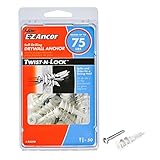
Okay, so I’ve sung the praises of toggle bolts, but does that mean all anchors are useless? Not entirely. There are different types of drywall anchors, and some are far superior to the basic plastic expansion anchors I was complaining about. You’ve got self-drilling anchors, which are great for lighter loads and are super easy to install – you just screw them directly into the drywall, no pre-drilled hole needed for some types. (See Also: Can Concrete Anchors Be Used In Brick )
Then there are metal expansion anchors, which are a step up from plastic. They work on a similar principle, but the metal provides more strength. My personal favorite among the “anchor” category, for situations where you can’t use a toggle, are the screw-in types that have a wider flange. These spread the load over a larger area of the drywall surface itself.
I used a set of these for hanging some substantial artwork in a client’s home. They weren’t as solid as a toggle bolt, but they held up a lot better than basic plastic ones.
They require a slightly larger hole than the plastic anchors, and you screw them in until the flange is flush with the wall. The key with any anchor, beyond the type, is matching it to the weight of the item you’re hanging. Most anchor packaging will have a weight rating. It’s tempting to ignore it and just grab the cheapest option, but that’s a mistake I’ve made.
For things like lightweight decorative shelves, or small, framed photos that won’t be disturbed, a good quality plastic or self-drilling anchor can absolutely do the job. It’s all about understanding the load and the material you’re working with. But for anything that carries significant weight, or could be bumped or pulled, you’re often better off with a more substantial solution.
Toggle Bolts vs. Anchors: A Quick Comparison
| Feature | Basic Plastic Anchors | Toggle Bolts | Opinion/Verdict |
|---|---|---|---|
| Installation Complexity | Very Easy | Moderate (requires larger hole) | Plastic wins on ease, but it’s a trade-off for strength. |
| Holding Power | Low to Moderate (best for light items) | High (suitable for medium to heavy items) | Toggle bolts are clearly superior for serious weight. |
| Material Required | Drywall only | Drywall, plaster, hollow doors, thin partitions | Toggle bolts offer more versatility in material. |
| Cost per unit | Very Low | Moderate | Plastic is cheaper, but you get what you pay for. |
| Risk of Failure | High for heavier items | Low when installed correctly | Toggle bolts inspire much more confidence. |
| Best For | Very light decor, small pictures | Shelves, mirrors, TVs, heavy wall-mounted items | When in doubt, go for the toggle. |
The Drywall Factor: What You’re Actually Drilling Into
The real differentiator between a toggle bolt and many common anchors comes down to what’s behind your wall. Standard drywall is basically gypsum plaster sandwiched between paper. It’s strong enough for its purpose, but it’s not inherently load-bearing in the way a solid wood stud is. Most basic anchors rely on friction and the integrity of the drywall itself to hold.
They expand or wedge into the material. The problem is, drywall can crumble. When you put a lot of stress on a plastic anchor, the drywall around it can start to break down, and the anchor loses its grip.
Toggle bolts, on the other hand, use the back of the drywall as their anchor point. The toggle wings spread out behind the wall, distributing the load over a much larger surface area.
This means the force is less concentrated, and the drywall is less likely to fail. It’s like comparing trying to hold a heavy picture with just your fingertips versus using your whole hand to cradle it. The toggle bolt is the hand.
This also means that toggle bolts are fantastic for hollow materials where there’s no stud. If you’ve got a hollow-core door you want to hang a mirror on, a toggle bolt is your best bet. A basic anchor would just pull right through.
Another important point is hole size. Toggle bolts require a larger pilot hole than most anchors.
This can seem daunting, but that larger hole is what allows the toggle mechanism to work effectively. Don’t skimp on drilling the correct size hole; it’s vital for the bolt to engage properly behind the wall.
I’ve seen people try to force them through smaller holes, and it just doesn’t work, or it compromises the connection. It’s better to have a slightly bigger hole that’s securely fastened than a smaller hole that’s barely holding.
Common Mistakes and How to Avoid Them
Look, I’ve made my share of DIY blunders. One of the most common mistakes people make is simply not reading the weight rating on the packaging. (See Also: Can Cords Be Used To Make Anchors Climbing )
You see an anchor that looks sturdy and assume it can hold whatever you throw at it. Then you hang your expensive soundbar, and three weeks later, it’s on the floor. Another is choosing the wrong type of fastener for the wall material. Trying to use a drywall anchor in plaster, or a toggle bolt in solid concrete without the right drill bit and a masonry anchor, is a recipe for disaster.
You need to know what kind of wall you’re dealing with. Is it drywall? Is it plaster?
Is there a stud? If there’s a stud, you can usually just screw directly into that for maximum strength, and you won’t need any anchors at all. My first major wall-hanging fail involved a shelf that I thought was secured to a stud, but it turned out I was just off-center and had a flimsy toggle bolt dangling in the void.
Always, always, always locate studs if you can. Use a stud finder, or the old-fashioned tap-and-listen method.
If you can’t hit a stud, then you need to pick the right anchor or bolt for the job. Over-tightening is another common sin. With some plastic anchors, if you screw too hard, you can strip the hole or crack the drywall.
With toggle bolts, over-tightening the nut can sometimes strip the threads on the bolt or even pull the toggle wings too tightly, potentially damaging the drywall surface. Go steady and feel for resistance. I’ve also seen people use the wrong tool. Trying to install a toggle bolt with a tiny little screwdriver when you need a bit more use is frustrating and ineffective.
Get the right tool for the job. For toggle bolts, a screwdriver with a good grip or even a drill with a clutch setting can make the process smoother and more secure. Finally, don’t underestimate the power of a good instruction manual.
Yes, I’m guilty of tossing them aside, but for fasteners, especially toggle bolts, the instructions often specify the correct hole size and the best method for installation. A little bit of reading can save you a lot of headaches and damaged walls.
Real-World Scenarios: When to Use What
Let’s get practical. You’ve got a lightweight picture frame, maybe a 10×12 inch print.
A standard plastic expansion anchor or a self-drilling anchor is perfectly fine here. It’s easy, it’s quick, and it’ll hold without issue. You don’t need to go overkill. Now, imagine you want to hang a vanity mirror in your bathroom, something that’s maybe 2 feet by 3 feet and has some heft.
This is where basic anchors start to get dicey. If it’s a hollow wall, you absolutely need something with a mechanical lock.
A toggle bolt is ideal. You drill the hole, compress the toggle, push it through, and it opens up behind the drywall.
You’ll get a solid, reliable hold. I used toggle bolts to hang a fairly heavy antique mirror in my hallway, and it’s been there for years without a single complaint. How about installing a TV wall mount? This is a must territory. (See Also: Can Anchors In Your Shoulder Break )
You must use solid fasteners. For most standard drywall installations, this means toggle bolts rated for the weight of your TV, or even better, lag bolts into studs if you can find them.
If you can’t find studs, high-strength toggle bolts specifically designed for TV mounts are your next best bet. I’ve seen TVs come crashing down because someone used inadequate anchors, and it’s a costly and dangerous mistake.
A floating shelf that’s meant to hold a good amount of weight, like books or decorative items? Again, toggle bolts are usually the way to go, especially if the shelf isn’t long enough to span multiple studs. Make sure the toggle bolts are rated significantly higher than the expected load.
For heavier duties, like mounting a large cabinet or a radiator cover, you’re often looking at toggle bolts or, if you’re lucky enough to find them, screwing directly into wall studs. The key is understanding the load: Is it static (like a shelf)? Or dynamic (like something that might get bumped or pulled)?
Dynamic loads require stronger solutions. I once tried to mount a small, decorative fireplace surround using only plastic anchors because I was being lazy. Big mistake. It started to sag within a month.
Swapped them for heavy-duty toggle bolts, and it’s been solid as a rock ever since. That experience solidified my belief: for anything substantial, toggle bolts are usually the answer when studs aren’t an option.
People Also Ask
Can I Use Toggle Bolts in Plaster Walls?
Yes, toggle bolts are generally excellent for plaster walls, especially older ones where the plaster might be more brittle or the lath behind it is spaced out. The toggle opens up behind the plaster and lath, providing a secure grip. You’ll need to drill a hole large enough for the compressed toggle to pass through, and just like with drywall, make sure you’re using a toggle bolt rated for the weight of the item you’re hanging.
What’s the Difference Between a Toggle Bolt and a Molly Bolt?
Molly bolts, also known as hollow wall anchors, are similar to toggle bolts in that they work in hollow materials. However, a molly bolt has a metal sleeve that expands or collapses behind the wall as you tighten the bolt, whereas a toggle bolt has wings that spring open. Toggle bolts generally have a higher weight rating and are considered more secure for heavier loads than most standard molly bolts.
How Do I Know If I Need a Toggle Bolt or a Regular Anchor?
If you’re hanging something very light, like a small picture frame or a curtain rod for lightweight curtains, a basic plastic or self-drilling anchor might suffice. However, for anything with significant weight, such as shelves, mirrors, TV mounts, or heavy decorative items, and especially if you cannot locate a wall stud, you should opt for a toggle bolt. The key is the load-bearing capacity and the security of the attachment mechanism.
Can Toggle Bolts Be Removed and Reused?
Generally, no. Once a toggle bolt is installed and the wings have sprung open behind the wall, removing the bolt means the wings will remain inside the wall, and you’ll have a loose toggle floating around. You can remove the bolt itself, but the toggle mechanism will be left behind, and you’ll need to use a new toggle bolt if you want to re-hang something in the same spot. The hole will also likely be too large for a standard anchor.
Final Thoughts
So, are toggle bolts stronger than anchors? For the most part, when you’re talking about hanging anything more than a lightweight picture, the answer is a resounding yes. The way they mechanically engage with the back of the wall provides a level of security that most basic anchors just can’t match. I’ve learned the hard way that skimping on fasteners is a false economy that can lead to damaged walls and dropped items.
If you’re unsure, err on the side of caution. Invest in toggle bolts for anything that carries significant weight, especially if you can’t get it into a stud. It might take a few extra minutes and a slightly bigger drill bit, but the peace of mind is absolutely worth it. Don’t be like me and have your prized possessions end up on the floor.
Next time you’re staring at a blank wall with something heavy to hang, remember this: locate studs if you can, but if you can’t, a good quality toggle bolt is your best friend.