I remember the first time I tried to hang a heavy mirror in my apartment. The landlord said it was fine, just use a wall anchor. Easy, right? Wrong. I grabbed a handful of anchors from the hardware store, picked one that looked about right, and hammered it in. Five minutes later, the mirror was on the floor, the drywall was a mess, and my wallet was significantly lighter. It turns out, not all anchors are created equal, and frankly, the whole system can be a bit of a confusing mess if you don’t know what you’re looking at. So, are wall anchors color coded? Let’s get into it.
For years, I’ve been wrestling with what to hang where and how. I’ve wasted enough money on flimsy plastic anchors that crumble under pressure to fill a small dumpster. I’ve learned what actually holds, what barely holds, and what is just plain optimistic. This isn’t about fancy marketing; it’s about keeping your stuff on the wall.
Why the Confusion? It’s Not as Simple as You Think
Look, the simple answer to ‘are wall anchors color coded?’ is mostly no, not in a universal, follow-the-rainbow kind of way. You’ll find some brands use color to differentiate their own product lines – maybe a red anchor for heavier loads, a blue for medium.
But that red anchor from Brand A might be totally different in load capacity than Brand B’s red anchor. It’s a bit of a Wild West out there, and relying on color alone is a recipe for disaster, trust me. I once bought a pack of anchors that were all the same bright yellow, thinking they were for a specific weight range based on the picture on the package. When I actually checked the tiny print on the back, they were rated for barely anything.
The packaging was misleading, and the color was just a branding choice. It’s enough to make you want to just screw things directly into the studs every single time, but that’s not always an option, is it?
The real story behind wall anchor identification is about the material, the design, and most importantly, the weight rating. The manufacturers should make it clear, but sometimes it feels like they deliberately don’t.
You end up squinting at tiny print on a blister pack in a poorly lit aisle, trying to decipher if ‘medium duty’ means it can hold your cat or your entire collection of vintage encyclopedias. This lack of standardization is what leads to people like me, years ago, just guessing. Guessing how much weight a plastic plug can really take, guessing if it will expand properly, guessing if it will rip out of the drywall the moment something with a little heft is attached. It’s frustrating because the concept is simple: make a hole, insert anchor, screw in fastener, hang stuff.
But the execution, especially for the average DIYer without an engineering degree, is anything but.
Then there are the different types of anchors themselves. You’ve got your basic plastic expansion anchors, your self-drilling anchors that look like little screws, your molly bolts, your toggle bolts. Each one has a different mechanism for gripping the wall.
Plastic ones rely on friction and expansion within the drywall. Self-drilling ones screw directly into the drywall, offering a bit more grip. Molly bolts have a sleeve that expands behind the drywall, and toggle bolts have wings that open up on the other side. The material is often plastic, metal, or a combination.
The size and shape vary wildly. So, while a specific color might indicate something within a single manufacturer’s range, it’s not a universal language. You need to be looking at the load ratings and understanding the type of anchor for the job.
My first apartment was a masterclass in learning this the hard way. I hung a cheap bookshelf, thinking the plastic anchors were fine. It lasted about three weeks before it sagged dramatically, pulling the anchors out. The sound it made was less a crash and more a slow, mournful groan of failing plastic. After that, I swore I’d never just grab and go again. I started reading every single word on the packaging, comparing different brands, and even looking up reviews online before I bought a single anchor. It felt like overkill at the time, but it saved me a lot of headaches and a lot more broken shelves.
What to Actually Look for (besides Wishful Thinking)
Forget the colors for a second. The real intel you need is printed right there on the package, usually in ridiculously small font. First, and most importantly, is the weight rating. This is usually given in pounds.
You’ll often see two numbers: ‘shear’ and ‘tension’. Shear is when the weight is pulling straight down (like a shelf). Tension is when the weight is pulling outwards from the wall (like a hanging lamp). Always, always err on the side of caution.
If the package says 25 lbs shear, don’t hang something that weighs 20 lbs on it. Give yourself a buffer.
I usually double the required strength if I can. For example, if I need to hang a picture that weighs 10 lbs, I’m looking for anchors rated for at least 20-30 lbs.
This is where those cheap plastic ones often fail – they might claim a high number, but in real-world drywall, that number is often optimistic at best.
Next, understand the type of wall anchor and its mechanism. Are you dealing with drywall, plaster, or concrete? Drywall is the most common for interior walls in many homes and apartments. Plastic expansion anchors, self-drilling anchors, and toggle bolts are generally for drywall. Molly bolts can work in drywall and plaster. Concrete requires specialized anchors, often made of metal or heavy-duty plastic with aggressive threading or expansion. Using the wrong type of anchor for your wall material is a guaranteed way to have your item end up on the floor. I learned this when I tried to hang a heavy garden trellis on a brick wall using drywall anchors. Yeah, that didn’t end well. (See Also: Can Concrete Anchors Be Used In Brick )
The material and size of the anchor also matter. Most common anchors are made of plastic (nylon or polypropylene) or metal (zinc-plated steel, brass, aluminum). Metal anchors generally offer higher weight ratings and better durability than plastic ones, but they can also be more expensive. The size of the anchor, both in diameter and length, dictates how much material it engages with in the wall. Longer anchors generally provide better support. For drywall, look at anchors that are at least 1-1.5 inches long to get a decent grip behind the drywall.
Finally, consider the fastener it’s designed for. Anchors are made to accept specific screw sizes (e.g., #8 screw, 1/4-inch screw). Make sure the screws you use are the correct size and length. Too small a screw won’t engage the anchor properly, and too long a screw can poke out the other side or not anchor securely. Some anchors come with screws, which is helpful, but always double-check.
Here’s a quick rundown of common anchor types and what I generally look for:
| Anchor Type | Best For | Pros | Cons | My Verdict |
|---|---|---|---|---|
| Plastic Expansion Anchors | Light to medium loads in drywall | Cheap, easy to install | Low weight rating, can crumble | Okay for pictures, avoid for anything heavy. |
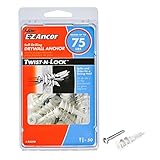
| Self-Drilling Anchors (e.g., E-Z Ancor) | Medium loads in drywall | Easy installation (screw-in), good grip | Can strip drywall if over-tightened, cost more than basic plastic | My go-to for medium-duty stuff like small shelves or towel bars. |
| Molly Bolts | Medium to heavy loads in drywall/plaster | Excellent holding power (expands behind wall) | Requires a larger hole, can be tricky to install | Reliable for heavier items if you can make the hole. |
| Toggle Bolts | Heavy loads in drywall (especially hollow walls) | Very strong, distributed load | Requires a large hole, wings can be fiddly | The heavy artillery for drywall when you need serious strength. |
| Concrete Anchors | All loads in concrete/brick | Designed for masonry, very strong | Requires drilling with a masonry bit, specific to material | A must for solid walls; buy the right type for concrete. |
Common Mistakes That Lead to Disaster
Oh, the mistakes I’ve made. The most common one, and the one that cost me that mirror, is simply underestimating the weight. People see an anchor and think ‘it’s holding something, so it’s fine.’
But drywall is basically reinforced paper. It’s not solid. When you hang something, you’re relying on the anchor to distribute that weight properly or to grip the studs behind the drywall. If you don’t hit a stud, and your anchor isn’t rated for the job, you’re just praying.
I’ve seen people hang heavy TV mounts on what looked like regular plastic anchors, and honestly, I just cringe. It’s a disaster waiting to happen. You’re not just risking the item you’re hanging; you’re risking damage to your wall and potentially injury.
Another big mistake is using the wrong anchor for the wall type. As I mentioned, drywall is different from plaster, which is different from concrete block. A plastic anchor that works fine in drywall might crumble or just spin freely in old plaster. And trying to use a drywall anchor in concrete? Forget about it. You’ll bend the screw, damage the anchor, and achieve nothing but frustration. You must know what your wall is made of. A quick tap can often tell you if it’s hollow (drywall/plaster) or solid (concrete/brick). If you’re really unsure, you might have to carefully drill a small pilot hole and examine the material that comes out. Better to do that than guess.
Then there’s improper installation. This is huge. For plastic expansion anchors, you need to drill a hole of the correct size.
Too small, and you can’t get the anchor in without damaging it. Too big, and it won’t grip. For self-drilling anchors, you need to drive them in straight and not overtighten, which can strip the drywall.
For toggle bolts, you need to make sure the wings deploy correctly behind the wall. I’ve rushed this step more times than I care to admit, and it’s always come back to bite me.
The anchor might go in, but it’s not seated properly, and the holding power is compromised. Think about it: if the anchor isn’t fully seated or expanded, it’s not making proper contact with the wall material.
It’s like trying to hammer a nail into rotten wood; it just doesn’t get a good bite.
A less obvious mistake is overloading over time. Even if an anchor can hold 50 lbs, constantly leaning things against it, or having something slightly wobble, can stress the anchor and the drywall.
Anchors aren’t designed for dynamic loads unless they specifically state they are. Imagine hanging a coat rack. You put your coat on it, and it’s fine. But then you hang a heavy winter coat, and maybe a backpack, and then a kid tugs on it.
That constant stress, even if it’s below the maximum rating, wears down the anchor and the surrounding drywall. It’s the slow creep of failure. I learned this with a bathroom shelf; it held my shampoo bottles for months, but the constant humidity and the weight shifting eventually caused one of the anchors to loosen significantly.
Finally, ignoring the fastener. The screw or bolt that goes into the anchor is just as important. Using a screw that’s too thin or too short means it won’t engage the anchor properly.
Using one that’s too long can poke through the other side of the wall, especially in thin interior walls. The head of the screw also matters; it needs to be the right shape to sit flush against the item you’re hanging or to fit into the anchor’s design. I once tried to use a lag screw in a plastic anchor meant for a standard wood screw. It just chewed up the anchor and wouldn’t tighten. (See Also: Can Cords Be Used To Make Anchors Climbing )
It felt like trying to fit a square peg in a round hole, but way more destructive.
Real-World Use: Hanging the Unhangable
Okay, let’s get practical. You’ve got a heavy item, and there’s no stud in sight.
What do you do? For something like a large, framed mirror or a significant piece of art, I’m reaching for the heavy-duty options.
Toggle bolts are my friends here. You drill a hole, feed the bolt through, and the wings flip open on the other side of the drywall. This distributes the weight over a much larger area of the drywall, making it incredibly strong. I used toggle bolts to hang a massive, antique oak headboard on a wall where I absolutely could not find studs.
It felt like overkill at the time, but it’s been solid for years. You do need to be careful to make sure the wings deploy correctly; if they get jammed, you have a problem. Sometimes I’ll even pre-feed a piece of string through the anchor hole to help guide the toggle wings open.
It’s a bit of a fiddly process, but the payoff in holding power is worth it.
For moderately heavy items, like a decently sized bookshelf that isn’t packed to the brim with lead bricks, self-drilling anchors are often the sweet spot. They screw directly into the drywall like a screw, but they have a wider flange and a stronger internal thread. They require a bit more torque to drive in, and you need to make sure you’re drilling a pilot hole of the right size (usually indicated on the package) so you don’t strip the drywall threads. I’ve used these to hang floating shelves that hold a good amount of books, and they’ve held up perfectly.
They look cleaner than toggle bolts, and the installation is generally faster once you get the hang of it. My only real complaint is that some of the cheaper ones can feel a bit flimsy, so I tend to stick to reputable brands.
What about things like hanging a TV mount? For that, you absolutely want to find studs. Period. No anchor in drywall is going to safely hold a modern flat-screen TV, especially one that’s large.
The weight and the use created by the screen make it a recipe for disaster. If you absolutely cannot hit studs, you need specialized heavy-duty drywall anchors designed specifically for TV mounts, often called heavy-duty toggle anchors or strap toggles.
These have much larger wings and are designed to spread the load across a significant portion of the wall. But even then, I’d be nervous. The manufacturer of your TV mount will always specify that you must secure it to studs. Don’t mess around with that.
For something that expensive and potentially dangerous, studs are the only way to go. I once had a friend who thought they could get away with just anchors for their TV. We watched it with bated breath for weeks, and thankfully nothing happened, but I still felt sick every time I looked at it.
When it comes to lighter items, like a framed photo or a lightweight mirror, your basic plastic expansion anchors (often called ‘plastic plugs’) or even some of the stronger self-drilling ones are perfectly fine. The key here is to match the anchor size to the weight and the screw size. A small anchor with a small screw is all you need. Don’t go overboard and drill a huge hole for a tiny picture.
It’s wasteful and weakens the wall unnecessarily. I’ve got a whole collection of these in various sizes, and they get used for all sorts of small jobs around the house – hanging calendars, light decorations, small shelving units. They’re the workhorses of the DIY world, and when used correctly, they’re incredibly useful.
One trick I learned for making sure anchors are seated correctly in drywall is to use a level. After you drive or hammer in the anchor, hold a level against it to make sure it’s flush with the wall. If it’s sticking out, it won’t provide a good surface for whatever you’re hanging. If it’s recessed too far, it might mean the hole was too big. For plastic anchors, a gentle tap with a hammer can often seat them flush. For self-drilling, a bit of careful turning with a screwdriver should do it. It’s these little details that make the difference between a secure mount and one that’s going to fail.
Are Wall Anchors Color Coded? A Deep Dive
Let’s circle back to the original question: are wall anchors color coded? The most straightforward answer is that there is no universal, industry-wide color-coding system for wall anchors. This is the frustrating truth that many DIYers discover the hard way, just like I did. If you grab a handful of anchors from different manufacturers, you’ll find a rainbow of colors, but they don’t necessarily mean the same thing.
A red anchor from Brand X might be designed for light loads, while a red anchor from Brand Y might be for heavy-duty applications. It’s a branding choice, not a standardized indicator of performance. This is why I always tell people to ignore the color and focus on the printed specifications on the packaging. (See Also: Can Anchors In Your Shoulder Break )
However, within a single brand’s product line, manufacturers might use color to distinguish different types or load capacities. For example, one brand might use yellow for their standard plastic anchors, blue for their medium-duty ones, and red for their heavy-duty metal anchors. This is helpful if you’re buying exclusively from that brand and understand their system. But it doesn’t translate across brands. So, while you might see yellow anchors and think ‘light duty,’ and then see a different yellow anchor from another brand that’s actually for heavier loads, you’ll be confused. It’s a system that works only if you’re loyal to a specific brand and its offerings.
The Federal Trade Commission (FTC) has guidelines for product labeling to prevent deceptive practices, but this doesn’t extend to mandating color-coding for something as specific as wall anchors. The onus is on the consumer to read the packaging. For true standardization, we’d need an industry body to agree on a system, and that just hasn’t happened. This lack of standardization is a significant source of confusion and, consequently, installation failures. It’s why I always preach vigilance when shopping for anchors. You have to be a detective, examining load ratings, anchor types, and materials, rather than just picking the prettiest color.
I’ve also seen instances where the color of the anchor might sometimes relate to the material it’s intended for, but this is incredibly rare and not something to rely on. For instance, some very specific concrete anchors might have color indicators, but this isn’t a general rule for drywall anchors. The vast majority of color coding you see on common wall anchors is purely aesthetic or for brand differentiation. Think of it like car colors – a red car doesn’t automatically mean it’s a sports car, even though many sports cars are red. It’s the make, model, and engine that matter.
So, to be absolutely clear: Do not buy wall anchors based on color alone. It’s a trap. The most reliable way to determine if an anchor is right for your job is to read the weight capacity printed on the package. Always compare this to the weight of the item you intend to hang, and remember to factor in a safety margin. If you’re unsure, opt for a higher-rated anchor or a different type of fastener altogether, like screwing directly into studs if possible. The color is the least important spec on the package.
Practical Tips for Secure Hanging
Beyond understanding the types and ratings, a few practical tips can save you a lot of hassle. First, always use a stud finder if you’re hanging anything heavier than a postcard.
Seriously, this is the number one way to make sure a secure mount. Most modern stud finders are electronic and pretty accurate. They detect the change in density behind the drywall, indicating where a stud is located. If you can hit a stud, you bypass the need for most types of anchors entirely and use a long, sturdy screw directly into the wood.
It’s the most reliable method. I invested in a decent electronic stud finder about five years ago, and it’s paid for itself in peace of mind alone.
It takes the guesswork out of it.
Second, don’t be afraid to drill a slightly larger hole if needed, especially for toggle bolts or molly bolts. The packaging usually specifies the drill bit size. If you can’t get the anchor in without forcing it and potentially damaging it, it’s better to widen the hole slightly than to cram it in. A properly seated anchor is far more secure than a damaged one that’s barely in. Just make sure you are using the recommended bit size, not just guessing. A pilot hole that’s too big is as bad as one that’s too small.
Third, consider the weight distribution. If you’re hanging a long shelf, don’t just put two anchors at the ends. Use at least three, spaced evenly, to distribute the load better. If you’re hanging a large, heavy picture, consider using two anchors, even if the item only has one hanging point, to spread the stress. For things like curtain rods, using anchors on both ends, and potentially one in the middle if it’s a long rod, will prevent sagging. It’s about spreading the force across more of the wall. I learned this the hard way with a particularly heavy curtain rod that sagged in the middle because it only had two mounting points.
Fourth, clean up your workspace. When you drill holes, drywall dust is going to fly. Use a drop cloth or some old newspapers underneath where you’re drilling. It makes cleanup infinitely easier. Also, keep your screws and anchors organized. A small tray or even just a piece of cardboard can help prevent tiny screws and anchors from rolling away into the abyss. Trust me, finding that one missing anchor when you’re halfway through a project is infuriating.
Fifth, test your anchor before fully loading it. After you’ve installed the anchor and screwed in your fastener, give it a firm tug. Try to wobble it. If it feels loose or like it’s pulling out, don’t put your heavy item on it. Remove it, fill the hole, and try again with a different, higher-rated anchor or a different method. This simple test can save you from a lot of potential damage. I usually hang on it gently myself, if it’s appropriate for the item and the anchor rating. It’s a quick sanity check.
Are All Yellow Wall Anchors the Same?
No, absolutely not. Yellow is a common color for plastic expansion anchors, but different brands use it to signify different load capacities or types within their own product line. You cannot assume that all yellow anchors are interchangeable or have the same weight rating. Always check the packaging for specific details.
Can I Use Any Screw with a Wall Anchor?
No, you need to use the screw size and type specified for the anchor. Most anchors are designed to accept a specific gauge of screw (e.g., #8, #10). Using the wrong screw can prevent the anchor from expanding or gripping properly, leading to a weak hold or outright failure. The screw head type (e.g., flathead, Phillips) also matters for proper seating.
Do I Need a Special Drill Bit for Wall Anchors?
For most common plastic and self-drilling anchors used in drywall, a standard twist drill bit is usually sufficient. However, the anchor packaging will specify the recommended drill bit size. For concrete or masonry anchors, you will absolutely need a masonry drill bit, which has a carbide tip designed for hard materials.
How Much Weight Can a Wall Anchor Hold?
This varies wildly depending on the type, size, material, and quality of the anchor, as well as the wall material it’s installed in. Plastic anchors might hold 10-25 lbs, while heavy-duty toggle bolts can hold 50-100+ lbs in drywall. Always refer to the manufacturer’s stated weight rating for shear and tension, and always use a safety margin.
Verdict
So, to cut through the noise: are wall anchors color coded? Mostly, no. It’s a marketing choice, not a universal language. Relying on color is a gamble that usually doesn’t pay off. You need to be smart about it, read the specs, and understand what you’re working with. Don’t let a pretty color blind you to the actual performance (or lack thereof) of an anchor. My own painful experiences have taught me that a little bit of due diligence upfront saves a whole lot of heartache, and potential damage, down the line.
The real key is to match the anchor to the weight of the item and the material of your wall. If you have the option, always go for studs. If not, choose an anchor type that’s known for its holding power in drywall, like toggle bolts or heavy-duty self-drilling anchors, and always, always err on the side of caution with the weight rating. Don’t be the person whose precious artwork ends up on the floor.
Next time you’re at the hardware store staring at a wall of anchors, remember this. Ignore the colors, focus on the numbers, and think about what you’re actually trying to hang. Your walls (and your stuff) will thank you for it. Now go forth and hang securely.